Self-Guided: Dolomites Palaronda Trek

Alps / Italy / Dolomites


HIGHLIGHTS:

  • Pale Group: largest massif in the Dolomites
  • Non-technical or technical itinerary options
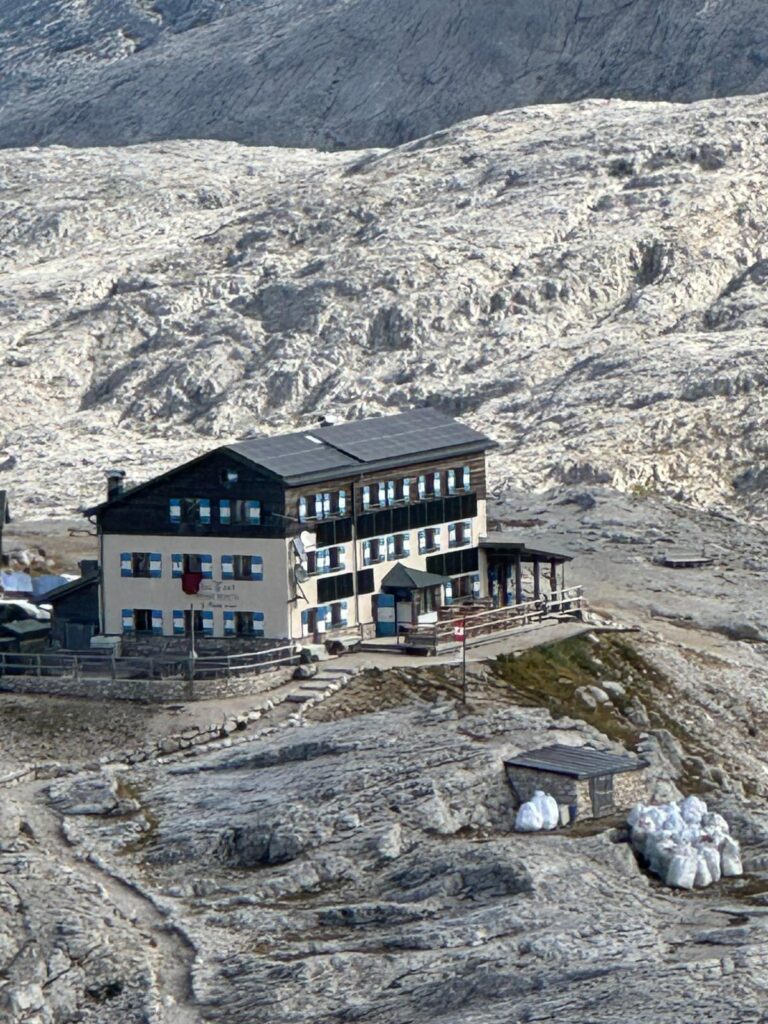
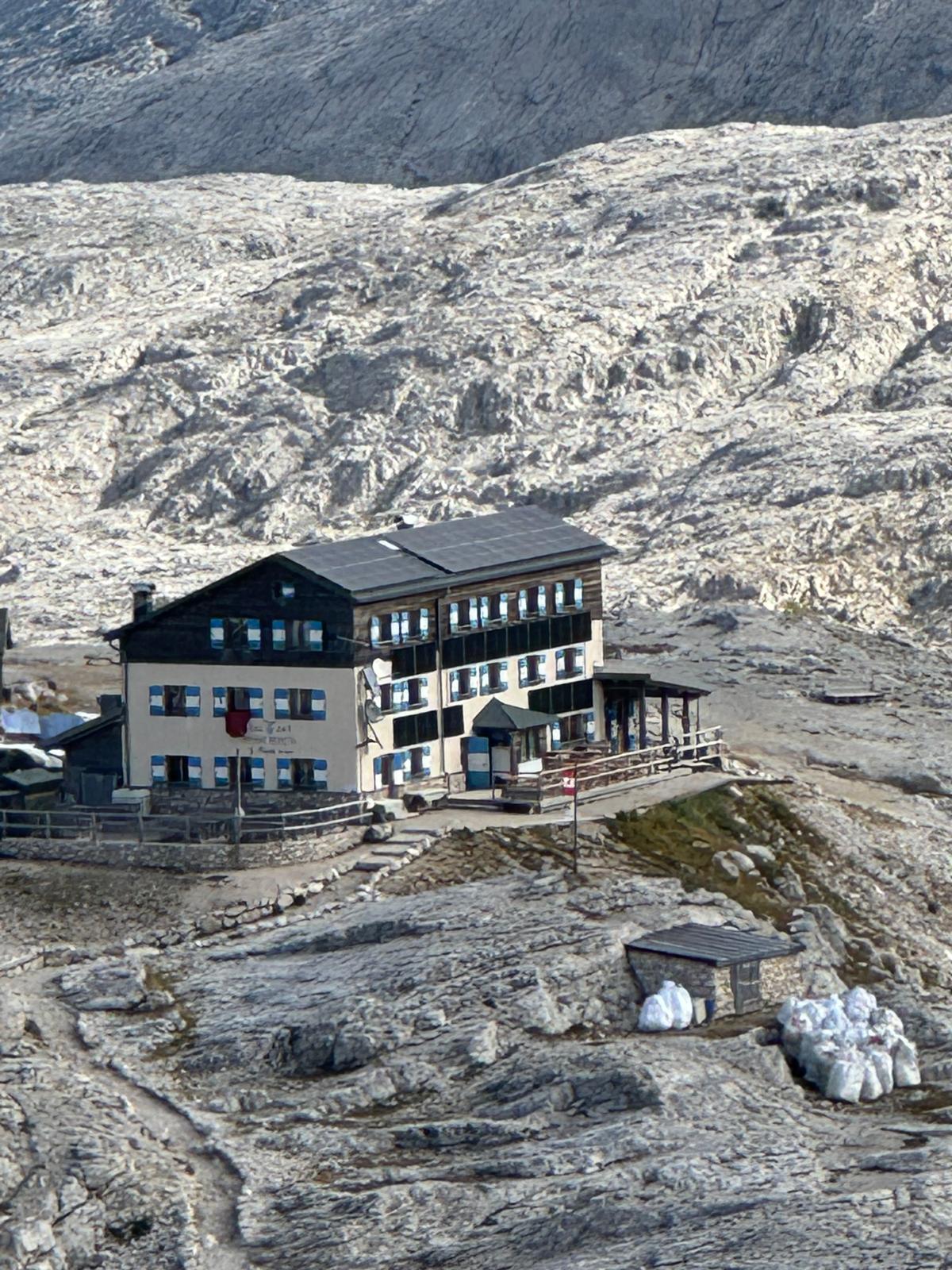
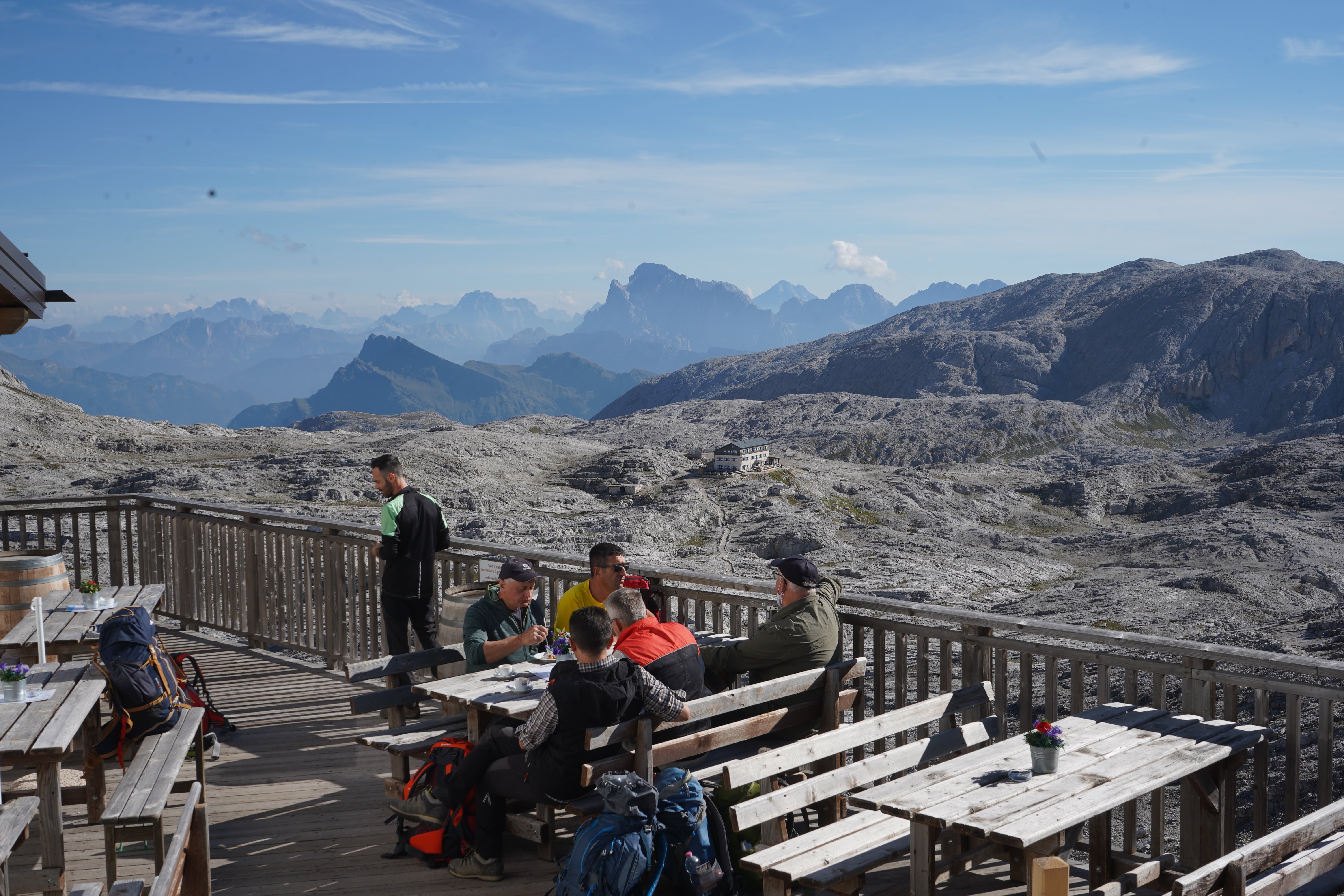
  • Fully catered huts, some with showers, some with private rooms
  • Excellent Italian and Tyrolean cuisine!
  • GPS tracks, and detailed instructions provided

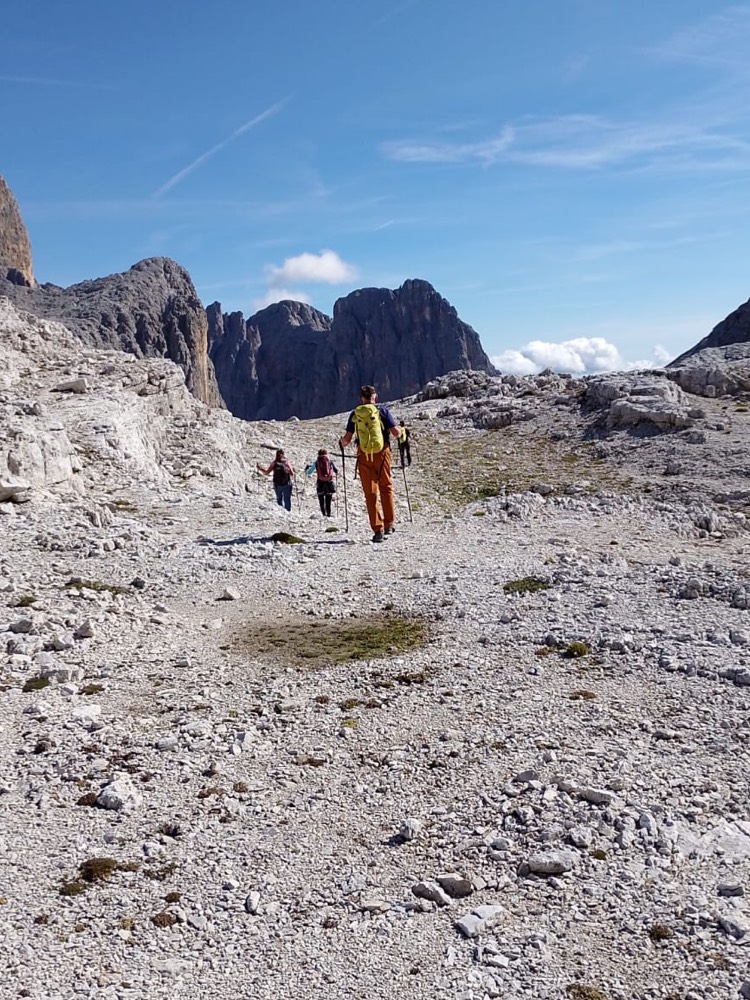
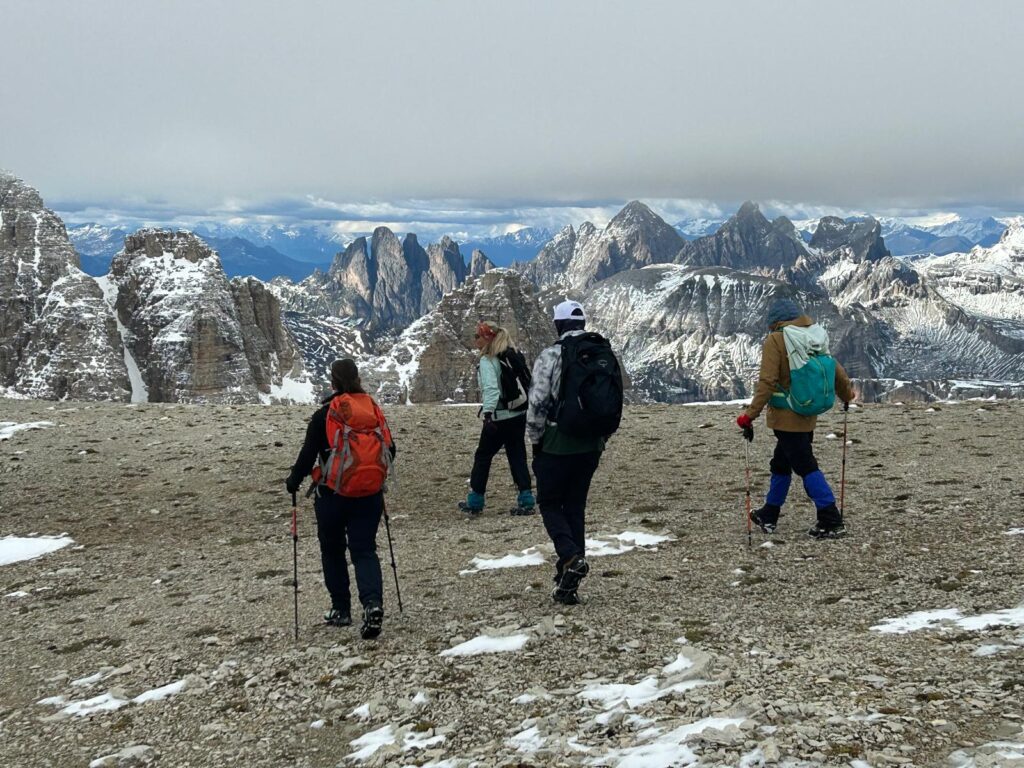
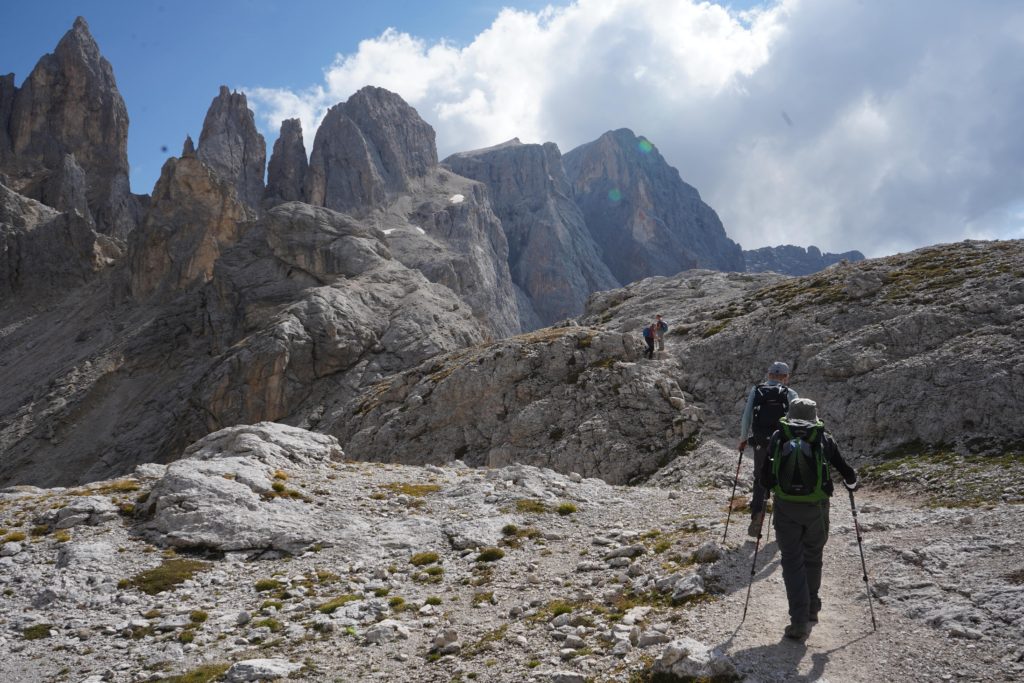
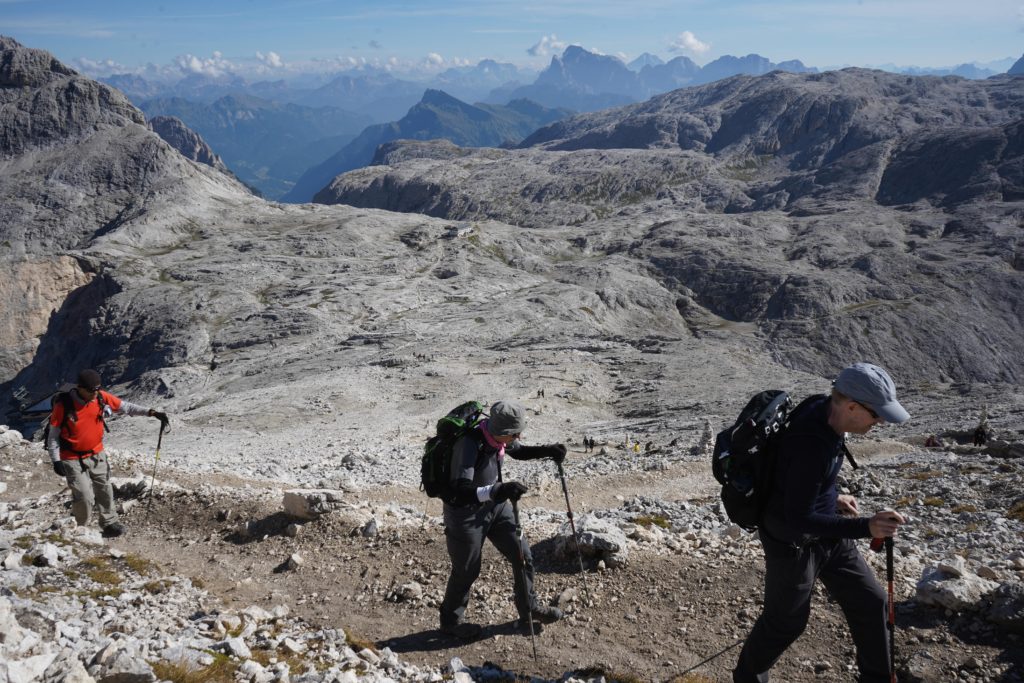
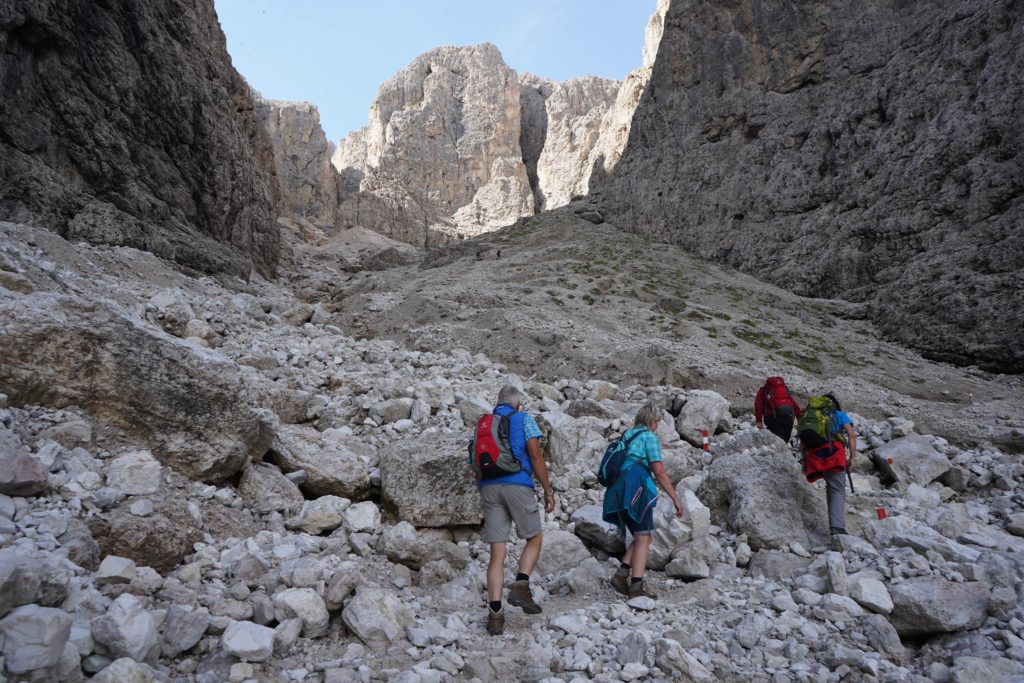
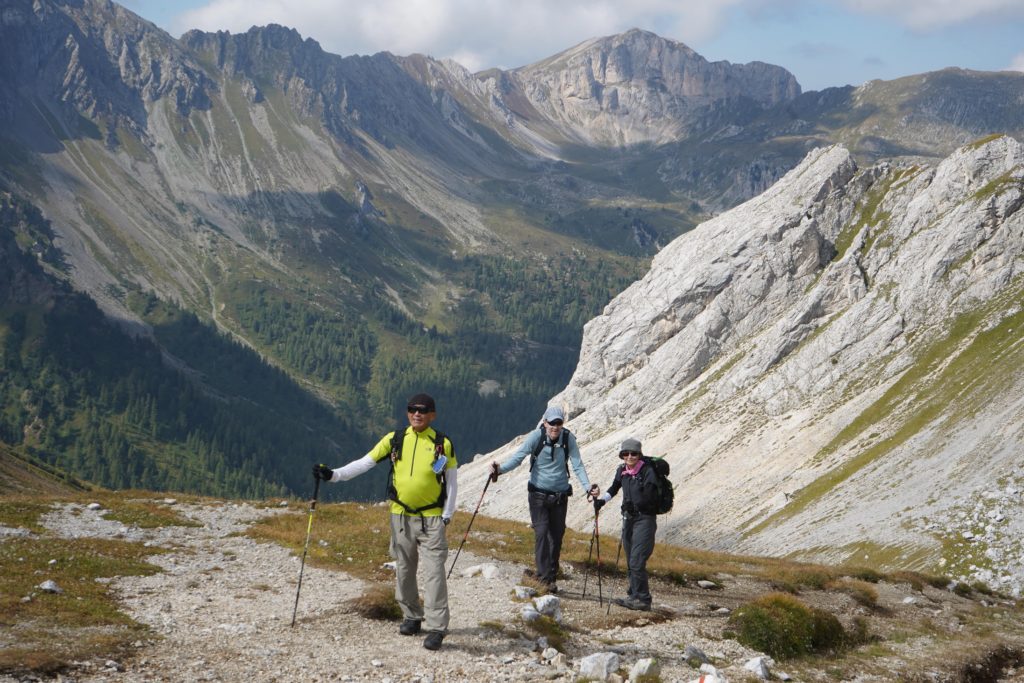
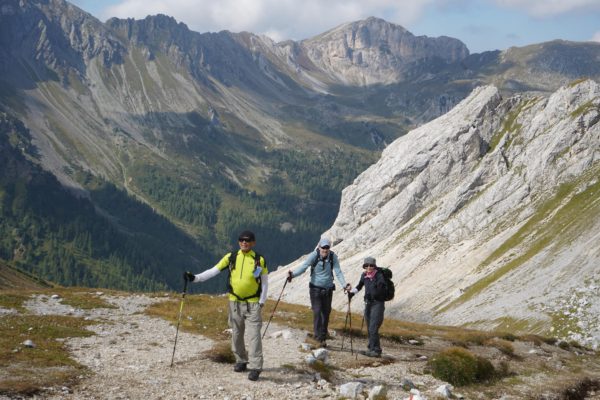
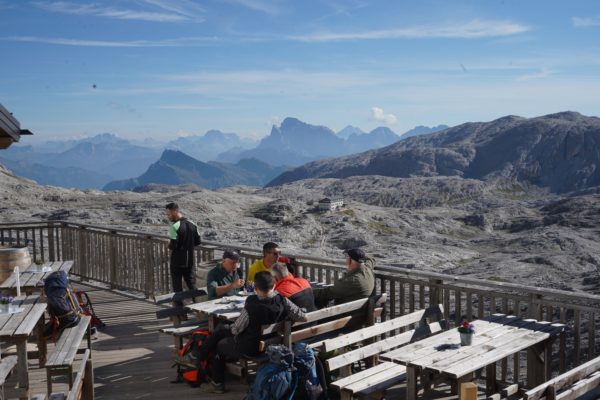
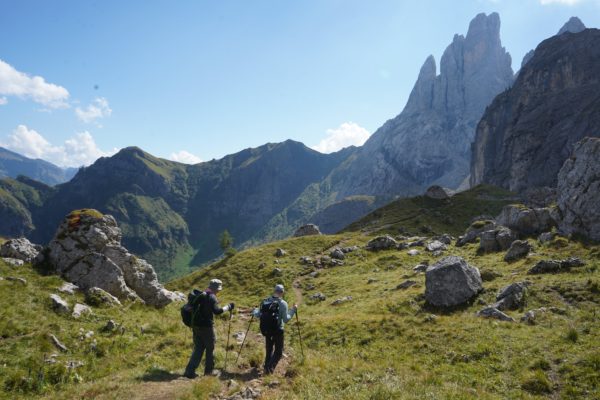
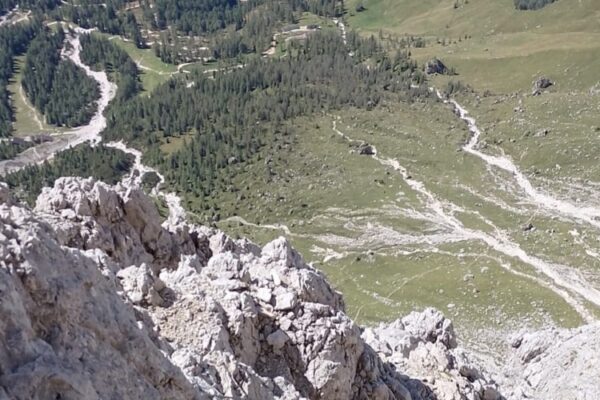
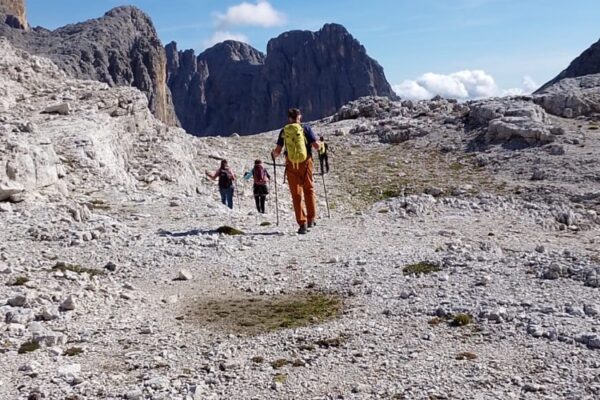
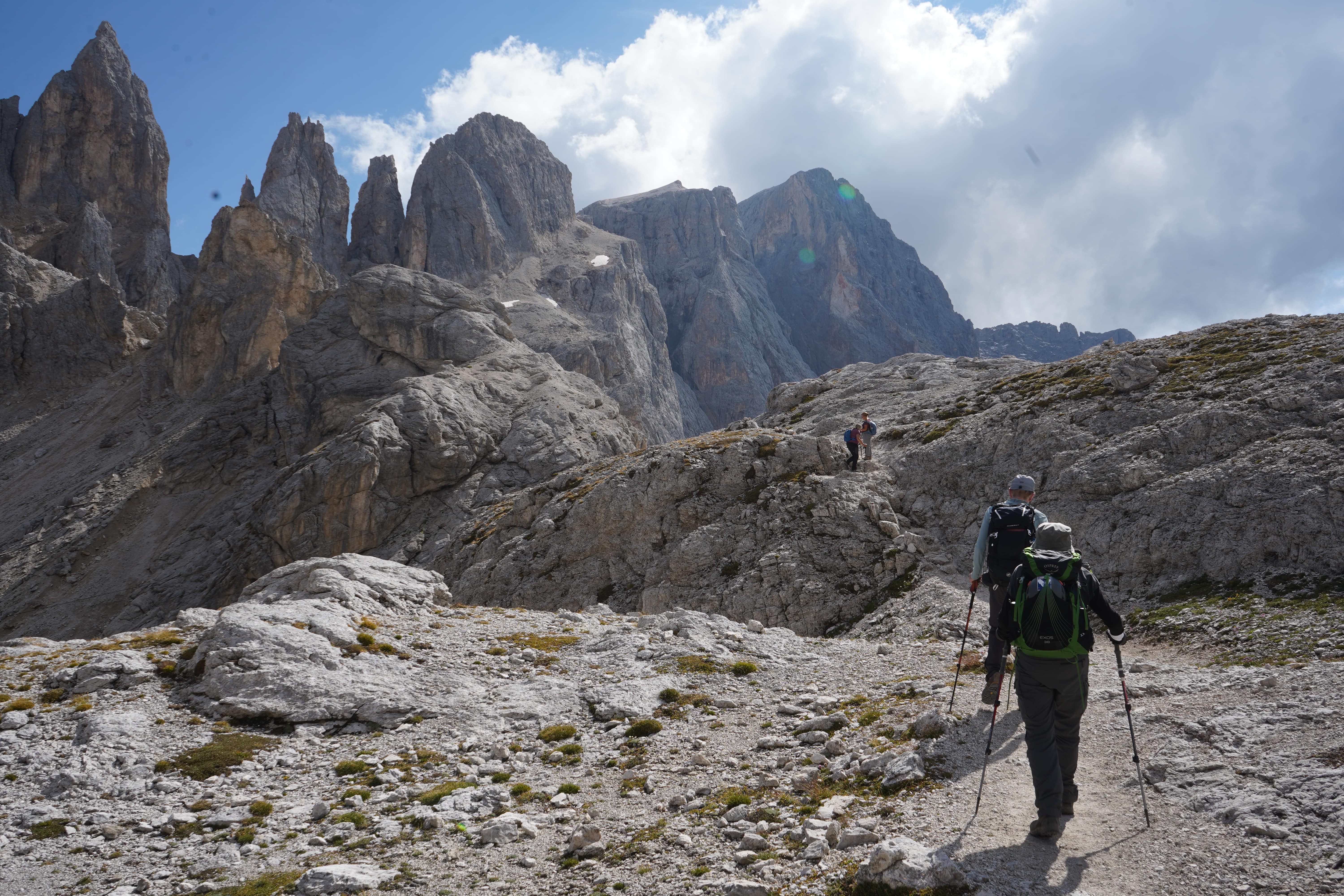
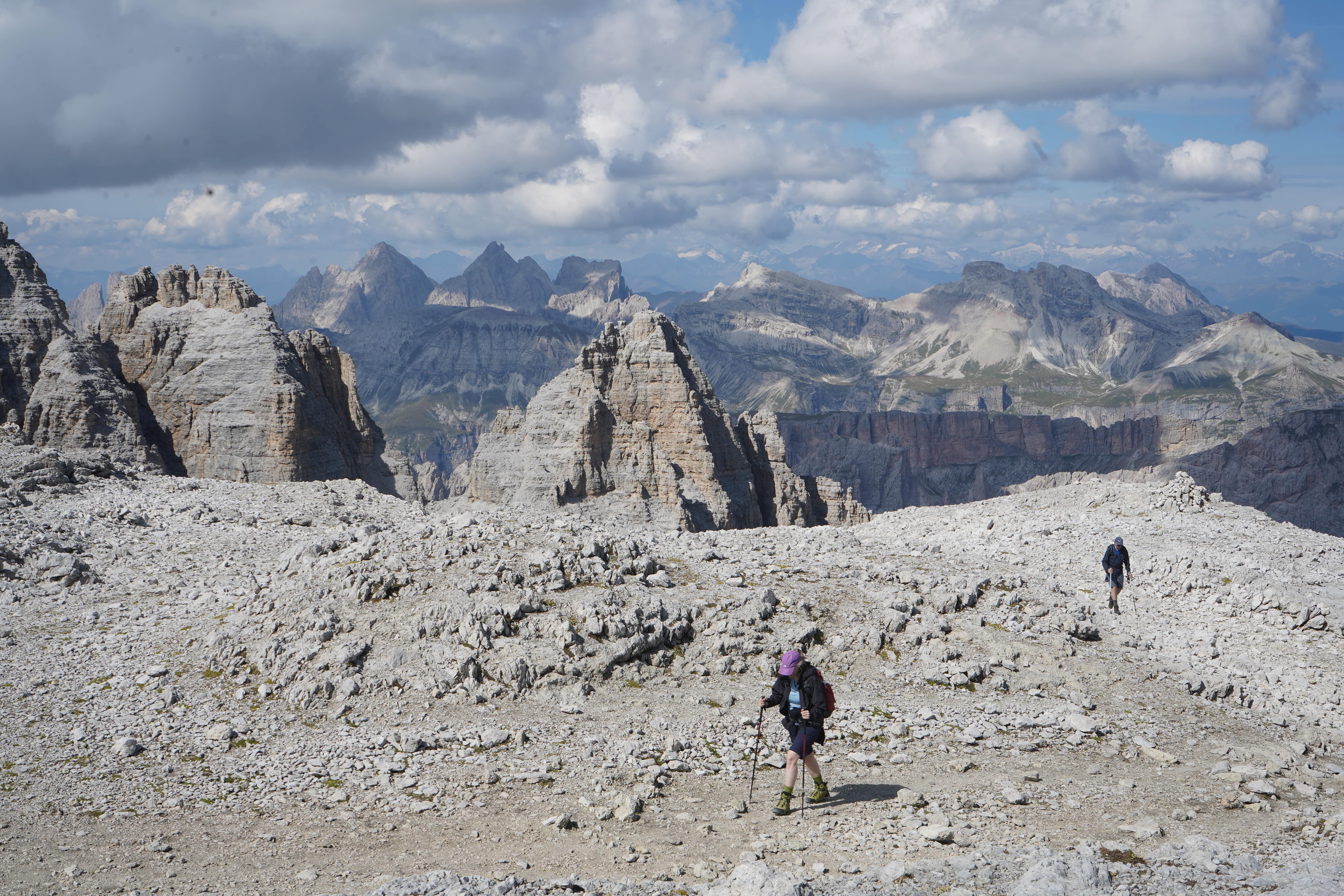
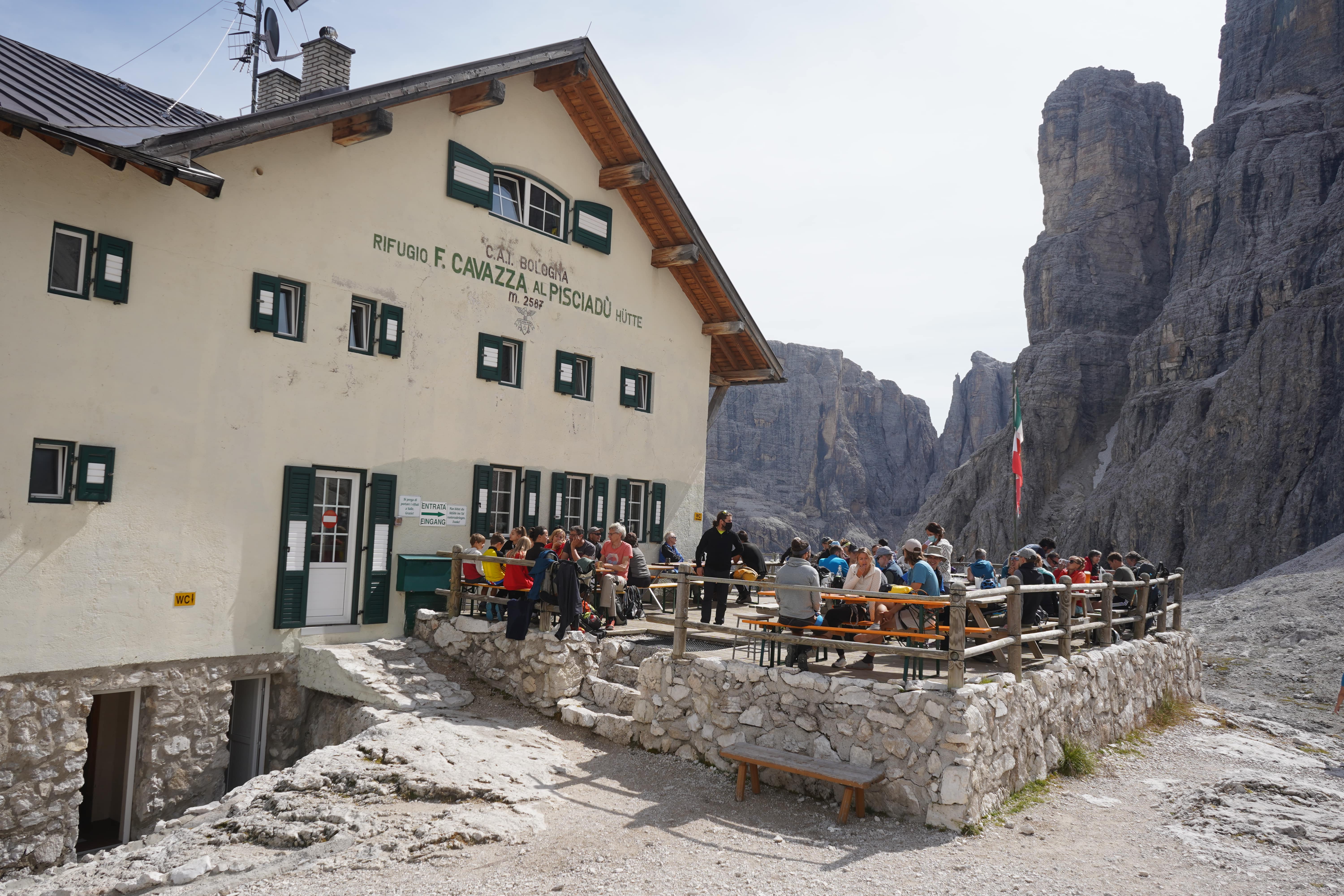
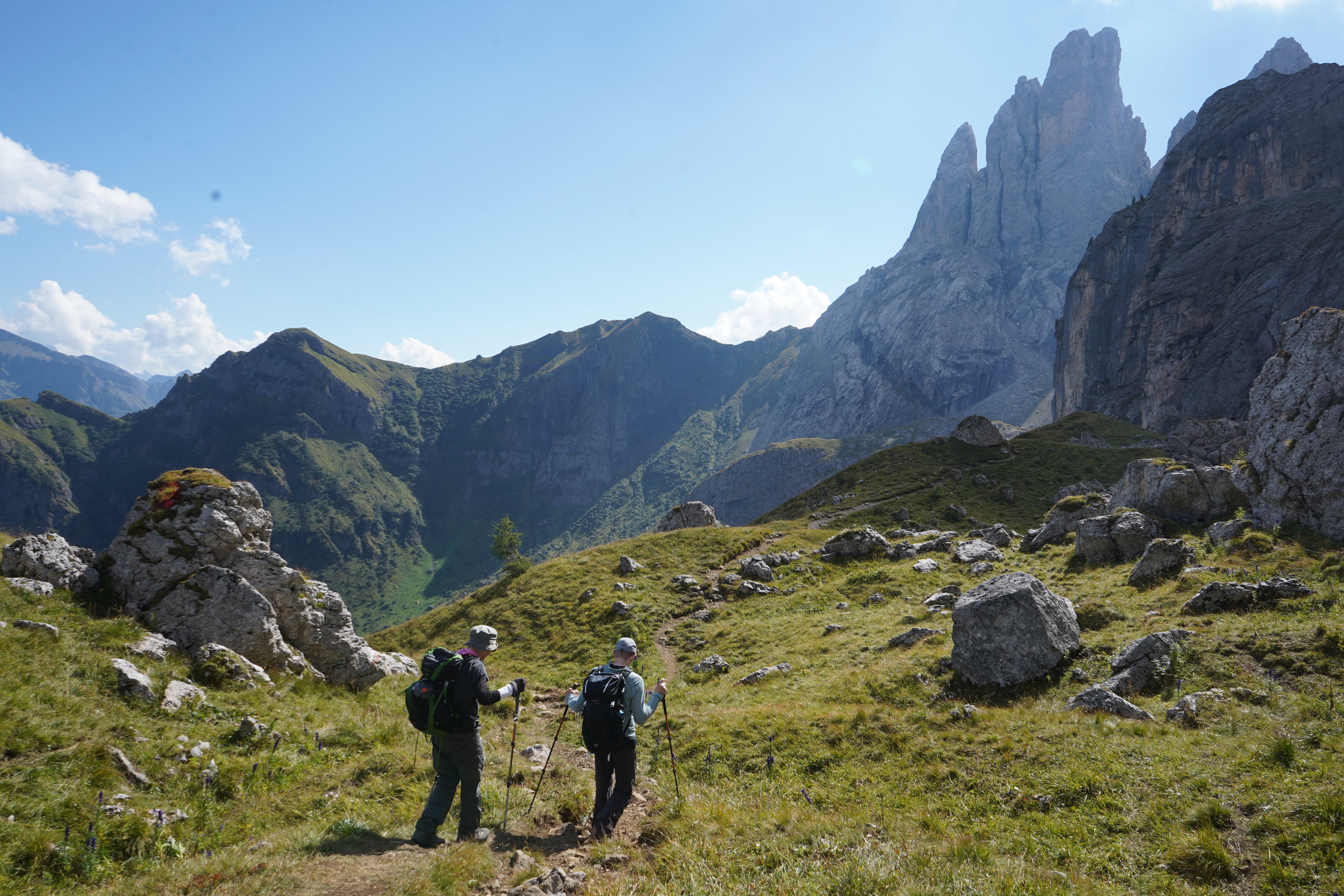
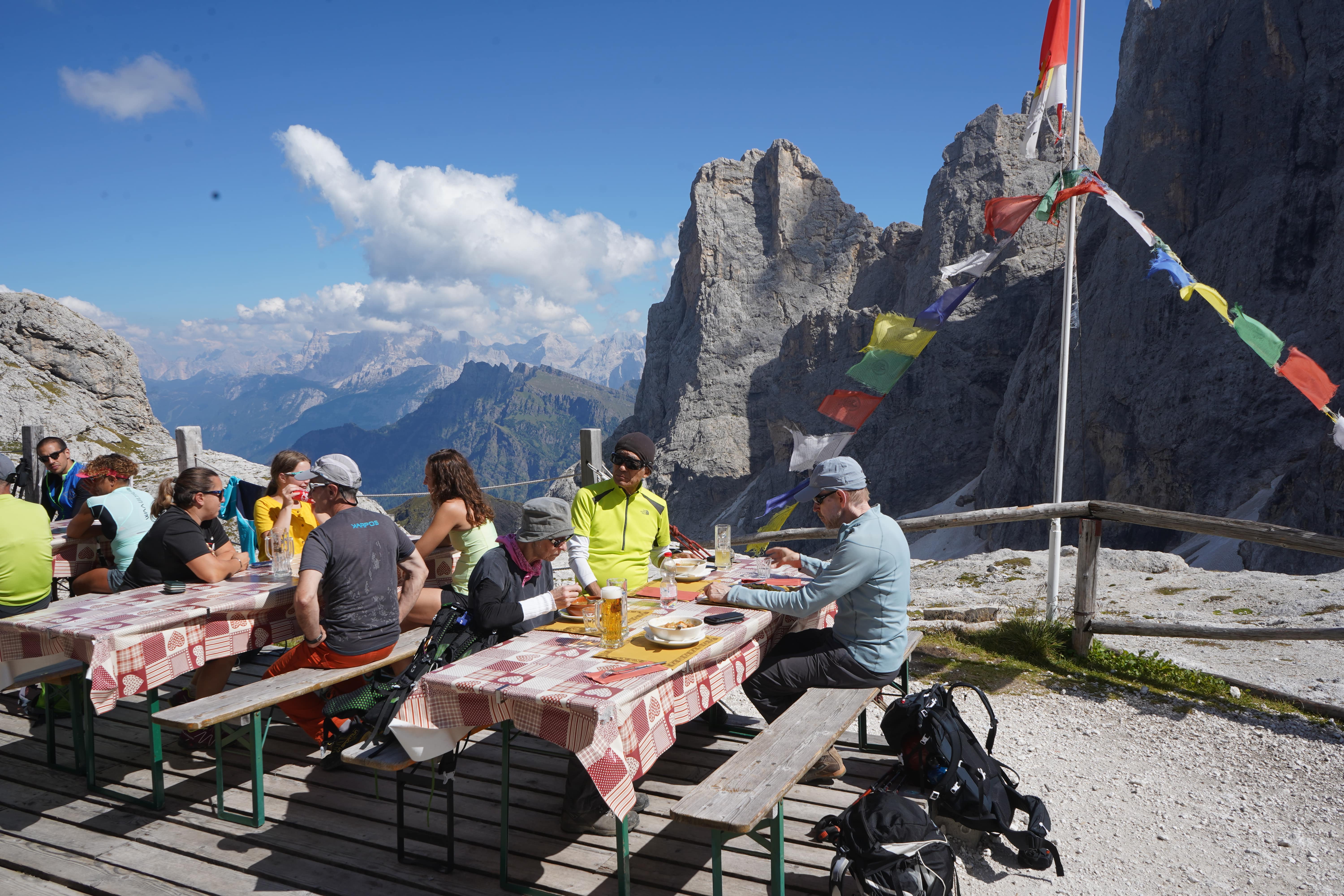
Pale di San Martino—aka the Pale Group is the largest massif in the Dolomites and home to one of the most iconic landscapes, a place that feels wild, vertical, and dramatic at every turn. We offer two Palaronda Trek Variations, both taking you right through the heart of this limestone fortress, linking high mountain huts with exposed ledges, airy traverses, and, rugged terrain. It’s exciting without being extreme, adventurous without being overwhelming, and endlessly photogenic.

Of our two variations, the Palaronda Soft is the classic itinerary that features moderate trails, no cable-assisted sections, daily distances of around 10km/6mi and between 300m – 1000m / 1000ft – 3200ft elevation gain. 

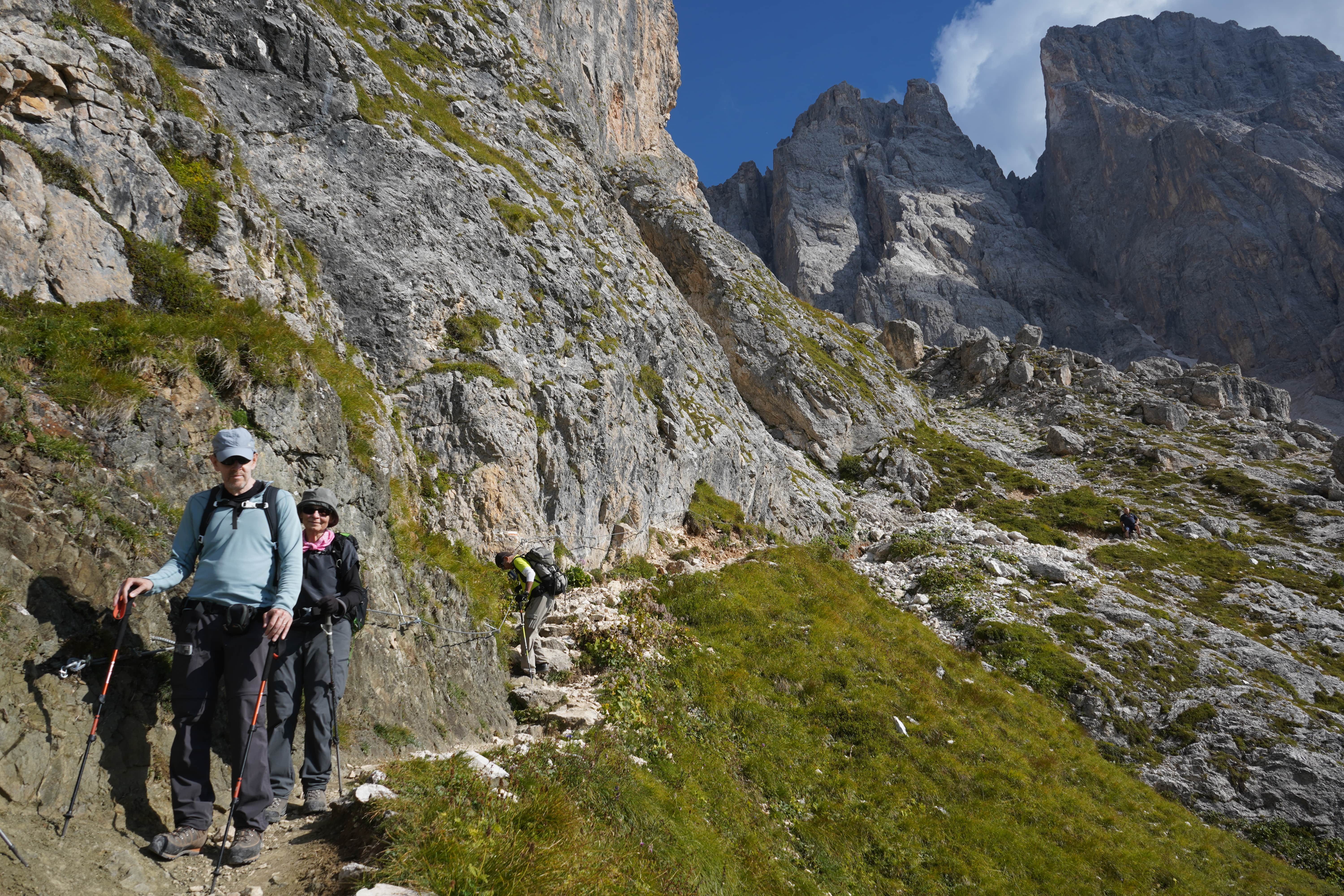
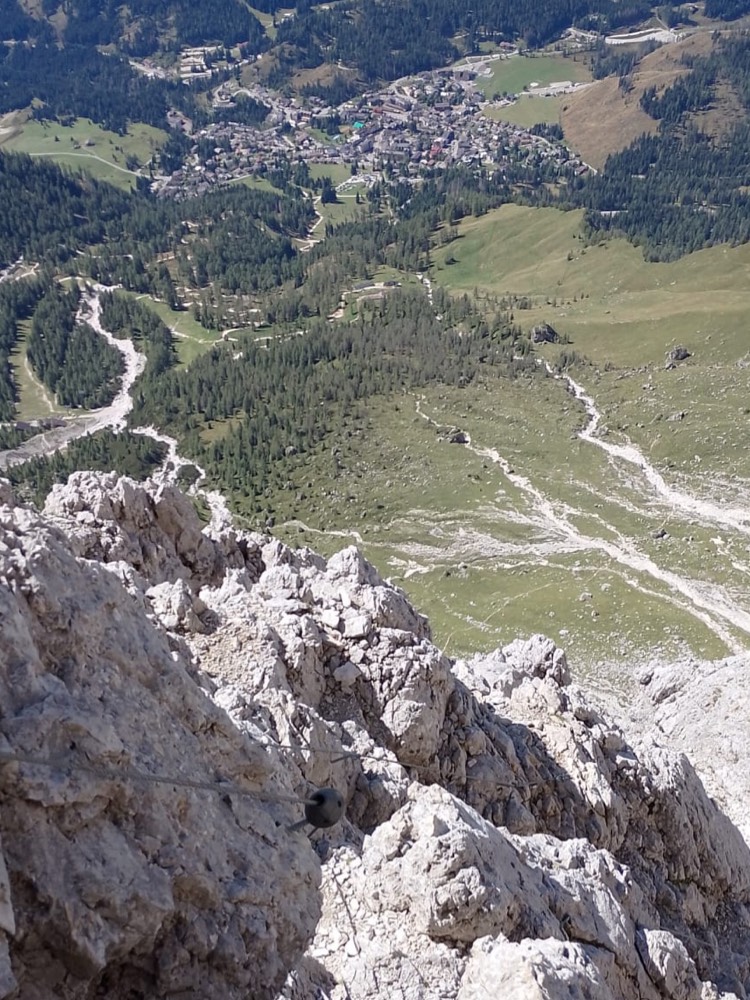
The Palaronda Hard is a modified version that features cable-assisted and via ferrata rated trails. This trek is the hardest self-guided option we offer designed for experience hikers with previous scrambling, via ferrata and/or rock climbing experience, sure-footed, are comfortable on exposed trails. The via ferrata routes themselves are not challenging and some trekkers don’t use via ferrata gear, but it is recommended. If you’re looking for something even more adventurous I recommend our guided trips like the Palaronda Classic Via Ferrata Trek, Stubai Alps High Route Trek, or the Haute Route Glacier Trek.  

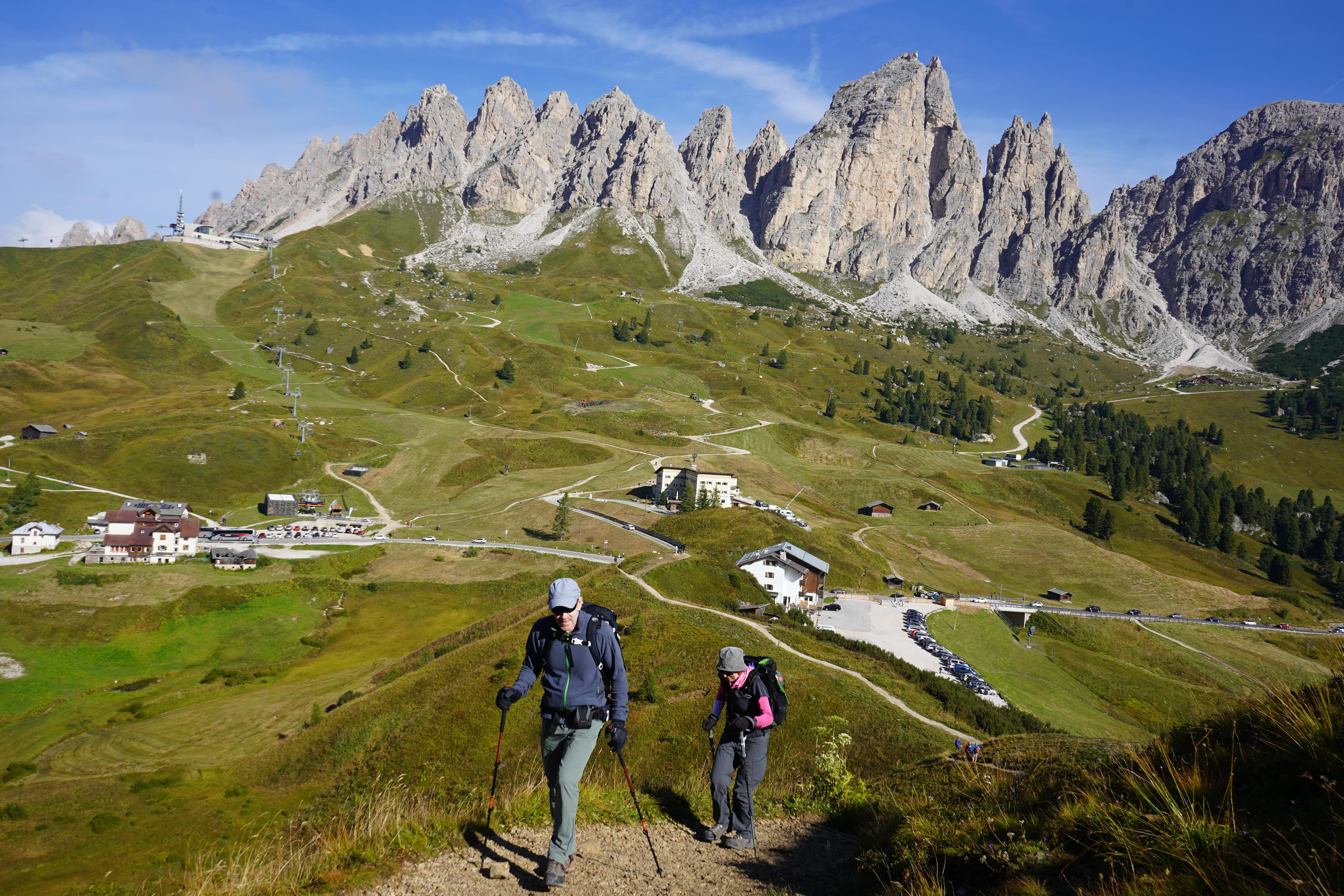
These treks begin and end in the beautiful Alpine resort town of San Martino di Castrozza.

DIFFICULTY

  • Your group should be physically fit and accustomed to walking up to 8 hours per day
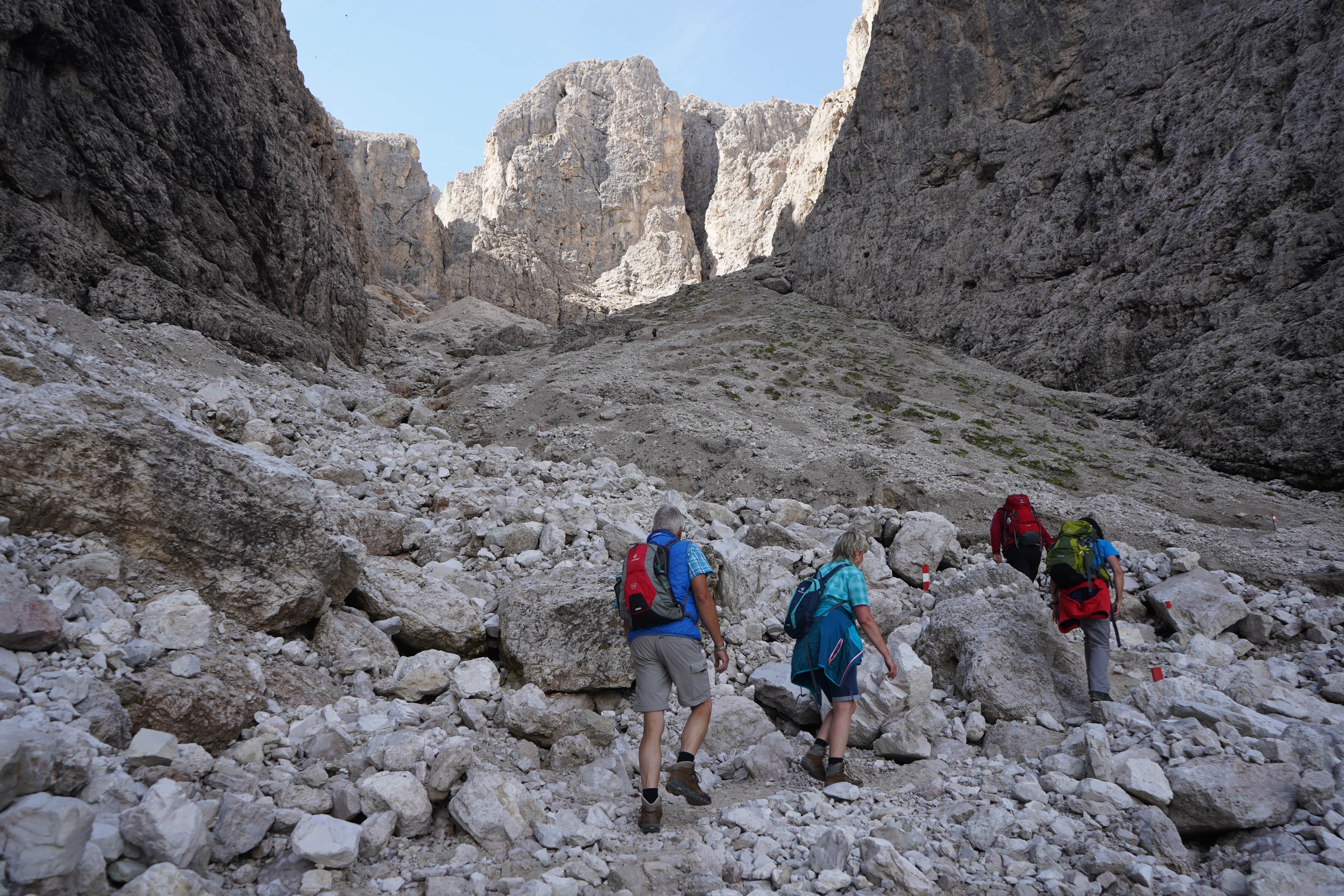
  • The trails are maintained and marked but can be rough and very steep
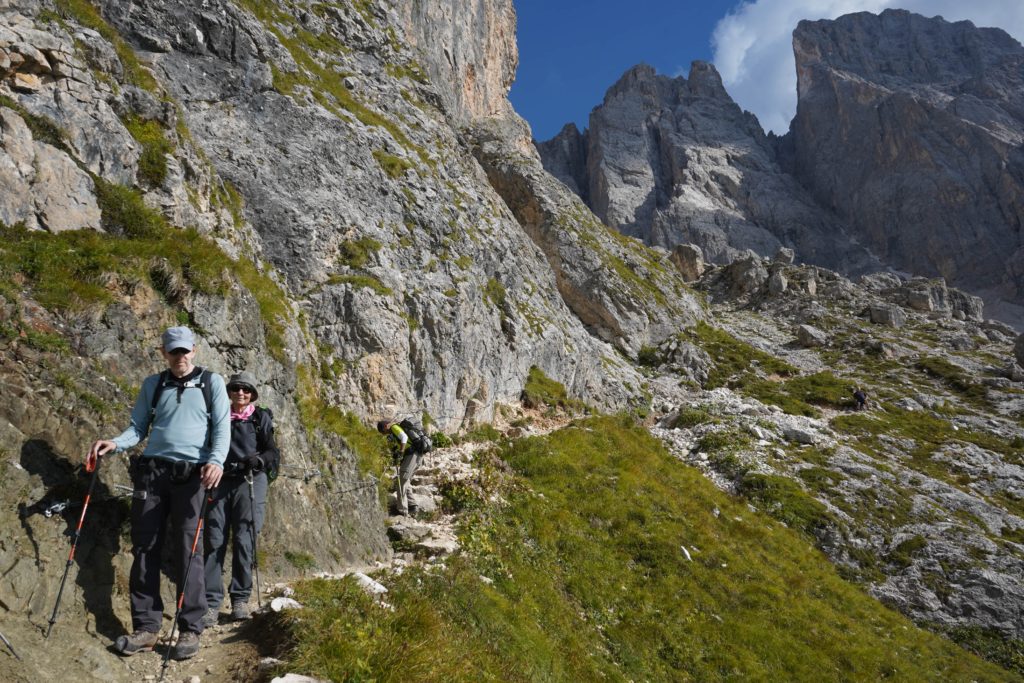
  • Exposed trail sections, at times equipped with cables to hand-rail
  • Traverse of the Sella and Rosetta plateau in bad visibility requires navigation skills
  • Light multi-day packs

CUSTOM TRIP DEPARTURES

Custom trips at any time from June to early October!

For details click “Custom Trips” Tab


Self-Guided: Palaronda Soft Trek Itinerary


As with all of our self-guided trips, we look after the pre-trip organization, bookings, and ground transportation logistics. In addition, we will provide your group with detailed daily instructions, a recommended equipment list, GPS tracks (which can be followed on your smartphone), and PDF maps. Your group of strong and experienced hikers will follow the itinerary on your own.

Arrival/Travel Day:

Arrive in San Martino di Castrozza for lodging in your hotel. Please use this day to stock up on any lunch and snack supplies you may need for the trek.

Day 1: San Martino di Castrozza to Rosetta Hut  

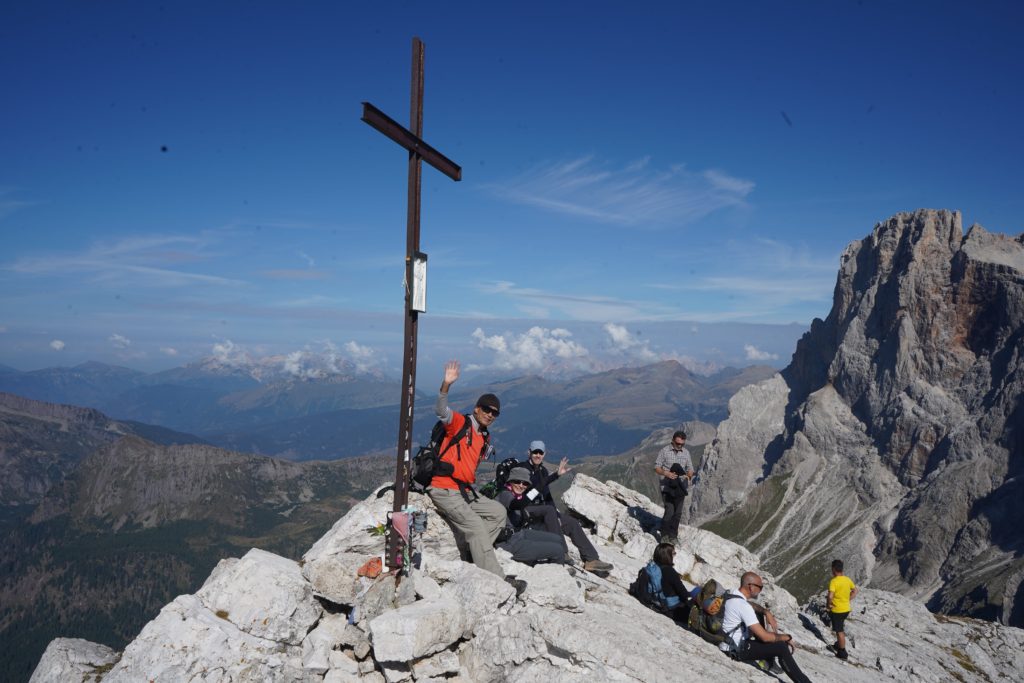
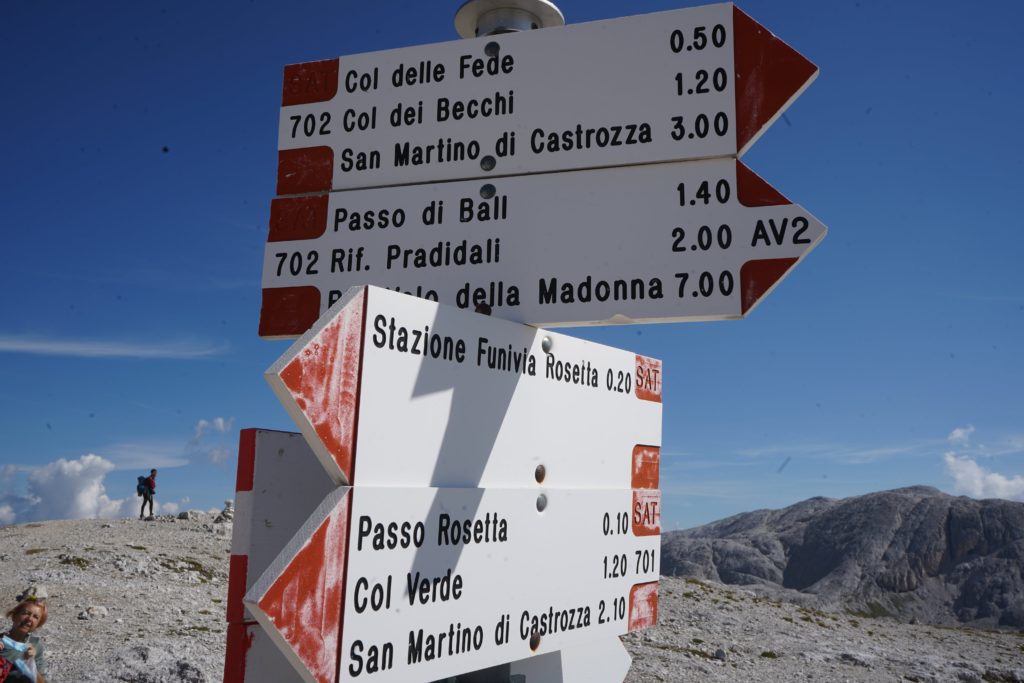
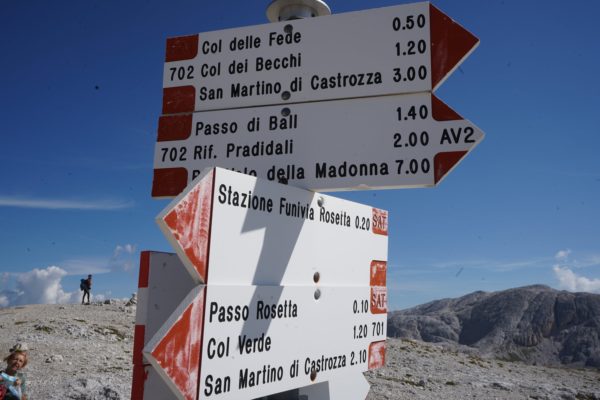
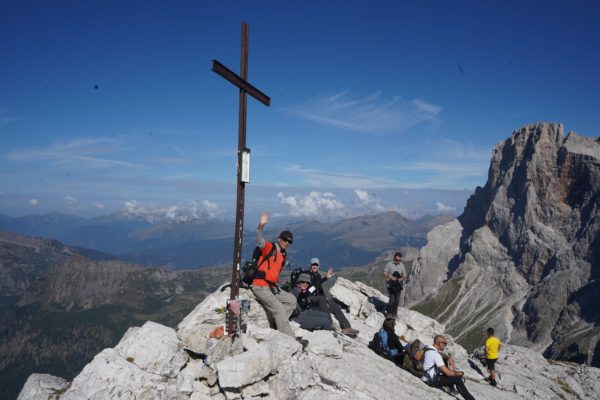
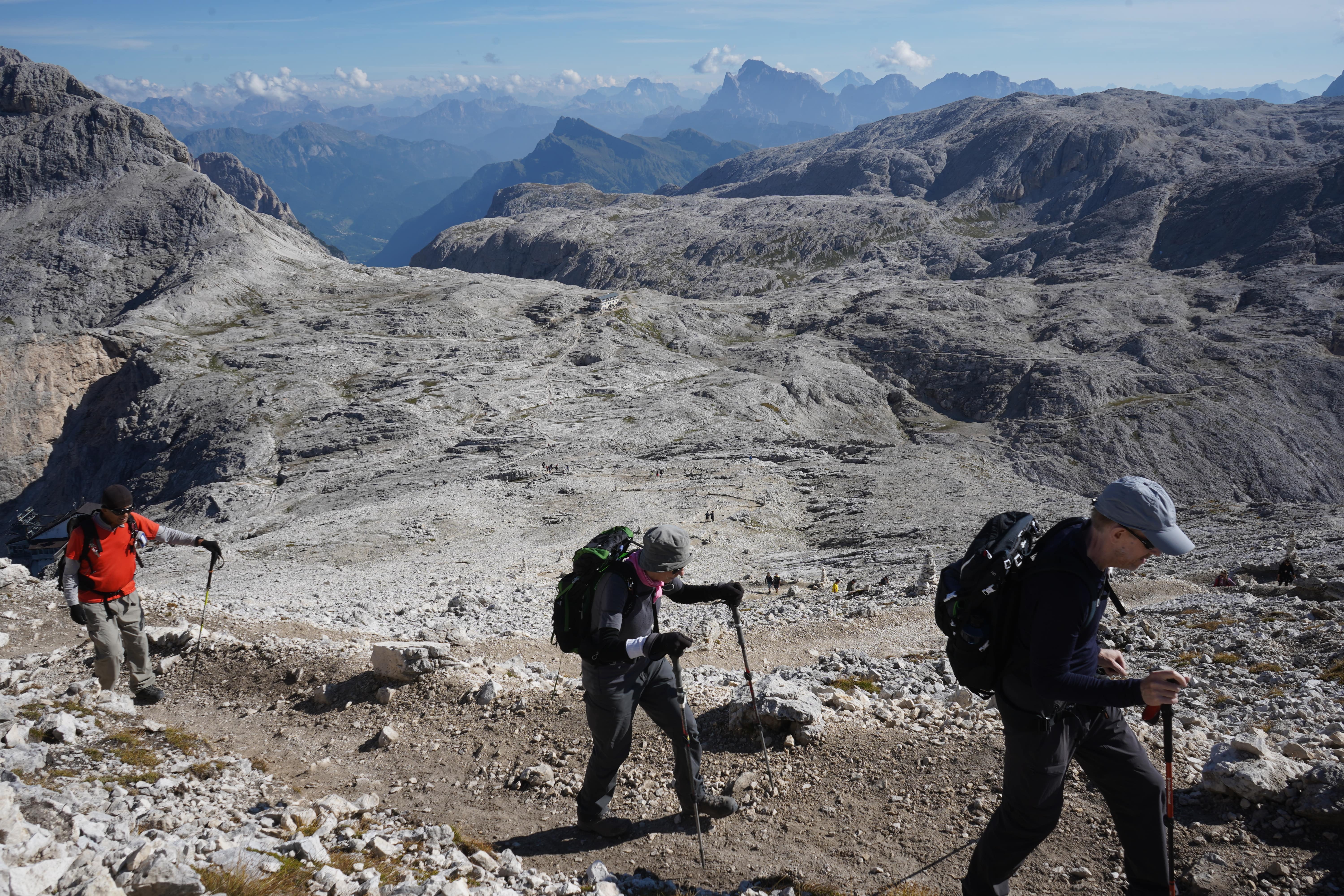
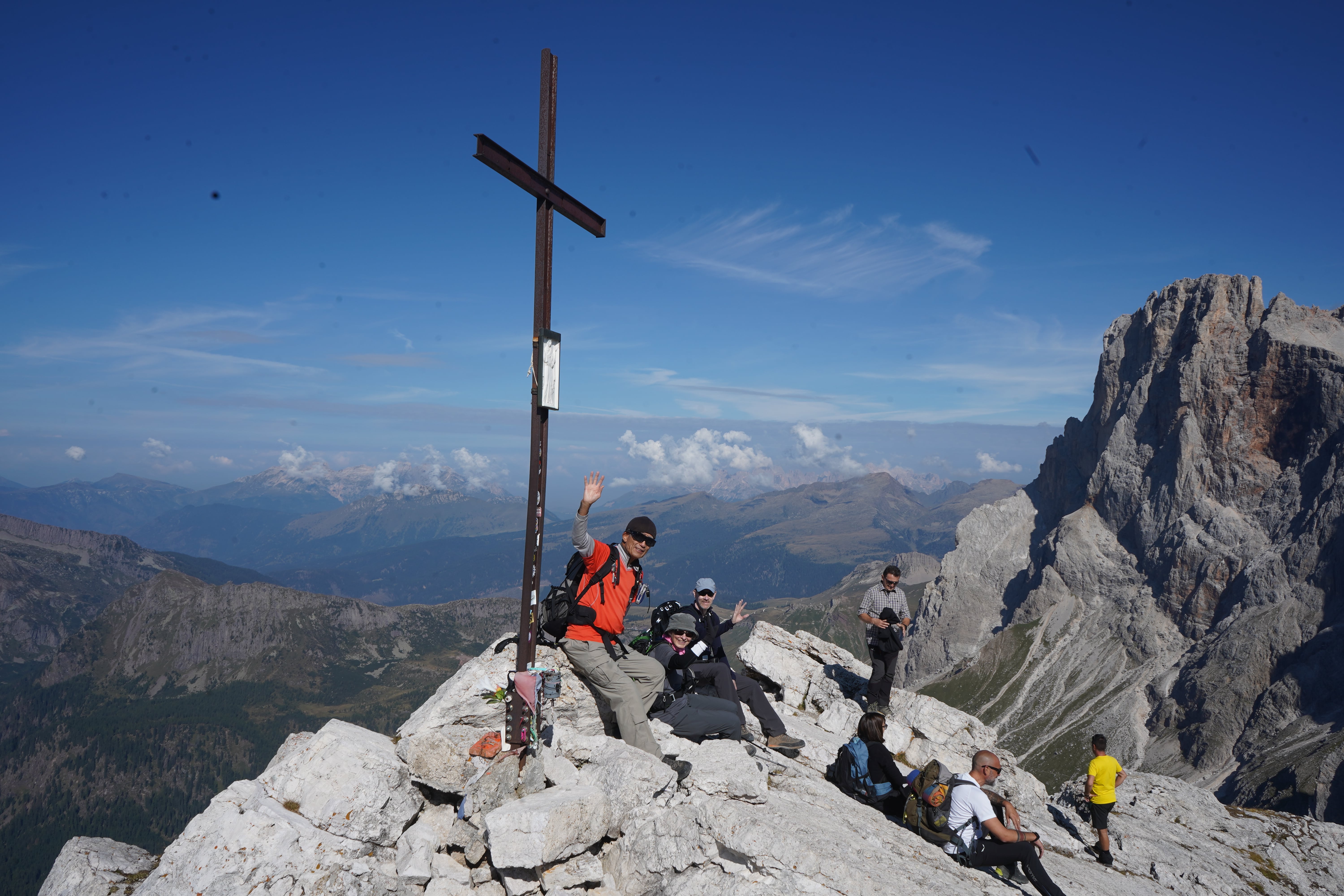
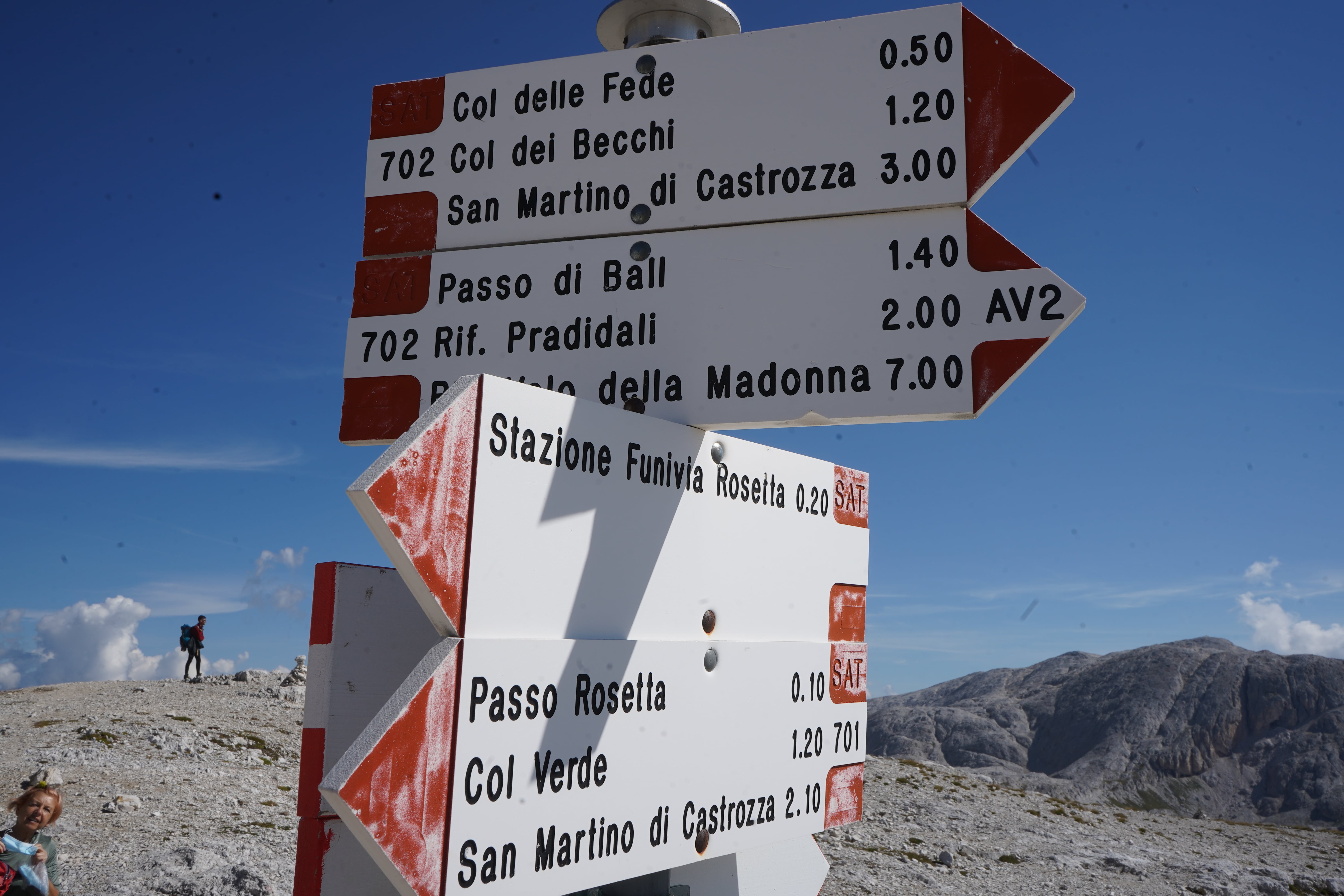
Start the morning with a delicious buffet breakfast at the hotel. Depending on your hotel location, walk or bus to the base of the Colverde funicular station. From there you ascend the footpath under the gondola until you reach the Colverde Hut and continue in the direction of Rifugio Rosetta(2358m), passing the Pale di San Martino plateau area and, shortly later, the Rosetta Hut. From the Refuge it is possible to summit the Cima Rosetta (2743m) for panoramic view of the surrounding mountains and San Martino di Castrozza.

Total distance: Approx. 6.5km/4mi,  1100 meter (3600 ft) ascent and 100 meters (330 ft) descent, 4 hrs of hiking.

+ 160m / 530ft up and down, 1km/ 0.63mi, 1 hrs round trip if you add on Cima Rosetta. 

Day 2: Rosetta Hut to Pradidali Hut via Fradusta Glacier 

After breakfast, we start our day on a rock garden trail that leads to the foot the Fradusta Glacier. We ascend on the left flank of the glacier, climbing for 1.5 hours before we reach Cima Fradusta(2939m). Not only are you rewarded with stunning views, you’re now in the very heart of the Pala Group. You will descend along the same path until the trail intersects at Passo Pradidali Basso. From there, it’s a quick descent to Rifugio Pradidali(2278m).

Total distance: Approx. 9.8km / 6mi distance, 447m / 1466ft ascent, 763m / 2500ft descent, 4.5 hrs walking time.

Day 3: Pradidali Hut to Treviso Hut

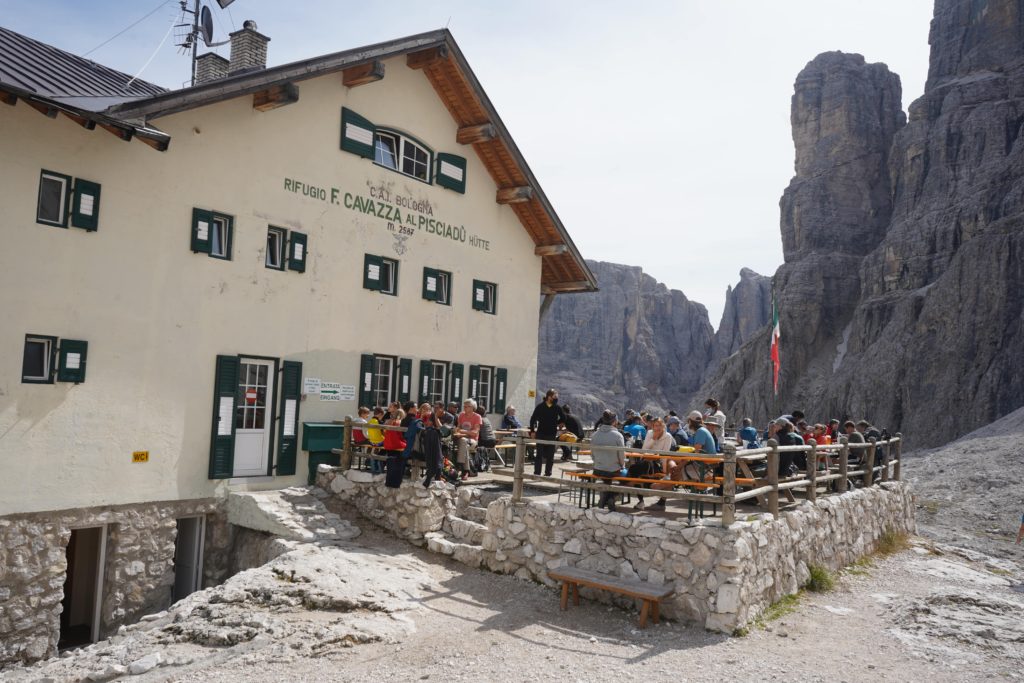
The day starts with breakfast before you are on your next adventure to the Treviso Hut(1631m). We begin by descending into the Pradidali Valley, walking a panoramic path with towering cliffs high above all the way to the beautiful Val Canali, where we can stop to appreciate the Cima Canali, the spires of Cimerlo and the imposing Sass Maor. For those that have the energy, fairytale-like Lake of Villa Welsperg is a great side trip, especially on a warm, sunny day. We continue past the ruins of Malga Pradidali and Malga Canali, both worth a stop and a great place for a rest stop. walking through a larch and spruce wood we soon reach the Treviso Hut (1631 m).

Total distance: Approx. 8.7km / 5.4mi distance, 426m / 1397ft ascent, 1071m / 3513ft descent, 5 hrs walking time.

Day 4: Treviso Hut to San Martino di Castrozza 

Enjoy a hearty breakfast before today’s final trek. Choice between 3 routes of varying difficulty:

Easy: The quickest way from Treviso Hut to San Martino di Castrozza is via descent to the Val Canali followed by taxi or bus to San Martino di CastrozzaIn total, the hike should take you 1.15 hours followed by a 30minute taxi ride.   

447 m = 1466 ft descent, 3.8 km = 2.4 mi distance, 1.15 hrs walking time. 

Mid:

Hardest: this option is the longest and should only be completed by strong groups in good weather. Your day includes a 1300m/4250ft ascent as we finish the circuit back to the Rosetta Hut. You will follow one long trail up to the wide del Coro valley, then onto Canali pass(2466m) at the eastern edge of the pass. The majority of the ascent is behind you and the path head includes gentle incline and relatively flat terrain all the way to the Rosetta Hut. From the Hut, make your way top of the Rosetta Gondola and take the 2 gondolas back down to San Martino di Castrozza for your final night of lodging.

Total distance: Approx. 10.7km / 6.6mi distance, 1295m / 4248ft ascent, 289m / 948ft descent, 7 hrs walking time.

Departure/Travel Day:

Your trip officially concludes after breakfast.

Self-Guided: Palaronda Hard Trek Itinerary


As with all of our self-guided trips, we look after the pre-trip organization, bookings, and ground transportation logistics. In addition, we will provide your group with detailed daily instructions, a recommended equipment list, GPS tracks (which can be followed on your smartphone), and PDF maps. Your group of strong and experienced hikers will follow the itinerary on your own.

Arrival/Travel Day:

Arrive in San Martino di Castrozza for lodging in your hotel. Please use this day to stock up on any lunch and snack supplies you may need for the trek.

Day 1: San Martino di Castrozza to Rosetta Hut  

Start the morning with a delicious buffet breakfast at the hotel. Depending on your hotel location, walk or bus to the base of the Colverde funicular station. From there you ascend the footpath under the gondola until you reach the Colverde Hut and continue in the direction of Rifugio Rosetta(2358m), passing the Pale di San Martino plateau area and, shortly later, the Rosetta Hut. From the Refuge it is possible to summit the Cima Rosetta (2743m) for panoramic view of the surrounding mountains and San Martino di Castrozza.

Total distance: Approx. 6.5km/4mi,  1100 meter (3600 ft) vertical ascent and 100 meters (330 ft) descent, 4 hrs of hiking.

+ 160m / 530ft up and down, 1km/ 0.63mi, 1 hrs round trip if you add on Cima Rosetta. 

Day 2: Rosetta Hut to Pradidali Hut via Fradusta Glacier 

After breakfast, we start our day on a trail that leads to the foot the Fradusta Glacier. We ascend on the left flank of the glacier, climbing for 1.5 hours before we reach Cima Fradusta(2939m). Not only are you rewarding with stunning views, you’re now in the very heart of the Pala Group. You will descend along the same path until the trail intersects at Passo Pradidali Basso. From there, it’s a quick descent to Rifugio Pradidali(2278m).

Total distance: Approx. 9.8km / 6mi distance, 447m / 1466ft vertical climb, 763m / 2500ft vertical descent, 4.5 hrs walking time.

Day 3: Pradidali Hut to Treviso Hut

The day starts with breakfast before you start on your next adventure to the Treviso Hut(1631m). We begin by descending into the Pradidali Valley, walking a panoramic path with towering cliffs high above all the way to the beautiful Val Canali, where we can stop to appreciate the Cima Canali, the spires of Cimerlo and the imposing Sass Maor. For those that have the energy, fairytale-like Lake of Villa Welsperg is a great side trip, especially on a warm, sunny day. We continue past the ruins of Malga Pradidali and Malga Canali, both worth a stop and a great place for a rest stop. walking through a larch and spruce wood we soon reach the Treviso Hut (1631 m).

Total distance: Approx. 8.7km / 5.4mi distance, 426m / 1397ft vertical climb, 1071m / 3513ft vertical descent, 5 hrs walking time.

Day 4: Treviso Hut to San Martino di Castrozza 

Enjoy a hearty breakfast because today’s final hike is the longest and includes a 1300m/4250ft ascent as we finish the circuit back to the Rosetta Hut. You will follow one long trail up to the wide del Coro valley, then onto Canali pass(2466m) at the eastern edge of the pass. The majority of the ascent is behind you and the path head includes gentle incline and relatively flat terrain all the way to the Rosetta Hut. From the Hut, make your way top of the Rosetta Gondola and take the 2 gondolas back down to San Martino di Castrozza for your final night of lodging.

Total distance: Approx. 10.7km / 6.6mi distance, 1295m / 4248ft vertical climb, 289m / 948ft vertical descent, 7 hrs walking time.

Departure/Travel Day:

Your trip officially concludes after breakfast.

Inclusions


Services included in the total price

  • Fully Customized and detailed day-to-day itinerary, designed by our director and head guide, Jorg Wilz
    (you will find directions, including hiking times/distances/elevation gain and loss, trail numbers and “Plan B options” in case of fatigue or adverse weather or extension options should you desire a longer day)
  • GPS tracks that you can upload to your smartphone or GPS, along with printable PDF maps
  • 3 -star hotel lodging in San Martino di Castrozza at the start and end of your trip with a large breakfast
  • Lodging in huts/mountain lodges in private rooms, small-shared rooms, or dorms with 3- or 4-course dinners and buffet breakfasts
  • 24-hour Hotline contacts while you are en route
  • Support with your travel logistics and all trip organization as well as sightseeing suggestions

Not included

  • Airfares
  • Dinners for the nights in hotels
  • Travel to the starting and end points
  • All transportation during the trek, including gondolas/cable cars
  • Via ferrata equipment for the Palaronda Hard Trek
  • Tourist Tax ( 2-5€ per night/person, payable in cash to the huts at check out)
  • All lunches and snacks (these can be purchased at the huts or in the Valley)
  • Drinks (beer is usually about 5€ per pint, wine 10-30€ per bottle, lunch 10€, bottled water 4€ per litre)
  • Insurance
  • Any additional costs in case of itinerary changes regardless if those changes were made due to adverse weather or mountain conditions, or due to personal or group preferences.

Add-Ons($): please ask for a quote

  • Additional hotel nights at the start and/or end of your trip
  • Topographical maps (available on request – cost of map + shipping additional $)
  • Hotel upgrades
  • Taxi transport from nearby airports

Transportation


Where to Travel

Your trip starts and ends in the beautiful mountain resort town of San Martino di Castrozza.

The San Martino Tourist Information website is a great resource for travel information for all modes of transport.


Airport Options with Driving Times to San Martino di Castrozza:

  • Bolzano Airport (BZO), Italy, Approx. 1.5–1.75 hours drive (Small regional airport with limited flight options) 
  • Treviso Airport (TSF), Italy, Approx. 1 hour 40 minutes – 1 hour 55 minutes drive (Small regional airport with limited flight options) 
  • Venice Marco Polo Airport (VCE), Italy, Approx. 2 – 2.25 hours drive (Most commonly used major international airport)
  • Verona Villafranca Airport (VRN), Italy, Approx. 2.25 – 2.75 hours drive (Small regional airport with limited flight options) 
  • Innsbruck Airport (INN), Austria, Approx. 2.5 – 2.75 hours drive (Small regional airport with limited flight options) 
  • Munich International Airport (MUC), Germany, Approx. 4.25 – 4.5 hours drive
Driving times assume normal summer conditions; rush hours, mountain traffic, weekends, or bad weather can add time, especially on the final approach into the Primiero Valley.

Public Transportation: 

If you are travelling from Innsbruck or Munich, most commonly you will be able to take a train to Trento and from there transfer to a bus for your final journey to San Martino di Castrozza.

For train schedules and booking: OEBB or Bahn.de

If you are travelling from the Italian airports, most commonly you will be able to take a train to Feltre or Trento and from there transfer to a bus for your final journey to San Martino di Castrozza.

For train schedules and booking: Trenitalia
For bus schedules: Trento Transporti 

Travels times vary widely so it is best to plan ahead.  The earlier you make your train booking, the cheaper it will be.


Direct Bus Shuttle:

Via Brusutti Bus – transfer between Venice (airport and train station) and San Martino di Castrozza Bus Station. 1 morning transfer daily in shoulder season, with an additional evening bus in peak season (July/August). Please refer to the website for schedule and booking details.


Private Shuttle:

We may be able to arrange a private shuttle from one of the airports to  San Martino di Castrozza– ask us for a quote.
For transportation from San Martino to you your next destination you can also reserve a private taxi with one of these local companies.

Self-Guided: Dolomites Palaronda Trek Custom Trip Pricing


For larger groups and families, we can offer the following discounts on our advertised prices

Self-Guided Trips:

2-4 participants: Our advertised per person price
5-6 participants: 5% discount from our advertised per person price
7+ participants: 10% discount from our advertised per person price

Customize your trip

Our Self-Guided Dolomite Treks can be customized to any duration >3 days. If you are seeking a hut trek with private room options only we’d be happy to advise you on what alternative hut treks are available.

Try a Via Ferrata

See what the buzz is all about – add on 1 or 2 days of via ferrata, under the supervision of a mountain guide. Via ferrata routes include the use of cables, ladders, rungs, and the occasional bridge to facilitate safe passage across exposed mountain faces and ridges with beautiful hiking in between. The first via ferrata routes were built and used by soldiers in World War I. Many of these routes are still in use, but development is ongoing as via ferrata climbing has become a very popular sport in itself.

Gear List


Self-Guided Dolomites Trekking – Gear List.PDF

Please download a PDF copy to use as a checklist when preparing for your trip.


Considerations

Packing for a trekking trip is a balancing act. You want your pack to be as light as possible so you can truly enjoy the trek. But you also need to have enough gear to be warm (or cool), comfortable, and well-fed and watered. When buying, renting, or borrowing gear for the trip, please keep weight, performance, and function in mind. Brixen has many outdoor stores intermingled with its lovely cafes, gelaterias, and pizza restaurants. If you need clothing, footwear, or gear for the trip, come a day early and purchase or rent what you need. If you plan to rent gear in Brixen, it is best to contact the local shops in advance to ensure they rent the gear you need and make a plan for returning the gear as your trip starts and ends in different town.

Legend:

Early and Late Season Trips: June and September-October can be considered early and late season trips – depending on residual snowpack (June) or early snow/colder temps (Sept-October)
*Optional
**Optional but recommended

Hiking Gear

  • Light trekking boot or sturdy approach shoe with a fairly stiff sole for walking over rocky terrain
  • Daypack (30-45 liters) with rain cover specific to the pack. (Larger pack if bringing via ferrata equipment)
  • Good quality, thin, well-fitting leather gloves, preferably fingerless. Bike and belay gloves work well.
  • Maps and Trip Information Letter provided by OnTop Mountaineering
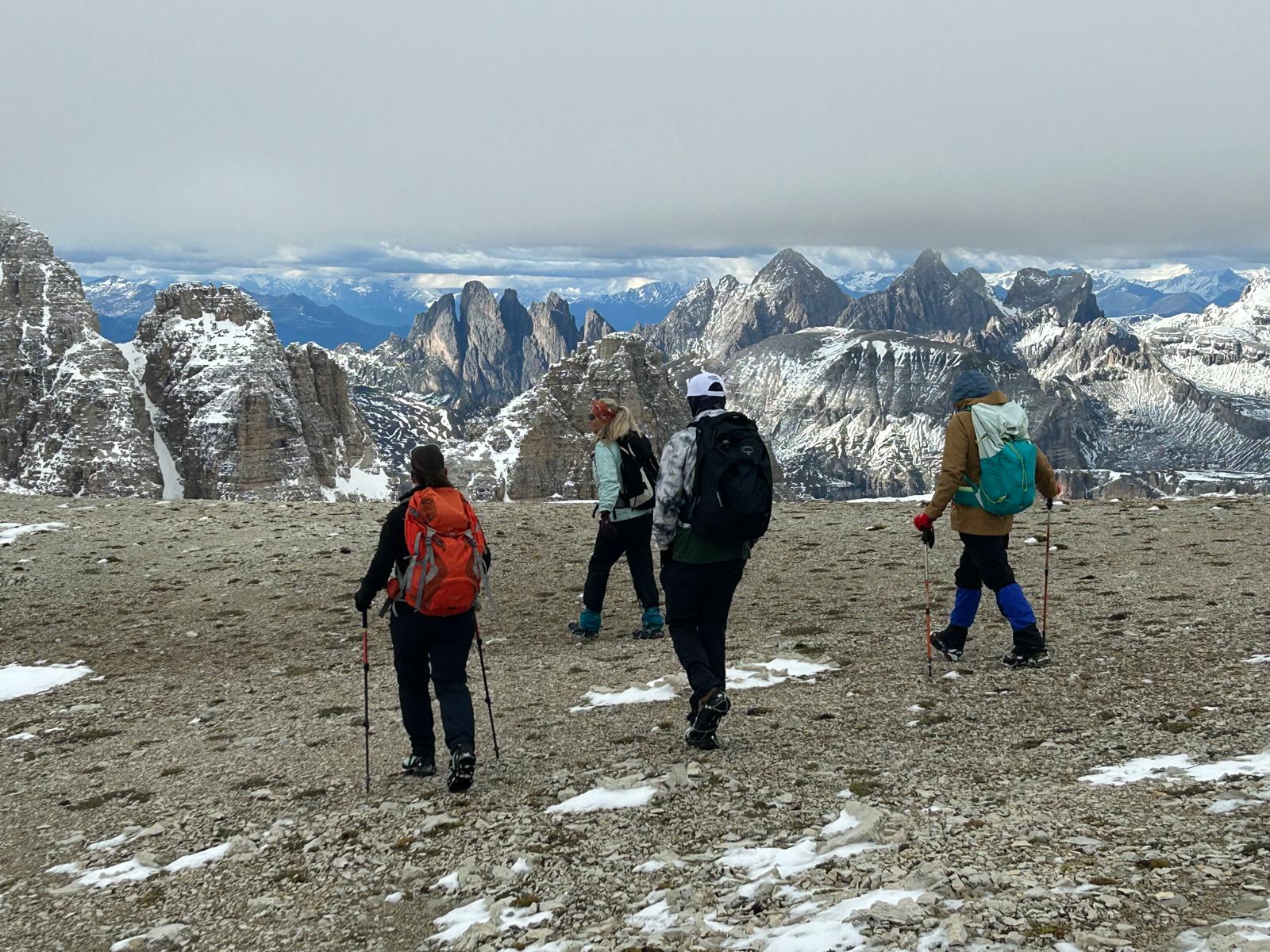
  • Yaktrax-type traction devices that fit your boots or shoes (for early + late season trips)
  • Short summer gaiters (for early and late season trips)
  • Lightweight, collapsible hiking poles **
  • Lightweight umbrella*

Via Ferrata Equipment (Optional)

Some participants may feel safer on the steep and exposed cable-assisted trails with the use of via ferrata equipment that acts as a layer of protection. These trails are not graded as technical via ferrata routes and via ferrata equipment is neither mandatory nor commonly used by most hikers on the AV2. If in doubt, please ask your trip coordinator for advice. Please note that we do not rent this equipment.

  • Via Ferrata Clip-In Set
  • Climbing harness
  • Climbing helmet
  • Two conventional locking carabiners

Clothing

We recommend the ‘layering system’: bring light, technical clothing that doesn’t consume much space in your backpack and dries quickly when sweaty or wet. Layers must be put on and taken off quickly as weather conditions change during the day. There may be days when you can wear cotton, but your main clothing choices should be synthetic or wool. Merino wool is a nice material for base layers and t-shirts because it is comfortable, warm, and it does not retain odours, even after many days of use.

  • Wind and waterproof shell jacket with hood (Gore-Tex or similar)
  • Lightweight wind and water-resistant over pants (Gore-Tex or similar)
  • Lightweight synthetic trekking pants or zip-offs
  • Medium weight Primaloft jacket with hood
  • Medium weight fleece sweater
  • Synthetic or wool base layers – top and bottom
  • Synthetic shorts and t-shirt
  • Quick-drying sports bra
  • 2-3 pairs of good quality trekking socks
  • Warm hat that covers your ears
  • Lightweight synthetic or wool gloves
  • Sun hat, preferably with a wide rim
  • Bandana or Buff*

Lodging

  • Sleeping bag liner for the huts – silk is lightest (MANDATORY for HUT LODGING)
  • Spare socks and underwear
  • Toiletries and small towel (quick-drying/ microfiber)
  • Cash – euros for lunches, drinks, snacks, showers, etc)
  • Ear plugs**
  • Light hut slippers
  • Alpine Club card*

Other items

  • Sunglasses with high UV protection
  • Sunscreen and lip protection with high SPF
  • One or two, one-liter water bottles
  • Headlamp with new battery
  • Your favourite hiking snacks – candy bars, dried fruit, nuts, etc. Lunches and snacks can be purchased at the huts or in the villages.
  • Personal first aid kit and other needs (eg. blister kit, prescription medicine, anti-inflammatory, contact lenses, prescription glasses, etc.)
  • Passport, health and travel insurance documents
  • Toilet paper – small amount for daytime emergencies
  • Light stuff sacs/ Ziploc bags to keep your daypack organized and important items dry**
  • Smartphone with charging cable**
  • Portable power bank*
  • Pocket knife*
  • Water purification tablets or small personal water filtration system*
  • Hand sanitizer or sanitary hand wipes*
  • Pocket knife*
  • Small container bug spray or cream*
  • Camera and charger*
  • Compass, maps, GPS, altimeter watch*
  • Feminine hygiene supplies*
  • Adaptor for European charging system*

FAQ


How difficult are the trails on the Palaronda Hard? Are there via ferrata sections and other exposed trails?

The Palaronda Hard travels on the Alta Via 2 and it does have sections with exposed trails where stumbling or falling off would result in serious consequence. Most of those sections have fixed cables to hand-rail, some longer sections are rated “via ferrata”. Pictures speak more than words and we would recommend checking out the many clips on the net, namely on Youtube that describe the AV2 in various weather / trail conditions. Unfortunately, rarely does one find particular days or sections labelled. Following is a sequence of clips that we found quite descriptive with our labelling and start times to watch for each section:

Alta Via 2 EP 3 Mike Windsor https://www.youtube.com/watch?v=3hQ0NCX92ZU .
Stage Mulaz Hut to Rosetta Hut (rated via ferrata) watch from min 1.12
Stage Mulaz Hut to Pradidali Hut (rated via ferrata) watch from min 6.32 to 8.36 and avoiding a cabled / exposed section on Delle Lede Pass to Treviso Hut / Canali Valley


Can technical / via ferrata sections be avoided on the Palaronda Hard?

Yes – we provide bad weather/bail out options but these are not intended to be the primary itinerary. For an itinerary without the technical / via ferrata sections we recommend the Palaronda Soft.


What are the huts like? Double rooms? Showers? Food Choices?

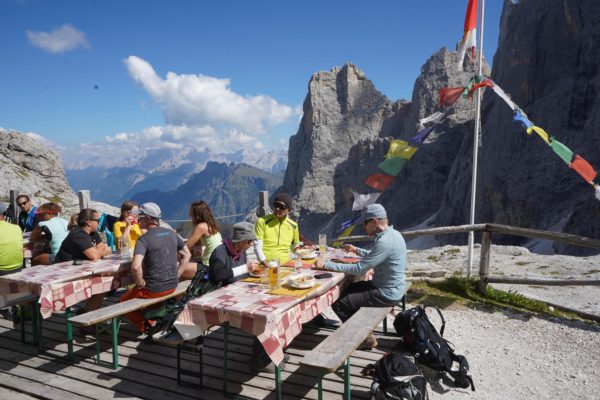
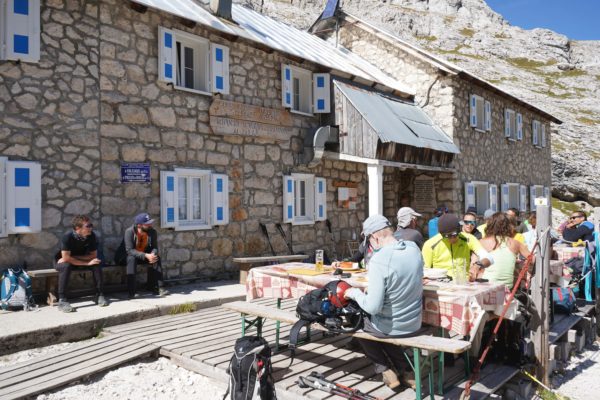
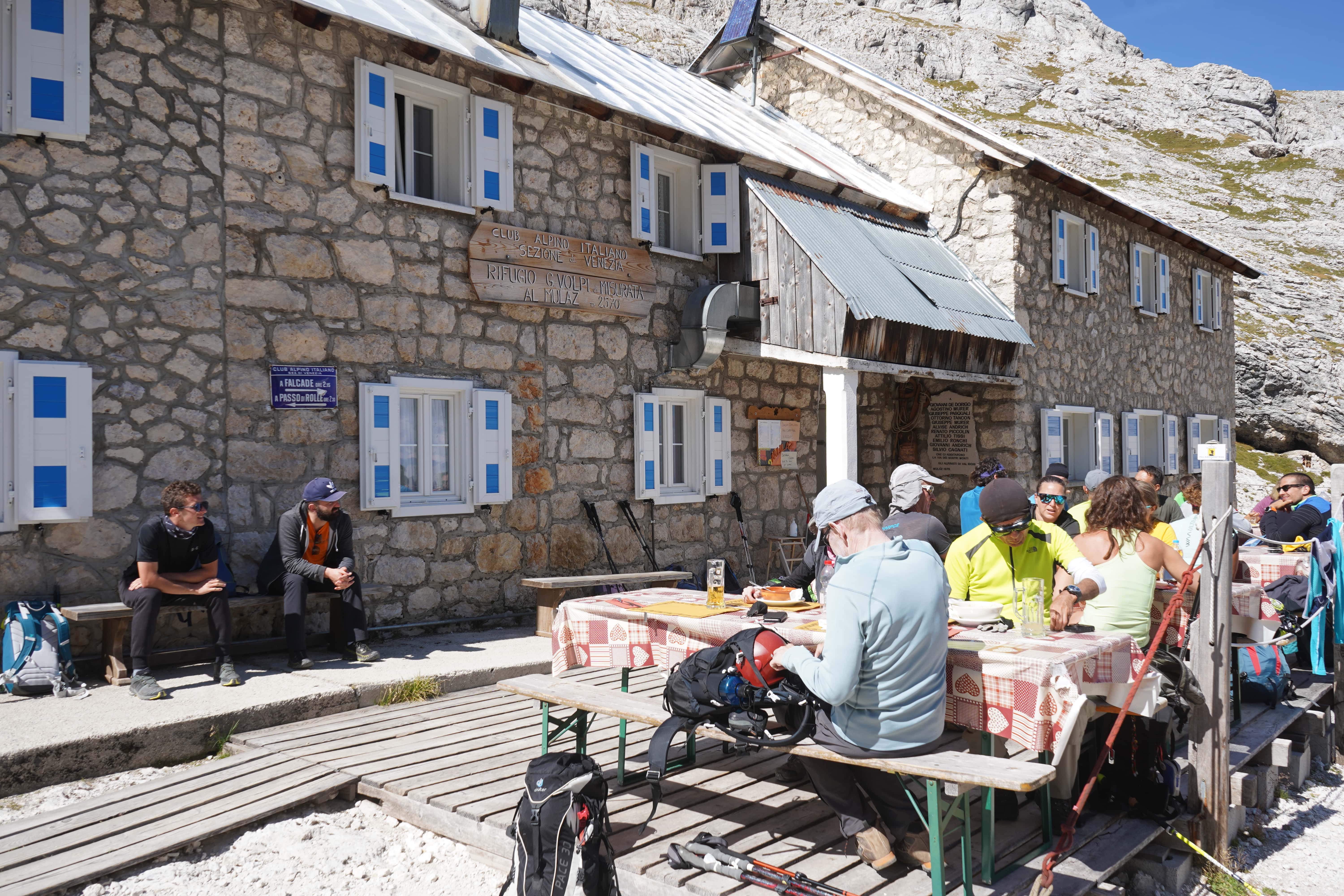
The huts in the Palaronda var.  While all of the huts offer showers, only some offer private rooms. The others offer bunkbed-style sleeping with up to 10 people per room. Upon request and with an early booking, we can organize your trek with as many private (double) room options as possible.

The food is always delicious and plentiful (as is the Italian wine). Special diets like gluten free, pescatarian, vegetarian can be accommodated. For vegan diets we recommend bringing calory supplements due to limited choices.


What is a sleeping bag liner and do i need to bring one? 
A sleeping bag liner, “sacco lenzuolo” in Italian, is a lightweight, sack-shaped layer (usually cotton, silk, or microfiber) that you sleep in inside a bed or sleeping bag. Think of it as a personal bedsheet you can carry in your pack. It adds a tiny bit of warmth, keeps things hygienic, and packs down small.
For hut treks in the Dolomites, the short answer is: yes, you need one — and in many huts, it’s mandatory, even in private rooms. Mountain huts provide blankets and pillows, but for hygiene reasons they require guests to bring their own liner. Some huts sell disposable sleeping bag liners but these are discouraged for not being environmentally friendly.

How do I get to the meeting place from the airport?

Please see the “Transport” tab for details.


Climate, weather, temperatures and the best time to visit the Dolomites

The Dolomites, being on the “sunny side” of the Alps, are usually blessed with favorable weather. However, as with anywhere in the mountains, there is always a chance to get rain or snow. This is rare in July and August but it can happen in June and September. Daytime temperatures can range from -5°C (23°F) to 25°C (77°F), but it is usually somewhere in between. Average temperatures and precipitation for each month are described on this helpful weather graph for the Dolomites, which covers the past 30 years.

The majority of the huts along the way are between 2,000 and 2,500 m (6,500-8,200 ft.) in elevation.

Most of the huts are open from mid-June to late September. The busiest times are from mid-July to the end of August, with the period around August 5 – 25 being Italy’s busy summer vacation time.


Medical/Rescue and Trip Cancellation Insurance

We strongly recommend the purchase of a travel insurance package that covers adventure travel. Common policies sold by travel agents or policies included in your credit card contract tend to exclude “mountaineering”  if you read through the fine print. We recommend an adventure travel policy on our website at http://ontopmountaineering.com/travel-insurance/  which our clients had good experiences with in the past. *NEW: we now recommend including covid-19/pandemic coverage with your insurance policy.


Why Do You Not Offer this Trip in August? 

The month of August is the Italian’s busy vacation time. Hotels across the Dolomites and other popular vacation towns accommodate for the influx of Italian tourists by imposing minimum night stay requirements of 3 – 7 days that do not align with our itineraries. 1 night stays are often possible but they come with very high premiums, sometimes 3 – 4 x what we budget. Rather than passing these premiums on to our lovely clients, we encourage bookings outside of August or on another high route.


Lodging at the Huts

  • The huts are heated and provide sheets and comforters or wool blankets – however, in some of the huts the sheets/blankets are not changed between each client stay, so it is mandatory to bring a sleeping bag liner. The lightest models available are made of silk and weigh around 100 grams (1/2 pound).
  • The Huts included along our route vary in size from very large to small and rustic depending on their location – all are built in magnificent settings. Some of the huts only offer coed, multi-bed bunk rooms for 10 to 14 trekkers (when fully occupied).
  • When lodging in dorm rooms/ non-private rooms, you will be sleeping with your fellow trekkers and most likely other trekkers as well. If you are a sensitive sleeper, we highly recommend ear plugs, an eye mask, and perhaps a sleep aid.

Breakfasts and Dinners at the Huts

  • Breakfasts typically consist of tea/coffee, bread, jams, cold cuts or ham, cheese, muesli, cereal with milk or yogurt. Smaller or more remote huts, like the Fonda Savio Hut, may have smaller breakfast offering. If you have your preferred cereal for breakfast, granola bar or power snack, you should probably bring it along from home, as it might not be available in the small food stores in Italian mountain villages or at the huts.
  • Dinners are usually between 3- 4 courses (“mezza pensione”) which consist mostly of pasta or soup, a meat entree and dessert and/or cheese.

Lunches 

Lunches are not included in our trip packages. We recommend packing a lunch for the first day of trekking. Packed lunches are available at each hut and must be ordered the night before.


Luggage Storage and Transfers

You can use the hotel luggage storage facilities at your own risk. Neither OnTop nor the hotel accepts any responsibility for loss of or damage to the luggage or the contents (including any valuables, even if we have been advised) during storage, the disposal process or any luggage transfers that may be part of your trip package. That being said, we have never had any issues with lost luggage during storage or transfer.


Medical/Rescue and Trip Cancellation Insurance

Medical evacuation insurance is mandatory for participation in all OnTop Mountaineering (OnTop ltd) Trips.

Common policies sold by travel agents or policies included in your credit card contract tend to exclude adventure travel, including trekking above 2000m, mountaineering, roped travel, ski & snowboard, ski mountaineering etc. if you read through the fine print. For adventure travel policy recommendations see our website: OnTop travel insurance recommendations. You may get the best coverage if you book travel insurance policies within 14 days of paying your trip deposit.  You may also want to consider additional insurance coverage like CFAR or trip cancellation.

We recommend pandemic coverage with your insurance policy.


Can I Do It?


Some days, you will reach your hut or lodge by early afternoon and will have the option between summiting a nearby (non-technical) summit or relaxing with a good book and an Italian coffee.

Your backpack will be relatively light (5 – 8 kg = 11 – 18 lbs) as you will only carry snacks/lunch for the day, water, and extra clothing. A bit heavier if you are bringing via ferrata equipment.


Palaronda Soft

The Palaronda Soft involves strenuous hiking on everything from good, dry trails to rocky terrain to snow-covered passes (depending on the time of year). The trails are well marked and maintained, but even so, there are stretches with rough, steep, and exposed sections. Although non-technical, each day requires 5-8 hours (maximum of 12 km / 7.5 miles, 1000 m / 3,280 ft vertical) of hiking with steady elevation gains and losses. Yaktrax-type traction cleats may be required in certain places, especially early and late in the season.

Your group should be physically fit, experienced at mountain hiking, and able to deal with adverse weather conditions. You should be able to navigate in fog and bad visibility with a map and a compass (or GPS). Rain, snow, or icing can make the trails treacherous or cover up trail markers, which can turn your hike into a challenging mountaineering adventure any day. If in doubt whether your group has the skills and experience required, please discuss it with us – or you may want to consider joining one of our guided hut-to-hut treks, such as the Cortina Dolomites Hut-to-Hut Trek or the Cortina Dolomites Hut-to-Hut Via Ferrata Trek.


Palaronda Hard

The Dolomites High Route #2  involves strenuous hiking on everything from good, dry trails to rocky terrain to snow-covered passes (depending on the time of year). The trails are well marked and maintained, but even so, there are stretches with rough, steep, and exposed sections that require the use of cables to negotiate. Each day involves 5-8 hours (maximum of 20 km / 13 miles, 1,300 m / 4,600 ft vertical) of hiking with steady elevation gains and losses. Yaktrax-type traction cleats may be required in certain places, especially early and late in the season.

Your group should be physically fit, experienced at mountain hiking, comfortable with exposed hiking on narrow and steep trails, and able to deal with adverse weather conditions. You should be able to navigate in fog and bad visibility with a map and a compass (or GPS). Rain, snow, or icing can make the trails treacherous or cover up trail markers, which can turn your hike into a challenging mountaineering adventure any day.

If in doubt whether your group has the skills and experience required, please discuss it with us. If this trip sounds like it might be a little too far out of your comfort zone, you might want to try the slightly easier (and thus more popular) Dolomites High Route #1 (Alta Via Uno), or you may want to consider joining one of our guided hut-to-hut treks, such as the Cortina Dolomites Hut-to-Hut Trek or the Cortina Dolomites Hut-to-Hut Via Ferrata Trek.


Feedback


We will gladly put potential clients in touch with previous participants of each trip in order for interested guests to get more personalized references and their questions answered from a more objective point of view than what our office could provide.


References of prior guests


“We had a great time on our hike. Thank you. The weather was fantastic (aside for a little rain on day 3). Thank you for all the arrangements. It made our trip hasslefree, which is what we were looking for. We are happy to leave a positive review somewhere if that would be helpful. ” Jonas H., Atlanta, USA


“- Itinerary was great, amazing scenery and generally well balanced. The first day was a little short for our liking.
– Maps were clear and easy to follow, however written instructions were less clear but with a map alongside them they made sense.
– 9/10.
– We’d definitely be interested in booking another trip next year. ” Jack G., UK


“Our Dolomites adventure was fantastic! Everything worked out perfectly (including, luckily, the tight flight and bus transfers to Cortina). Organization and logistics were accurate and detailed. We felt very informed about the itinerary, lodging and food were great, and we have already recommended OnTop to a friend. Thanks for everything!” Joshua K., MA, USA


“We just want to send a quick update on our trip. We had a wonderful time trekking in the mountains. The huts and ruins were big highlights! And the weather was even perfect….it rained only once we were checked into our huts and cleared by morning to give us postcard views. Thank you for all the details and descriptions of the route(s)…they were right-on. If you want me to write a review for your use I’ll be happy to do that once we are back home next month.” Susan S., CO, USA


“We did have a great Europe trip! Our favorite part, for both of us, was the OnTop self-guided hikes in the Dolomites. It was absolutely spectacular! It was laid out in just the right sequence, starting off fairly easily, and then getting a bit more challenging as we went along…
then providing a little respite in Cortina before doing another amazing circuit of the Tre Cime de Lavarado. Jorg’s directions were very good providing bailout options for really bad weather or fatigue etc… and extra side trips for a bit of extra adventure if that suited our fancy. We did most of the recommended route, but passed on a couple of side trips, and took the short route on the last day. I will provide much more detail in a revised version of Jorg’s hiking instructions, with photos, and map snippets, and some info regarding our impressions of the various trails.” Steve Ford, WA, USA
2026 PRICES

4 days / 5 nights: US $1385

For longer trips please inquire for custom pricing. 
*Trips during the month of August are subject to a high-season surcharge. Please inquire for rate.

  • # of days reflects self-guided hiking days – does not include travel days
  • Price is per person, based on a group size of 2-4
  • Discounts for larger groups and families

GROUP TRIP SIZE

2 – 16 Participants


TRIP INCLUSIONS

Services included in the total price

  • Fully Customized and detailed day-to-day itinerary, designed by our director and head guide, Jorg Wilz
    (you will find directions, including hiking times/distances/elevation gain and loss, trail numbers and “Plan B options” in case of fatigue or adverse weather or extension options should you desire a longer day)
  • GPS tracks that you can upload to your smartphone or GPS, along with printable PDF maps
  • 3 -star hotel lodging in San Martino di Castrozza at the start and end of your trip with a large breakfast
  • Lodging in huts/mountain lodges in private rooms, small-shared rooms, or dorms with 3- or 4-course dinners and buffet breakfasts
  • 24-hour Hotline contacts while you are en route
  • Support with your travel logistics and all trip organization as well as sightseeing suggestions

For a full list of services included, not included, and add-ons, please select our “Trip Inclusions” Tab.