
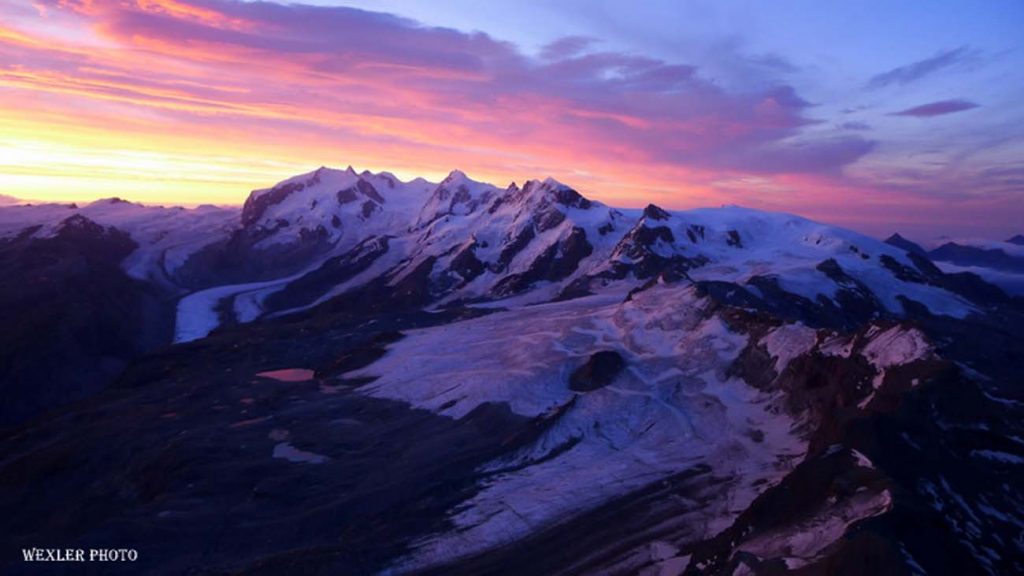
Monte Rosa Peaks Traverse
Alps / Italy & Switzerland
Hut-to-hut traverse above Zermatt and next to the Matterhorn
Ten classic, glaciated summits over 4,000 m / 13,120 ft in five days
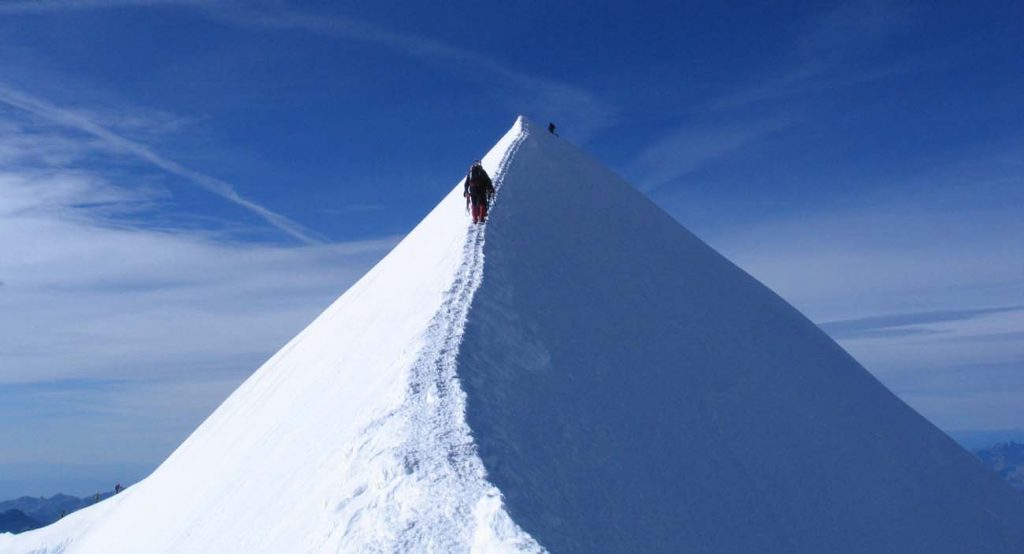
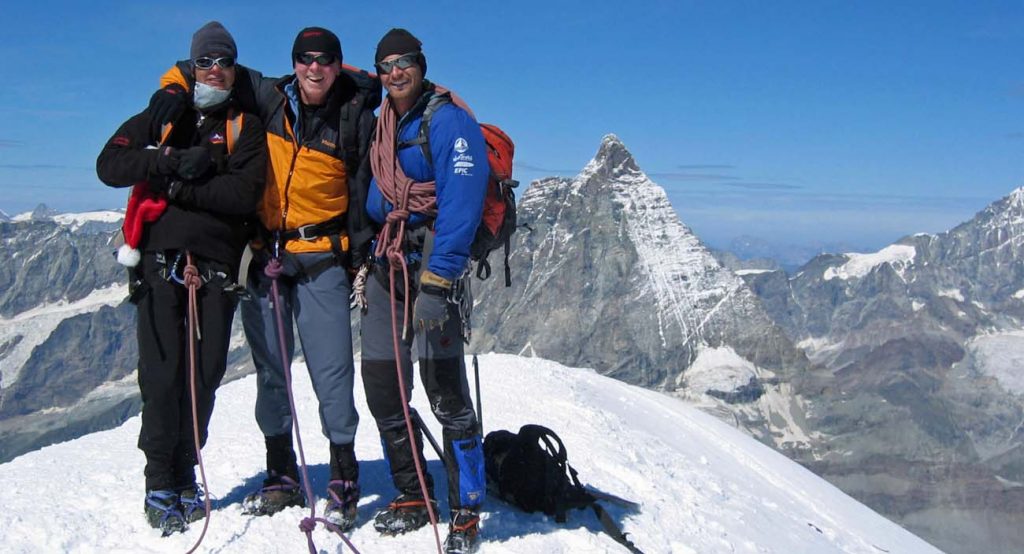
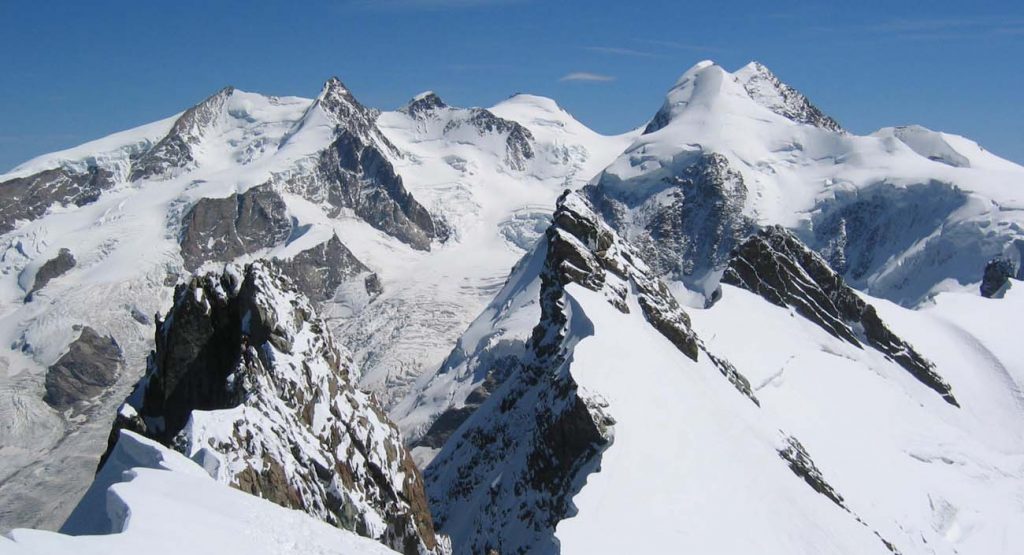
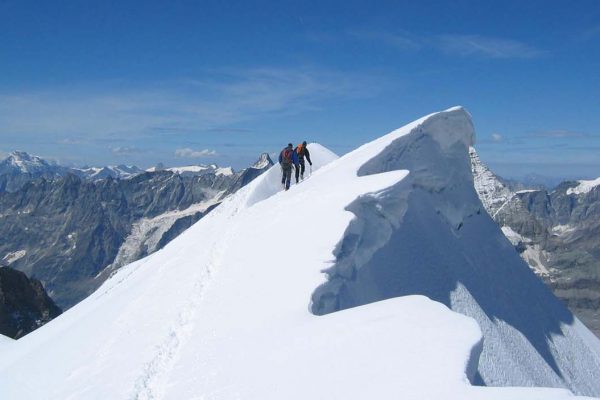
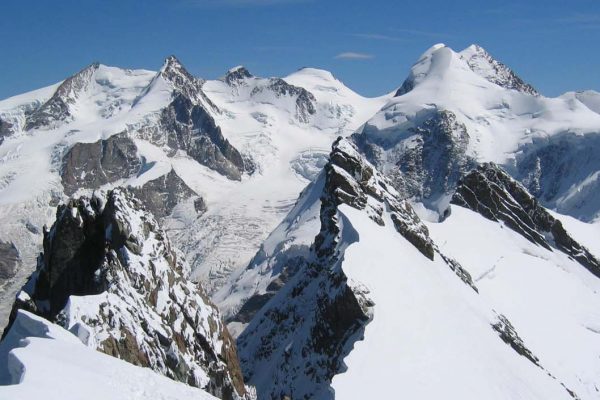
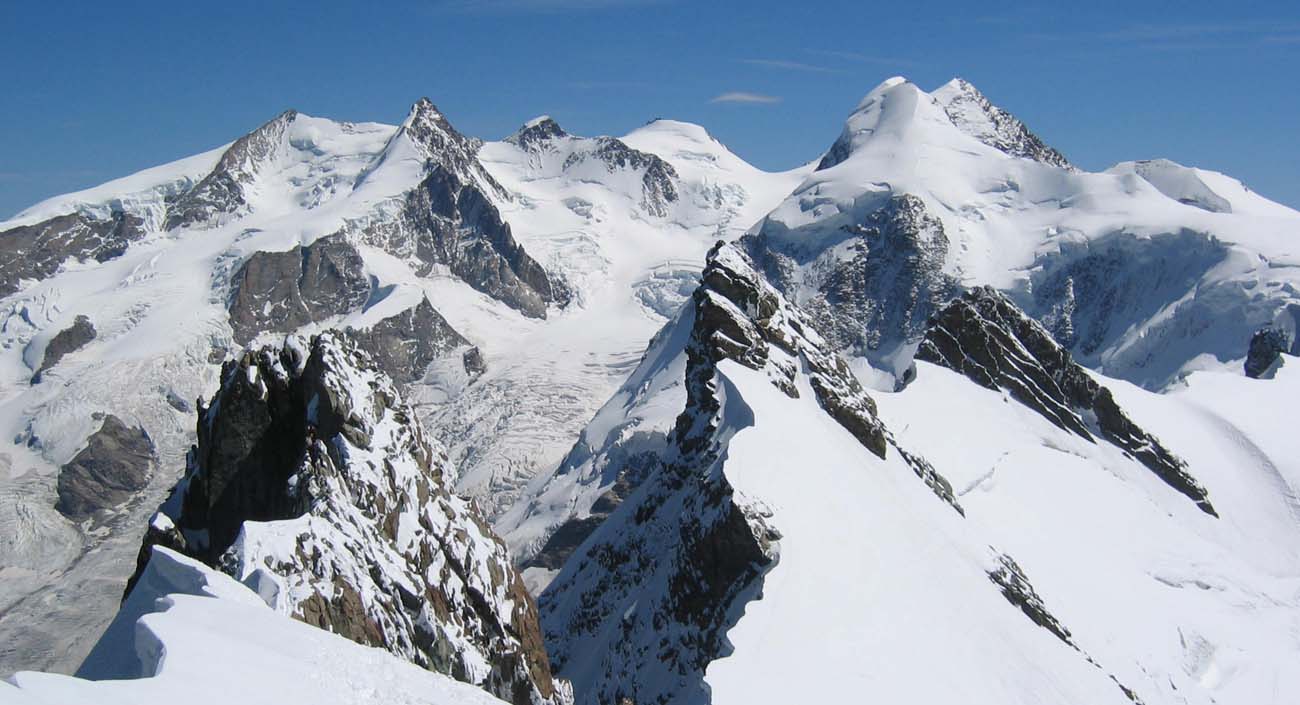
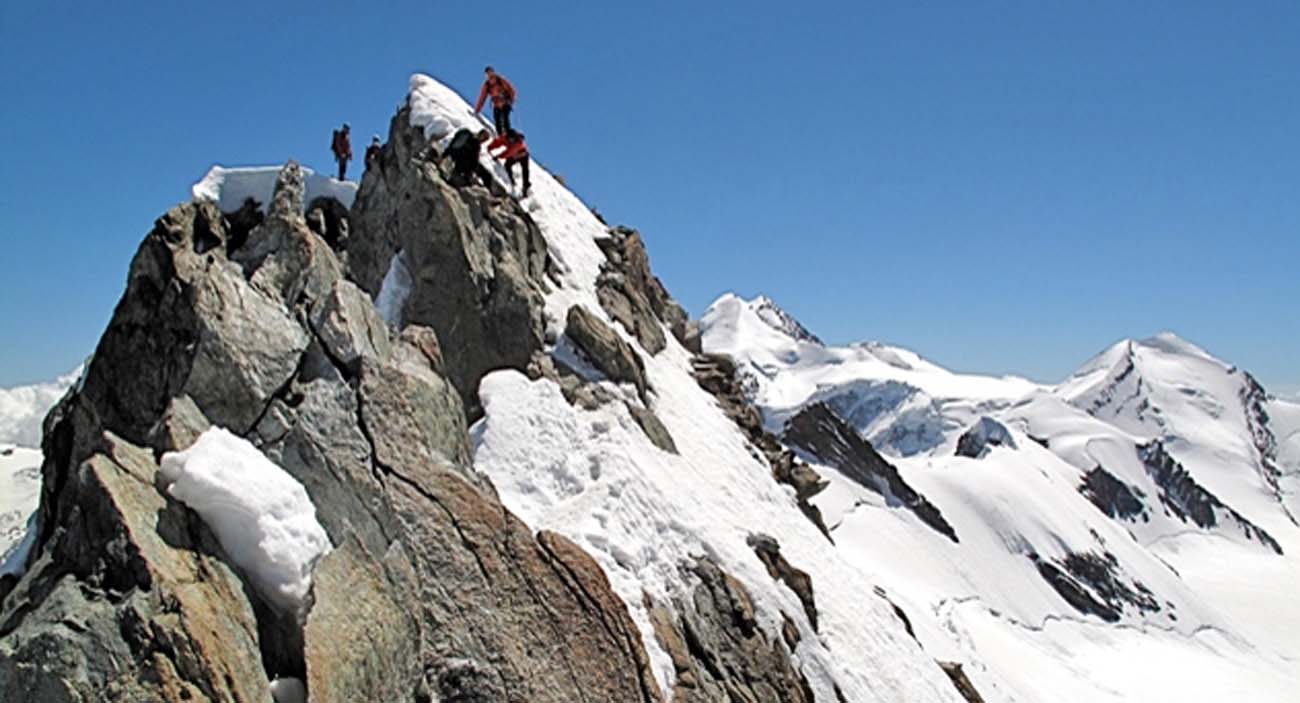
Of the 50 highest peaks in the Alps over 4,000 metres / 13,120 ft, 12 are located in the heavily glaciated Monte Rosa Massif on the border between Switzerland and Italy. Although our start and end points are in the famous Swiss mountain village of Zermatt, most of our time will be spent on the sunny Italian side of the range, which is why the traverse is also commonly referred to as the “Spaghetti Tour”. It is an engaging traverse with many high points that will keep you in glaciated terrain for the entire week!
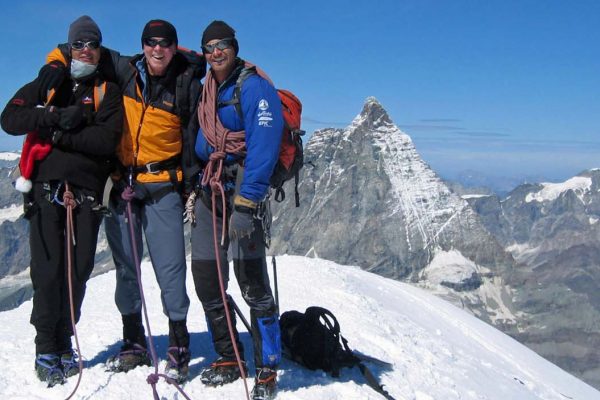
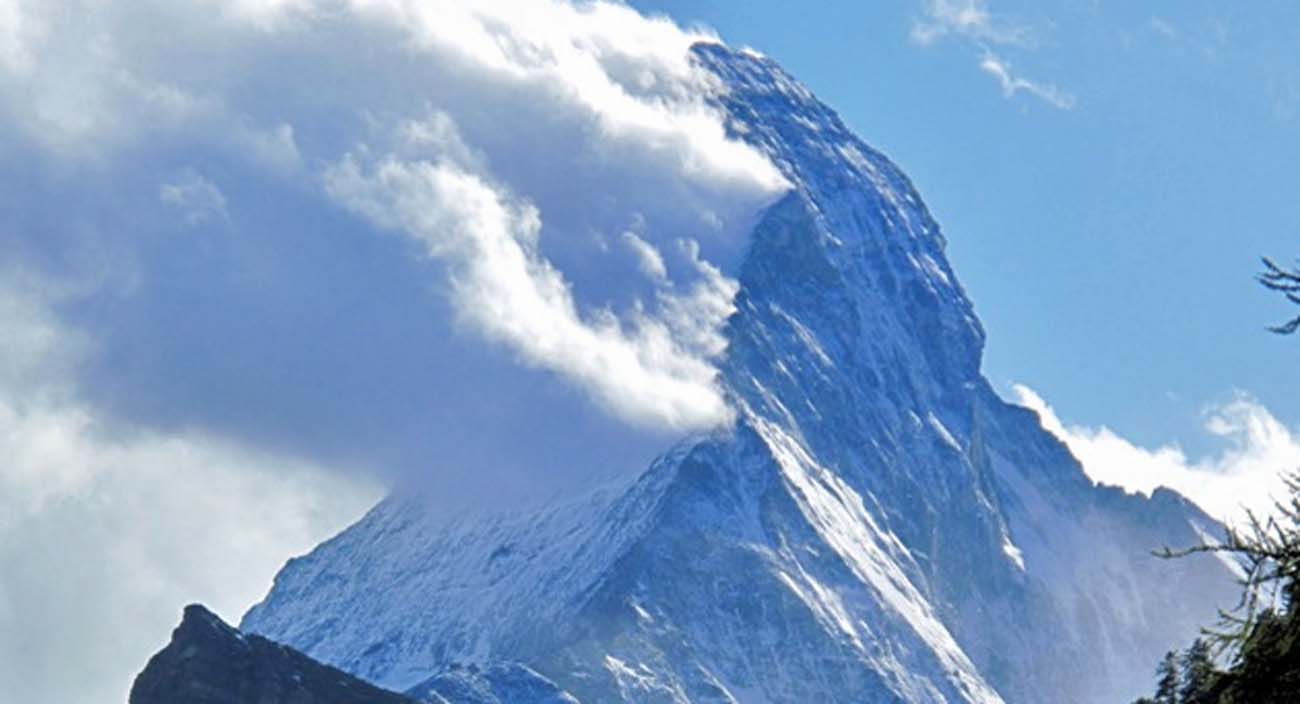
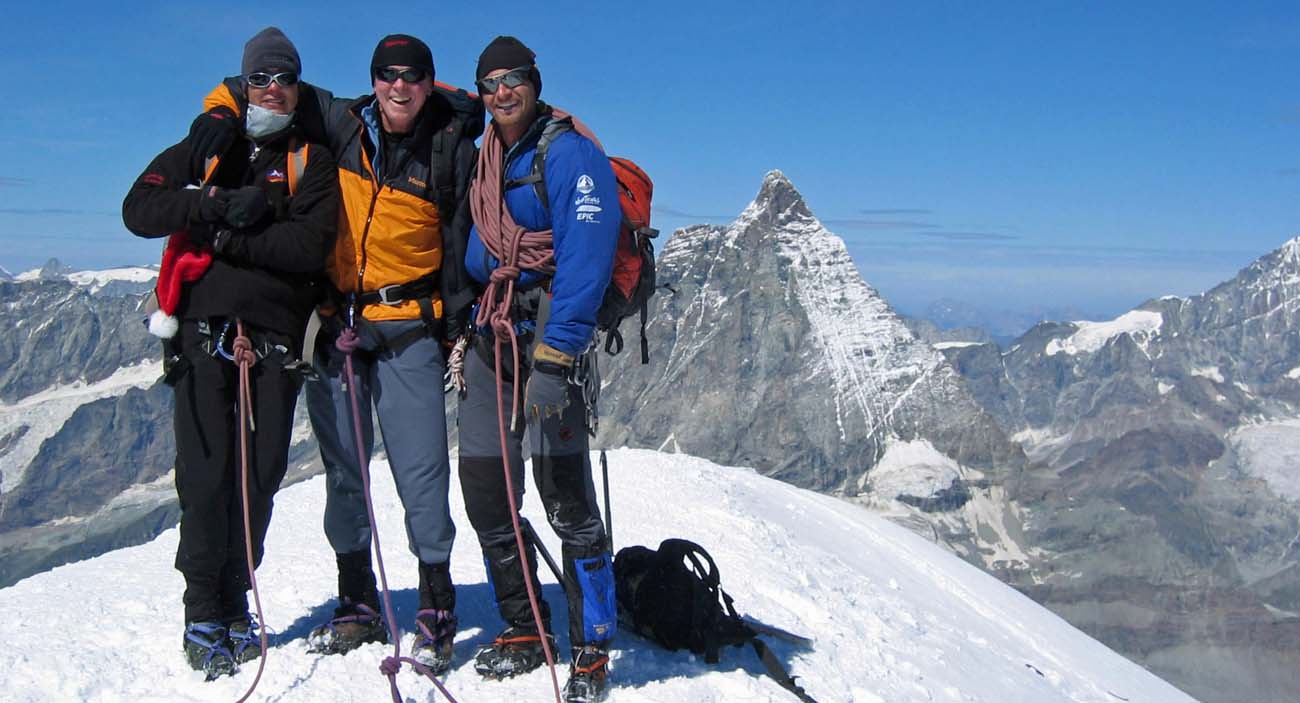
Thanks to a network of full-service high alpine huts and the moderately technical character of the summits, this traverse provides an opportunity to tackle up to ten 4,000 m peaks in only five days – assuming a good level of fitness, previous experience with crampons & ice axe, good acclimatization, and good weather and conditions. Your rewards will be incredible views of the Western Alps, including the nearby Matterhorn, and great Italian food, wine, and coffee in the huts.
For the Monte Rosa Traverse, we offer a less technical “regular” as well as the more difficult “extreme” itinerary which also includes a traverse of the more technically demanding Dufourspitze (4,634 m 15,203 ft), the second highest summit in the Alps.
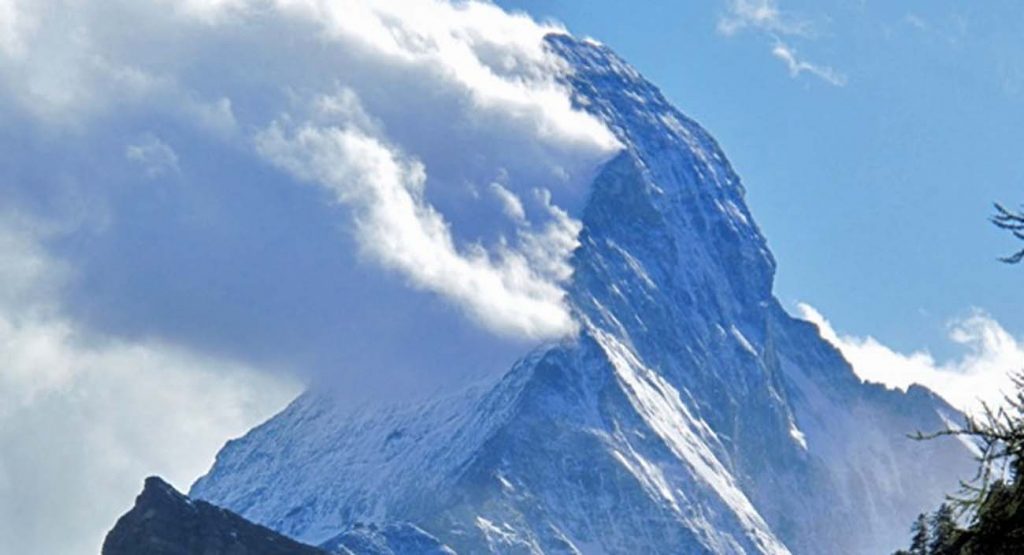
Recommended: With the Monte Rosa Traverse under your belt and a good acclimatization effect to your advantage, why not add an additional two or three days to your trip to climb the Matterhorn (4,477 m / 14,685 ft) or Mont Blanc (4,810 m / 15,777 ft)?
2026 Pricing
from€ 2890EUR / person
HIGHLIGHTS
- Awesome views of Mont Blanc & Matterhorn
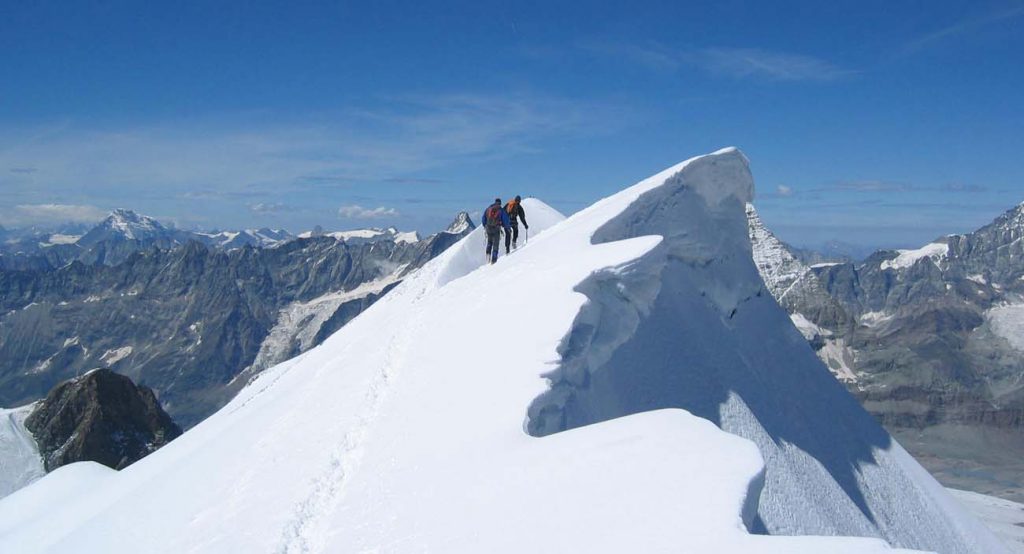
- Exposed ridges, huge glaciers
- Full-service huts above 3,000 m / 10,000 ft
- Lodging at the Margherita Hut, Europe’s highest at 4,550 m / 14,925 ft
- Moderate or difficult itinerary options
DIFFICULTY
- Up to 10 hrs/day
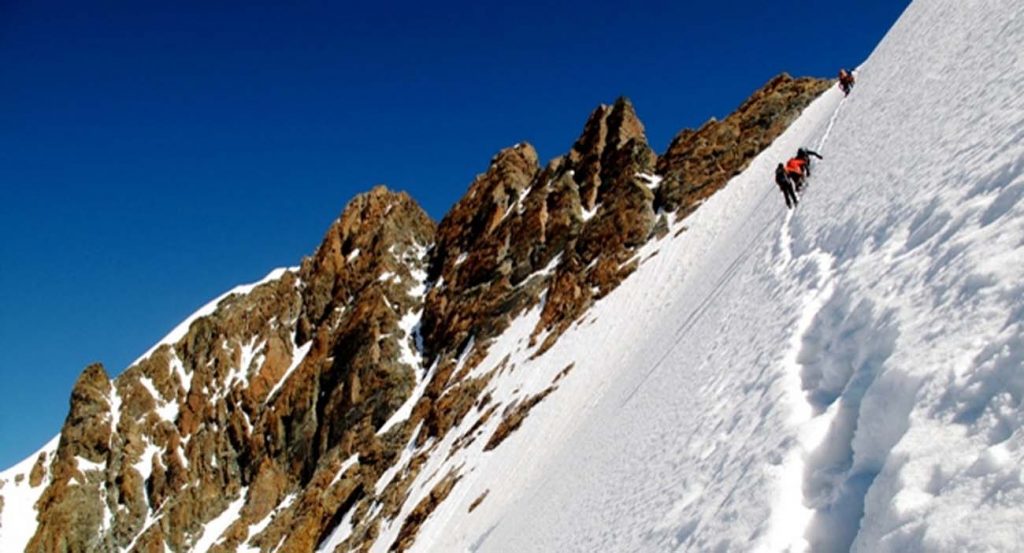
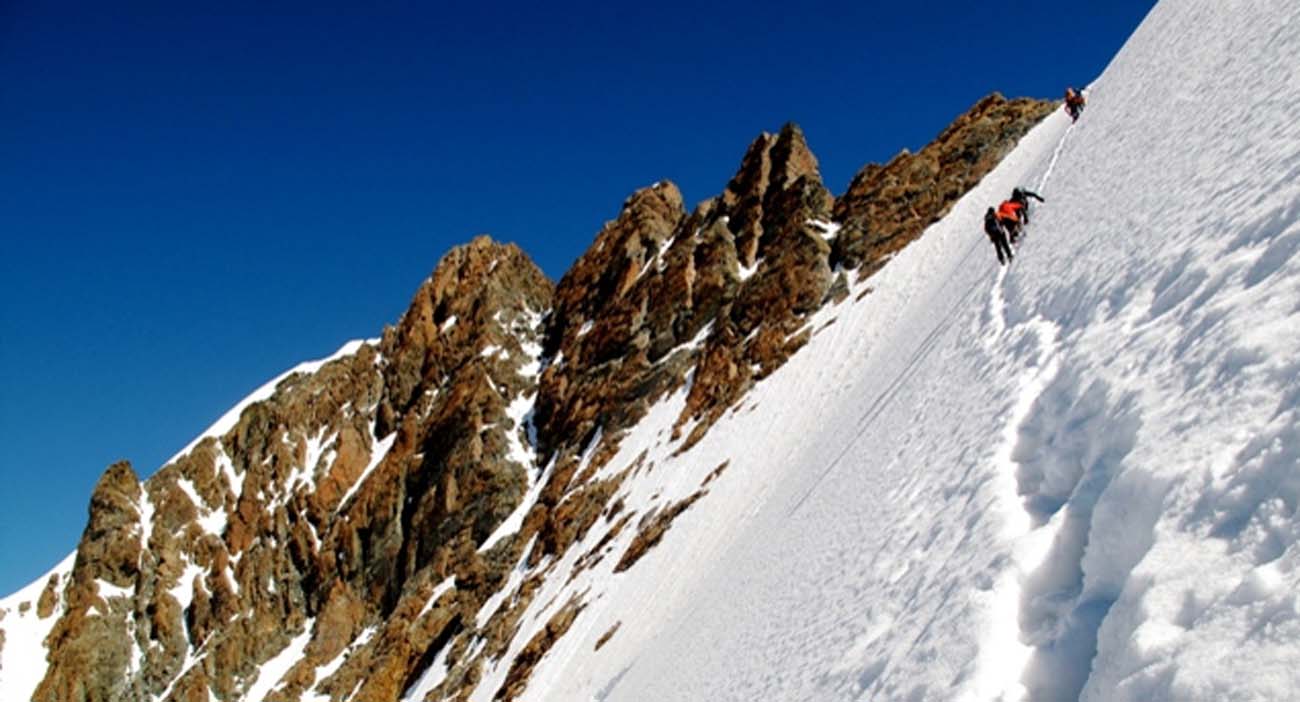
- Exposed Ridges
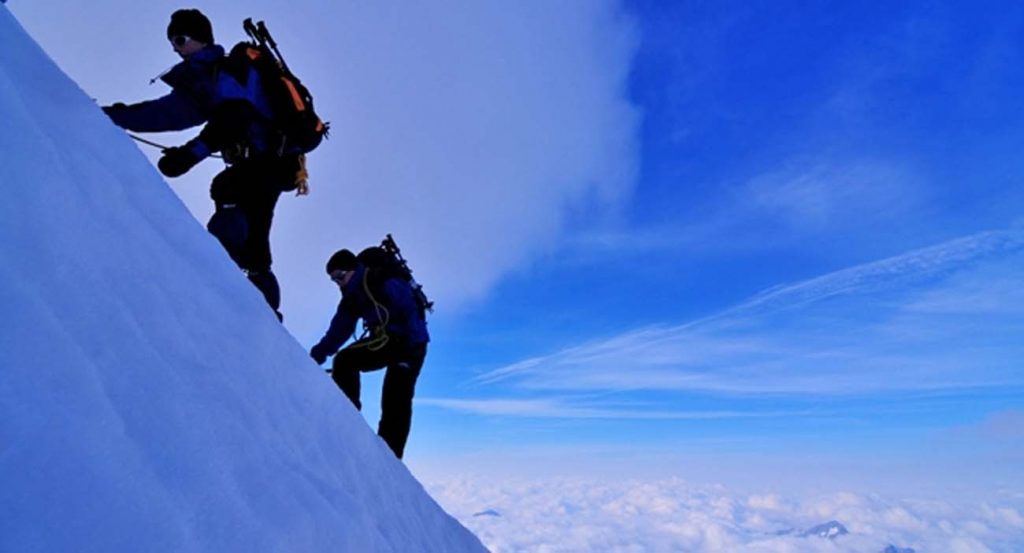
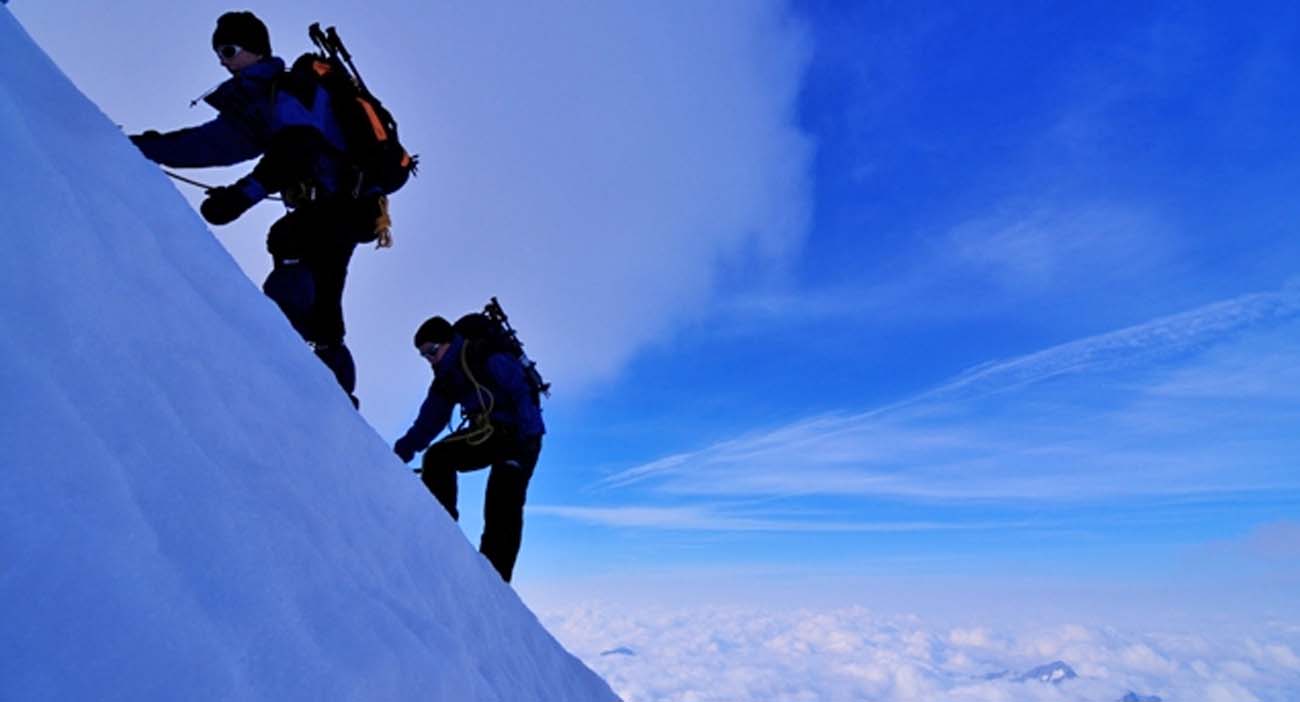
- 45 deg. Ice/Snow
- Front-pointing
- Crevassed Glacier
5 Day Regular Itinerary
Monte Rosa Classic Traverse for Peak Collectors
The following itinerary is for our Regular Monte Rosa Peaks Traverse program (5 Days, max. 3 clients : guide).
Strong groups may also consider our Extreme Monte Rosa Peaks Traverse (4 Days, max. 2 clients : guide). The itinerary can be found on our “4-Day Extreme Itinerary” tab.
Day prior to Monte Rosa Traverse
You can either meet your guide in the evening prior to your trip, or in the morning of Day 1. We recommend meeting in the evening for trip briefing and equipment check to allow for more time to adjust / rent equipment if needed.
Day 1
Trip briefing in the morning, in case the evening before did not work logistically. Gondola ride to the Klein Matterhorn early in the morning. Ascent of the Breithorn (4164 meters=13660ft) and descent to the Guide d’ Ayas Hut on (3420 meters=11220 ft) on the Italian side of the range. This day is largely meant to help you acclimatize and leave time to review technical skills.
Day 2
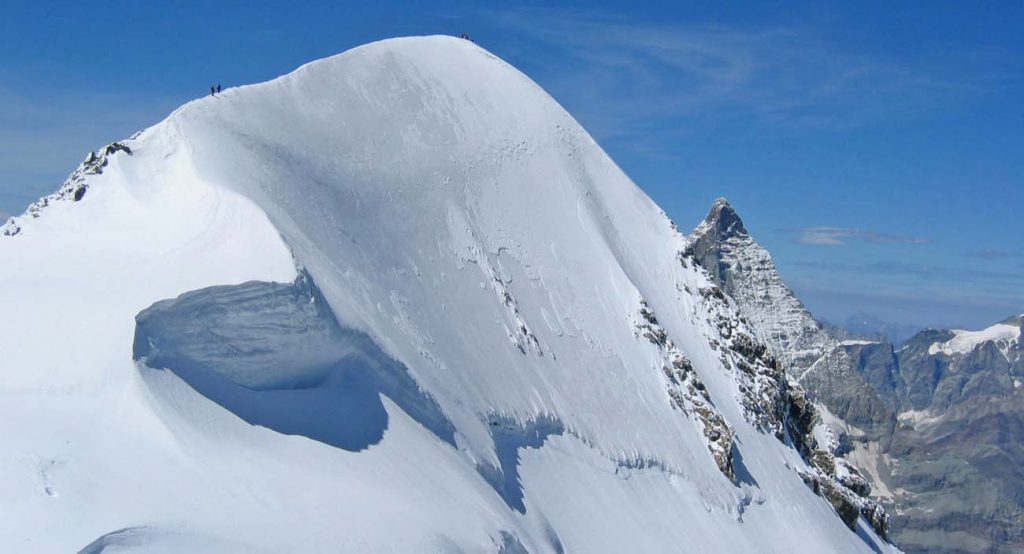
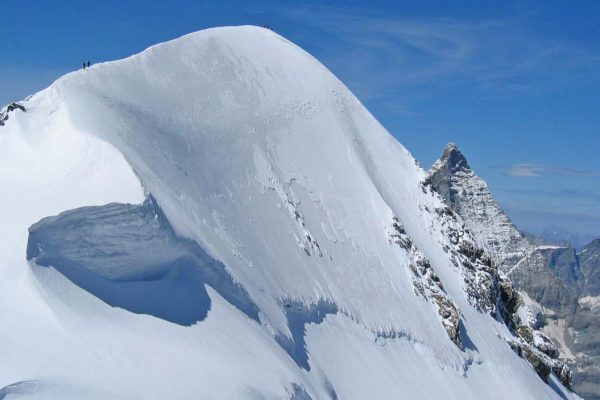
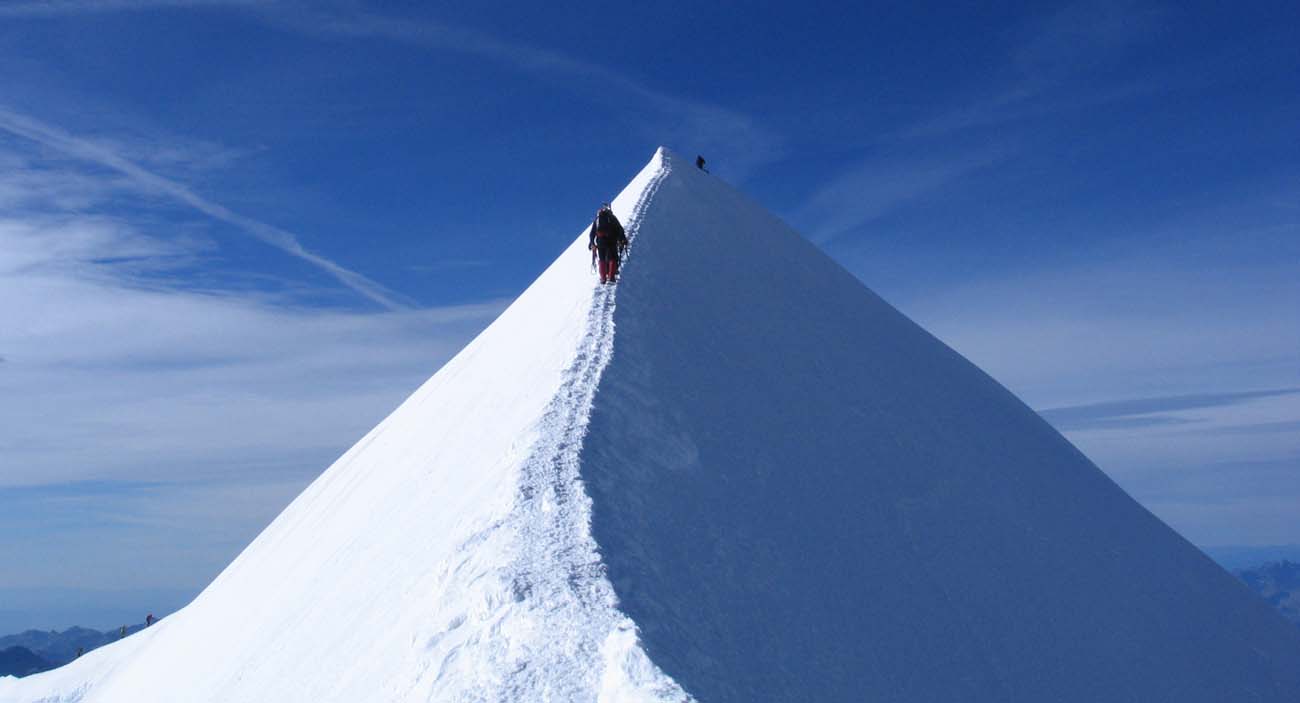
We reascend yesterday’s track and traverse the Castor (4228 meters=13870 ft), first by climbing the steep west face, then along a narrow snow ridge to the summit. Easy descent to the Quintino Sella Hut 3860m (12,660 ft).
Day 3
First of two feast days for 4000-meter summit collectors: After traversing across the Passo del Naso (steep ice, front pointing on your crampons required for several pitches), we’ll have the option to climb the Balmenhorn, Corno Nero and Vincent Pyramid – all relatively easy summits around 4250 meters (=14000 ft). Descent to the Mantova Hut.
Day 4
We reascend yesterday’s track to back to the glaciated Monte Rosa Plateau and tackle the higher elevation peaks we didn’t get to the previous day: Ludwigshoehe, Parrotspitze, Zumsteinspitze 4565 m (14975 ft) and finally the Signalkuppe (a.k.a. Punta Margherita) 4555 m (14940 ft) where the Margherita Hut will welcome us right on the summit, which makes it the highest, fully catered hut of the Alps.
Day 5
Regular: Almost all downhill today back into Switzerland. We descend the rugged Grenz (=border) Glacier, bypass the futuristic looking Monte Rosa Hut until we reach the vast Gorner Glacier. Once off the glacier we gain a comfortable trail leading to the Rotenboden Station of the Gornergrat Railway, which will take us back to Zermatt – the easy way for your knees!
4 Day Extreme Itinerary
Extreme Monte Rosa Peaks Traverse (4 Days, guide: clients ratio 1:1)
Day prior to Monte Rosa Traverse
You can either meet your guide in the evening prior to your trip, or in the morning of Day 1. We recommend meeting in the evening for trip briefing and equipment check to allow for more time to adjust / rent equipment if needed.
Day 1
Trip briefing in the morning, in case the evening before did not work logistically.
Gondola ride to the Klein Matterhorn early in the morning. Ascent of the Breithorn (4164 meters=13660ft) and descent to the Guide d’ Ayas Hut on (3420 meters=11220 ft) on the Italian side of the range. The Breithorn Half-Traverse continues to climb the spectacular ridge line from the Breithorn Summit to the east and requires exposed scrambling across rocky and snow parts – a good introduction to what’s to come for the next 3 days. Another alternative is an ascent of the Pollux 4090m (13,420 ft), which offers some easier rock climbing followed by a beautiful summit ridge. This day is largely meant to help you acclimatize and leave time to review technical skills. Lodging at the Guide D’ Ayas Hut.
Day 2
We reascend yesterday’s track and traverse the Castor (4228 meters=13870 ft), first by climbing the steep west face, then along a narrow snow ridge to the summit. Easy descent to the Quintino Sella Hut 3860m (12,660 ft). Strong parties can consider adding the Pollux 4090 m to today’s program if they didn’t already hit it on the previous day. Another option is to add an ascent of the Lyskamm West Summit 4530 m (14,860 ft). Lodging at the Quintino Sella Hut
Please Note: Strong parties can combine the first 2 days of the trip by skipping the Guide D’Ayas Hut and traversing the Castor directly from the Klein Matterhorn Gondola.
Day 3
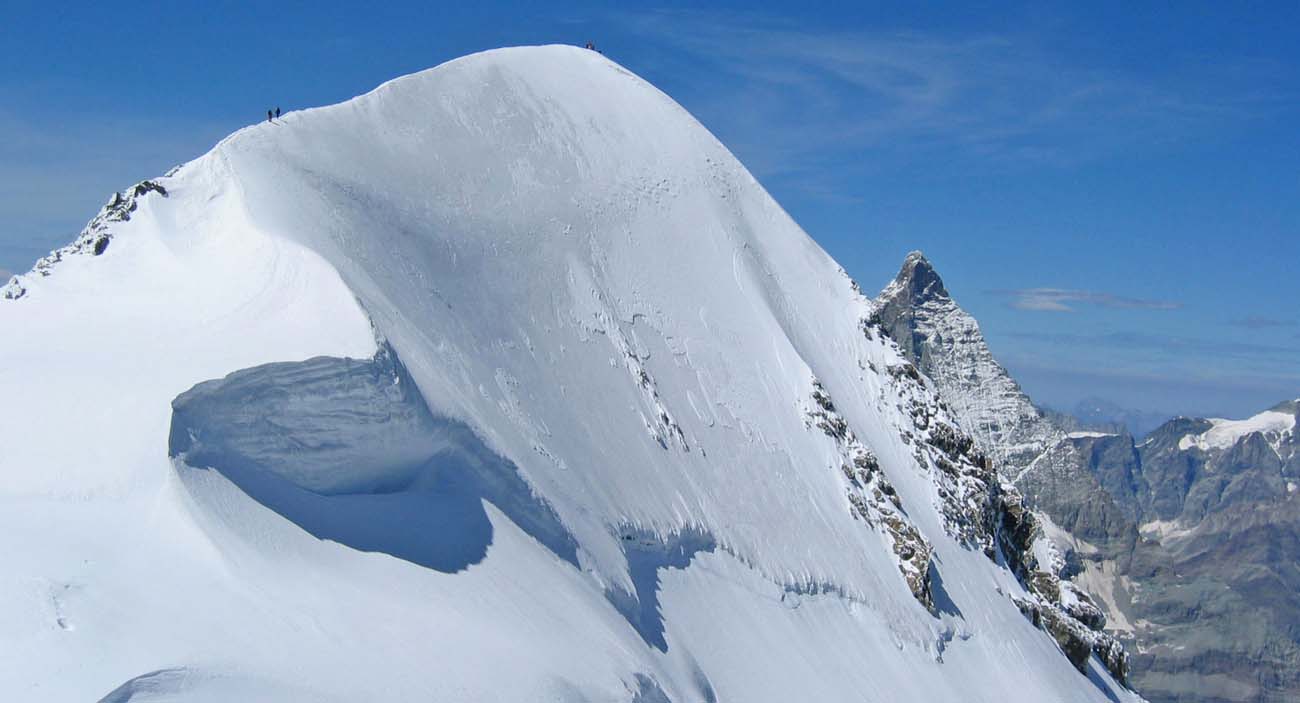
Today we tackle the Liskamm – one of the most challenging ridge traverses in the Alps when climbing the entire 5 km from the West to the East summit 4530 m (14850 ft). Solid cramponing skills, a head for heights, good snow conditions and calm weather are required. The climbing involves extremely exposed, often knife-edged snow, some easier rock, and short steep traverses below the crest. Lodging at the Margherita Hut.
Day 4
After a sunrise start we traverse the nearby Zumsteinspitze en route to Monte Rosa’s highest peak, the Dufourspitze (4618m or 15150 feet). The ridge is exposed and the main difficulties are in the rock scrambling sections (while usually wearing crampons) across gendarmes (rock towers) until we reach the tiny summit (about 4 – 5 hrs). The descent follows the West Ridge along the normal route, where more difficult rocky sections are equipped with fixed ropes. After about 1.5 hrs we reach the Silbersattel (Silver Saddle) where the technical difficulties are finished. First on snow and glacier, then on rocky, morainal trails to the futuristic-looking Monte Rosa Hut for a break (2 hrs). A further 2.5 hours or so of flat dry glacier and an uphill trail at the end, lead us to the Gornergrat railway station at Rotenboden, and we descend back to Zermatt by train.
Inclusions
Included:
- 4 or 5 days guiding by an internationally (UIAGM) certified, multilingual, mountain guide, all guide expenses
- 3 or 4 nights lodging in dormitories or rooms with bunk beds in the huts
- 3 or 4 x dinners and breakfasts at the huts
Not Included
- Any cost for land transportation
- Accommodation in Zermatt
- Gondola / mountain train cost (but see below)
- Rental equipment, however we can provide you with technical equipment items for a small fee on request
- Beverages, alcoholic or not
- Lunches and snacks
- Any additional cost of itinerary changes, particularly if participants should need another night of lodging at the Monte Rosa Hut after the ascent of the Pointe Dufour, should the guide have the additional day available to accommodate such a request.
Budgeting for Cost not included in the Trip Price
Accommodation – there is a wide variety of hotels in Zermatt and we leave it to you to book one. However we’re happy to help with any travel logistics and can book accommodation on your behalf.
Dinner in a restaurant in Zermatt is not cheap, but also not outrageous. You can eat well for CHF 30 – 40 . A can of beer in the huts runs usually at CHF 8, a bottle of wine around CHF 40, the gondola to Klein Matterhorn runs at around CHF 100 / person, the train from Rotenboden to Zermatt is about CHF 38.
Cost Reduction Options for your Travels in Switzerland
Holder of the Half-Fare Card of the Swiss Railway, which is valid for 1 month (or one year at a higher price) and costs around CHF 120 will receive a discount of 50% on almost all train rides and gondolas in Switzerland, including the Klein Matterhorn Gondola (savings of CHF 50 / person) and the Gornergrat Train in Zermatt (savings of CHF 21 on a return trip to Zermatt from Rotenboden). Savings for gondola / train rides on this trip usually account for more than 60% of the purchase price and especially if you plan to travel to and from Zermatt by train, the “Half Fare Card” provides you with savings. For online purchase please click here. However, it appears that the card can also be purchased at any railway station in Switzerland. You may be asked to show your passport as the 1 month card is not accessible for residents of Switzerland, which would also explain why it’s really hard to find it on the official website of the Swiss Rail (SBB).
Transportation
Travel to Zermatt
The three closest international airports with road distances, travel durations and train fares:
From Geneva Airport: Car: 235 km, 2.30 hrs. Train: 4 hrs, CHF 51/person one way, 2 departures per hour with 3-4 changes. For a ticket in 1st class add CHF 39. Double the amount for a return ticket.
From Zurich:Car: 350 km, 3.30 hrs. Train: 4.5 hrs, CHF 63/person one way, almost hourly departures. For a ticket in 1st class add CHF 47. Double the amount for a return ticket.
For the train timetable and prices, please click on this link for the Swiss train webpage.
From Milan: Car: 230 km, 3 hrs. Train 4 hrs, Euro 80, almost every two hourly departures
Please note that if traveling by car, you will have to leave your car on a commercial parking lot (fees from CHF 4 to 7 every 24 hrs) in the village of Tasch, located about 10 km before reaching Zermatt. From there, you have to either travel by taxi or train (CHF 8, departures usually every 20 minutes during the day).
Here is a currency converter for your convenience.
Train from Zermatt to Schwarzsee:
Please click on this link for train ticket information and booking for Zermatt to Schwarzsee. One way train ticket in 2nd class is approx. CHF 33. You will need a ticket for your guide but note he/she has discounted rates so best to buy the two tickets the days of.
Gear List
Monte Rosa Equipment List as Downloadable .PDF
Please download a PDF copy to use as a checklist when preparing for your trip.
Considerations
Packing for a mountaineering trip is a balancing act. You want your pack to be as light as possible so you can truly enjoy the week. But you also need to have enough gear to be warm (or cool), comfortable, and well-fed and watered. When buying, renting, or borrowing gear for the trip, please keep weight, performance, and function in mind.
Zermatt has plenty of mountaineering stores intermingled with its cafes, bars, bookstores, and restaurants. If you need clothing, footwear, or gear for the trip, come a day early and shop to your heart’s desire, but be aware that prices in Switzerland tend to be high.
Technical Equipment
Bring the following, or rent or buy it in Zermatt (see “Trip Info” links at the bottom of this webpage):
- High-quality, full-shank, leather or synthetic mountaineering boots
- Lightweight, collapsible ski poles (optional, but at least one is recommended)
- Gaiters, unless your pants lock tightly to your boots
- 40-50 litre backpack with rain cover for transporting your things plus group gear
Bring the following, buy it upon arrival, or ask us (in advance) to provide the items:
- Crampons with anti-snowballing plates, fitted to your boots
- Ice axe for glacier travel (50-75 cm, classic pick)
- Climbing helmet
- Harness for glacier travel
- Two conventional locking carabiners or one triple-action locking carabiner
Your guide will bring the following:
- Rope
- Crevasse rescue equipment
- Group first aid kit and general repair kit
Clothing
Temperatures on this traverse can vary hugely. We might experience +30°C (85°F) temperatures walking up the glaciers on windless, sunny days and then be exposed to below 0°C / 32°F temperatures with strong winds on the summit ridges. Somewhere in between is normal and having several clothing layering options is important. Bring light, technical clothing that doesn’t take much space in your backpack and dries quickly when sweaty or wet.
- Wind and waterproof shell jacket with hood (Gore-Tex or similar)
- Lightweight wind and water-resistant over pants (Gore-Tex or similar)
- Lightweight synthetic trekking pants or zip-offs
- Medium-weight Primaloft jacket with hood
- Medium-weight fleece sweater
- Synthetic or wool base layers – top and bottom
- Synthetic shorts and t-shirt
- 2-3 pairs good quality trekking socks
- Warm hat that covers your ears
- Lightweight synthetic or wool gloves
- Sun hat, preferably with a wide rim
- Quick-drying sports bra*
- Bandana or neck gaiter (eg. Buff)*
At the Huts
- Spare socks and underwear
- Light down jacket or vest (optional)
- Sleeping bag liner – silk is lightest. Blankets are provided.
- Light hut slippers (optional – they are almost always provided at the huts)
- Toiletries and a small towel (keep to a bare minimum, but some huts have showers)
- Alpine Club membership card (if you hold membership)
- Earplugs (optional, but recommended)
Other items
- Your favourite lunch items and hiking snacks – candy bars, dried fruit, nuts, etc.
- Sunglasses with high UV protection – glacier-specific sunglasses are best
- Sunscreen and lip protection with high SPF. Consider zinc-based.
- One or two one-litre water bottles with insulators. Water bladders are not recommended.
- Headlamp with spare battery
- Personal first aid kit and other needs (eg. blister kit, prescription medicine, anti-inflammatory, contact lenses, prescription glasses, etc.)
- Pocket knife (optional)
- Passport, health and travel insurance documents
- One or two lightweight garbage bags for extra waterproofing (optional)
- Light stuff sacs or Ziploc bags to keep your backpack organized and important items dry (optional)
- Camera, spare batteries (optional)
- Maps, GPS, altimeter watch (optional)
- Hand sanitizer or sanitary hand wipes (small personal amount)
- Feminine hygiene supplies
- Toilet paper – small amount for daytime emergencies
- Telephone with charging cable (optional)
- Adaptor for European charging system (optional)
FAQ
Do I need to sign a Release of Liability & Assumption of Risk Agreement (a.ka. liability waiver)?
Yes, you do. Mountaineering, skiing, climbing, hiking, via ferrata and all other wilderness and adventure travel activities are inherently risky with potential for injuries or even death.
It is very important to us that you are aware of those risks before you start the booking process, which includes filling out a booking form and paying a deposit.
With signing the liability waiver, you confirm that you understand the potential risks and hazards, and are willing to accept the risks, which includes giving up legal rights you may have.
This would also be the time to ask questions or address concerns before you book.
For your reference here is a link to our Liability Waiver. Our booking terms & cancellation policy with more details can be found here
Trip Related Questions:
Rental Gear:
What if I don’t have all the technical gear needed for the Monte Rosa Traverse?
There are several shops in Zermatt that provide gear rental for climbing and mountaineering:
Trip Details
Meeting Point
Ideally you will meet your guide in the evening prior to your trip in Zermatt. We gladly assist in organizing any pre/post trip lodging and airport transfers.
Travel to Zermatt
The three closest international airports with road distances, train travel durations and approximate fares:
Geneva: Car 235 km, 2.30 hrs. Train: 3.45 hrs, SFR 90 / person, almost hourly departures.
Zurich: Car 350 km, 3.30 hrs. Train: 4.5 hrs, SFR 120 / person, almost hourly departures
Milan: Car 230 km, 3 hrs. Train 4 hrs, Euro 80, almost every two hourly departures
Please note that if travelling by car, you will have to leave your car on a commercial parking lot (fees from SFR 8 to SFR 12 every 24 hrs) in the village of Tasch, located about 10 km before reaching Zermatt. From there, you have to either travel by taxi or train (SFR 10 one way, departures usually every 20 minutes during the day).
Climate, Weather, Temperatures
High season for all mountaineering in the western Alps is mid-July through August, mainly due to the stable weather that time of the year. Daytime temperatures can vary between 30C (86F) in the valleys to -10C (14F) on clear mornings when we start our day from a high-level hut.
Medical/Rescue and Trip Cancellation Insurance
We strongly recommend the purchase of a travel insurance package that does cover adventure travel. Common policies sold by travel agents or policies included in your credit card contract tend to exclude “mountaineering” if you read through the fine print. We recommend an adventure travel policy on our website at http://ontopmountaineering.com/travel-insurance/ which our clients had good experiences with in the past. *NEW: we now recommend including covid-19/pandemic coverage with your insurance policy.
Can I Do It?
Monte Rosa 5 Day Classic Traverse for Peak Collectors:This is a classic high alpine mountaineering traverse with moderately difficult, glaciated peak ascents – previous experience with crampons and ice axe (or an additional training day before the beginning of this trip) as well as very good physical endurance for up to 10 hour mountaineering days with early starts every day are required. Since you will be spending 5 days between 3500 meters (11500 ft) and 4550 meters (15000 ft), you should be able to adapt well to altitude – previous experience in high altitude is advantageous!
Monte Rosa “extreme” 4 Day Program with Traverse of the Pointe Dufour: Same as above, however participants need to be seasoned alpinists with a several trips on technical peaks in high altitude under their belt. Participants need to be super-fit, well-acclimatised and comfortable to travel on their crampons on very exposed ridges for multiple hours at a time. The traverse of the Pointe Dufour commonly also requires technical rock climbing on snowy / icy rocks with crampons.
Optional Ascent of the Matterhorn via Hornli Ridge:(two additional days): The Matterhorn ascent is technically much more difficult than the Monte Rosa Peaks Traverse and requires a client to guide ratio of 1:1. The Hornli Ridge (Normal Route) is largely a rock scramble with a few sections of grade 5.6. In the upper section the ridge becomes steeper and fixed ropes facilitate the climb. For more detail please refer to our Matterhorn Page
Feedback
Monte Rosa Peaks Traverse – Of the 50 highest peaks in the Alps above 4000 Meters (13120 ft)
We will gladly put potential clients in touch with previous participants of each trip in order for interested guests to get more personalized references and their questions answered from a more objective point of view than what our office could provide.
References of prior guests
” Philipp was great. Very professional and capable. We had some weather the first day with some crevasse danger and Philipp really did a stand-up job of guiding.
Then on the descent to the train more crevasse issues. Thanks to Philipp’s expertise we got through. Everything was well organized. The itinerary was good. Lodging at the Weisshorn was good, everybody was friendly and attentive. The breakfast was excellent. The huttes were very nice, especially the Monte Rosa. The pasta at the Italian huts was delicious!! I would not hesitate to recommend On Top.”
—Laura R., Florida, USA
” Philipp is a total professional. There are no deficiencies I can think of. The most important thing he did for all of us is that he made us feel comfortable and safe. I loved all of the huts, the itinerary, and the weather. Philipp somehow instilled enough confidence in me such that I could successfully summit the Matterhorn and get back down safely. ”
—Pete F., MA, USA
” Both guides, Veit and Tommaso, did a great job, looked after us well, showed authority when needed, good humour, fixed things at the huts etc. Veit, we knew from before and was the same experienced, knowledgable, good leadership, easy to understand, a bit stubborn
2026 PRICES
Regular Itinerary, 4 Nights/5 Days:
Guide – Client ratio: 1:2
1 guest: EUR € 5,175
2 guests: EUR € 2,890
3 guests: EUR € 3,670
4 guests: EUR € 2,890
5 guests: EUR € 3,360
6 guests: EUR € 2,890
Extreme Itinerary, 3 Nights/4 Days:
Guide – Client ratio 1:1
EUR € 4,490 per person
2026 SCHEDULED DEPARTURES
4 Nights/ 5 Days
June 16 – 20
June 23 – 27
June 30 – July 4
July 7 – 11
July 14 – 18
July 21 – 25
July 28 – Aug. 1
Aug. 4 – 08
Aug. 11 – 15
Aug. 18 – 22
Aug. 25 – 29
GROUP TRIP SIZE
Regular Itinerary (4 Nights/5 Days):
Guide – Client ratio 1:2
Extreme Itinerary (3 Nights/4 Days):
Guide – Client ratio 1:1
CUSTOM TRIP DEPARTURES
Custom trips at any time from mid-June to mid-September!
Shorter trips are possible at pro-rated pricing
TRIP INCLUSIONS
- 4 or 5 days guiding by an internationally (UIAGM) certified, multilingual, mountain guide, all guide expenses
- 3 or 4 nights lodging in dormitories or rooms with bunk beds in the huts
- 3 or 4 x dinners and breakfasts at the huts
For a full list of services included, not included, and add-ons, please select our “Trip Inclusions” Tab.


SIMILAR TRIPS
Matterhorn Ascent
Mont Blanc Ascent
Haute Route Glacier Trek
TRIP INFO LINKS
ZERMATT GEAR RENTAL
Matterhorn Sport
Bayard Alpine Lifestyle, Zermatt
Yosemite Shop