Avalanche Safety Course – AST 2
Canada / Canadian Rockies / Alberta & British Columbia
Alberta: Canmore or Banff
British Columbia: Golden, or Rogers Pass
Intensive four-day Avalanche Safety Training 2 (AST 2) following the course curriculum of Avalanche Canada
If you have already successfully completed your Avalanche Safety Training 1 (AST 1) course, it is time to take the next step. The 4-day / 32-hour Avalanche Skills Training 2 (AST 2) course builds on the concepts learned in AST 1 and provides a more advanced decision-making framework for traveling in avalanche terrain.
What makes our course stick out from others is that we include specific avalanche accident case studies from popular ski touring terrain in the Canadian Rockies and the Selkirks to avoid common pitfalls of decision-making and to alert participants to terrain specific avalanche problems (“frequent performers”). Our instructors are senior ACMG guides with a wealth of avalanche forecasting experience. Our evening “classroom” and morning field day planning sessions are via “Zoom” meetings for more flexibility in timing, convenience, lower cost and the ability to split the content into shorter sessions.
AST 2 is a prerequisite for the Avalanche Canada Levels 1 course,
which prepares the learner for careers in the snow safety industry (eg. ACMG ski guides, ski patrol, public safety, heli-skiing, etc.) and which focuses more on snow technician skills and industry recording standards.
2026 Pricing
CAD $780/ person + 5% GST
HIGHLIGHTS
- Avalanche Canada AST 2 course curriculum
- Avalanche Canada AST 2 certificates for graduates
- Excellent terrain: Banff, Yoho, Kootenay National Parks
- Senior instructors with avalanche forecasting experience
- Class room sessions on “Zoom” = flexibility and convenience
- Learning by doing with avalanche accident case studies
DIFFICULTY
Moderate pace on backcountry ski touring equipment (or split board) during the field days.
Avalanche Safety Training 2 (AST 2) Course Curriculum
4 days / 32 hours
“Class Room” Sessions (9 – 10 hrs) – commonly held as “Zoom Meetings” in the evening:
Our classroom sessions focus on learning about the key factors in avalanche hazard assessment and the correct interpretation of field and external data, namely the avalanche bulletin. One strength of our courses is the frequent use of case studies of previous accidents in commonly travelled terrain in the Canadian Rockies, The Selkirks and Monashee Ranges to discuss common mistakes in decision making both in the planning phase as well as during the field day.
- Introductions / Goals / Agenda
- Review of AST1 content
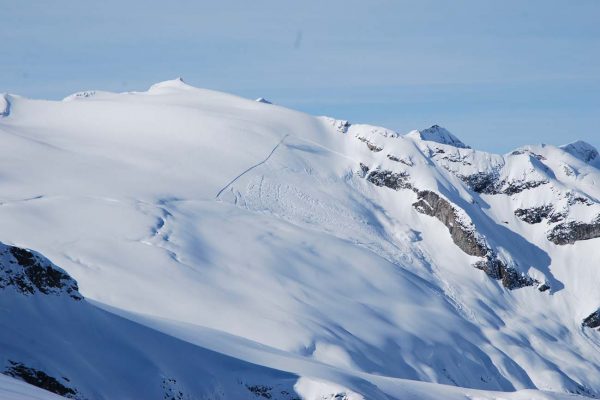
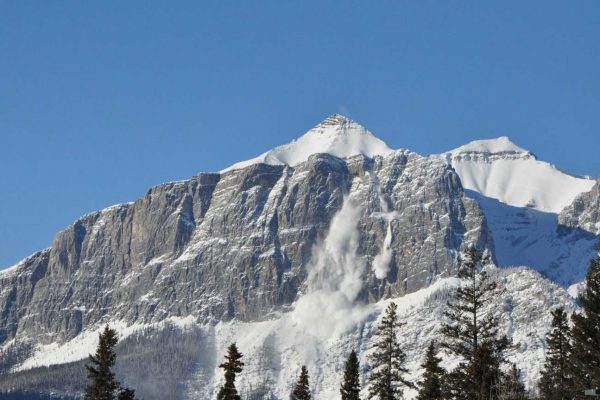
- Avalanche phenomena, formation and characteristics of avalanches
- Avalanche Terrain recognition, introduction to the Avalanche Terrain Exposure Scale
- Changes in mountain snowpack, snow metamorphism
- Review of the Avaluator ™ model and decision factors
- Safe travel concepts
- Trip planning – a methodical approach to information resources and data
- Accessing and utilizing the Avalanche Danger Scale and Public Avalanche Bulletins
- Avalanche and backcountry safety gear
- Companion Rescue / Transceiver review
- Human factors in decision-making
- Case studies of avalanche accidents
- Logistics for the Field Days
Field Days (3 days):
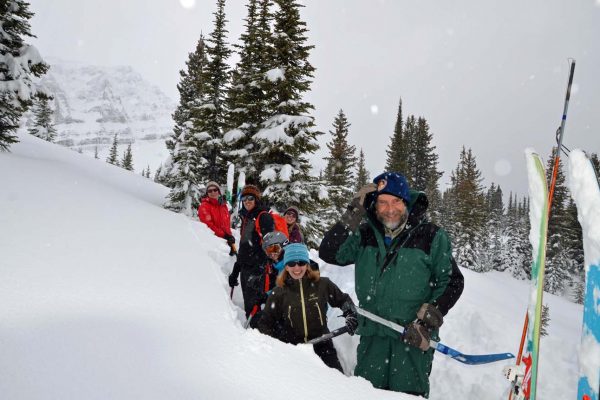
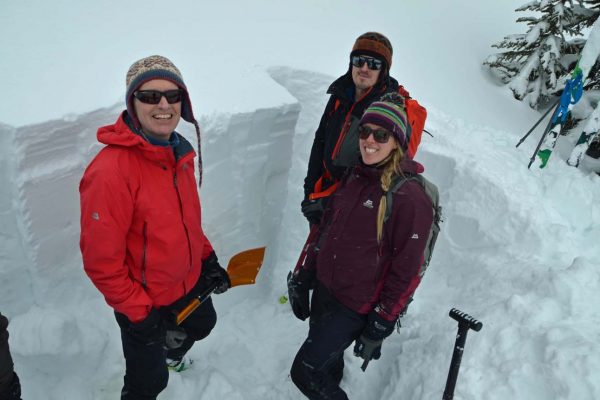
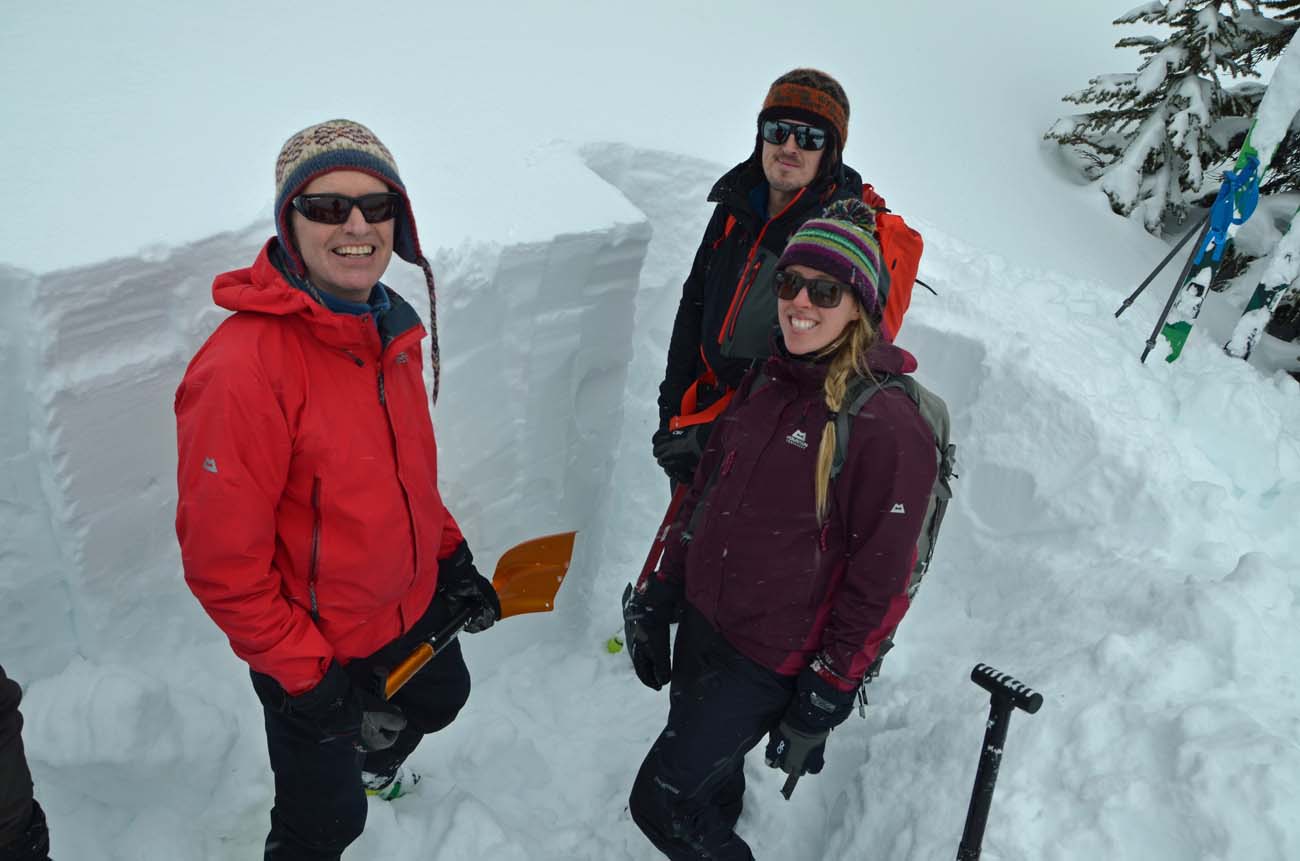
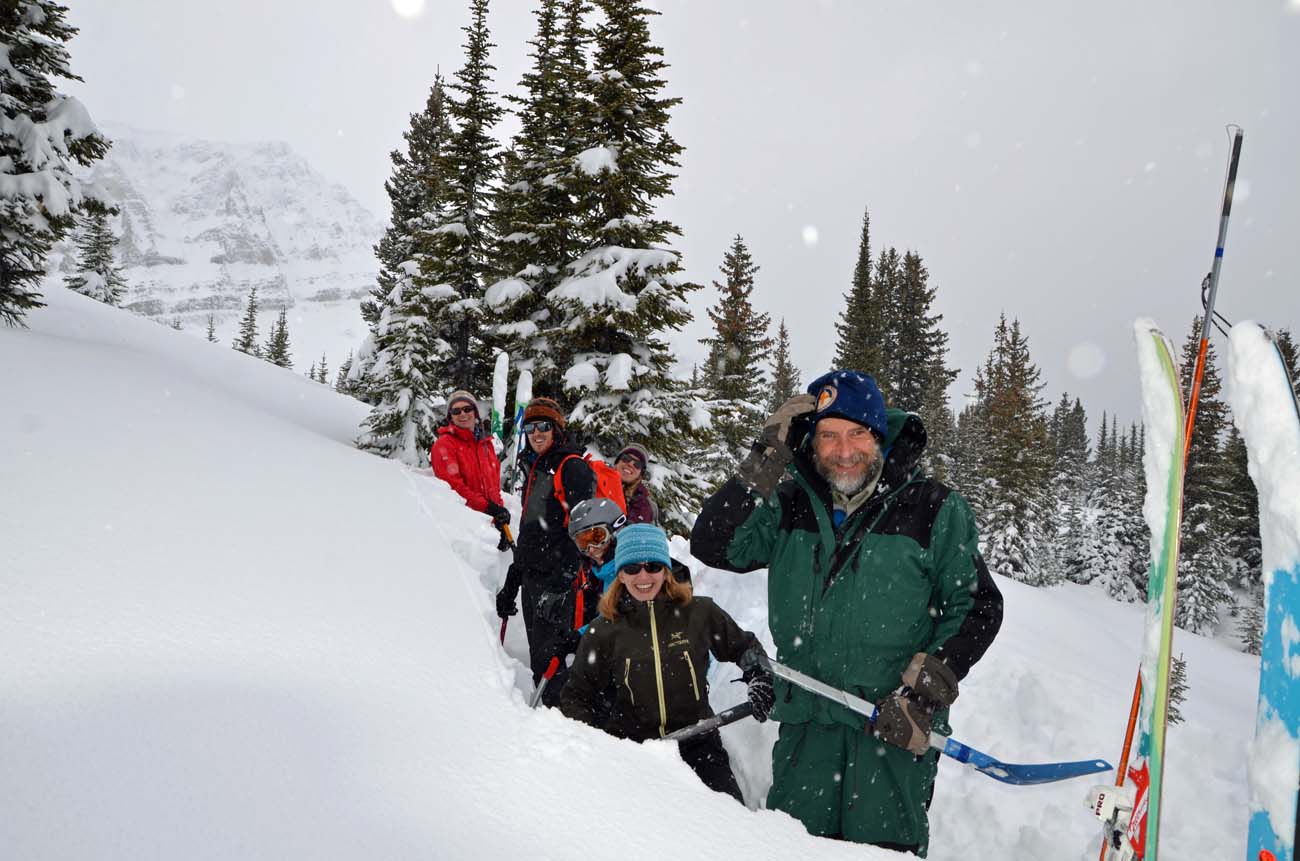
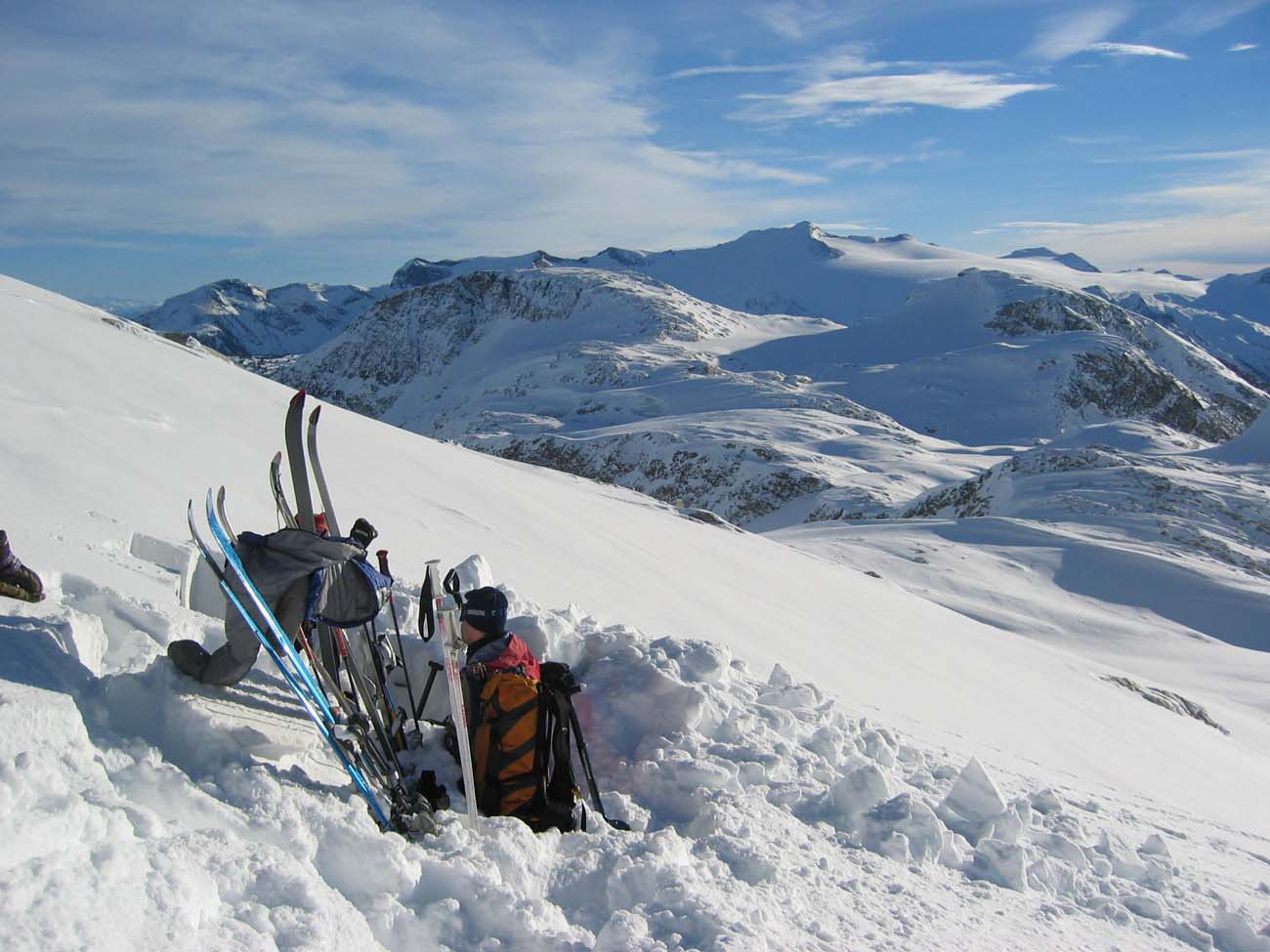
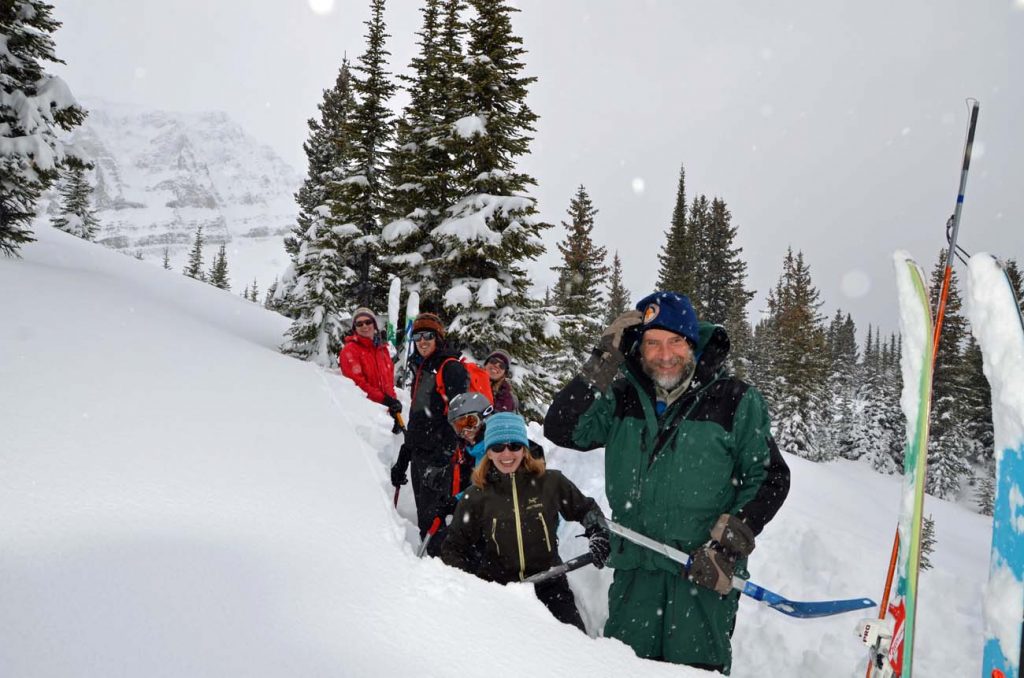
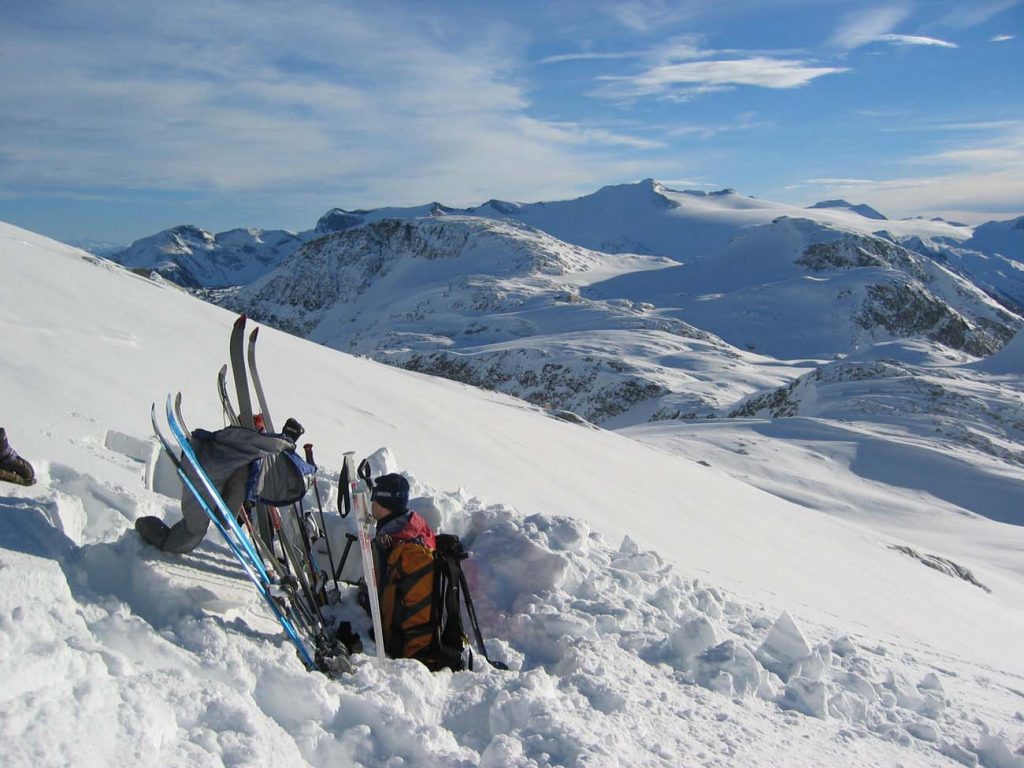
Our field days are driven by the “learning by doing” concept. Expect full days of ski touring with participants taking over leadership roles for decision-making, track setting with lots of field discussions. Commonly our field days are preceded by a 30 – 60 minute long morning “Zoom Meeting” for planning the day and to cover last minute curriculum relevant for the field training.
- Pre-trip meeting / hazard assessment
- Field observations / use of the Avaluator
- Group management and safety in the backcountry
- Avalanche terrain recognition
- Route finding in avalanche terrain
- Decision making in avalanche terrain
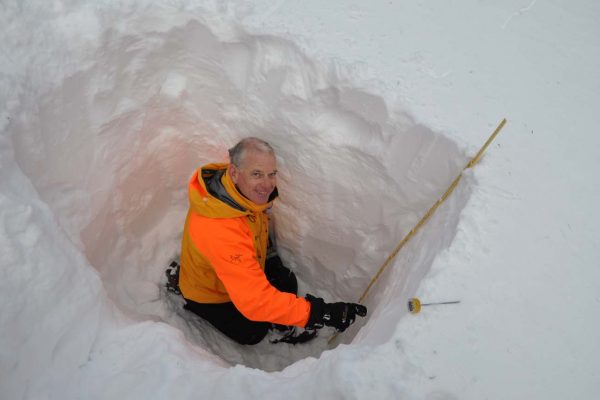
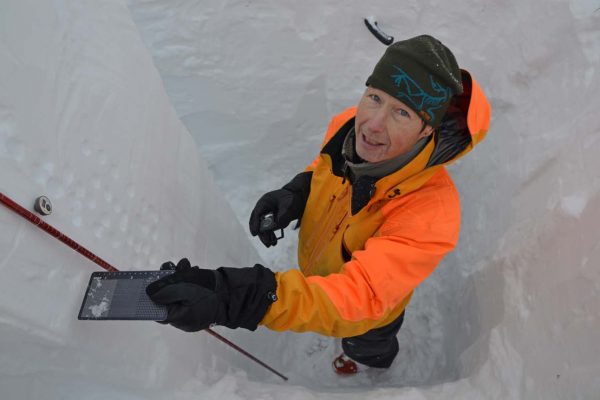
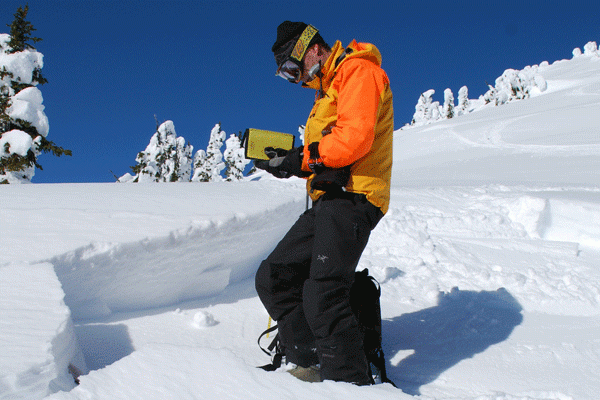
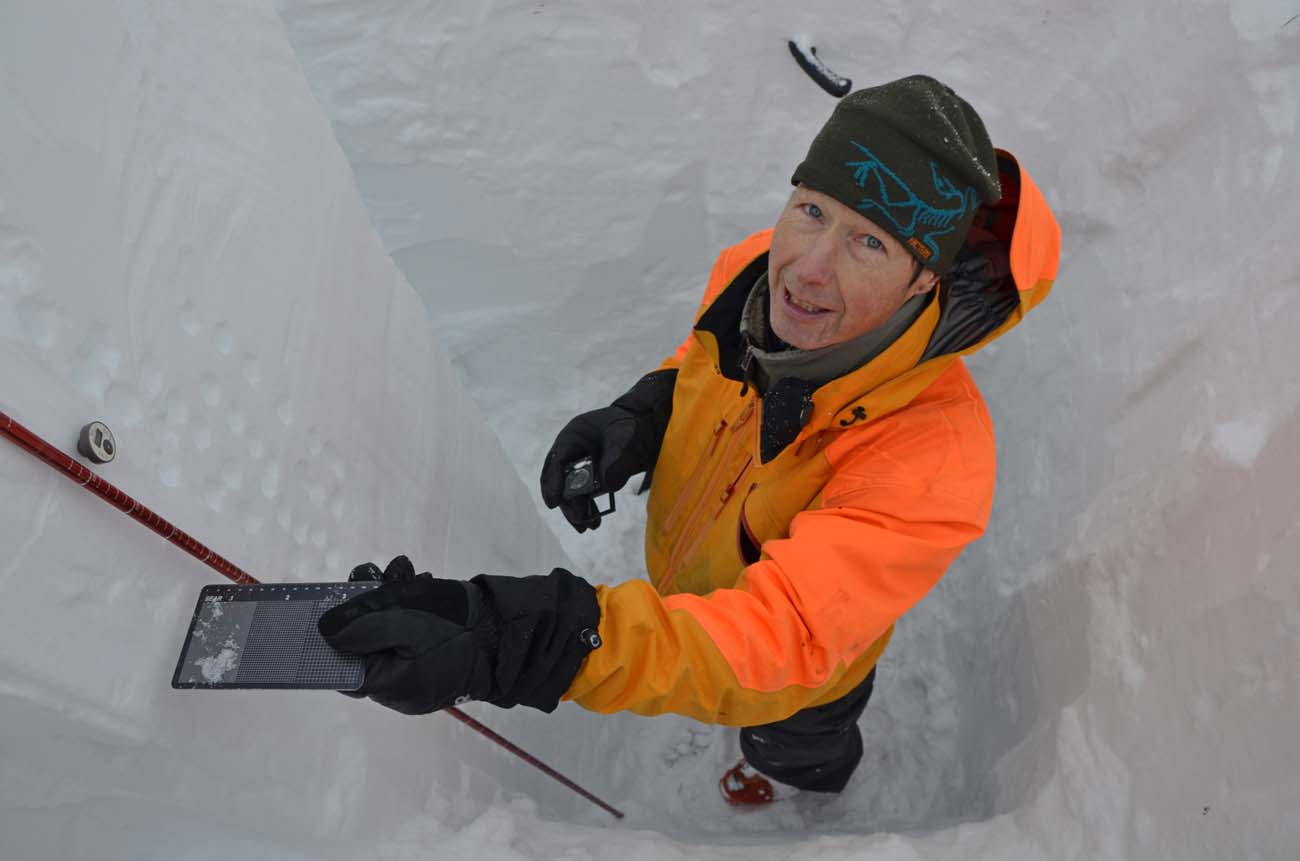
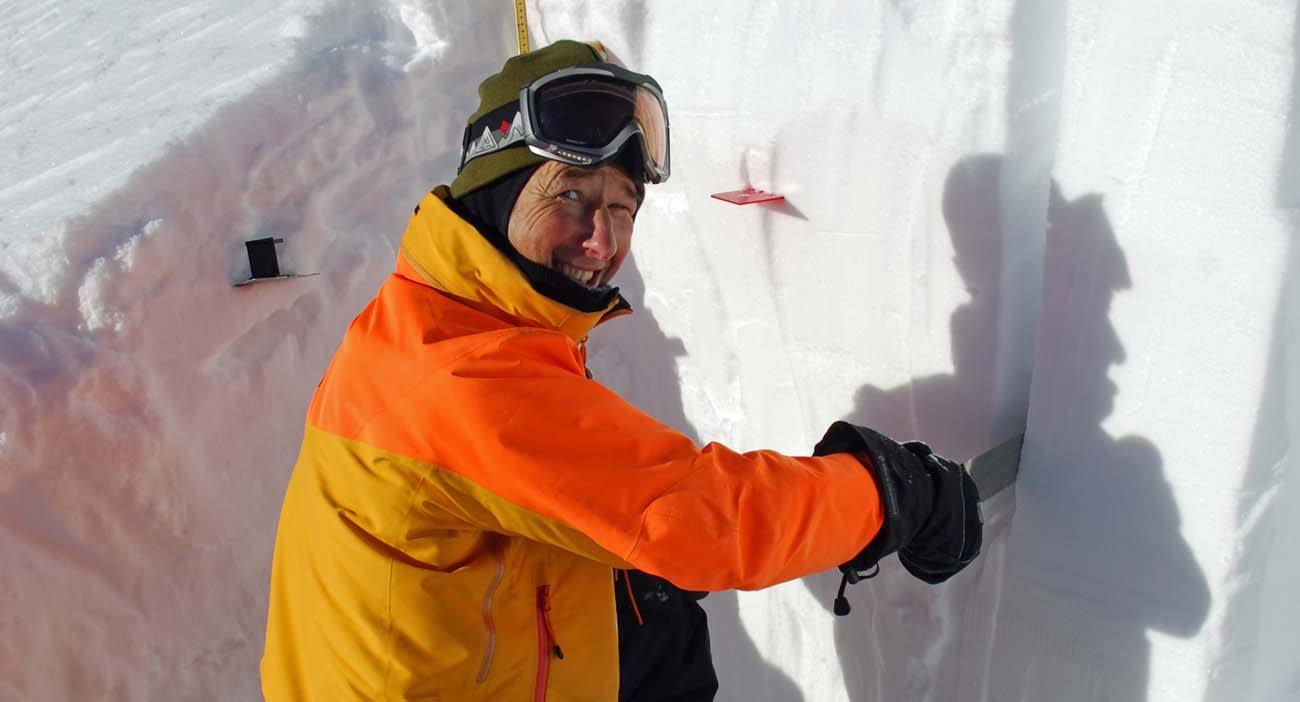
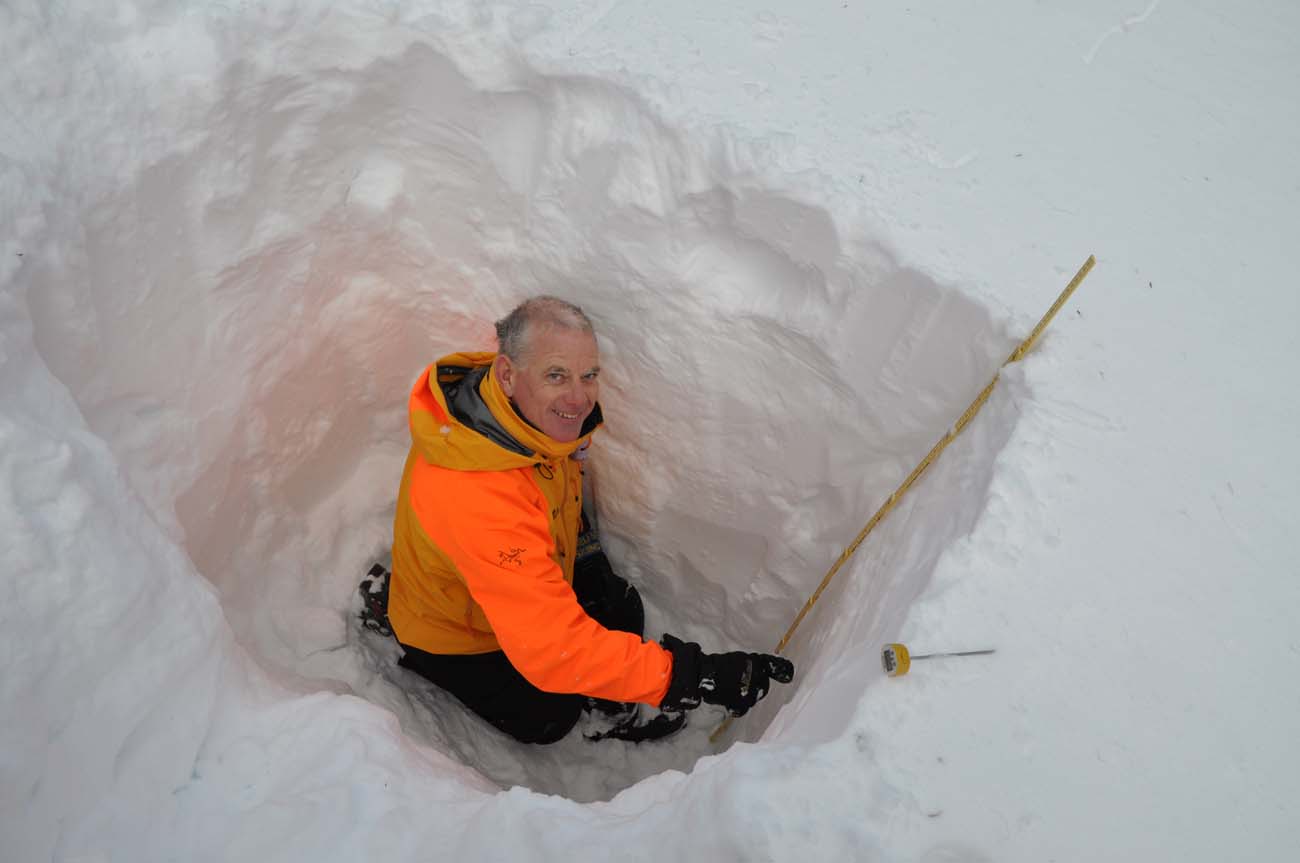
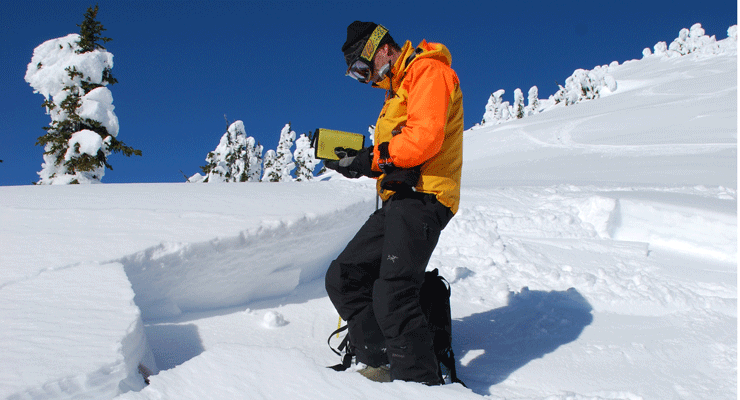
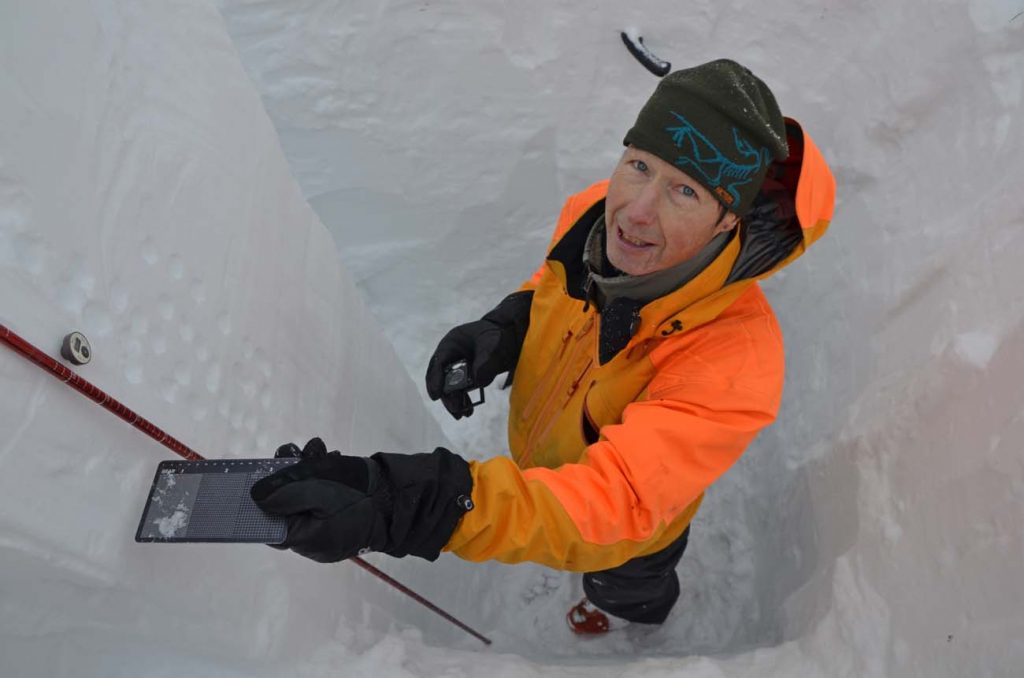
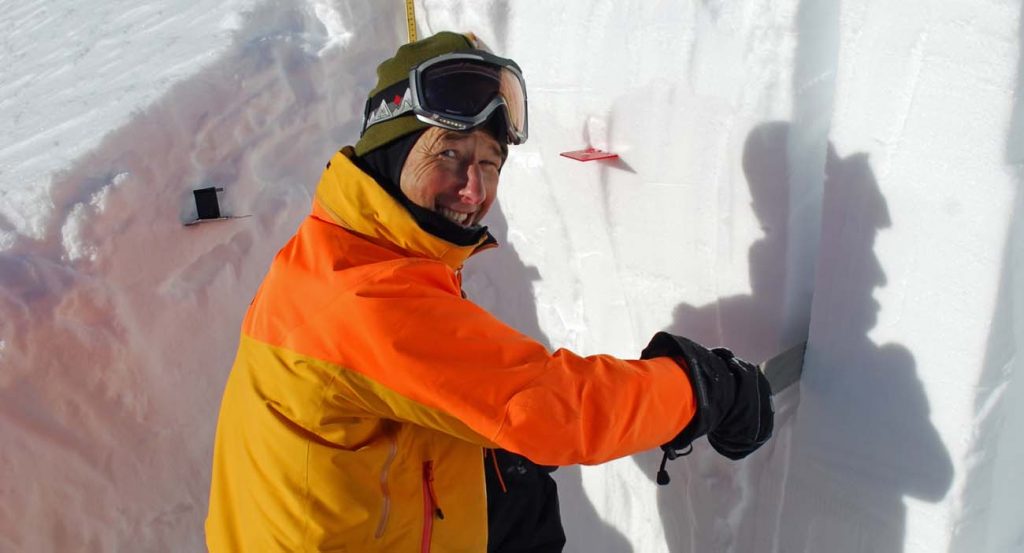
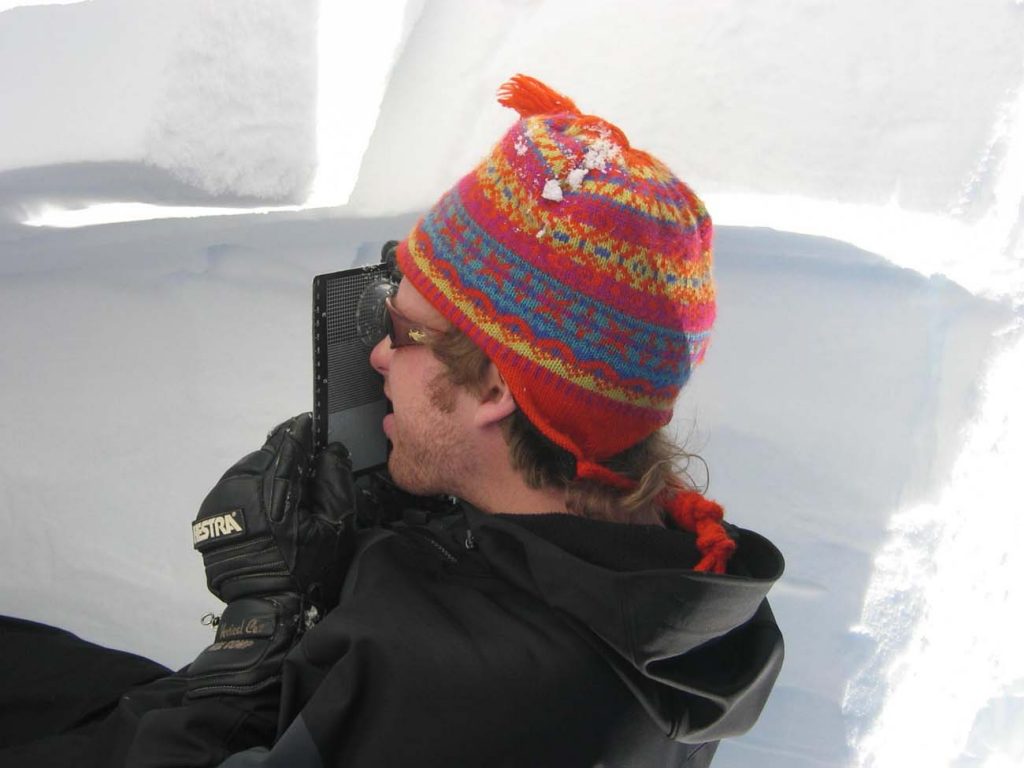
- Snow profiles and stability tests (Compression Test, Extended Column Test (ECT) and Deep Tab Test (DTT), Propagation Saw Test, Rutschblock etc.
- Weather, snowpack and avalanche activity observations
- Snow stability analysis
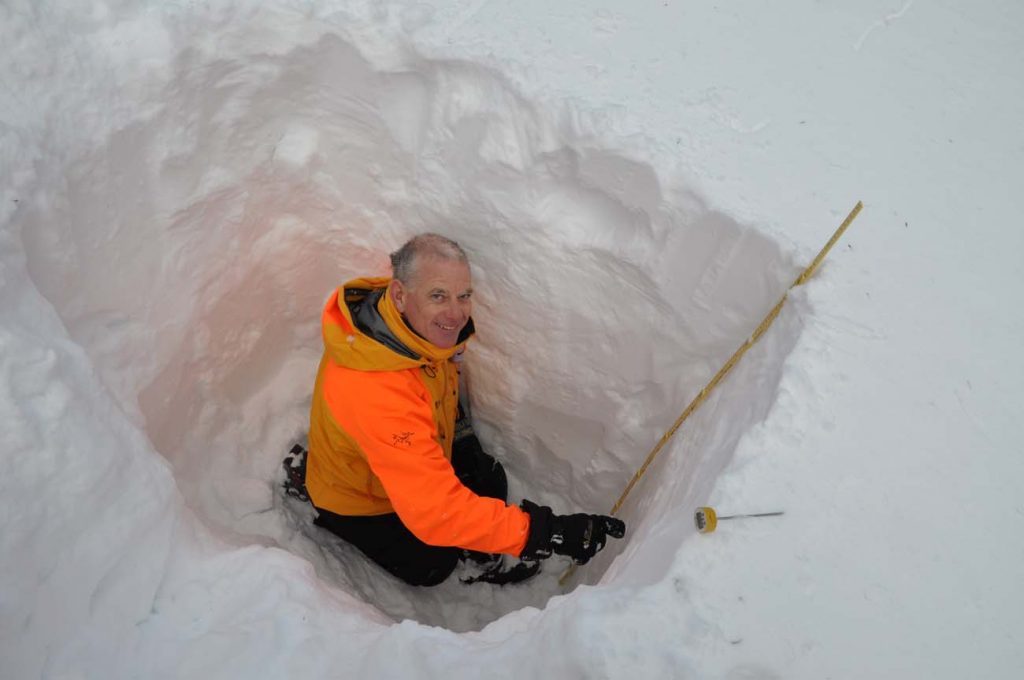
- Companion Rescue and group rescue skills including avalanche transceiver use, single / multi- / close-proximity burials and multiple burials, shovelling and probing techniques
- Post-trip debrief
In doing so, we will focus on the three decisive factors in evaluating stability and overall hazard:
1) Hazard rating according to the avalanche bulletin
2) Slope steepness and exposure to hazard from above
3) Slope exposure and shape
By the end of the course, students should be able to:
- Use the Avaluator™ as a tool to determine when changes to plans and/or travel techniques are required to travel safely.
- Use techniques to verify official Avalanche Danger Ratings in the field.
- Use the ATES technical model to develop personal, local terrain ratings.
- Use route-finding skills and appropriate travel techniques to mitigate risk.
- Proficiently carry out a companion rescue.
- Understand the limits of their training.
Inclusions
Included
- Instruction and guiding by an ACMG/IFMGA mountain guide, ACMG ski guide or assistant ski guide
- All members of Avalanche Canada with avalanche forecasting training an certification
- Use of digital (= latest generation) avalanche transceiver, shovel, probe
- Technical supplies such as crystal screen, loop etc.
- All Avalanche Canada course materials including the “Avaluator” decision tool as well as the instructional manual: Backcountry Avalanche Awareness by Bruce Jamieson, 7th Edition.
Not Included
- Land transport (although participants might be able to catch a ride with guide at cost)
- Lodging and food
- Rental of ski touring equipment or snow shoes
Add Ons
We will gladly quote you all-inclusive prices with lodging and airport pick up / drop off and all other land transport or we can assist you in making reservations for the lodging and transport option of your choice.
Trip Details
Meeting Point & Time / Course Locations
Meeting time for evening zoom classroom sessions usually 6.30 2 or 3 times during the week, meeting time for the 3 field days Fri – Sat will be agreed on in light of conditions and participant’s transport options in the morning of each field day during the zoom planning meeting (starts at 6.30 AM usually).
Weather/climate
Hugely variable! The early season courses (Nov – Feb) can be very cold (Min of -25C (=-13F), especially for the locations in the Rocky Mountains (Canmore and Lake Louise). The temperatures at rogers Pass tend to be more moderate with a minimum of -20C (=-4F). Average normal temperatures are around -10C (14 F).
Medical/Rescue and Trip Cancellation Insurance
We strongly recommend the purchase of a travel insurance package that does cover adventure travel. Common policies sold by travel agents or policies included in your credit card contract tend to exclude “mountaineering” if you read through the fine print. We recommend an adventure travel policy on our website at http://ontopmountaineering.com/travel-insurance/ which our clients had good experiences with in the past. *NEW: we now recommend including covid-19/pandemic coverage with your insurance policy.
Gear List
Gear List for Avalanche Courses as Downloadable .PDF
Please download a PDF copy to use as a checklist when preparing for your trip.
Technical Equipment
Bring the following, or rent it (see ‘Trip Info Links’ at the bottom of the page):
- Alpine touring (or telemark*) skis and ski boots, or a splitboard
- Ski poles
- Climbing skins (stick-on), fitted to your skis or splitboard
*Only bring telemark skis if you are an advanced telemark skier with backcountry experience.
If you do not have one or more of the following items, you can rent them from the listed retailers or OnTop can provide them. Please book in advance.
- Digital, 3-antenna avalanche transceiver
- Lightweight snow shovel
- Avalanche probe (two to three meters long)
Bring the following:
- Daypack (35-45 liters)
- Repair kit and Leatherman (can be shared between several people)
- Spare parts specific to your equipment
Clothing
Temperatures in the Canadian Rockies vary hugely. Between December and February, temperatures can be anywhere from -30°C / -22°F to 0°C / 32°F. Between March and May, it can be above freezing during the day with overnight lows not normally going below –10°C / 14°F. Having several clothing layering options is important.
- Wind and waterproof shell jacket with hood (Gore-Tex or similar)
- Wind and waterproof over-pants (Gore-Tex or similar)
- Warm pants (eg. lined Schoeller fabric)
- Thick fleece or wool pullover, or PrimaLoft jacket
- Light down jacket or vest for rest stops
- Medium weight fleece shirt
- Thin synthetic or wool underwear, top and bottoms
- Two pairs of gloves (lightweight and heavier weight)
- Scarf or neck gaiter (eg. Buff)
- Socks (synthetic or wool, thick outer and thin liners)
- Wool or fleece hat that covers your ears
- Gaiters that fit over your ski boot (unless pants seal tightly to your boots)
- Sun hat, preferably with a wide rim
- Bandana (optional)
Lodging comforts
- Spare underwear and socks
- Sleeping bag or sheet (depending on accommodations
- Earplugs (optional)
- Full set of toiletries, town clothes and footwear for your chosen accommodation
Other items
- Lunch and snacks (eg. sandwiches, candy bars, dried fruit, nuts, etc.)
- Sunglasses with high UV protection
- Ski goggles with high UV protection
- Sunscreen and lip protection with high SPF
- One-litre water bottle with an insulator. Water bladders not recommended
- Thermos (optional)
- Headlamp with fresh batteries
- Personal first aid kit and other needs (eg. blister kit, prescription medicine, anti-inflammatory, contact lenses, prescription glasses, etc.)
- Pocket knife (optional)
- Health and travel insurance documents
- Light stuff sacs or Ziploc bags to keep your backpack organized and important items dry (optional)
- Camera, spare batteries (optional)
- Compass, maps, GPS (optional)
- Ski wax / skin wax (optional)
- Personal amount of toilet paper in a Ziploc bag
- Hand sanitizer or sanitary hand wipes
- Feminine hygiene supplies
- Comfortable clothing and shoes to leave in the car for return to civilization
Group gear – will be supplied by OnTop Mountaineering and split amongst the participants to carry
- Emergency tarp
- General repair kit and Leatherman
- Maps, compass, GPS, altimeter watch
- Phone with power bank, radio, satellite phone or other emergency communication device
- First-aid kit
- Glacier travel rope and crevasse rescue gear (if necessary)
FAQ
Do I need to sign a Release of Liability & Assumption of Risk Agreement (a.ka. liability waiver)?
Yes, you do. Mountaineering, skiing, climbing, hiking, via ferrata and all other wilderness and adventure travel activities are inherently risky with potential for injuries or even death.
It is very important to us that you are aware of those risks before you start the booking process, which includes filling out a booking form and paying a deposit.
With signing the liability waiver, you confirm that you understand the potential risks and hazards, and are willing to accept the risks, which includes giving up legal rights you may have.
This would also be the time to ask questions or address concerns before you book.
For your reference here is a link to our Liability Waiver. Our booking terms & cancellation policy with more details can be found here
Why book with us?
Please be aware that there are significant differences in the qualifications of avalanche course instructors. Some AST 1 instructors have only the minimum required qualification of an Avalanche Canada Level 1 Operations course — not an avalanche forecasting course or guide certification. Also, group sizes of up to 20 students are commonplace in many avalanche courses.
Here is what we offer
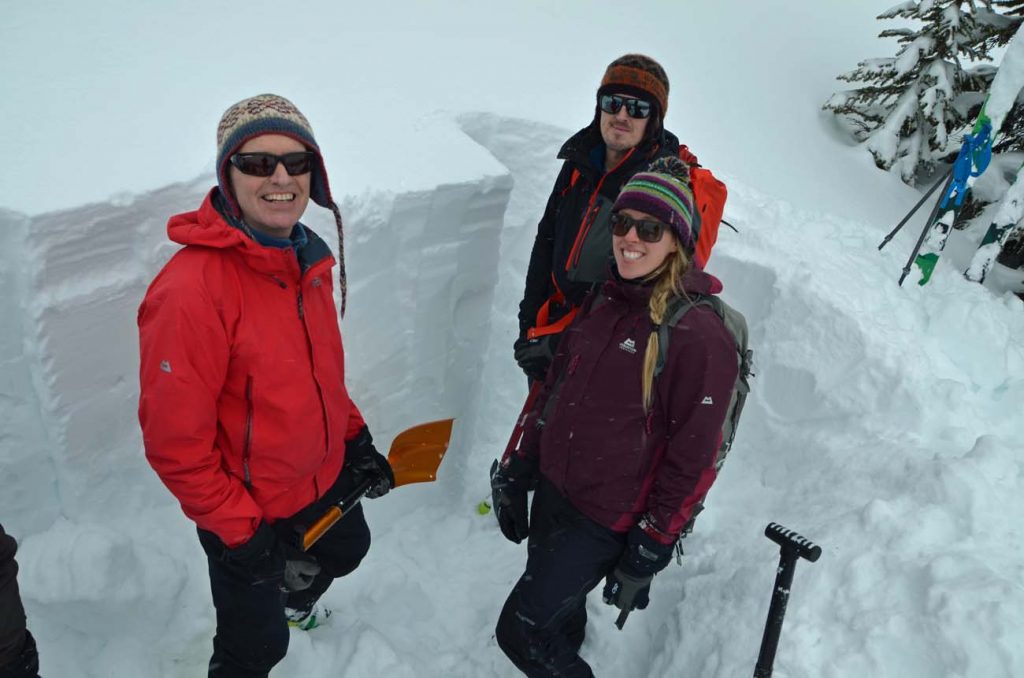
Our instructors are certified ACMG mountain and/or ski guides or assistant ski guides and Avalanche Canada professional members with at least 10 years of professional experience including operational avalanche forecasting. Our field days take place in interesting ski touring terrain in either provincial or national parks. Instructors who are not certified ACMG guides will not be able to take you inside any parks. Our group sizes do not exceed eight participants, and they are often between four and six, allowing for highly personalized attention.
Can I Do It?
You must be able to travel at a moderate pace on backcountry ski touring equipment (or split board) during the field days. To be eligible for the AST 2 certificate, you must first have taken the AST 1 course through an Avalanche Canada recognised provider.
Custom Trips
For custom groups signing up together for our AST2 avalanche courses we offer the following discounts / premiums relative to our advertised prices:
8 participants: 30% discount
7 participants: 22% discount
6 participants: 15% discount
5 participants: Advertised trip price
4 participants: 10% premium
3 participants: 35% premium
On a custom basis, we can also offer other locations in Western Canada or the Alps. We commonly include AST1 and AST2 avalanche courses in our Wapta or Bow Yoho Ski Traverses or our fly-in lodge and heli-assisted ski touring trips.
On a custom trip basis, we also offer courses for snowmobilers and snowshoers.
2025/26 DATES
Calgary / Canmore / Banff
2 Evening Zoom Sessions:
Every Week throughout the winter season:
Wednesday and Thursday 7:00PM – 10:15 PM
+
3 Field Days:
Every Week throughout the winter season:
Friday to Sunday 7:00AM – 4:00PM
2025/26 PRICES
CAD $780 + GST per person, minimum 4 people
GROUP TRIP SIZE
4 – 8 Clients: 1 Guide
CUSTOM TRIP DEPARTURES
Custom Courses available at any location including Golden, Revelstoke, and Rogers Pass
TRIP INCLUSIONS
Included
- Guide + guide expenses
- Use of avalanche safety gear, technical supplies, and Avalanche Canada course materials
- Zoom classroom for 2 evenings
Not included:
- Land transport
- Lodging
- Food
- Rental of ski touring equipment or snowshoes
- Ski resort passes if necessary
For a full list of services included, not included, and add-ons, please select our “Trip Inclusions” Tab.