Silvretta Ski Traverse
Alps / Austria & Switzerland
6-day ski traverse along the Austrian-Swiss border
perfect as a first hut-to-hut ski traverse
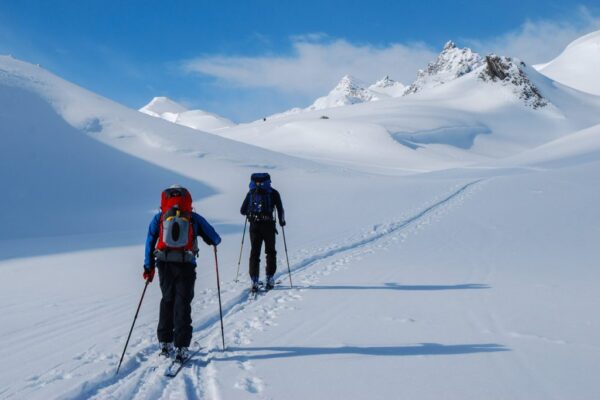
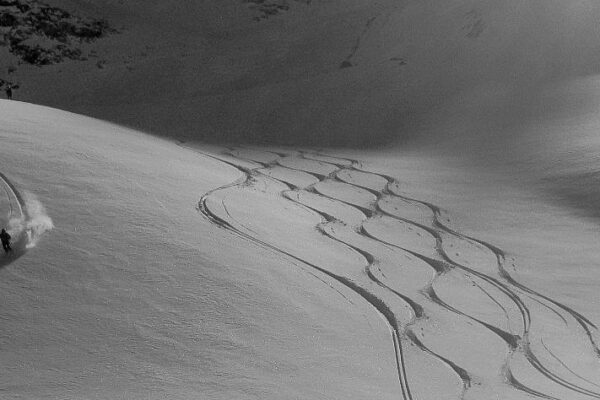
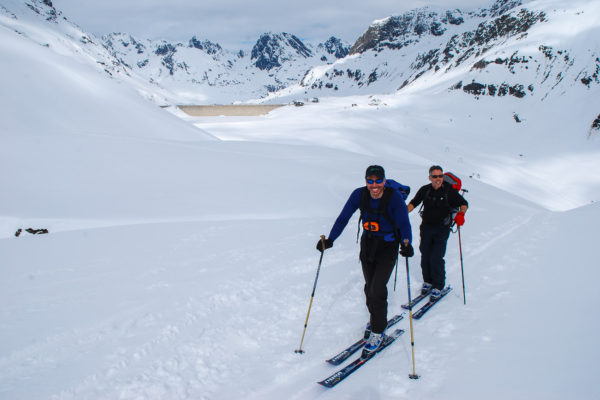
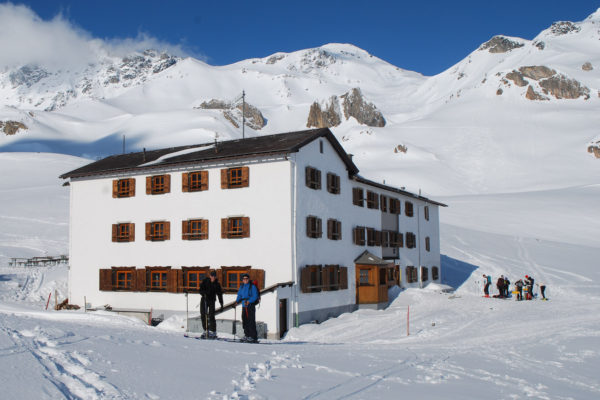
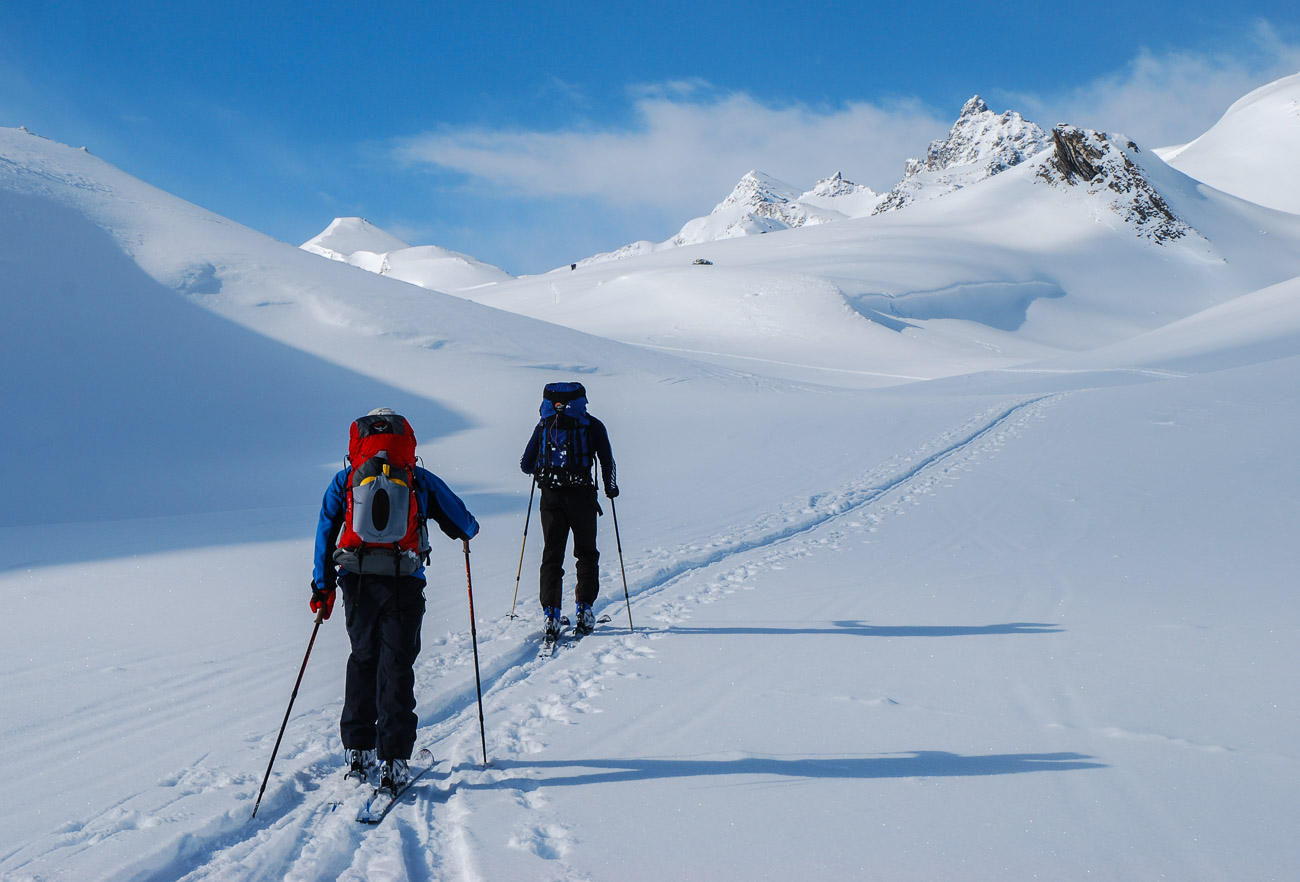
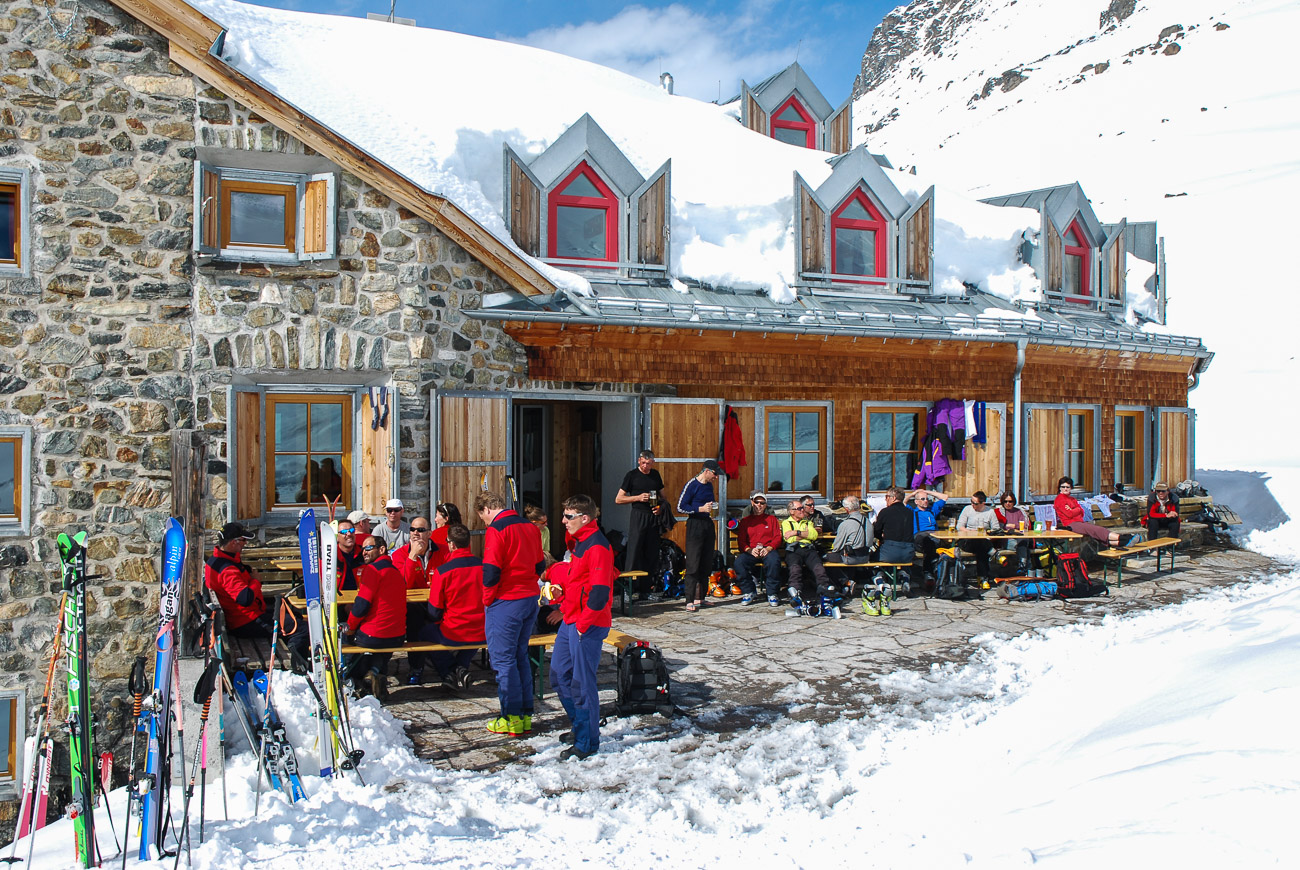
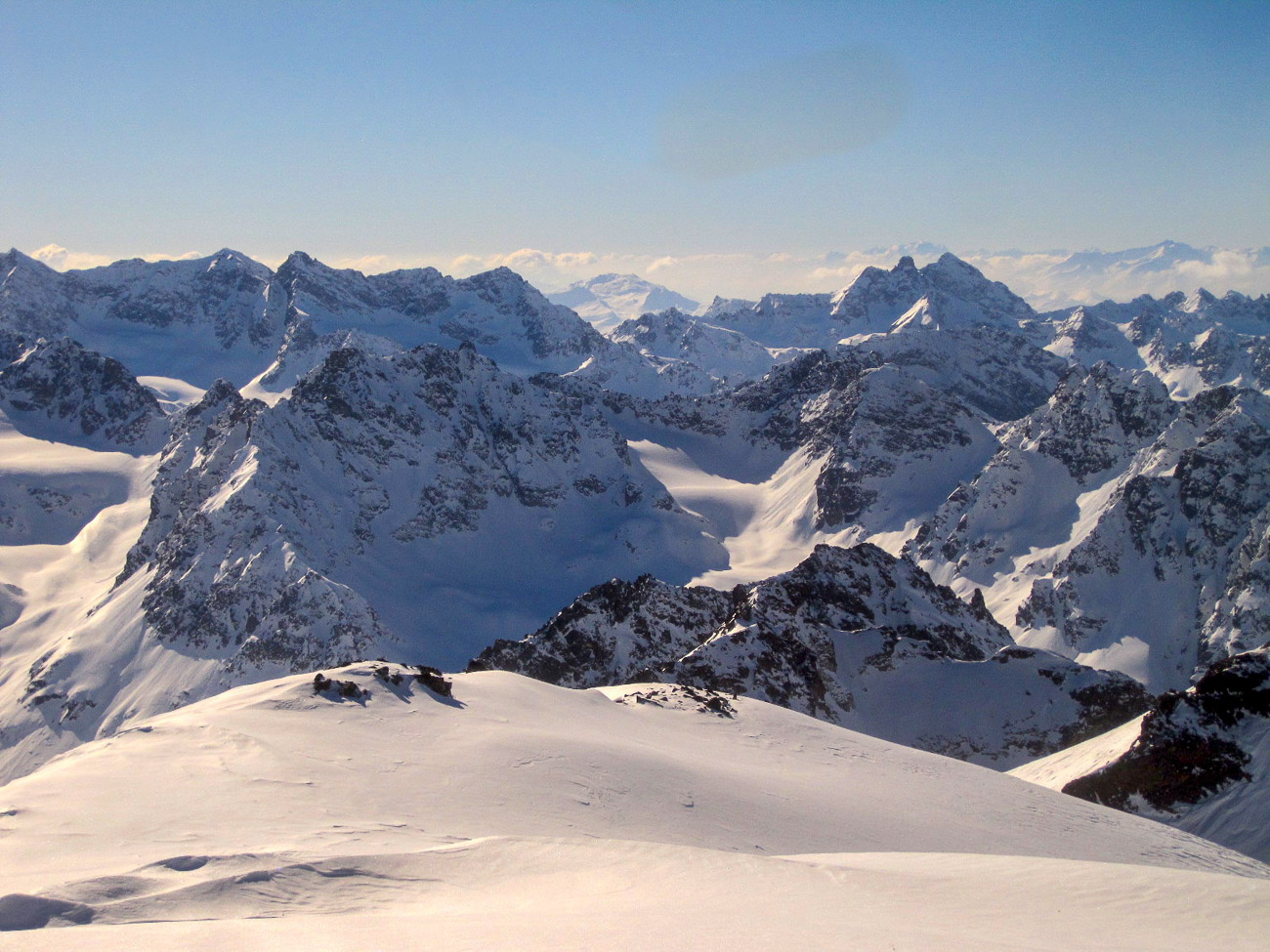
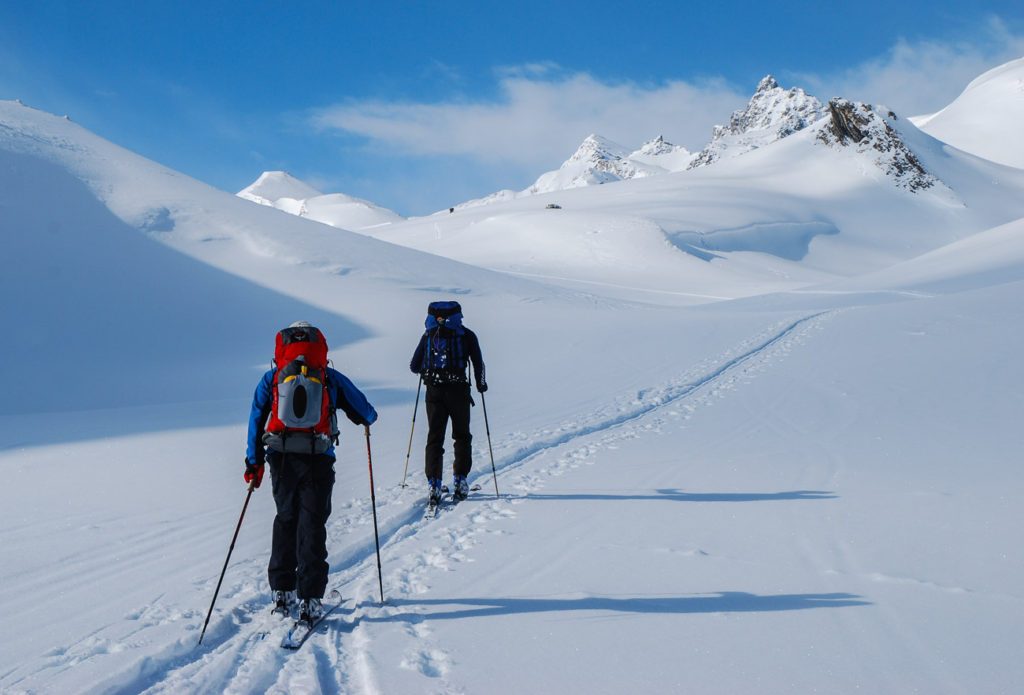
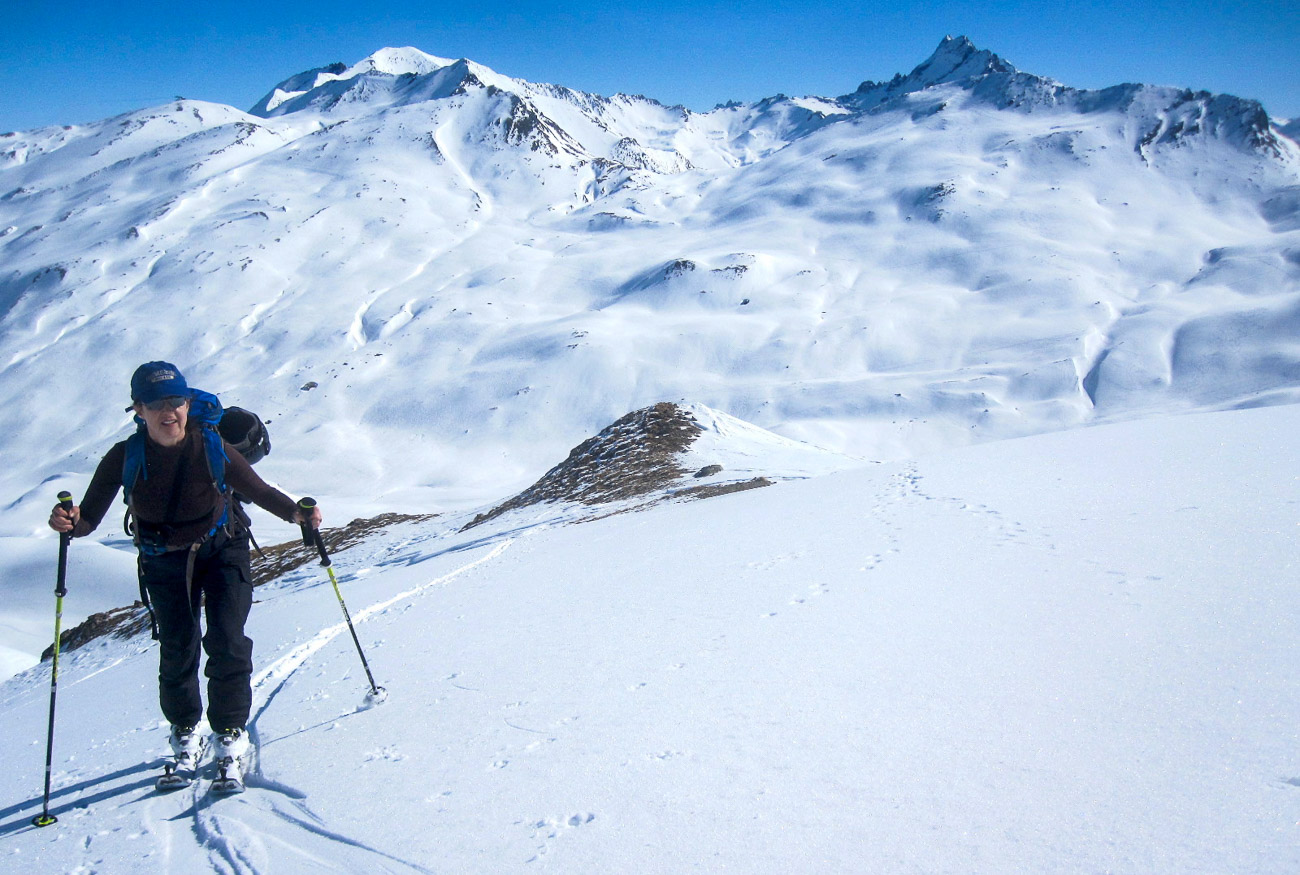
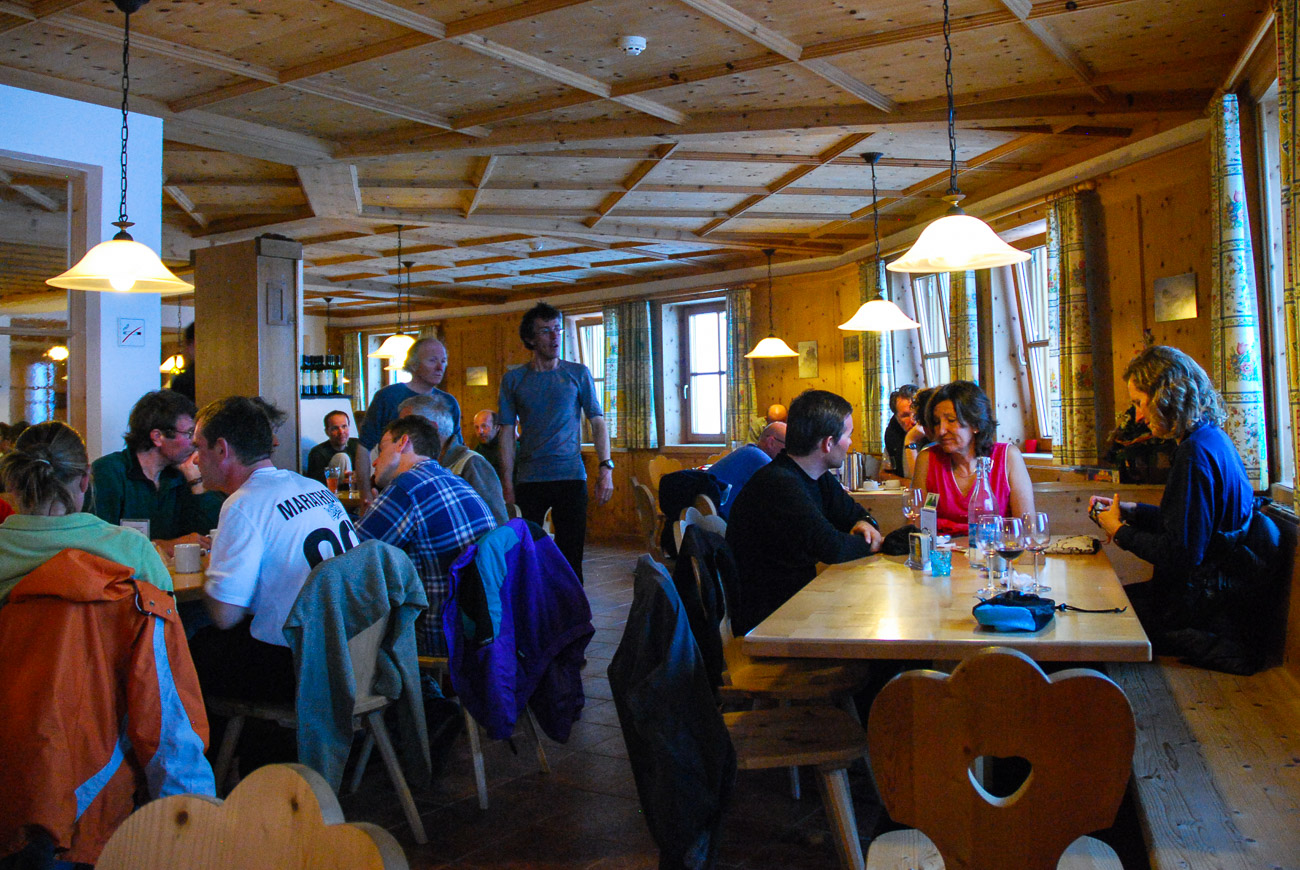
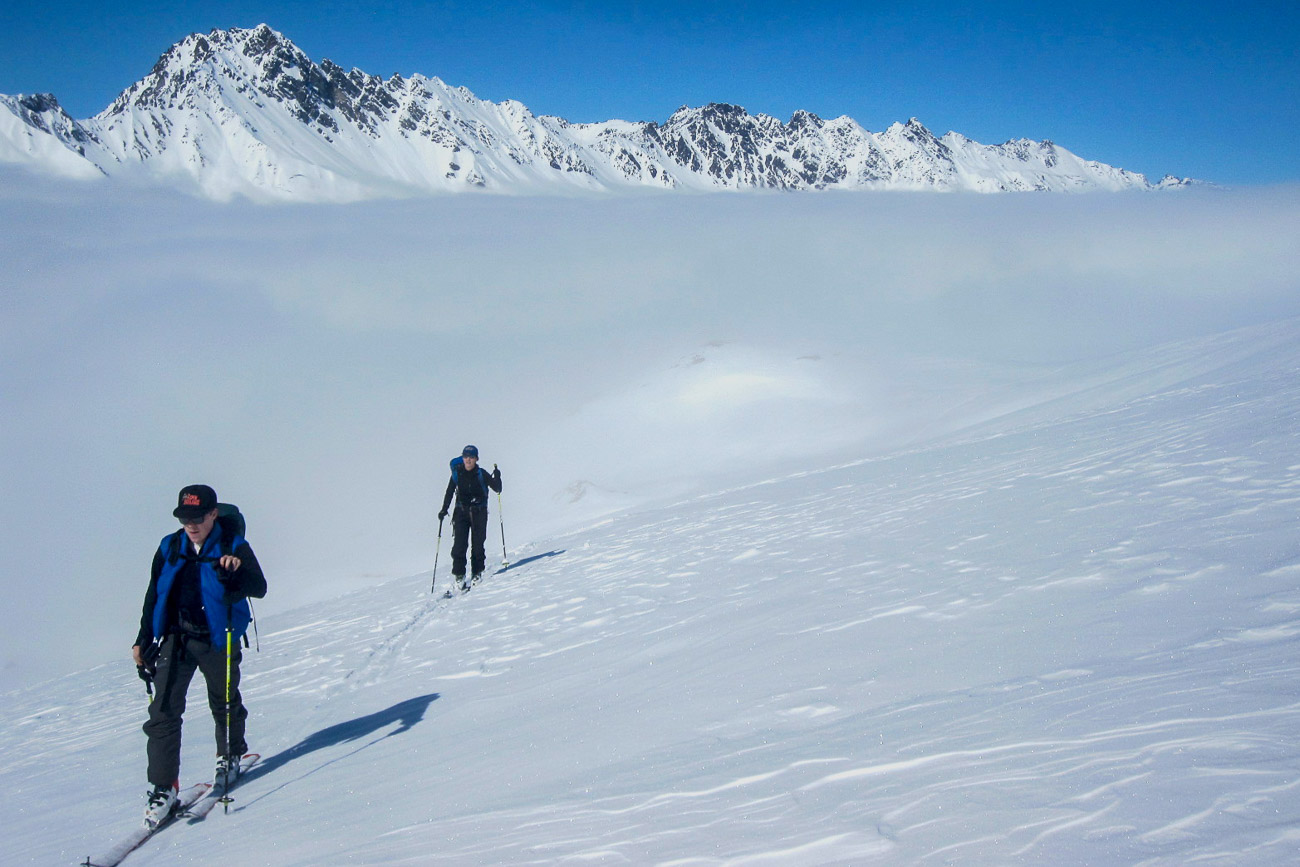
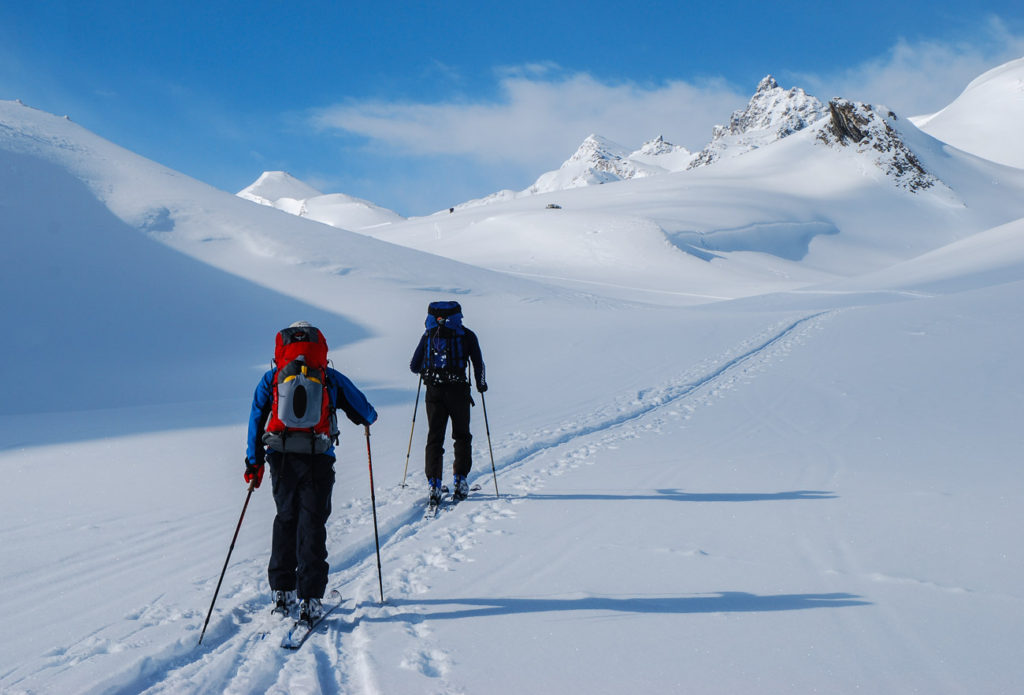
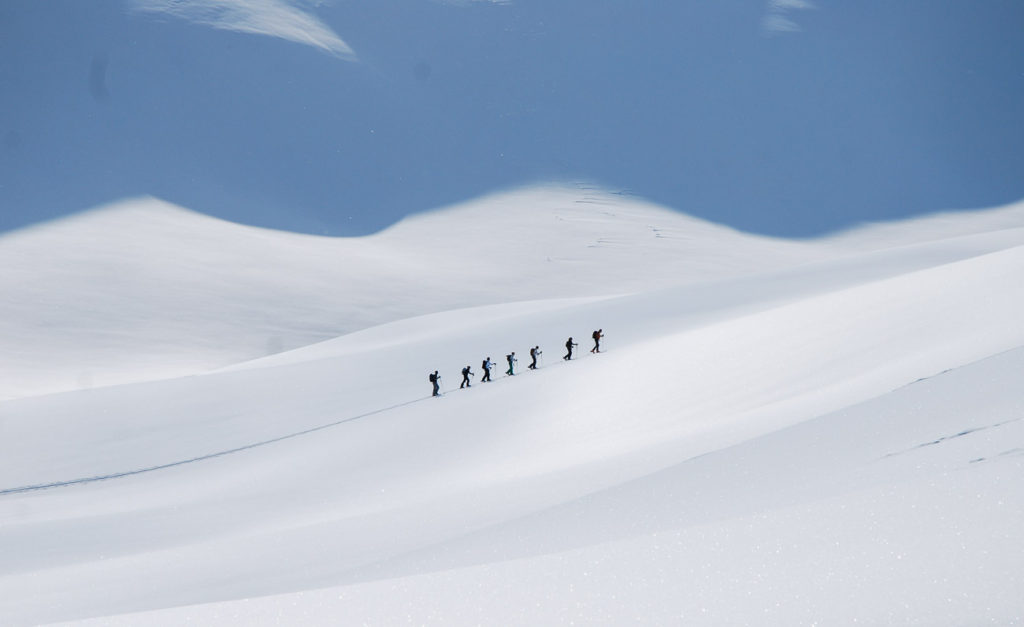
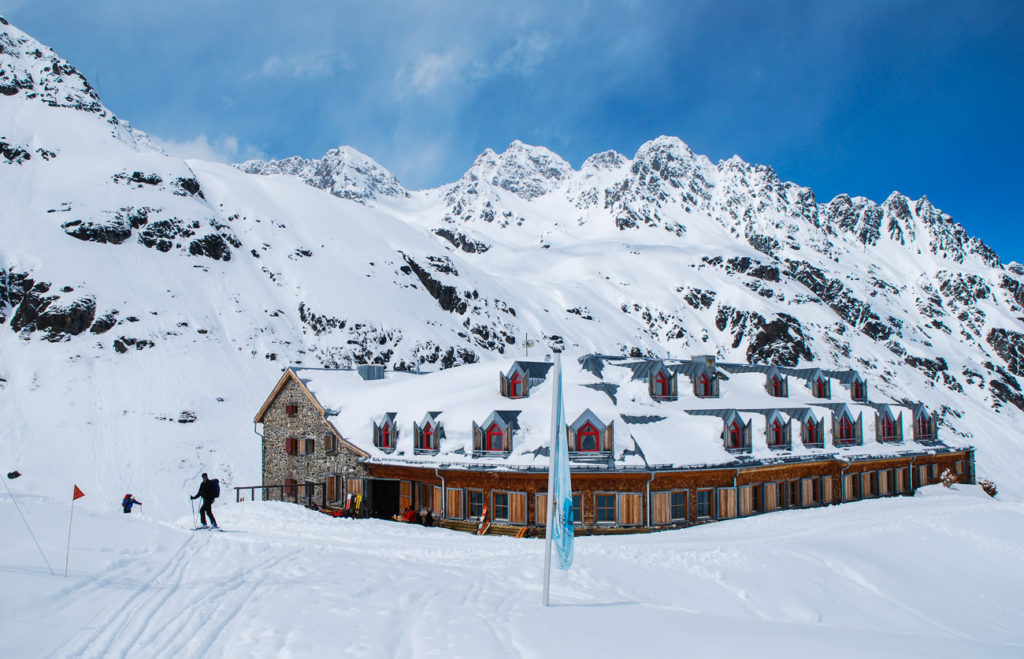
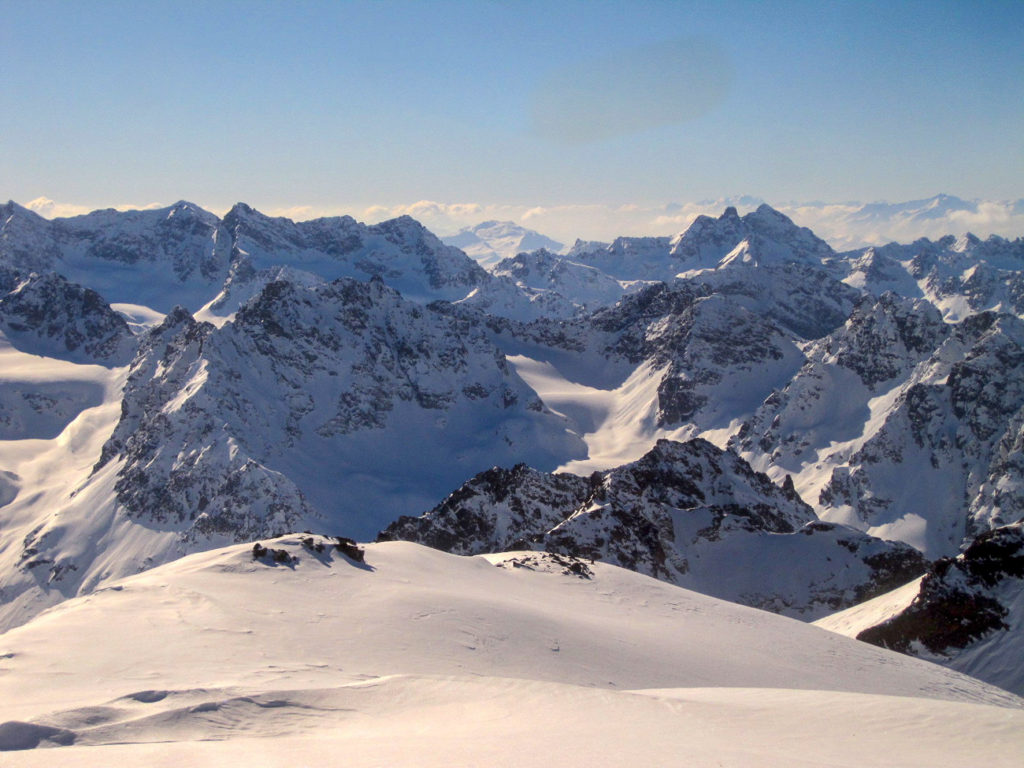
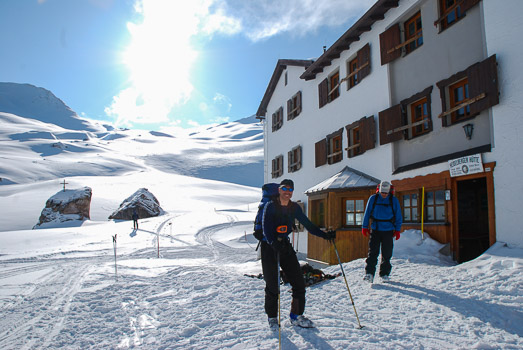
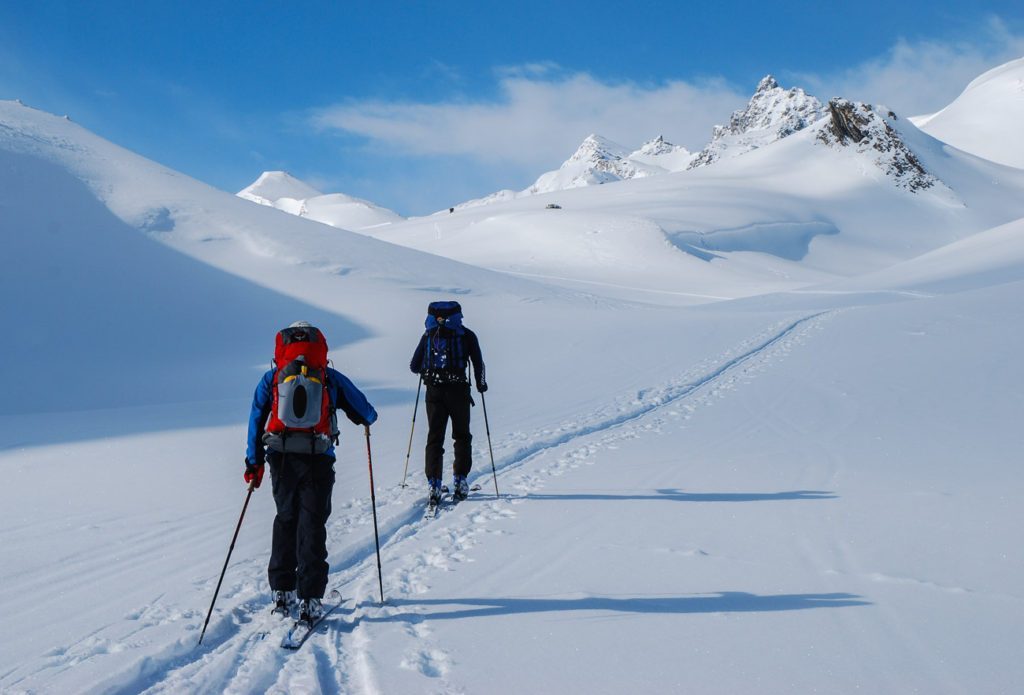
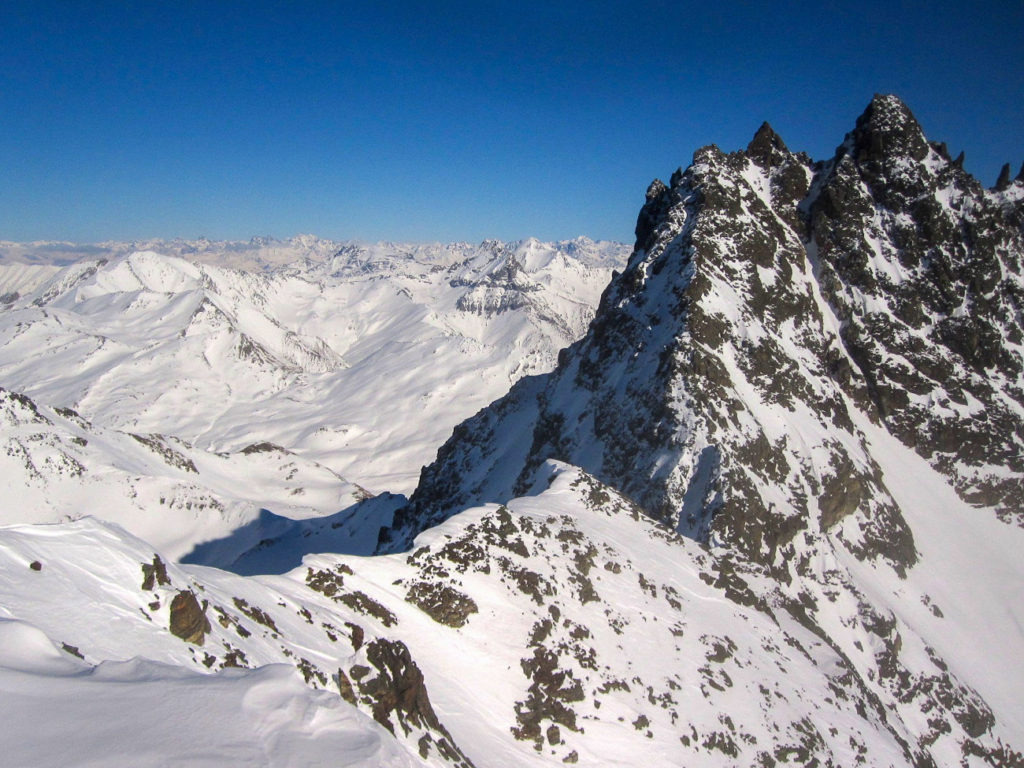
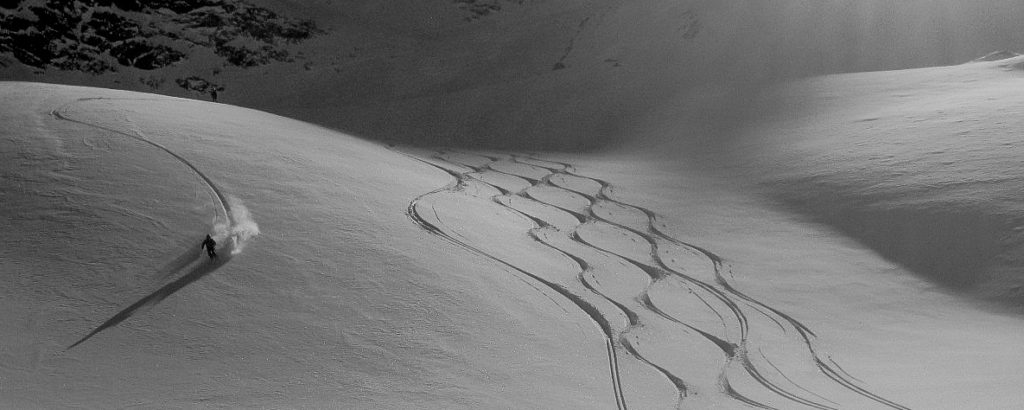
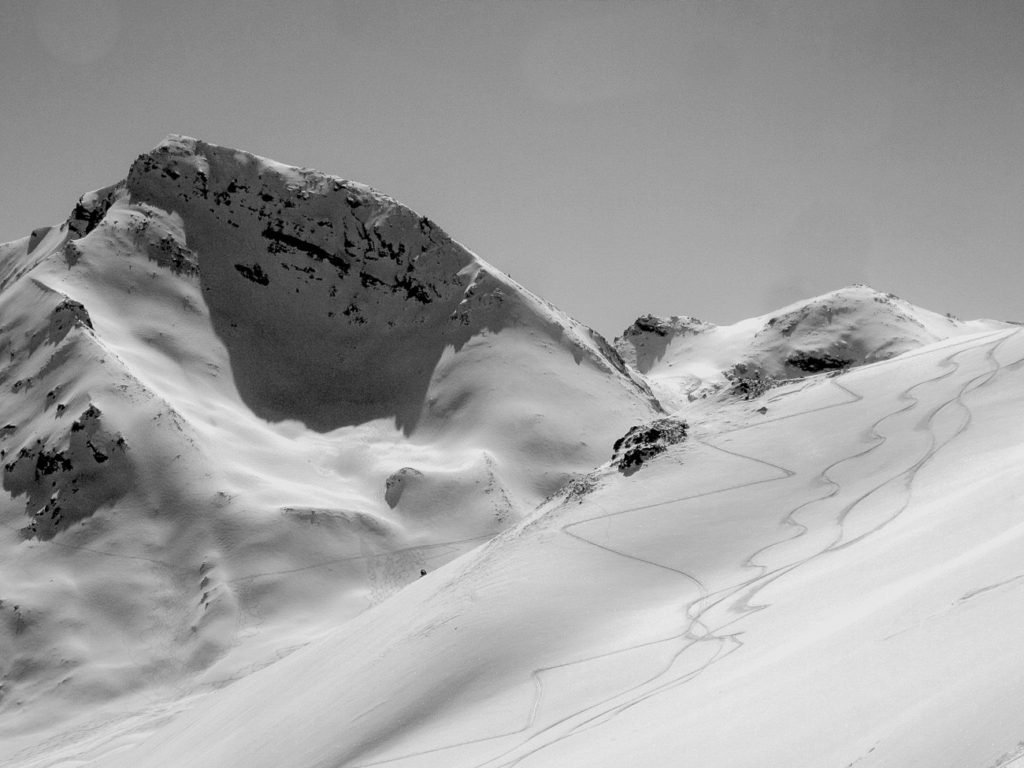
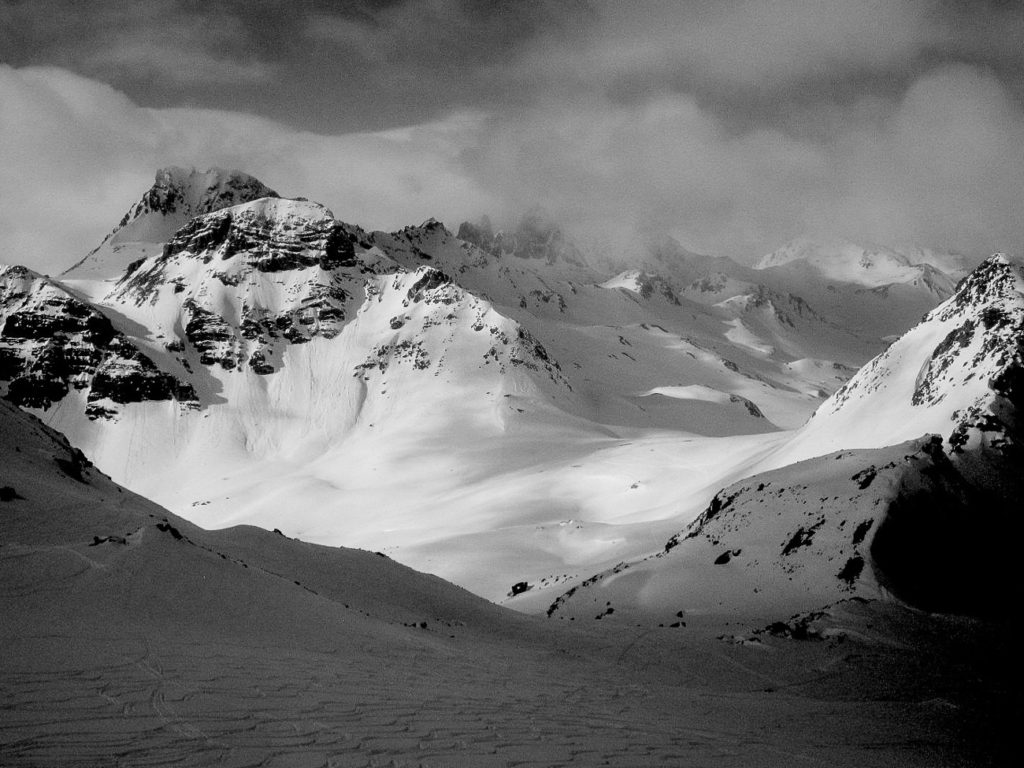
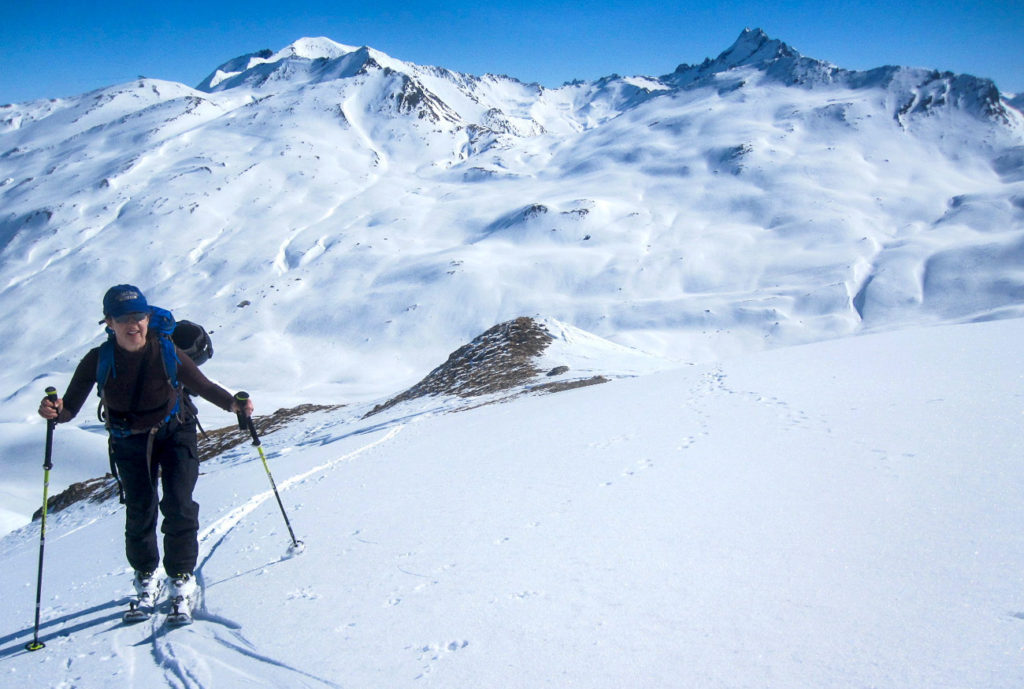
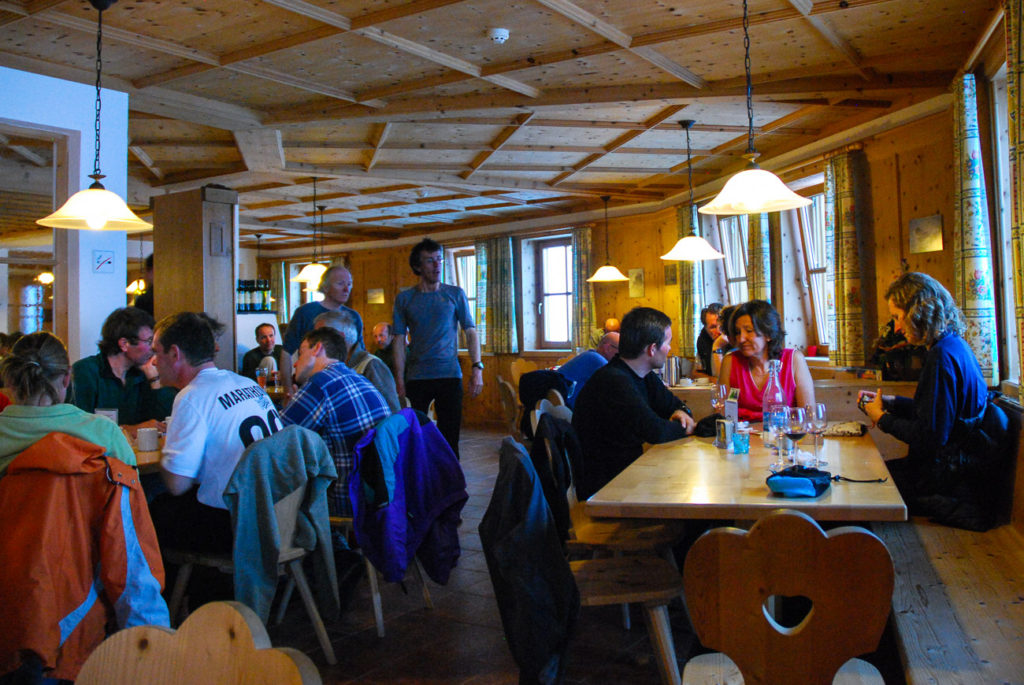
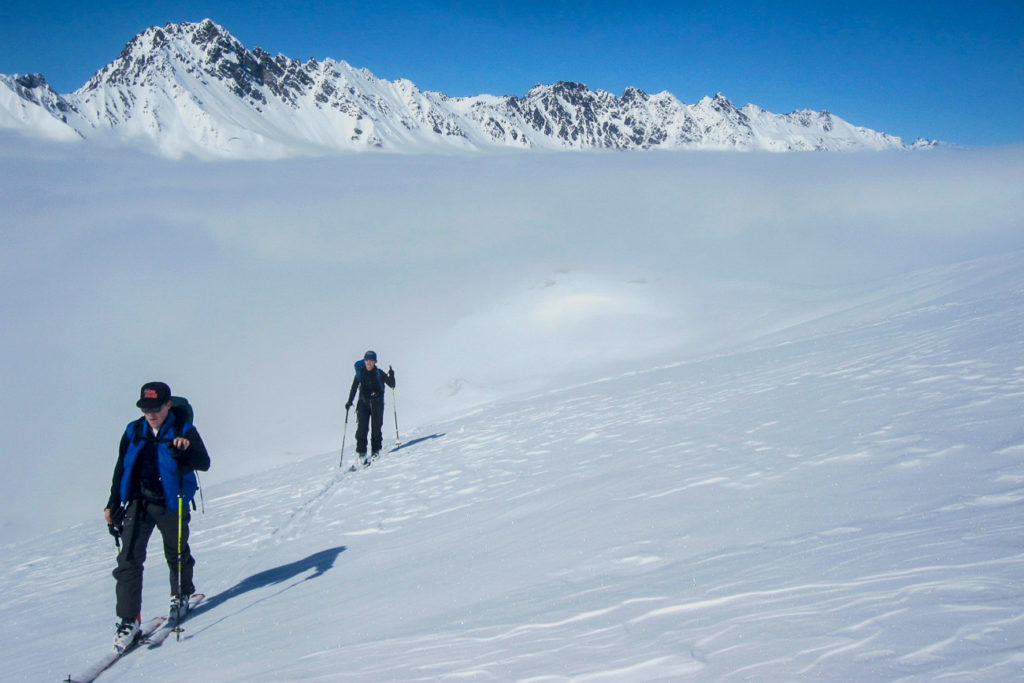
Most North Americans associate the word “Silvretta” with one of the original, ahead-of-its-time backcountry touring bindings. The inventor, Heinrich Wunder, actually named his bindings after the spectacular Silvretta mountain range; a ski touring paradise that runs along most of the border between Austria and Switzerland. Here is what the Silvretta has going for itself: Lifts out of the Austrian village of Ischgl bring us quickly to the edge of the backcountry. Straightforward travel with light packs takes us up and across passes and to the tops of relatively easy ski mountaineering summits over 3,000 m. The moderate descents—often blessed with excellent snow—are made even more enjoyable by the stunning scenery. And at day’s end, the backcountry huts feel more like luxurious alpine lodges, offering some of the best amenities in the Alps: outstanding Austrian cuisine, beer on tap, sunny terraces, hot showers, comfortable beds, and even a climbing wall and ice tower.
The Silvretta Range has something to suit every skier. The traverse listed as Itinerary 1 in the itinerary tab below (and for which the dates and prices are listed) is perfect for a group with mixed abilities and ambitions. Intermediate-level skiers and those on their first hut-to-hut ski traverse are sure to have a great time. None of the days require a huge effort, but each day can be expanded to add in more skiing if some or all of the group wishes.
We also offer a more difficult itinerary to private groups. This traverse, listed as “Advanced Itinerary” in the itinerary tab below, is for very fit and experienced backcountry skiers. The traverse is longer, covers a greater distance, and includes three more huts and several more peaks. Please inquire with us about pricing if you have a group of three or more.
2027 Pricing
from€ 2295/ person
HIGHLIGHTS
- Unforgettable scenery along the spine of Austria and Switzerland
- Relatively short days, with options for more laps or summits!
- Great skiing with lighter packs
- Luxurious mountain huts and lodges
- Excellent Tirolian cuisine
- Longer, more difficult traverse available
DIFFICULTY
- Up to 6 hours per day on the skis (more if desired)
- Intermediate skiing ability and good level of fitness required
- Not recommended for split boarders
- Itinerary
- Trip Inclusions
- Advanced Itinerary
- Transportation
- Custom Trips
- Gear List
- FAQ
- Trip Details
- Can I Do It?
Silvretta Ski Traverse Itinerary
The first itinerary listed below outlines the easier variation of the Silvretta Ski Traverse and the one for which the prices and dates are listed on this webpage. The second advanced itinerary that you find on the “Advanced Itinerary” tab is a more strenuous traverse with longer days, only available for private groups with a minimum of three very fit and experienced backcountry skiers.
Travel/Arrival day: Landeck, Galtur, Ischgl, or Mathon
Arrive at your airport of choice in the morning. Please see the “Details and Logistics” tab for information on how to get to the Paznaun region from one of the recommended airports.. Your hotel will be located in 1 of the following towns, all in close proximity to each other: Galteur (“Galtür” in German), Ischgl, or Mathon. During busy weeks, we may lodge you in Landeck as an alternative.
Galtür and the nearby ski resort of Ischgl offer fantastic downhill skiing opportunities – consider arriving a day early to get over jet lag, acclimatize, and enjoy a great day of resort skiing.
Please note: For custom groups arriving at the airport in Munich or Innsbruck early on day 1 we can arrange a snowcat ride to the Heidelberger Hut already in the late afternoon and thus get a kick start into the Silvretta range, which is especially of interest if you need to do a shorter trip duration.
Day 1: Galtur/Mathon/Ischgl to Heidelberger Hut
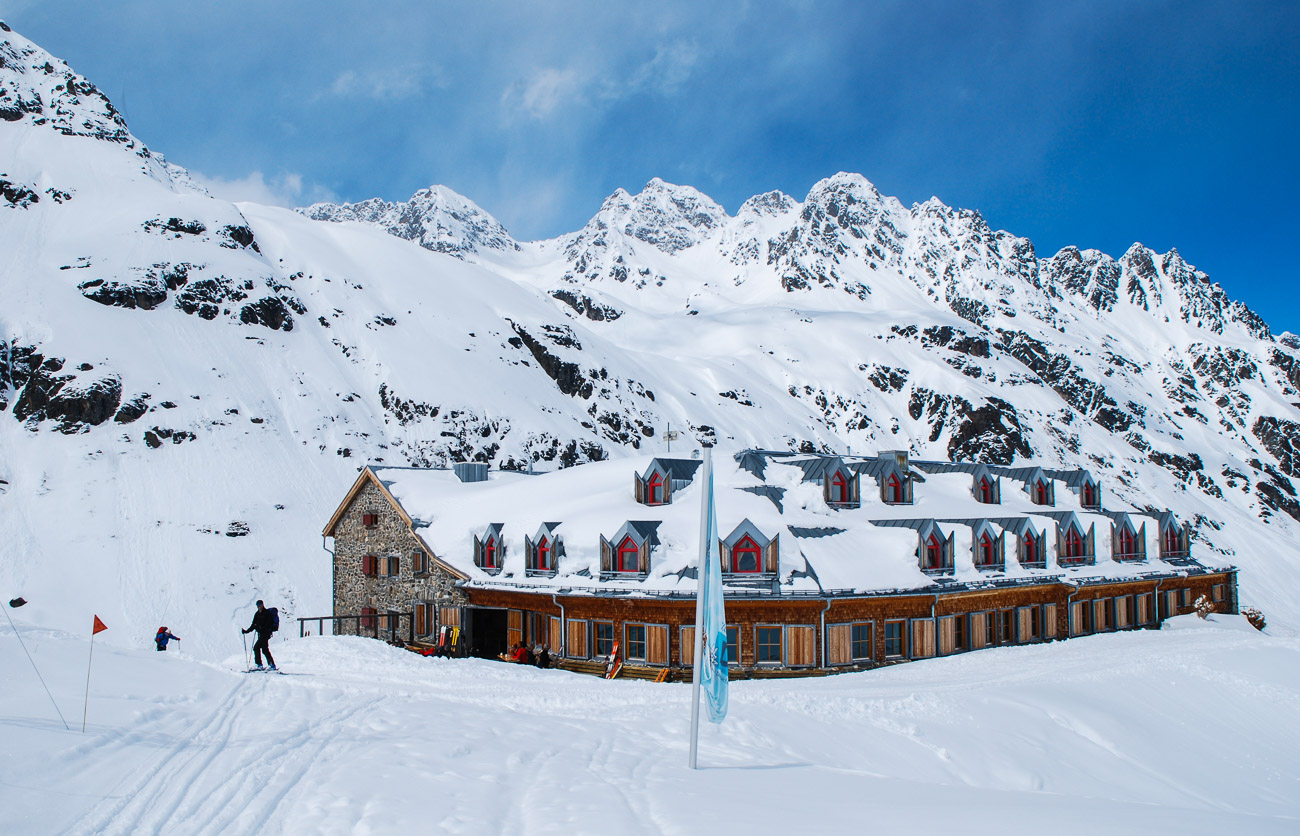
Breakfast at the hotel. Be ready to meet your guide in the lobby of your hotel at 8:30am for an equipment check and trip briefing. You will depart the hotel to begin the trek directly following the briefing. 10km bus transfer down the valley to Ischgl, then we use the lift system for the larger part of the morning to reach the Piz Val Gronda (2800 m / 9200ft) which marks the border to Switzerland. Various off-piste runs or ski touring options exist before we ski down to the Heidelberger Hut (2,264 m / 7,500 ft) either at the end of the day or mid-day before climbing one of the peaks close to the hut in the afternoon. Dinner and lodging at the Heidelberger Hut.
Day 2: Heidelberger Hut
Day ski tour with light backpacks from the Heidelberger Hut, with the goal of ascending a 3,000 m / 10,000 ft peak in the neighbourhood. Like the Jamtal Hut, the area around the Heidelberger Hut offers enough ski touring and peak ascents to keep us busy for an entire week. Piz Tasna and Heidelberger Spitze are amongst our favourite options for longer days, Piz Calgouns for a shorter afternoon trip for those keen to add on a second objective. Second dinner and night at the Heidelberg Hut.
Day 3: Heidelberger Hut to Jamtal Hut
Traverse day to the Jamtal Hut (2,165 m / 7,100 ft), with an ascent of Breite Krone (3,097m / 10,150 ft) along the way. (900 m / 3,000 ft elevation gain, 1,000 m / 3,300 ft descent). Dinner and lodging at the Jamtal Hut.
Day 4: Jamtal Hut
Ski touring day around the Jamtal Hut. Many options exist to climb peaks above 3,000 m (10,000 ft) peaks in the area with northern aspect ski runs with the Gemsspitz (3107 m / 10,191 ft) or the Hintere Jamspitz (3156 m /10,352 ft) being two of our favorites. Second dinner and night at the Jamtal Hut.
Day 5: Jamtal Hut to Wiesbadner Hut
Traverse Day to the Wiesbadner Hut (2440 m / 8000 ft). Commonly we use the traverse via the Vermunt glacier with the option to climb the Dreilaender Spitze (3200 m / 10500 ft) which requires some scrambling along an exposed rocky ridge and is only suitable for more experienced groups. At any rate, the northerly descent down the Vermunt glacier usually offers good powder skiing to the hut. Dinner and lodging at the Wiesbadner Hut.
Please note: For custom trips, we can also descend further, past the Wiesbadner Hut to the Bieler Hoehe, a road pass that is closed in winter. The Berggasthoft Piz Buin offers a remote ambiance with access to excellent day ski touring trips in 3-star hotel setting with a nice spa and excellent food also suitable to spend several days.
Day 6: Wiesbadner Hut to Galtur/Mathon/Ischgl
Return to Galtur, Ischgl, or Mathon. Many options exist for our last ski touring day: The highest peak of the region, the Piz Buin (3310 m / 10860 ft) requires some technical climbing with a rope belay and typically lower client-to-guide ratios but even the trip to the Fourcla dal Confin (border to Switzerland) offers an awesome trip with a great northern aspect descent back to the hut. Alternatively, an ascent of the Rauher Kopf (3100 m / 10170) followed by a northern aspect run down to the Bieler Hoehe is a great way to end the trip. From the Bieler Hoehe, we follow the (closed) road back to the town of Galtuer to complete the trek. The trip includes 1 more night of accommodation at our hotel or B&B in Galteur.
Please note: some of our guests opt to depart Galteur upon the completion of the traverse rather than staying at the Galteur hotel for the final night (typically for travel reasons). If this is the case we can assist you in booking a final night’s accommodation in Innsbruck or Munich (an additional charge may apply if rates are significantly higher than in Galteur).
Departure/Travel Day:
Departure after breakfast or transfer to one of our other Alps ski traverses!
Inclusions
Included:
- 6 days guiding by an internationally (UIAGM/IFMGA) certified, multilingual, mountain guide
- All guide expenses
- 2 nights accommodation in a hotel double room with breakfast
- 5 nights hut accommodation with halfboard (dinner and breakfast)
- Luggage storage
- Taxi/bus rides that are part of the itinerary
Not included:
- Air travel
- travel to and from your Hotel (Galtur, Mathon or Ischgl)
- Gondola and ski lift rides
- Dinners not included above
- Lunches, beverages, and snacks
- Avalanche safety equipment (shovel, probe and avalanche transceiver
- Rental equipment (if necessary)
- Insurance
- Additional costs in case of itinerary changes (adverse weather or mountain conditions, preferences, fatigue, lack of skills etc…)
- Single room (surcharge applies)
Silvretta Ski Traverse Itinerary: Custom Itinerary for advanced Skiers/Private Trips
The second variation of the Silvretta Ski Traverse includes more huts (instead of staying for 2 nights at the Heidelberger and 2 nights at Jamtal) and the ascent of more peaks giving you longer days on your skis. This variation is significantly harder than the trip outlined above and is for very fit, experienced backcountry skiers only. Please inquire with us if you have a group of at least three people who would like to undertake this adventure. Due to the significant difficulty of this variation please note that this option is NOT available for group departures.
Arrival/ Travel day: Galtur, Ischgl, or Mathon
Arrive at your airport of choice in the morning. Please see the “Details and Logistics” tab for information on how to get to Galteur (“Galtür” in German) from one of the recommended airports.
Day 1: Galtur/Mathon/Ischgl to Heidelberger Hut
Breakfast at the hotel. Be ready to meet your guide in the lobby of your hotel at 8:30am for an equipment check and trip briefing. You will depart the hotel to begin the trek directly following the briefing. Bus transfer to Ischgl, ski lifts to the Pauliner Kopf (2,864 m / 9,400 ft), and ski to the Heidelberger Hut (2,264 m / 7,500 ft). If time allows, we can ascend a peak along the way, or just enjoy turns in the area.
Day 2: Heidelberger Hut to Jamtal Hut
Ski tour to the Jamtal Hut (2,165 m / 7,100 ft), with an ascent of Breite Krone (3,097m / 10,150 ft) along the way (900 m / 3,000 ft elevation gain, 1,000 m / 3,300 ft descent).
Day 3: Jamtal Hut to Wiesbadner Hut
Ski tour to the Wiesbadner Hut (2,443 m / 8,000 ft), including an ascent of the Dreilanderspitze (3,197m / 10,500 ft) along the way (1,000 m / 3,300 ft elevation gain, 700 m / 2,300 ft descent).
Day 4: Wiesbadner Hut to Silvretta Hut
Ski tour to the Silvretta Hut (2,341 m / 7,700 ft) with an ascent of Piz Buin (3,312 m 10,900 ft) along the way.
Day 5: Silvretta Hut to Saarbrücker Hut
Ski tour to the Saarbrücker Hut (2,538 m / 8,300 ft) with an ascent of Silvrettahorn (3,244 m / 10,640 ft) along the way.
Day 6: Saarbrücker Hut to Galtur/Mathon/Ischgl
Ski to the valley and return by bus to our hotel in Galtür.
Departure/Travel Day:
Departure after breakfast or transfer to one of our other Alps ski traverses!
Transportation
We will book a hotel for your group in one of three towns in the Paznaun Region: Galtür, Ischgl, or Mathon. It is easy to reach these towns by train and bus from nearby airports. The closest airports are Innsbruck, Austria (1 hour); Munich, Germany (3 hours); Friedrichshafen, Germany (2.5 hours); and Zürich, Switzerland (3-4 hours).
From one of the airports and/or the city’s main train station, take the train to “Landeck-Zams”, Austria. Once in Landeck, get on bus number 260 to Paznaun, directly in front of the train station. The scenic bus ride takes around 50 minutes to 1 hour. Taxis from Landeck-Zams train station are also available. Contact information can be found here.
If enough participants arrive at the Munich airport at a similar time, OnTop can arrange a van to pick up and deliver the whole group for an extra fee.
Silvretta Ski Traverse Private Trip Pricing
Why not find some friends and put together your own group? For private groups undertaking Itinerary 1, we can offer the following pricing assuming the same inclusions :
2 participants: 60% premium in addition to our advertised per person price
3 participants: 40% premium in addition to our advertised per person price
4 participants: 20% premium in addition to our advertised per person price
5 participants: Our advertised per-person price
6 – 8 participants: 10% discount from our advertised per person price*
*we only confirm a group of 8 with 1 guide if all participants are strong skiers with previous multi-day hut trip experience. For groups that are not as strong, we recommend 2 guides, in which case the discount does not apply.
For groups larger than 8, please reach out to us for a custom quote.
Itinerary options:
Additional days:
A great way to acclimatize and to expand your trip by a day or two is to add ski touring days near the starting point of our traverse. Tyrol, Austria offers endless off-piste skiing options. Ask us for a quote for additional days.
Please also see Itinerary 2 under the Advanced itinerary tab.
For custom departures, we can extend or shorten the trip. The huts and lodges offer enough ski touring terrain to keep us entertained for plenty of extra days.
Gear List
Hut-to-Hut Ski Traverse Gear List.PDF
Click the link above to download a PDF copy to use as a checklist when preparing for your trip.
Considerations
Packing for a ski traverse is a balancing act. You want your pack to be as light as possible so you can truly enjoy the trek, but you also need to have enough gear to be warm (or cool), comfortable, and well-fed and watered. When buying, renting, or borrowing gear for the trip, please keep weight, performance, and function in mind.
Legend:
*Optional
**Optional but recommended
Technical Gear
- Alpine touring skis for spring ski touring, no wider than 100 mm underfoot
- Alpine touring ski boots, compatible with touring binding
- Ski crampons compatible with your skis and bindings
- Boot crampons, lightweight, compatible with your ski boot (Not required for Silvretta Ski Traverse)
- Adjustable ski poles
- Climbing skins, well glued and fitted to your skis (leaving the edges free once applied to ski base)
- Backpack (40 – 50 liters) with outside straps to attach skis and crampons
- General repair kit and Leatherman (can be shared between several people)
- Spare parts specific to your equipment
- Ski helmet*
Avalanche Rescue Gear
- Modern, 3-antenna avalanche transceiver
- Lightweight, metal snow shovel
- Avalanche probe (two to three meters long)
Technical Gear Provided by OnTop Mountaineering
The following equipment will be provided to you by OnTop Mountaineering for the duration of your traverse. This rental is included as part of your trip package. Should you not require the use of this gear, please inform your Trip Coordinator.
- Climbing harness (preferably without padding) for glacier travel
- One triple-action locking or two conventional locking carabiners
- Crevasse rescue equipment (Prusik slings, webbing, pulleys, auto-locking device). Your guide will bring a full set for the group.
Ortler Ski Traverse Only
- Ice axe for glacier travel (50-75 cm long) if guide deems necessary for conditions
Around the Huts
- Sleeping bag liner – no zippers, plastic, or metal. Silk is lightest (MANDATORY for HUT LODGING)
- Toiletries (minimum supply with small containers for soap and shampoo)
- Small, lightweight travel towel
- Down vest or light insulated jacket*
- Cash – euros for lunches, drinks, snacks, showers, etc.
- Light hut slippers or crocs. Some huts provide them, others do not
- Ear plugs**
- Alpine Club card (if you are a member of an Alpine Club)*
Clothing
We recommend the ‘layering system’: Bring light, technical clothing that doesn’t take much space in your backpack and dries quickly when sweaty or wet. Layers must be put on and taken off quickly as weather conditions change during the day. Merino wool is a nice material for base layers and t-shirts because it is comfortable, warm, and it does not retain odours, even after many days of use. Wind and waterproof shell jacket with hood (Gore-Tex or similar)
- Wind and waterproof shell jacket with hood (Gore-Tex or similar)
- Wind and waterproof over pants (Gore-Tex or similar)
- Ski touring pants
- Thick fleece or wool pullover, or PrimaLoft jacket
- Medium weight fleece shirt
- Capilene, fleece or wool underwear, top and bottoms
- Two or three pairs of gloves (lightweight and heavier weight)
- Socks (synthetic or wool, thick outer and thin liners)
- Spare underwear / sports bra
- Wool or fleece hat, covering the ears
- Sun hat, preferably with wide rim
- Bandana or neck gaiter (eg. Buff)*
Other Items
- Sunglasses with high UV protection. Nose cover optional. Extra sunglasses is a good idea.
- Goggles with high UV protection
- Sunscreen and lip protection with high SPF
- One-litre water bottle with an insulator. Water bladders not recommended
- Headlamp with spare battery
- Personal first aid kit and other needs (eg. blister kit, prescription medicine, anti-inflammatory, contact lenses, prescription glasses, feminine hygiene, toilet paper, hand sanitizer etc.)
- Passport and health and travel insurance documents
- Snacks – candy bars, dried fruit, nuts, etc.**
- Light stuff sacs or Ziploc bags to keep your backpack organized and important items dry**
- Rain cover specific to your pack, or large plastic bag*
- Small thermos*
- Pocket knife*
- Camera, spare batteries*
- Adaptor for European charging system*
- Cellphone with charging cable*
- Portable powerbank*
- Compass, maps, GPS, altimeter watch*
- Ski wax / skin wax*
FAQ
Do I need to sign a Release of Liability & Assumption of Risk Agreement (a.ka. liability waiver)?
Yes, you do. Mountaineering, skiing, climbing, hiking, via ferrata and all other wilderness and adventure travel activities are inherently risky with potential for injuries or even death.
It is very important to us that you are aware of those risks before you start the booking process, which includes filling out a booking form and paying a deposit.
With signing the liability waiver, you confirm that you understand the potential risks and hazards, and are willing to accept the risks, which includes giving up legal rights you may have.
This would also be the time to ask questions or address concerns before you book.
For your reference here is a link to our Liability Waiver. Our booking terms & cancellation policy with more details can be found here
Can the Silvretta Ski Traverse be done on a splitboard?
Some sections of the Silvretta Ski Traverse lend themselves to splitboards, but other parts are not splitboard-friendly. There are some low-angle descents and up-and-down sections that must be done in “walk mode”. Also, in case the party needs to rope up in bad visibility, skiing tends to be easier than boarding thanks to the ability to ‘snowplow’. All in all, the Silvretta Ski Traverse is probably not well-suited to splitboards. If you would like to complete this traverse on splitboard, please contact us before signing up.
Trip-related Questions:
Will we need ski crampons and/or boot crampons?
For spring ski touring in the Alps the ski crampons are imperative for about 70% of all trips. Once the typical spring diurnal weather cycle kicks in you will likely be walking on a melt-freeze crust on any solar aspects. The boot crampons work well for shorter, steep bits that go straight up but you will likely find yourself on extended side-hilling on a melt-freeze crust that carries for skis but you’d post-hole on boots with crampons. Consequently, what travels easily with ski crampons turns into an excruciating nightmare on boots…
That being said, if you end up picking a week that has more wintery weather with snowfall every day you may not need them at all! But if you do need them, you REALLY need them!
Boots crampons are always a delicate subject. Whether clip-binding in front or behind, one fits on one shoe and not on the other or vice versa. The crampons that always fit are paradoxically the ones that are slowest to put on, those with a strap-binding front and back.
The weight is a very important factor, as well as the protective cover to store them safely in the backpack. On Monte Cevedale, for example, we would not make it up to the summit (in certain weather conditions) without boot crampons. And on Monte Pasquale can be challenging without crampons because of 15 meters of hard ground. Please bring a pair along and if the guide feels you do not need them, they can be left with your luggage at the hotel.
Are there extras we can purchase at the huts and will we need cash?
All of the huts provide a three- to four-course dinner (soup, sometimes salad, main with meat and dessert), and breakfast (coffee, tea, bread, butter, jam, cheese, sometimes also sausage). These meals are included in your trip price. However, be sure to bring some Euro cash for the extras in the accommodations as they often do not accept credit cards.
To be well on the safe side, we suggest bringing about 50 Euros in cash per day.
Beverages are available for € 3-6 . Good wine costs € 20-35 per bottle. The water at the huts is officially not drinkable, but our guides say “although it is good”. When showers are available, they cost around € 3, or shower + towel is around € 5.
You can purchase lunch-to-go at the huts and in the valleys. Snacks, sandwiches, and hot lunchtime meals can also be purchased in the huts for € 1o to 20.
Can I rent touring skis and boots in Galtur?
Yes, the Sport Walter rental store in the village square rents touring skis and boots in their ‘diamond’ package. We do highly recommend bringing your own touring boots instead of renting. Good fitting ski boots are of fundamental importance when ski touring and an ill-fitting pair of boots can be seriously uncomfortable and lead to cold, painful feet. To reserve equipment visit Sport Walter’s website here.
Can I rent an avalache transceiver, shovel, and probe in Galtur?
Yes, the Sport Walter rental store in the village square rents avalanche transceivers, shovels, probes in limited quantities. Please contact them prior to the trip to secure your reservation of these items. Sport Walter can be reached by email at info@sportwalter.com or you can visit their website here.
Can I refill my BCA canister in Europe?
We haven’t seen the BCA system in Tyrol. If the cartridges are different from those of ABS, Mammut, etc., then it might be difficult to find them. You should look for it in bigger cities before arriving for the traverse. Generally, in higher mountain regions in spring, people don’t bring airbags as often.
Trip Details
Arrival Day
We will book a hotel for your group in one of three towns in the Paznaun Region: Galtür, Ischgl, or Mathon. It is easy to reach these towns by train and bus from nearby airports. The closest airports are Innsbruck, Austria (1 hour); Munich, Germany (3 hours); Friedrichshafen, Germany (2.5 hours); and Zürich, Switzerland (3-4 hours).
From one of the airports and/or the city’s main train station, take the train to “Landeck-Zams”, Austria. Once in Landeck, get on bus number 260 to Paznaun, directly in front of the train station. The scenic bus ride takes around 50 minutes to 1 hour. Taxis from Landeck-Zams train station are also available. Contact information can be found here.
If enough participants arrive at the Munich airport at a similar time, OnTop can arrange a van to pick up and deliver the whole group for an extra fee.
Meeting Time/Place
We often organize a meeting time of 8:30am on Day 1 of the itinerary, right before you set off on your first ski day. Your guide will start with an introduction, check your gear and overnight packs, and ask for any important dietary/medical information (privately). For some groups, when it works for the participant’s and guide’s schedules, we can include a guide meeting the night before, on your arrival day. We usually schedule this for 6pm. Your trip information letter (sent 4-6 weeks before your trip departure date) will provide your exact meeting time/day/place.
Best season/climate/weather
Early March until mid-April offers the best combination of weather conditions and snow stability. Temperatures can vary hugely. If winter weather patterns prevail, you can expect temperatures between -5°C and -15°C. Normally in spring, the temperatures range from -10°C overnight to +15°C during the day, especially on sunny days and when descending to the valleys.
The lodging
Galtür, Mathon, and Ischgl are quaint Austrian villages located in the Paznaun region of Tirol, Austria. You will start and end your ski tour here. Lodging is in double rooms with ensuite bathrooms at the three-star standard. Single rooms can also be reserved for a nightly surcharge. These rooms are limited and are subject to availability. If a single room is not available at a hotel, we can reserve a “double room-as-a-single” but the nightly surcharge may be higher than the cost posted on our website.
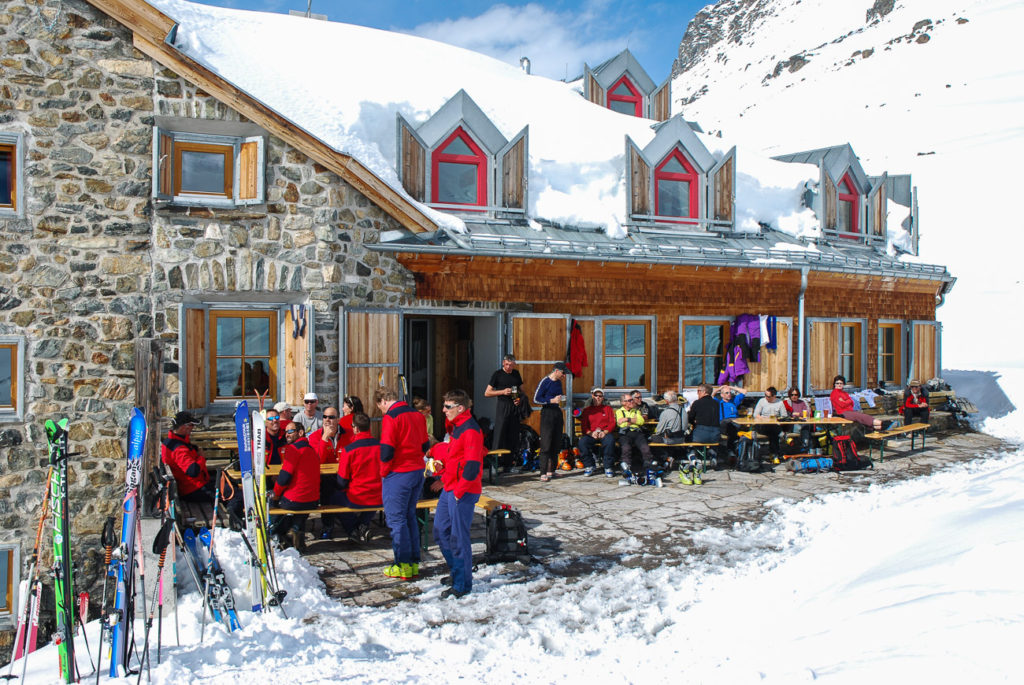
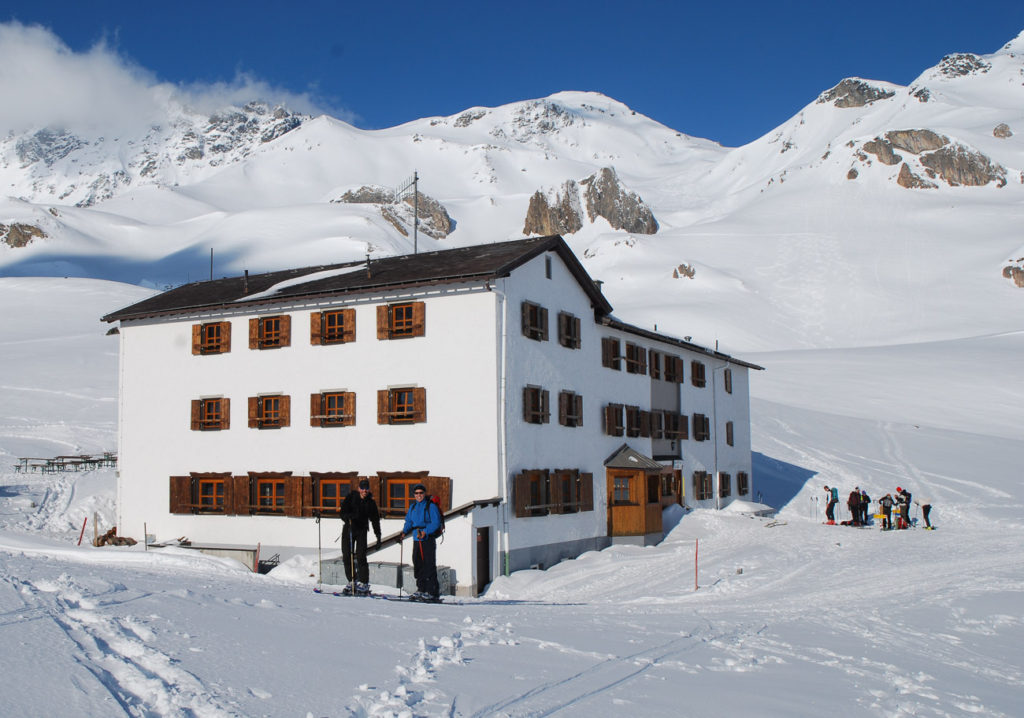
The other nights will be spent in luxurious alpine huts – two of the best in the Alps. They offer multi-bed bunk rooms, showers, meals, and apres-ski beverages. the Jamtal Hut even has a climbing wall and ice tower! The huts are heated, and wool blankets or down duvets are provided. Guests are required to bring a sleeping bag liner. The huts are also equipped with dry rooms for shoes and in some cases, clothing.
All of the huts offer a three- to four-course dinner (soup, sometimes salad, meat entrée and dessert), and breakfast (coffee or tea, bread, butter, jam, cheese, sometimes sausage). These meals are included in the price.
Special dietary needs can usually only be accommodated to a limited extent in the huts. Please talk to us if you have concerns.
The water in the huts is drinkable so there is no need to bring a purifier.
Snacks, sandwiches, cakes, and beverages (alcoholic and non-alcoholic) can be purchased in the huts.
Lunches
Lunches are not included in our trip packages. We recommend packing a lunch for the first day of trekking. Packed lunches are available at each hut and must be ordered the night before. If you have a guide, please discuss as a group what the next day’s lunch plans are as some group may opt to dine-in at a hut along the way.
Luggage Storage and Transfers
You can use the hotel luggage storage facilities at your own risk. Neither OnTop nor the hotel accepts any responsibility for loss of or damage to the luggage or the contents (including any valuables, even if we have been advised) during storage, the disposal process or any luggage transfers that may be part of your trip package. That being said, we have never had any issues with lost luggage during storage or transfer.
Medical/Rescue and Trip Cancellation Insurance
We strongly recommend the purchase of a travel insurance package that does cover adventure travel. Common policies sold by travel agents or policies included in your credit card contract tend to exclude “mountaineering” if you read through the fine print. We recommend an adventure travel policy on our website at http://ontopmountaineering.com/travel-insurance/ which our clients had good experiences with in the past. *NEW: we now recommend including covid-19/pandemic coverage with your insurance policy.
Can I Do It?
While this trip is relatively luxurious as ski traverses go, it can still be physically demanding and it takes us through serious mountain terrain. You must be able to ski safely and in control at all times while wearing a 6-8 kg backpack. Your skiing ability does not need to be technically perfect, but you should be a solid mountain skier with good “survival skiing skills”, and the ability to negotiate adverse snow conditions without falling while still traveling at a decent pace.
You need to be in very good physical and mental condition, ready to be on your feet for about six hours each day, including steep, continuous, uphill climbs of up to 1,000 meters (3,300 ft). Some of the summit ascents require scrambling along exposed ridges, however, you can also choose to wait at the ski depot. The guide will carry a rope for those clients who prefer a belay.
This trip is not recommended for splitboarders.
2027 SCHEDULED DEPARTURES
7 nights, 6 days of touring,
February 14 – 21 (Sunday Departure)
February 20 – 27 (Saturday Departure)
March 2 – 9 (Tuesday Departure)
March 14 – 21 (Sunday Departure)
*March 22 – 29 (Monday departure)
*March 28 – April 4 (Sunday Departure)
April 4 – 11 (Sunday Departure)
April 11 – 18 (Sunday Departure)
* High season surcharge applies
First and last day are travel days
Custom private trips at any time!
Shorter trips possible at pro-rated pricing
2027 PRICES
EUR €2295 per person
*Holiday surcharge of €250 per person for trips during Easter weekend.
GROUP TRIP SIZE
3-7 Clients: 1 Guide
CUSTOM TRIP DEPARTURES
Custom trips at any time from mid-February to end of April!
Shorter trips are possible at pro-rated pricing
For details click “Custom Trips” Tab
TRIP INCLUSIONS
- 6 days guiding by an internationally (UIAGM/IFMGA) certified, multilingual, mountain guide
- All guide expenses
- 2 nights accommodation in a hotel double room with breakfast
- 5 nights hut accommodation with halfboard (dinner and breakfast)
- Luggage storage
- Taxi/bus rides that are part of the itinerary
For a full list of services included, not included, and add-ons, please select our “Trip Inclusions” Tab.