Self-Guided: Tour du Mont Blanc Hike
Alps / France, Italy & Switzerland
4-11 days trekking in the Western Alps
Self-guided: We organize, book lodging & you hike!
Starts and ends in Chamonix, France
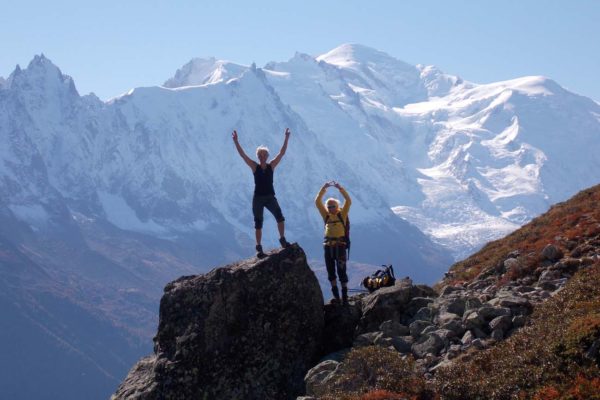
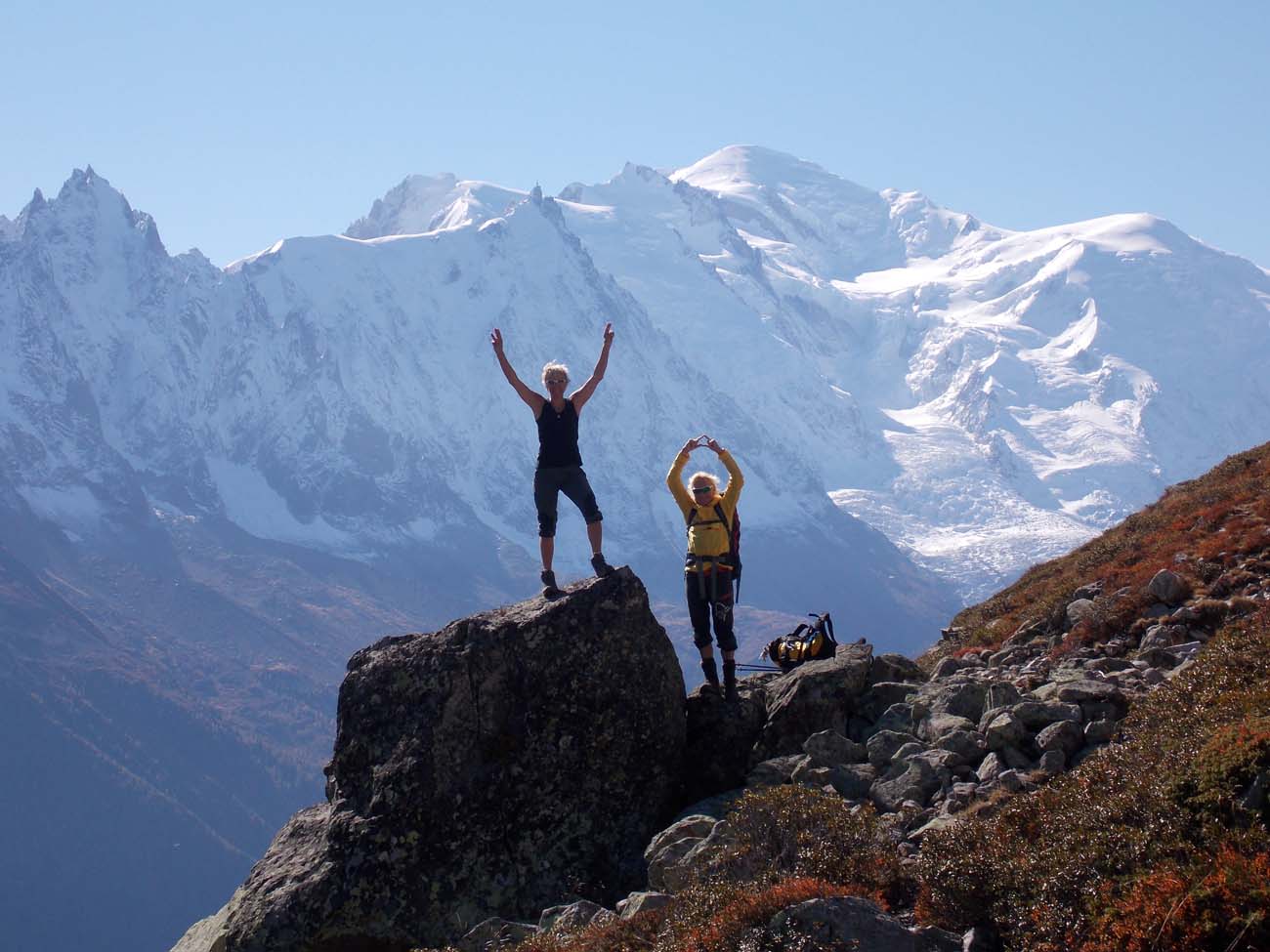
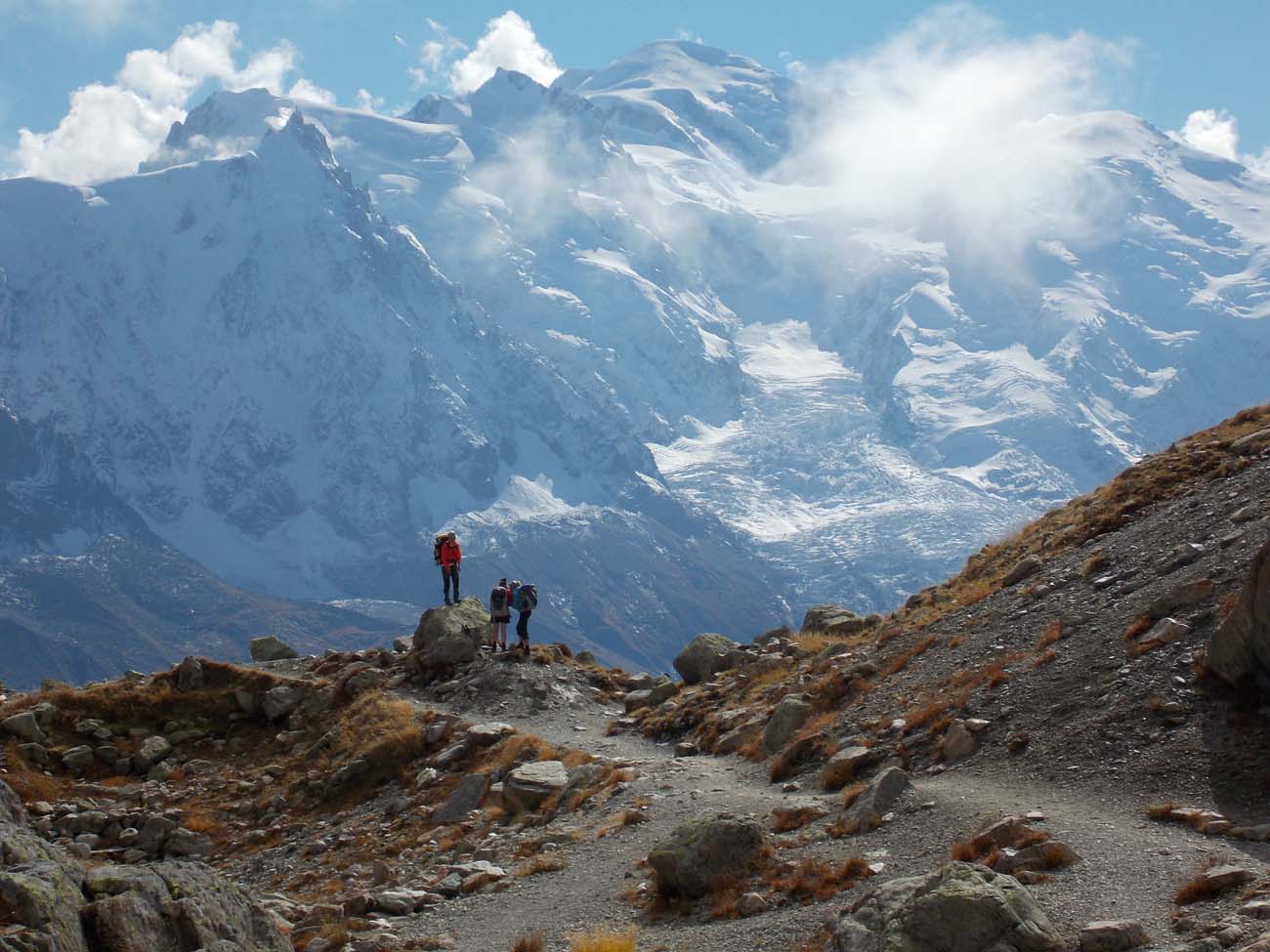
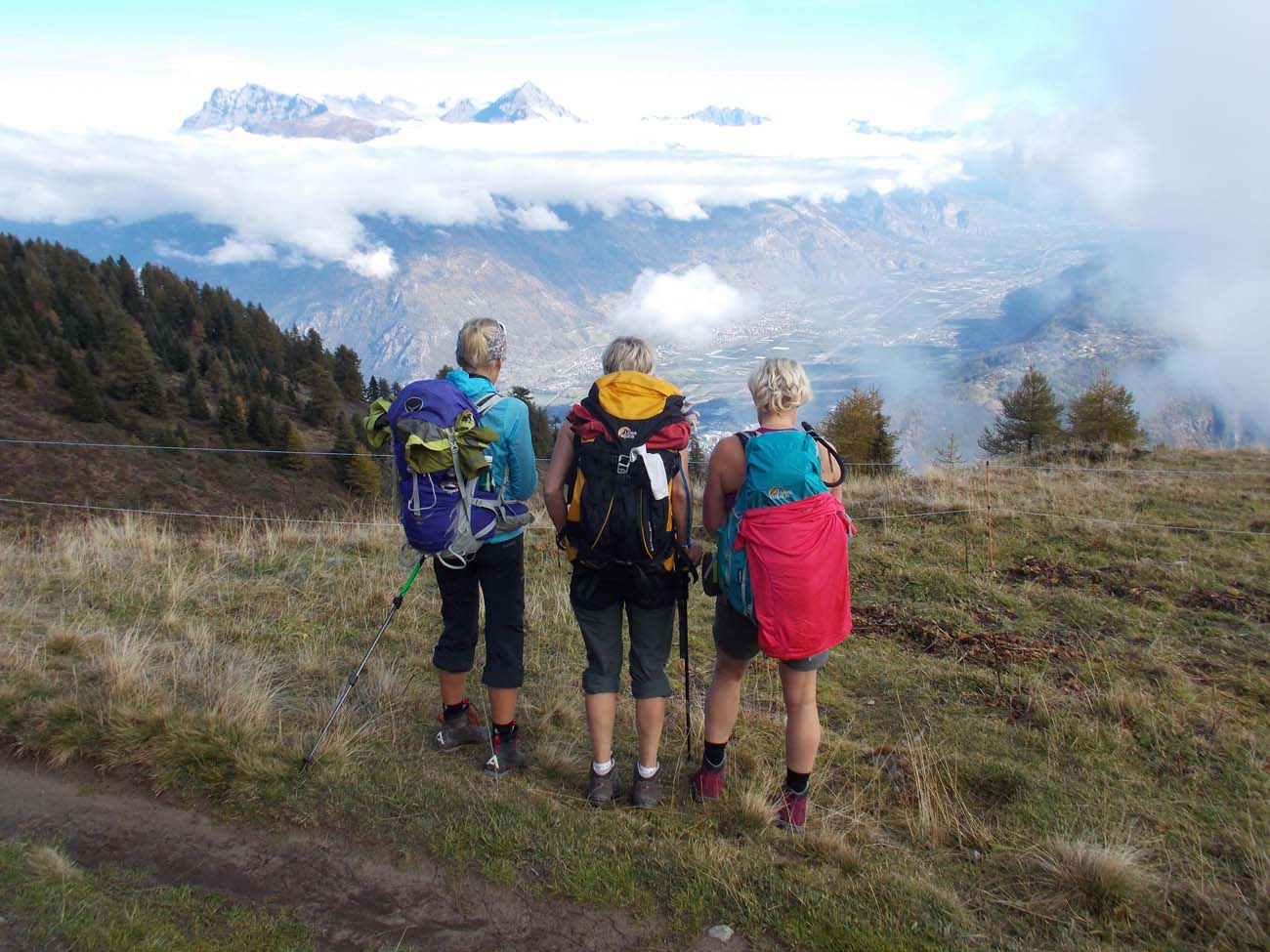
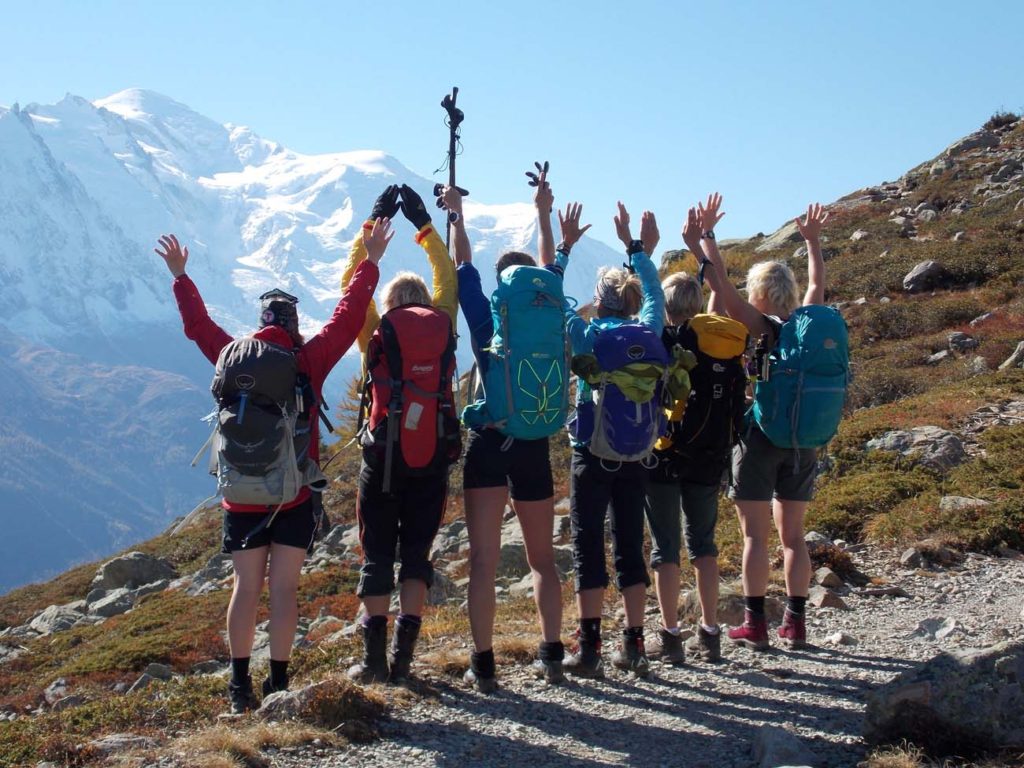
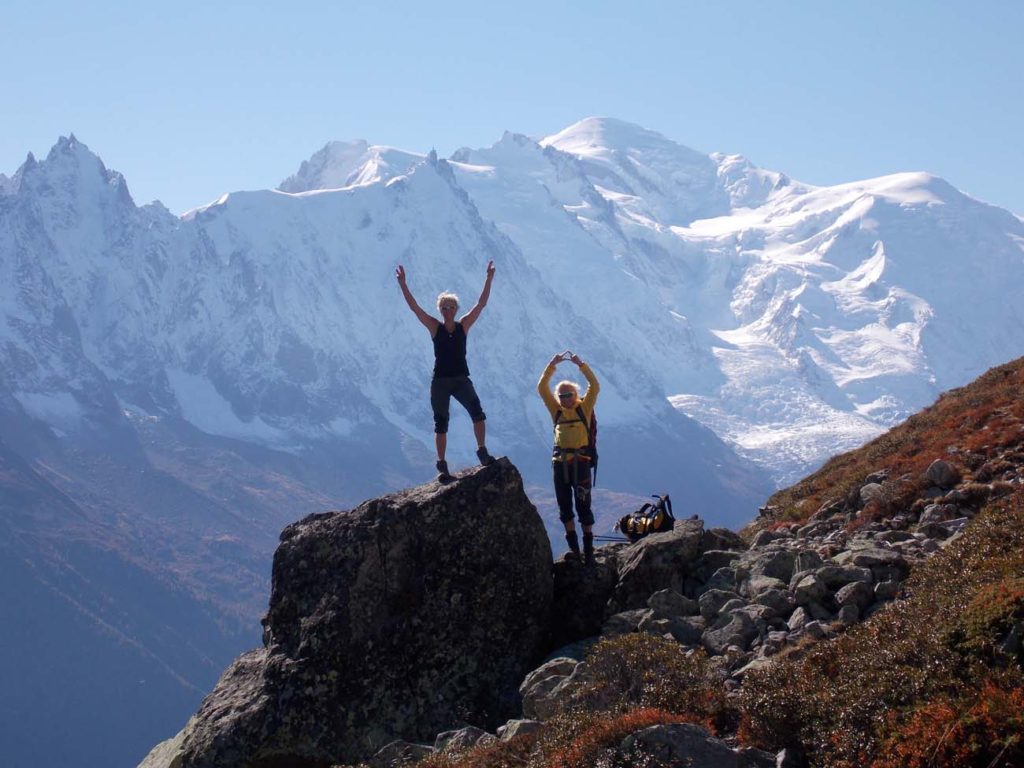
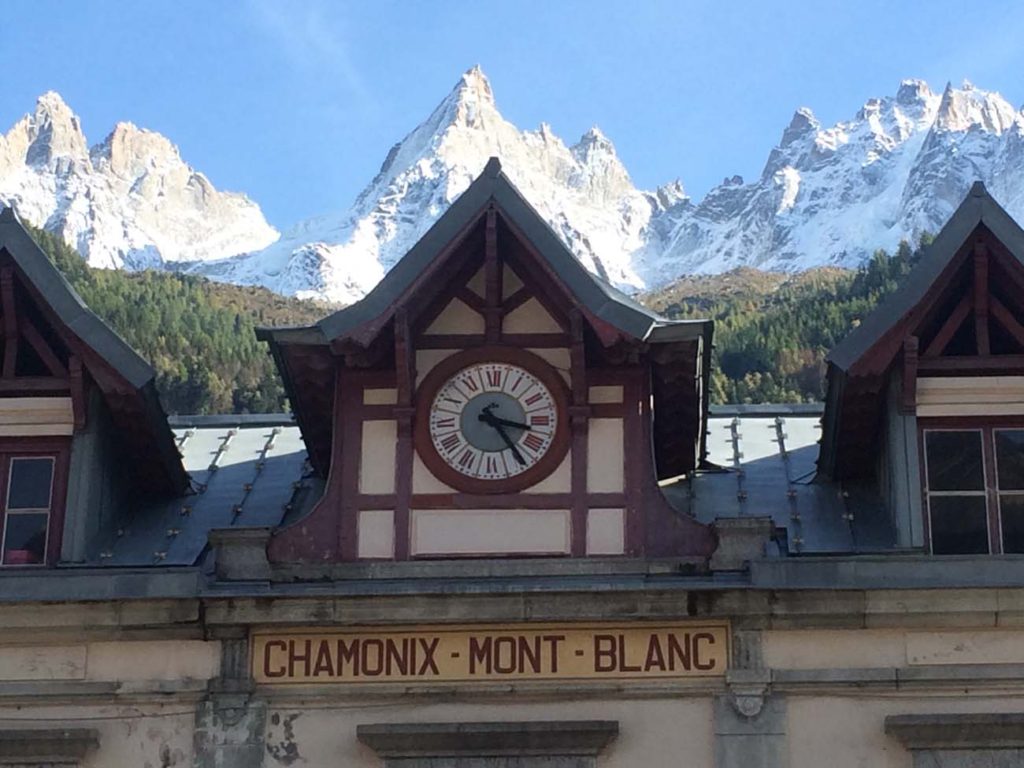
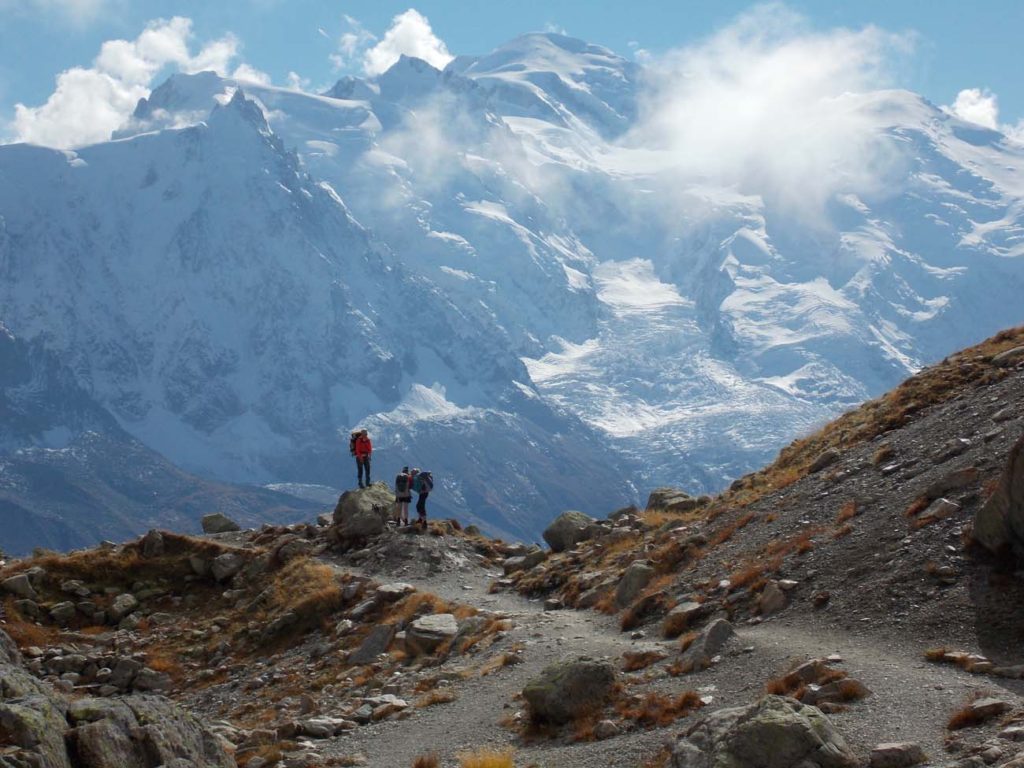
The Tour du Mont Blanc trek, aka the TMB, is a bucket-list item worthy of any hiker’s time and energy. This classic European Alps trek connects three alpine countries – France, Italy, and Switzerland – the TMB is rich in history and old-world culture. Mont Blanc, the highest peak in the Alps, draped with spectacular glaciers towers above the valley floor at nearly 5,000 m.
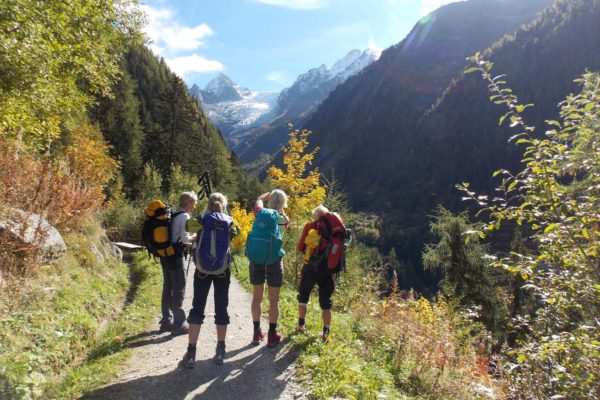
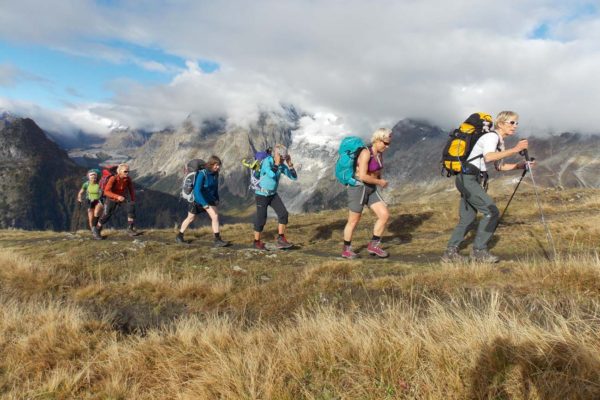
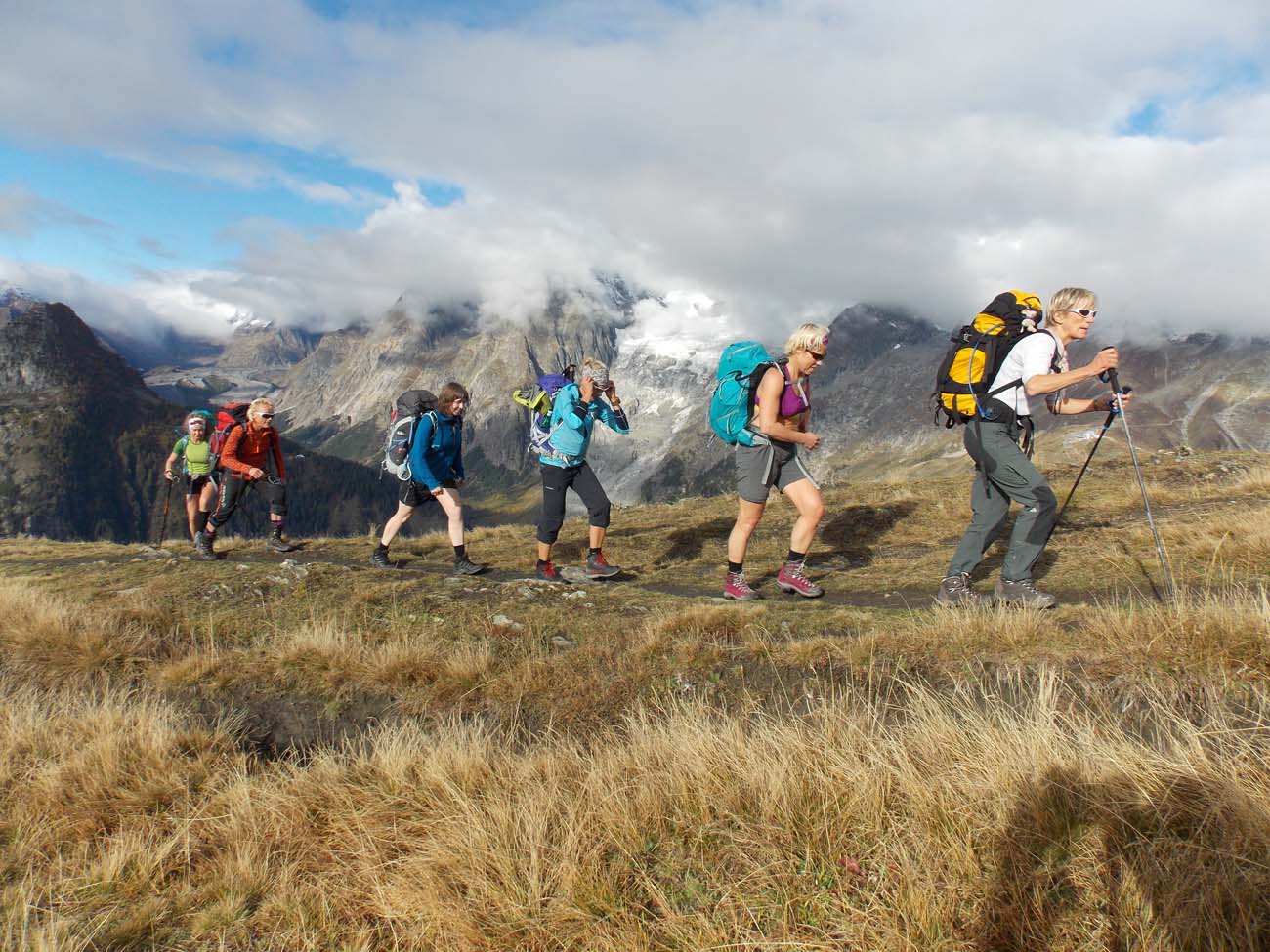
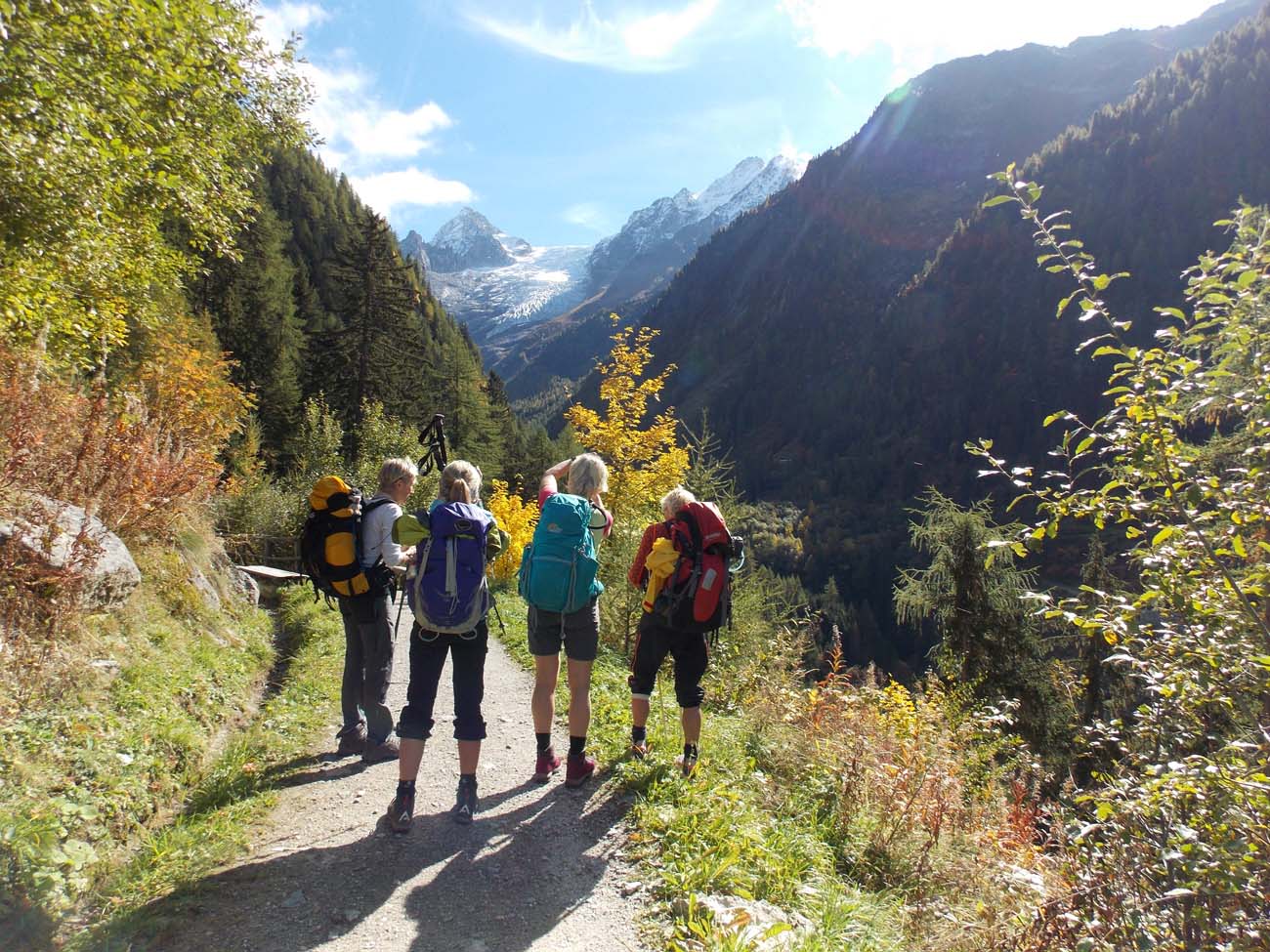
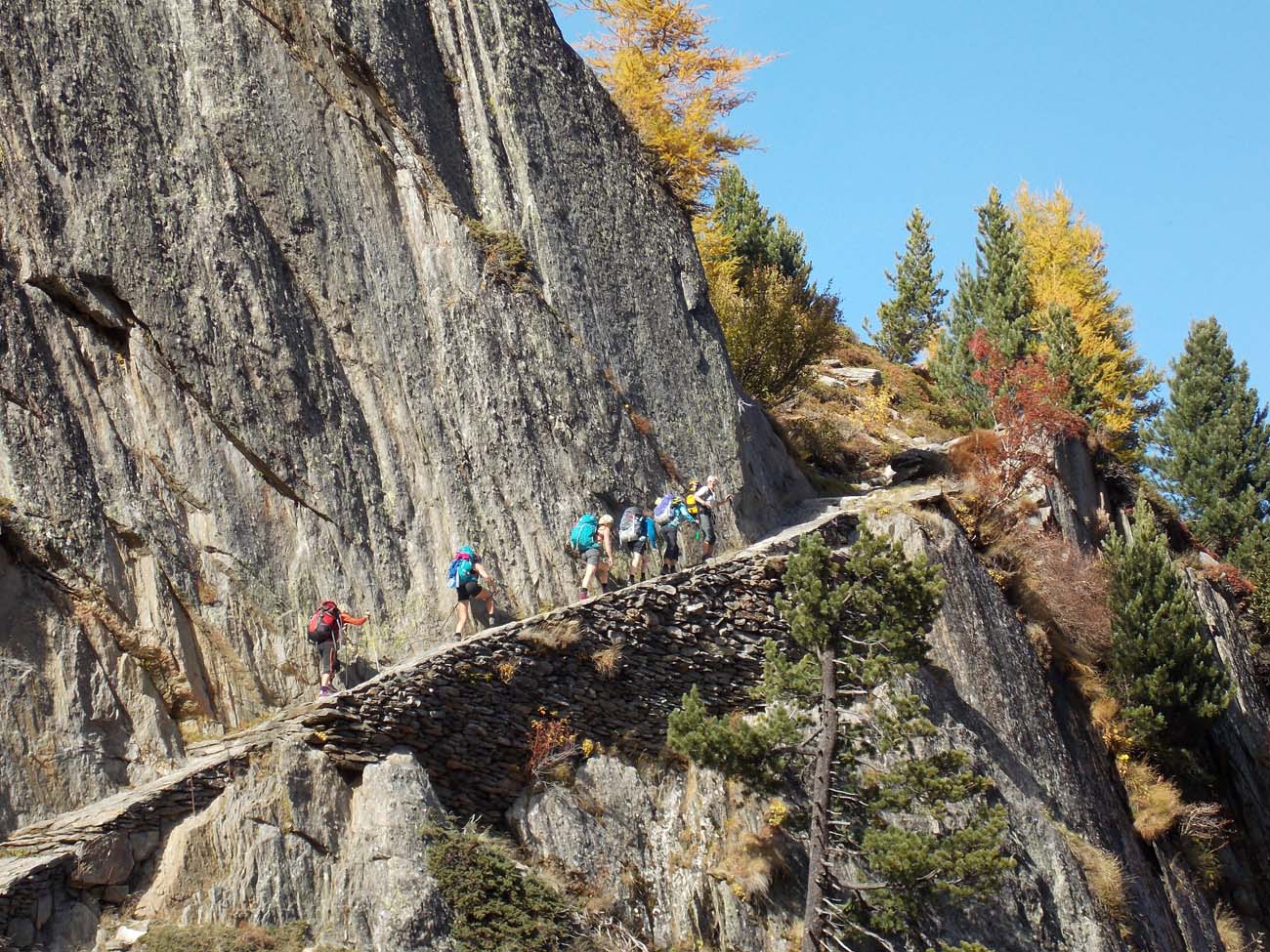
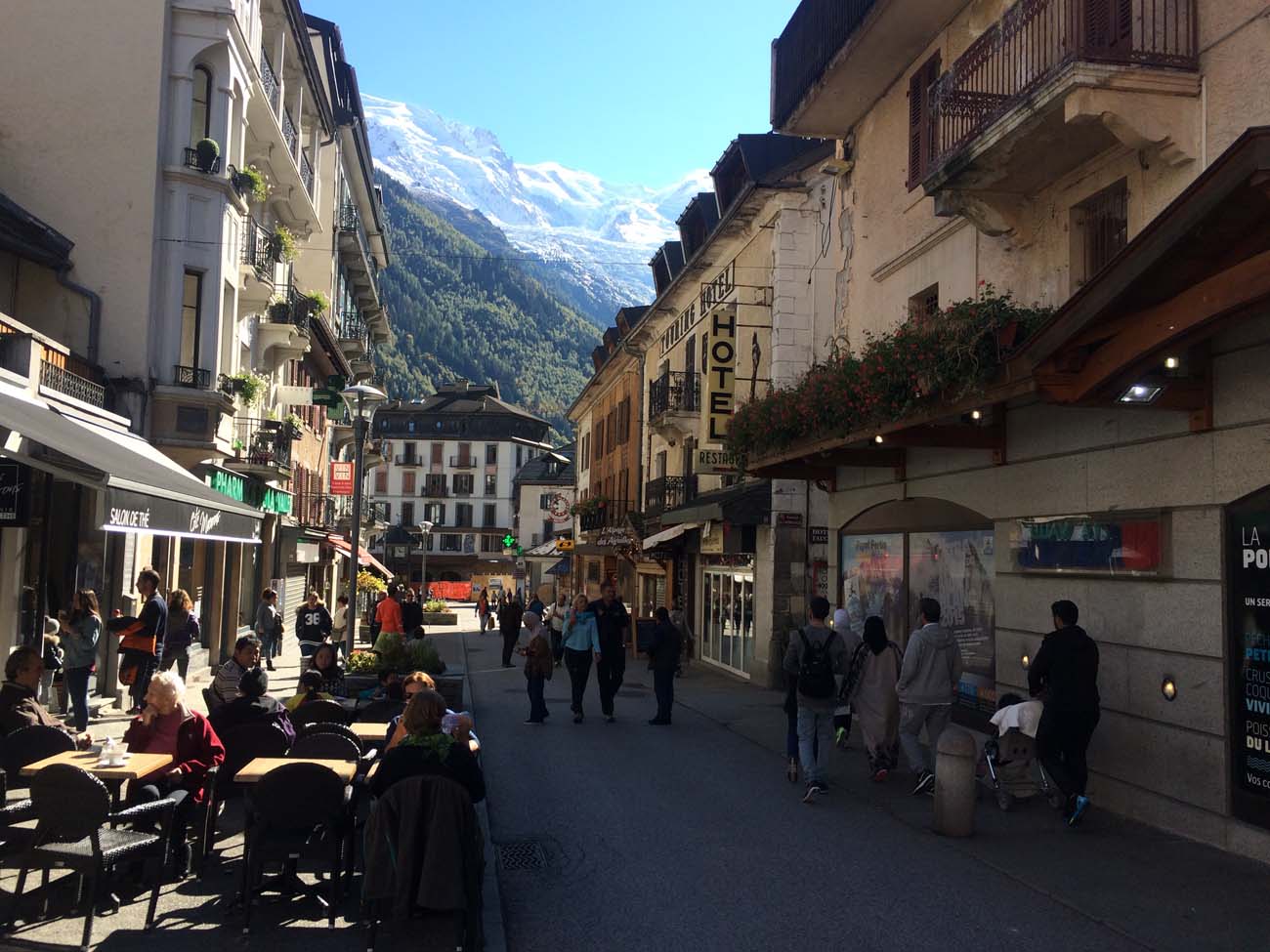
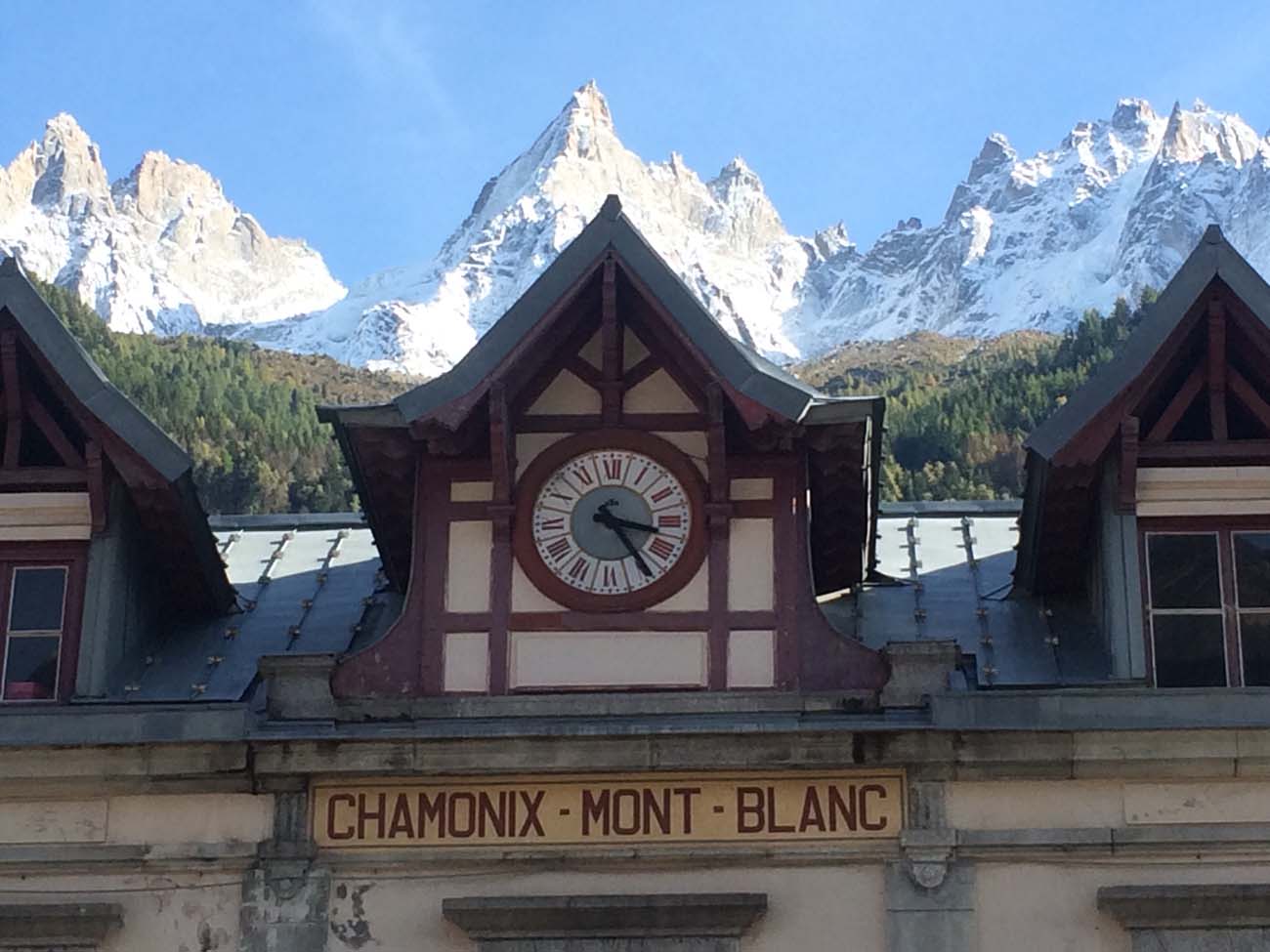
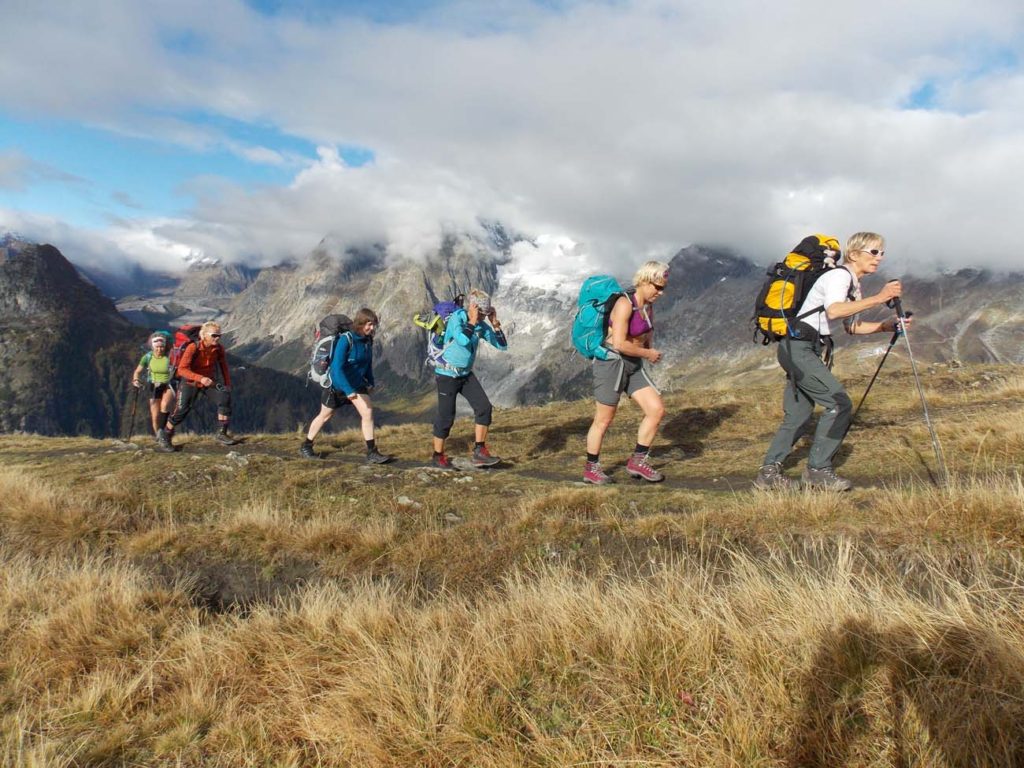
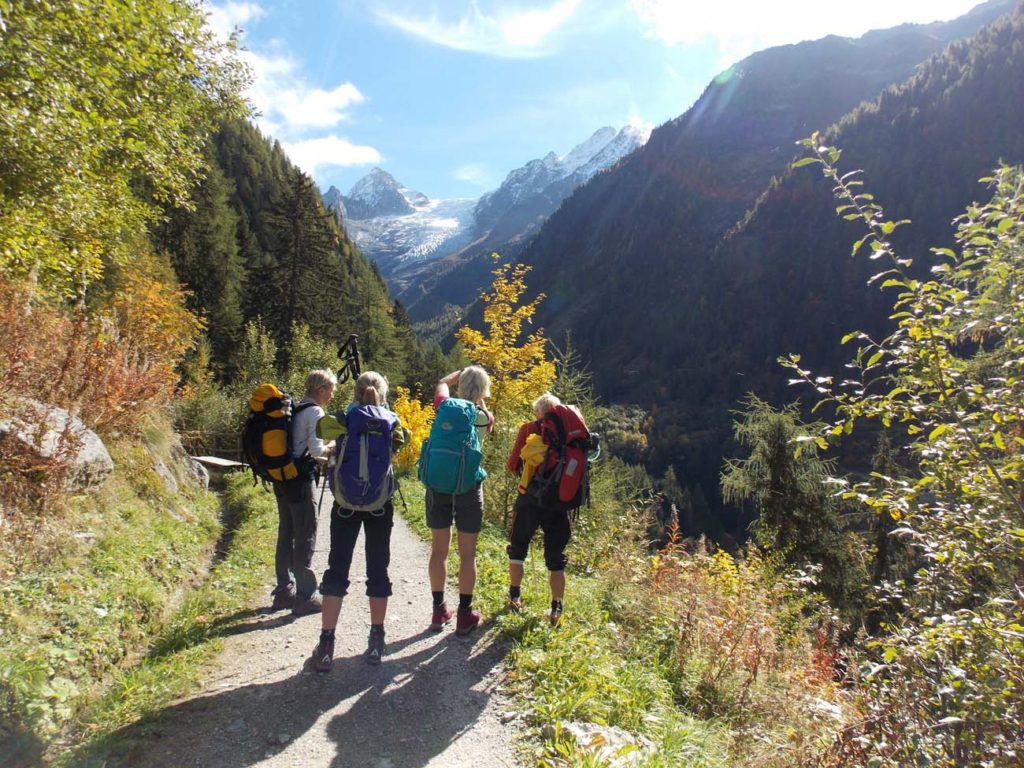
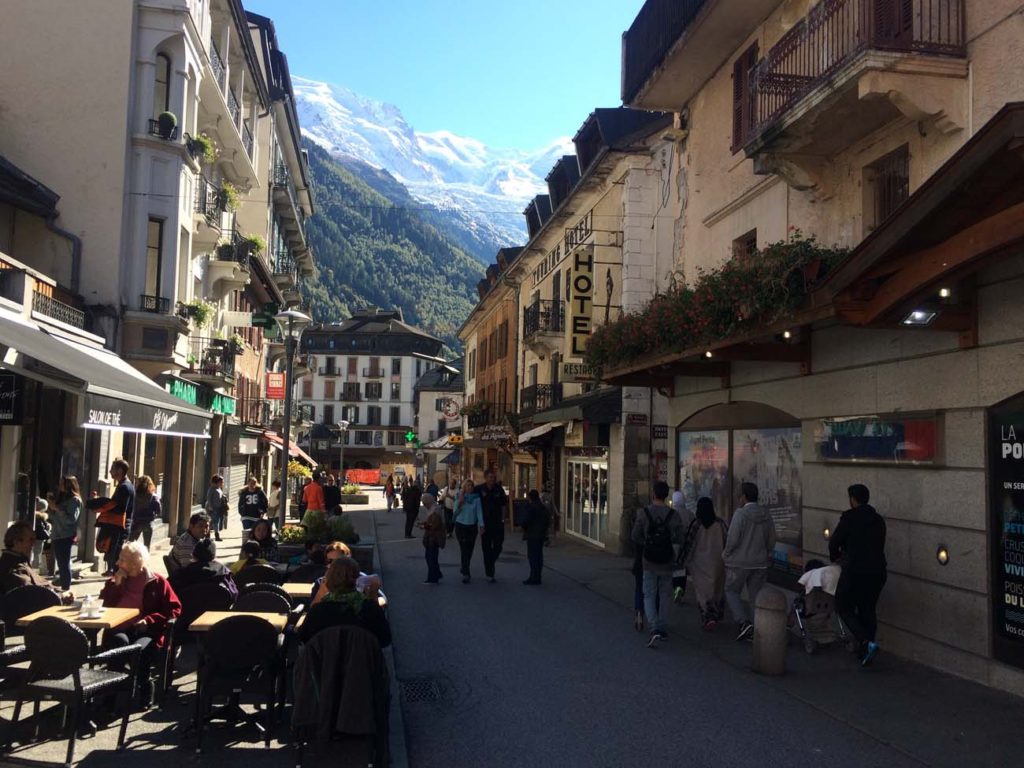
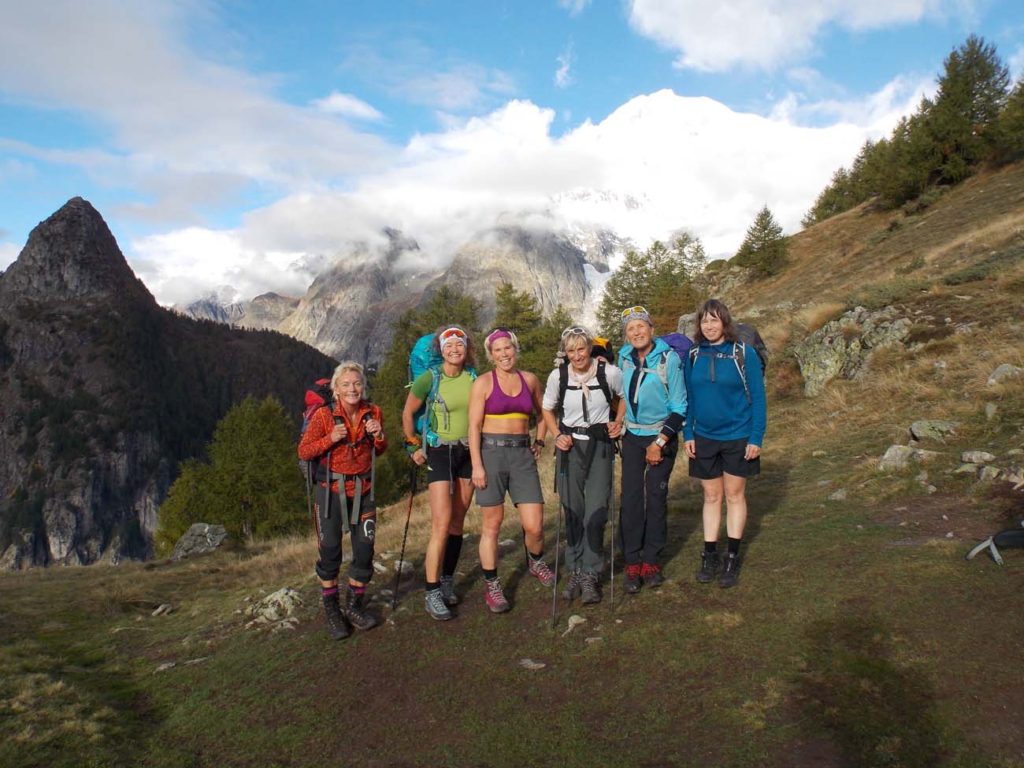
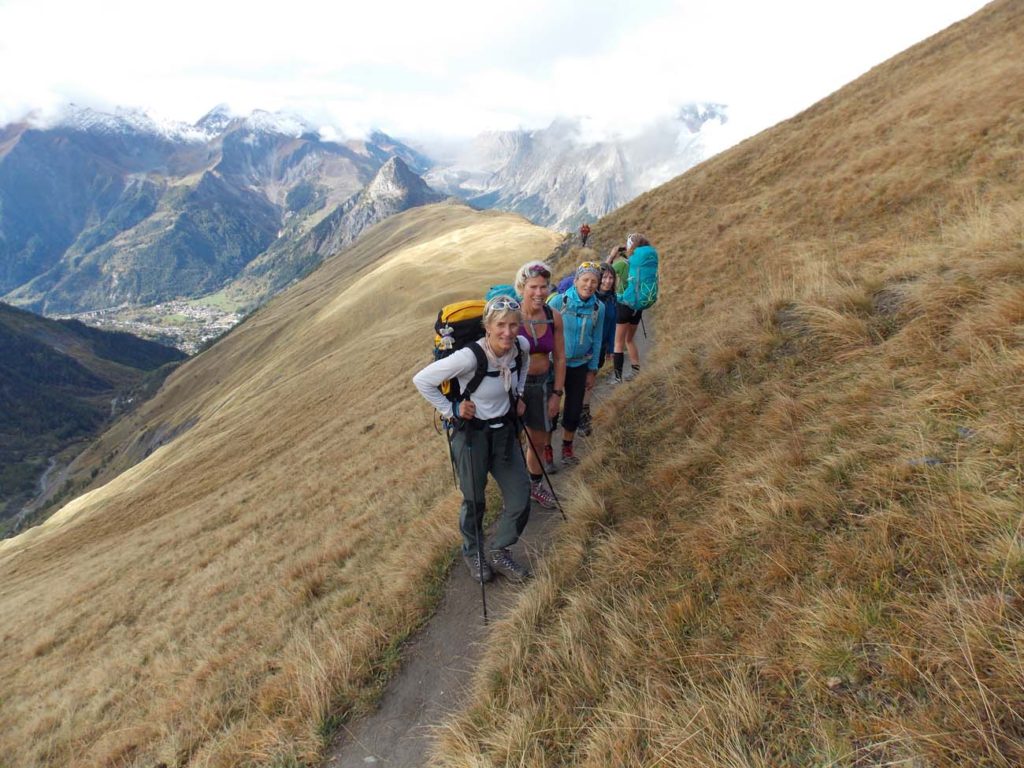
Our hike will begin and end in the alpine capital of the world – Chamonix, France, home to some of the most impressive scenery in the Alps. You will start off in a counterclockwise direction, as the trail meanders over craggy passes and through green pastures where cows and sheep graze under the warm summer sun. The hiking days are long but rewarding as good trails take us through extraordinarily scenic terrain before reaching our evening destination in secluded hamlets or small towns. Daily luggage transfers keep your packs small.
Our most popular variation of the TMB is a 6-day express hike that includes between 6,650 m (22,000′) elevation gain and loss and 100 km (62 miles) and 115 km (72 miles) distance. You will reach an altitude of around 2,500 m (8,200′) several times on the trek, the highest point being the Grand Col Ferret (2,537 m / 8,320 ft) on the border between Switzerland and Italy.
2026 Pricing
from€ 1575EUR / person
HIGHLIGHTS
- Three countries: France, Switzerland, Italy
- Circumnavigate Europe’s highest mountain
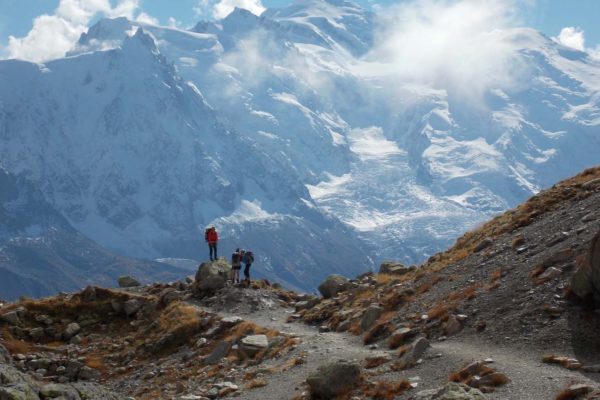
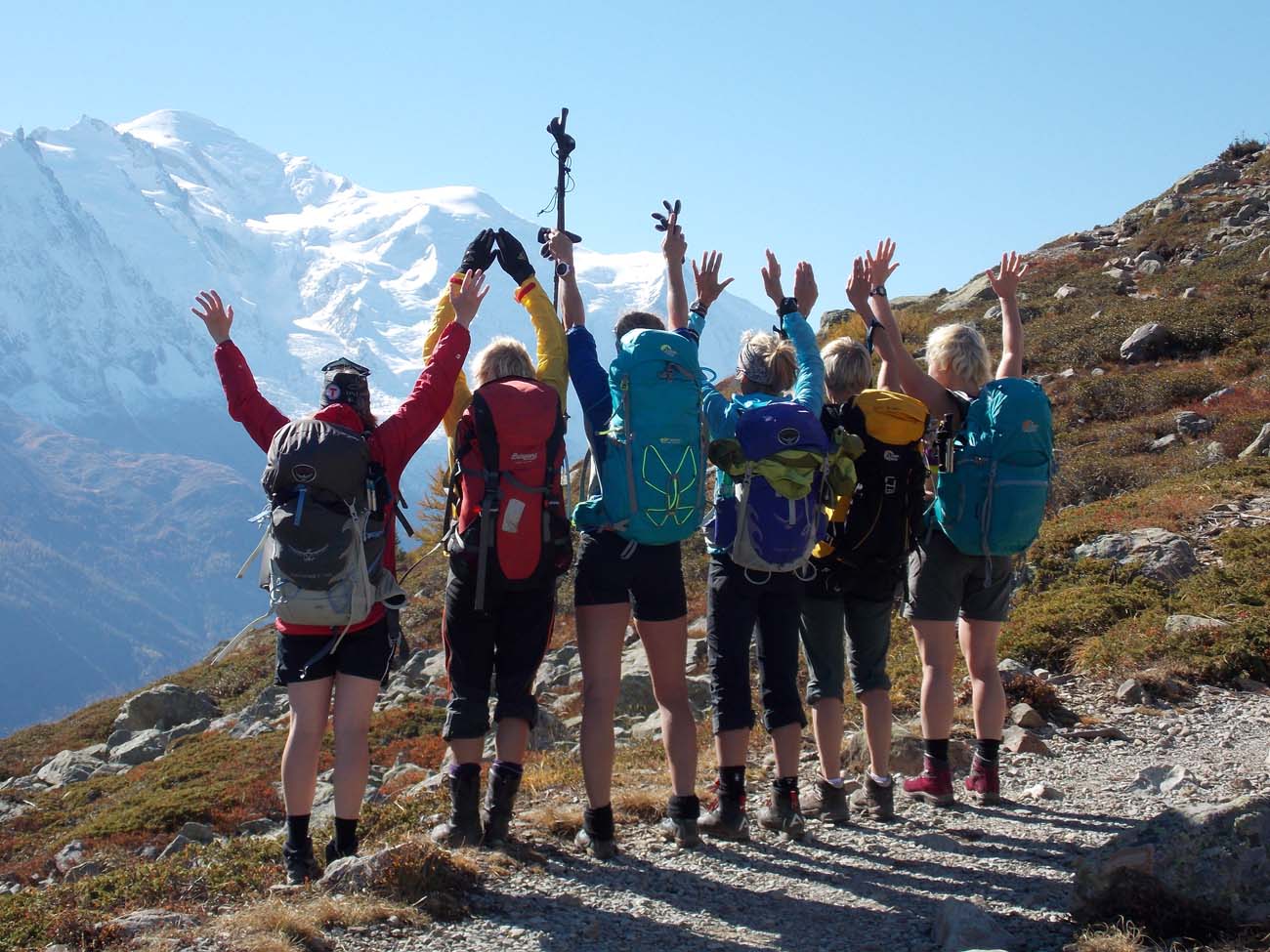
- Spectacular views of Mont Blanc from all sides
- Light daypacks with daily luggage transfer
- Private room lodging in hotels/huts almost every night!
- Great food, comfortable accommodation
DIFFICULTY
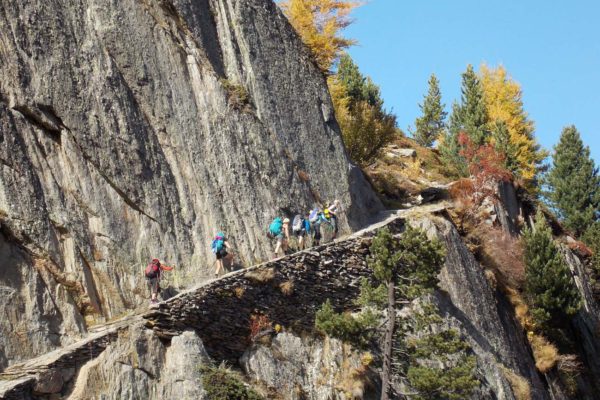
- Strenuous hiking on good trails, rocky terrain, and snow-covered passes
- Eight hours of hiking per day with steady elevation gains and losses
- Yaktrax-type traction cleats may be needed at times, especially early in the season.
- Light backpacks (5 – 8 kg = 11 – 18 lbs)
Self-Guided: Tour du Mont Blanc Hike Itinerary
Our self-guided trips receive a custom itinerary prepared by OnTop’s Director and Head Mountain Guide. A detailed daily trip description with trail numbers, horizontal and vertical distances as well as “Plan B and C” options in case of bad weather or adverse mountain conditions, need for longer or shorter days, etc. will be emailed out 4-6 weeks before your trip start date. We also provide you with a GPS track of the itinerary that can be downloaded to your smartphone to make sure you know where you are at any given time relative to a modern topographic map.
Below is a sample itinerary for our Mont Blanc Express Self-Guided Trek, 7 nights/ 6 days:
Arrival/Travel Day:
Arrive at the Hotel in Argentiere, Chamonix Valley. Regular train and car shuttle services are available throughout the day from Geneva Airport. Travel time is approximately 1.5 hours from the Geneva airport. Aim to arrive in the Chamonix Valley in the afternoon, allowing time to pack your trekking bag, have dinner, purchase snacks in town, etc.
Day 1: Argentière-Lac Blanc-Chamonix via La Flégère cable car
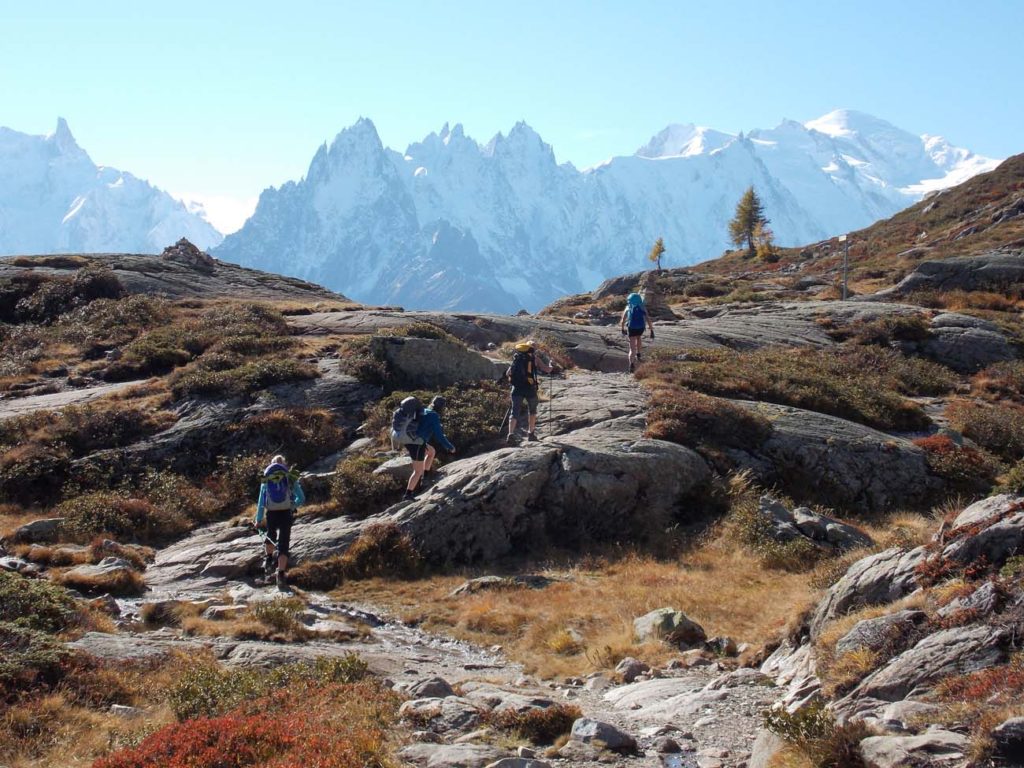
To get you acclimatized and warmed up, we start you out with a day trip in Chamonix Valley. Today is one of the most impressive days on the Tour du Mont Blanc, with the best view of the entire Mont Blanc range. An early start will enable you to reach the famous Refuge du Lac Blanc, perched high above the Chamonix Valley, in time for lunch.
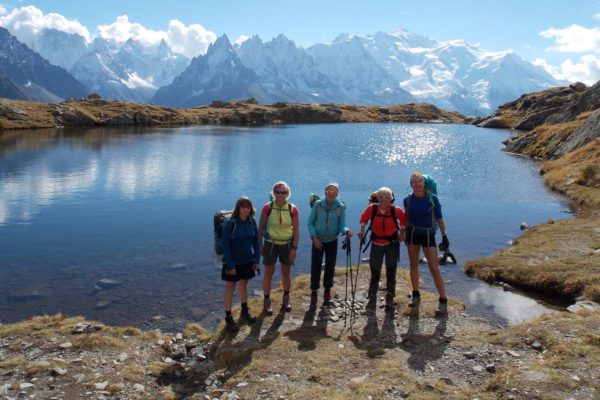
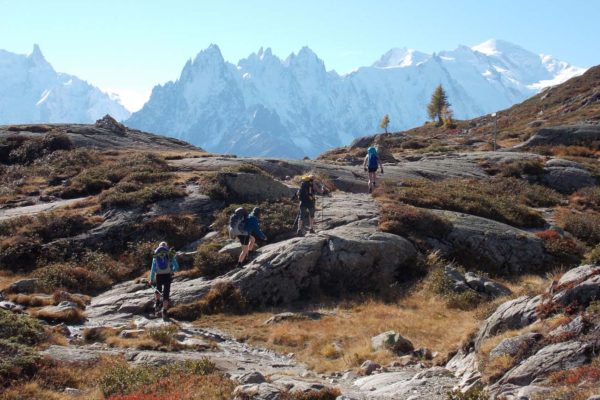
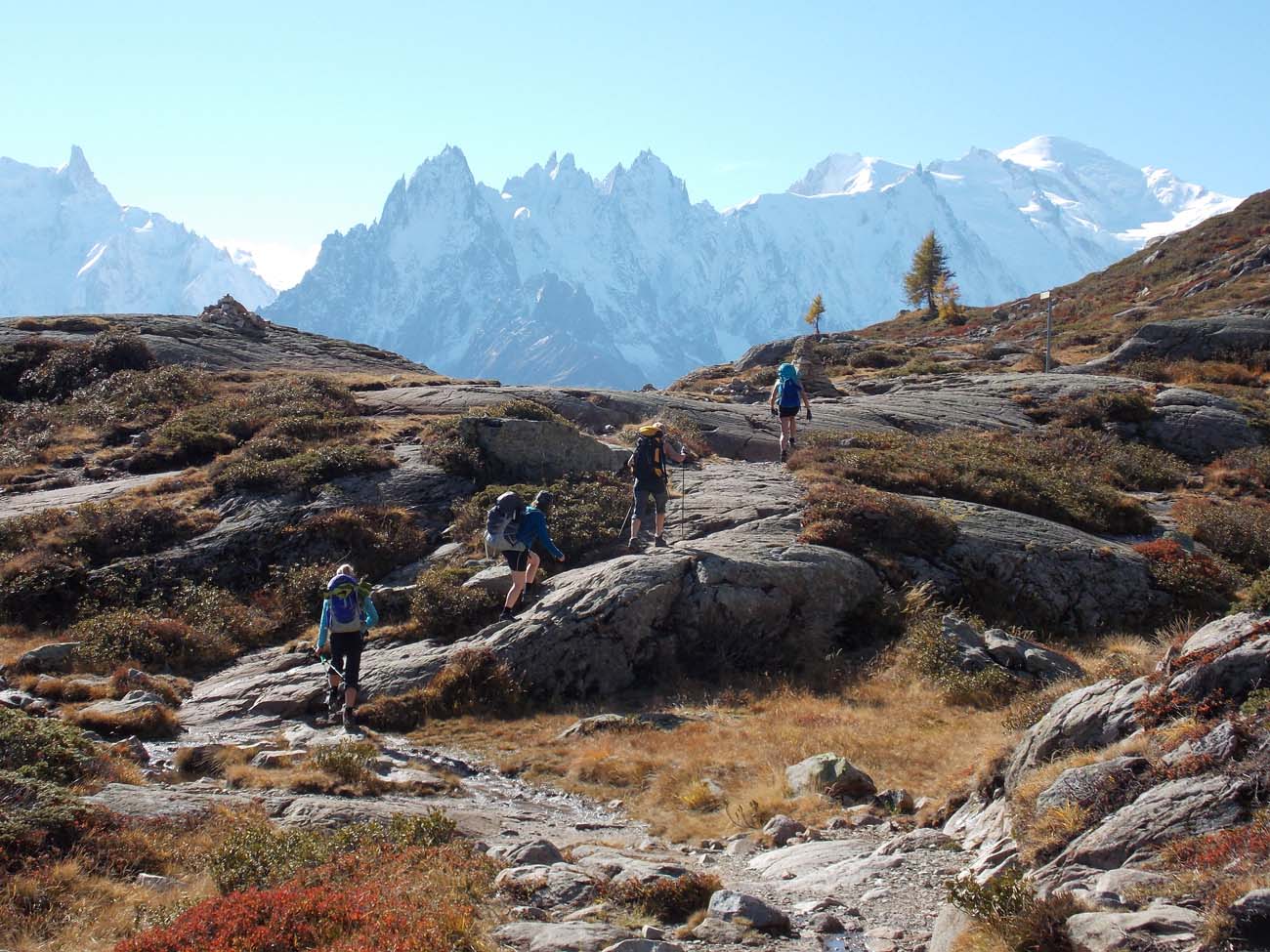
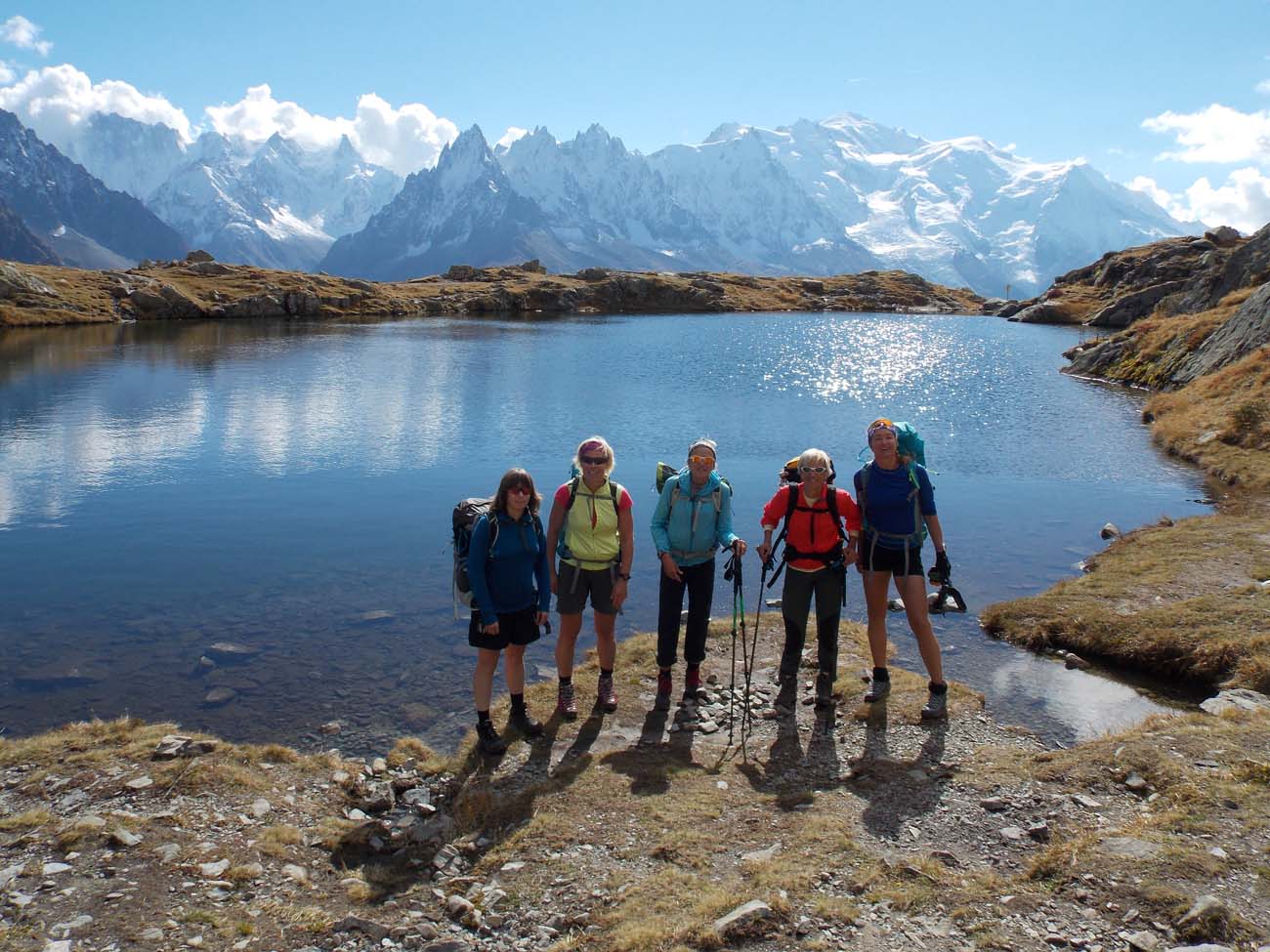
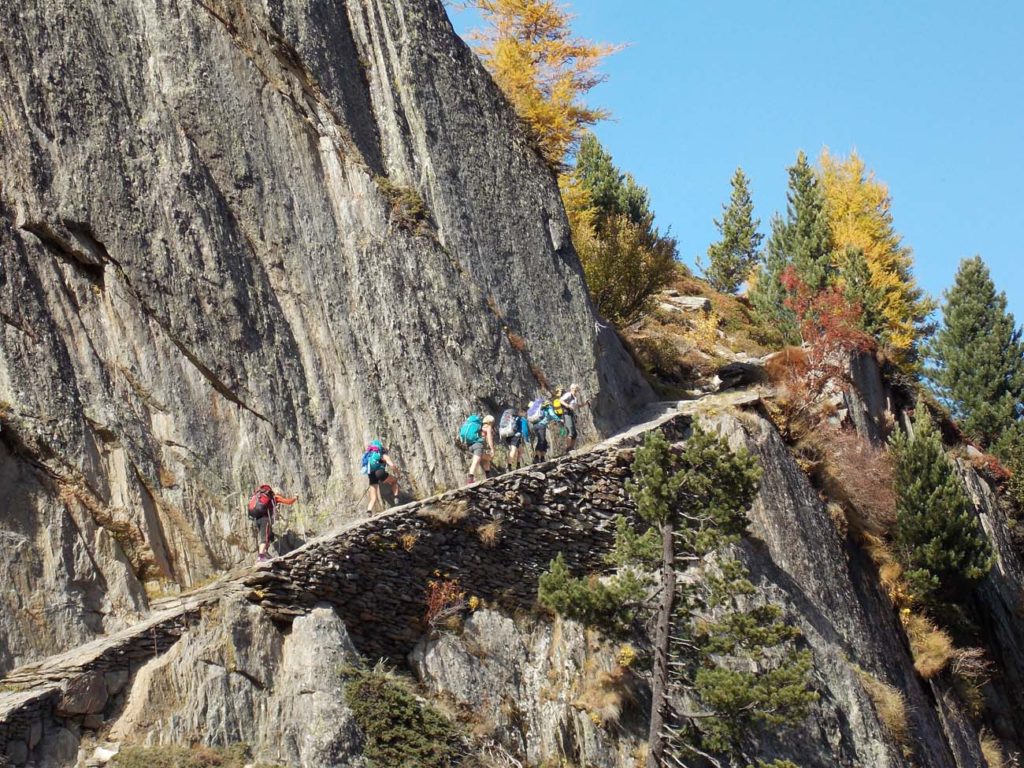
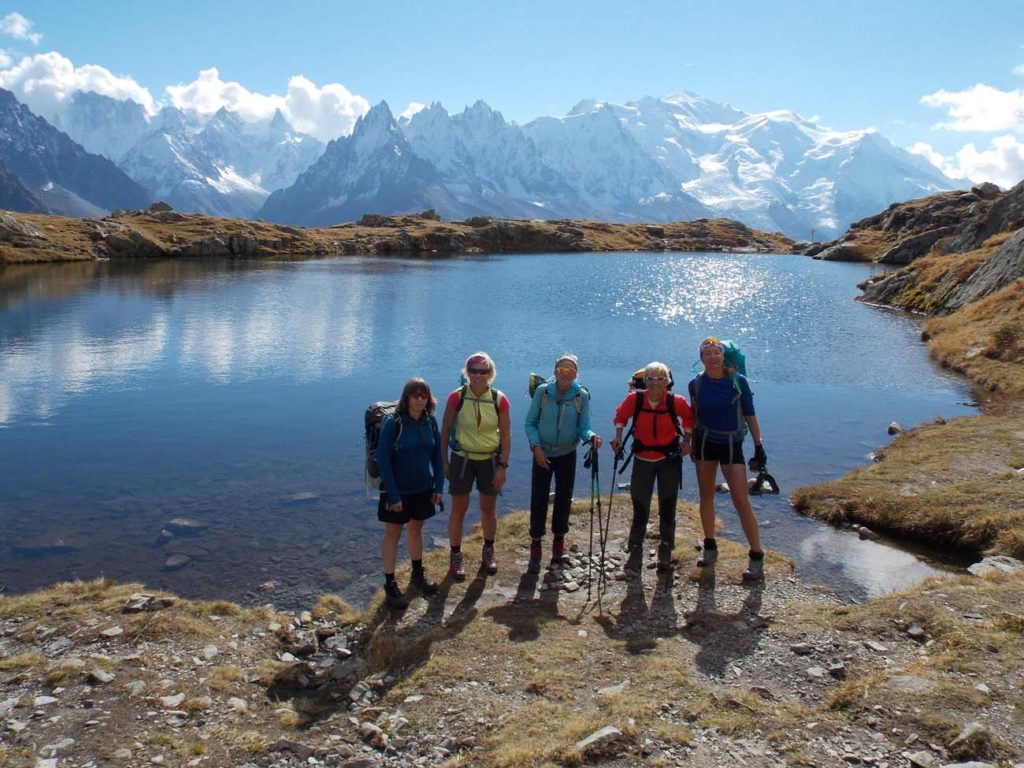
A 10-minute taxi or bus ride takes you to the Montet Pass from where your trail climbs steeply up granite benches and past small herds of goats and sheep. Once you reach the main bench above the valley, the trail climbs obliquely to the Lac Blanc, a series of small lakes with gorgeous views of Mont Blanc, the Aiguille Verte and Les Drus, several of the classic alpine climbs of the Chamonix area.
As you approach Lac Blanc, the Refuge du Lac Blanc will come into sight. You can expect a hearty lunch of French delicacies such as omelettes, soups, and amazing fruit tarts. Take a break to enjoy a short nap on the lounge chairs or dip your feet in the refreshing waters of Lac Blanc. Only 2 more hours left today as you traverse to the Index chair lift followed by the Flégère cable car, where we will reach the valley bottom easy on the knees in Les Praz. A public bus or taxi will get you back to your hotel in Argentière in about 15 minutes. Rest up tonight – tomorrow is a long day!
*We recommended packing a lunch for tomorrow – either request a picnic lunch from your hotel or grab something in town. If you prefer to have a plated meal, plan for a late lunch at the Refuge de la Croix du Bonhomme.*
1,050 m / 3,500 ft vertical gain, 100 m / 330 ft descent, 8.5 km / 5.3 miles distance, 6 hours of hiking.
Day 2: Chamonix to Les Chapieux
After breakfast, your taxi shuttle will transport you about 45 minutes to the small town of Les Contamines, where today’s hike begins on an ancient Roman road, used for trade and the Roman legions. Hiking through fields of grazing Tarentaise dairy cows, the hike begins easily enough along a gravel track before climbing steeply to the first of two passes. The trail below the Col du Bonhomme is steep and rocky but with rewarding views out to the limestone Pointe Percée and the normal climbing route of the Goûter Ridge on the Mont Blanc. An emergency shelter stands atop the pass which makes for a good windbreak and the perfect spot for your picnic lunch.
Post-lunch, it is time to head for the second pass, the Col de la Croix du Bonhomme about an hour away in the Savoie region of the Alps. A French Alpine Club hut bearing the same name is our next destination where an afternoon snack and coffee break awaits, or if you did not pack a picnic lunch, you can dine here. Look towards the east for your first views of Italy with glimpses of the Vanoise National Park directly south. A long, 1,000 m / 3,300 ft descent is your next challenge and your tired legs will be happy to stop for the night in the tiny hamlet of Les Chapieux. Dinner at your hotel before retreating to bed.
1,300 m / 4,300 ft vertical gain, 19 km / 12 miles distance. Up to 9 hours of walking.
Day 3: Les Chapieux to Courmayeur – Welcome to Italy!
Today begins with a short, 10-minute shuttle to the Ville des Glaciers Dairy Farm where our trail begins. Feel free to stop by the Dairy Farm shop to buy cheese to enjoy as a snack later on in the day. The walk begins along a wide track before climbing towards the border with Italy where we start to see the stunning views of the Val Veney and its incredible granite spires which have made this valley so famous. Towering over other peaks are the Monte Bianco di Courmayeur and the famous Aiguille Noire de Peuterey – by far one of the most coveted prizes in alpine climbing.
Bravo! You have made it to Italy. A strategically placed mountain hut, the Rifugio Elisabetta, is perched high on a rocky outcrop and marks a perfect venue for a quick snack of cake and coffee before heading down to Courmayeur. After your break, you will take a WWI military track past rushing streams and hanging glaciers to a bus stop at La Visaille before embarking on a 45-minute ride to the ancient Roman garrison town of Courmayeur,Italy where you will spend the night. The small town is rife with shops, markets, and restaurants for you to explore.
1,057 m / 3,500 ft vertical gain, 20 km / 13 miles distance. 7 hours of walking
Day 4: Courmayeur to Champex via Grand Col Ferret –Hello, Switzerland!
A hearty breakfast starts the day. A 30-minute taxi ride drops you in the hamlet of Arnouva Val Ferret. From there, an easy hike to the Rifugio Elena at the base of the Ferret Pass. An obligatory stop for outstanding coffees and cakes before the short, 1.5-hour ascent to the Grand Col Ferret on the border between Italy and Switzerland. From there, it’s all downhill past the dairy farm at La Peule and then down to your taxi or bus in La Fouly. A 45-minute scenic drive will deliver you to the spa town of Champex and its spring-fed lake. Overnight in 3-star hotel or inn.
900 m / 3,000 ft vertical gain, 20 km / 13 miles distance, 6 hours of walking.
Day 5: Champex to Col Forclaz / Trient
Depending on weather and the group’s energy level, we have several options today. If the forecast is for sunny skies, you can opt for the harder option and hike the arduous Fenêtre d’Arpette which offers some spectacular views out to the Glacier du Trient and Glacier des Grands. Roughly 1,300 m / 4,300 ft of climbing on loose rock and trails are required to gain the pass with a similar amount of vertical loss, making for a big day. The other and most popular option for the easier but equally beautiful hike is on the Bovine Trail – a short, steep hike through the forest to a large clearing where a herd of fighting cows graze on alpine wildflowers. There is a tiny restaurant in a refuge which serves great meals and offers an incredible array of locally produced wines from the Valais Canton of Switzerland. After lunch, 1.5 hours is all it takes to reach Col Forclaz/ Trient for dinner and lodging. Private rooms in Trient are scarce so lodging is often in shared dorm rooms. We can lodge you in Vallorcine or Martigny if you prefer private rooms – cost of the taxis to and from the trailheads are not included in the base-trip price.
*We recommended packing a lunch for tomorrow to enjoy the stunning views on the last day of the trail – request a picnic lunch from your lodge in the evening as picnic lunches are not usually available for ordering in the morning. If you prefer to have lunch in a restaurant there will be the option to do so.
Harder option: 1,300 m / 4,300 ft vertical gain, 15 km / 9 miles distance.
Easier option: 740 m / 2,400 ft vertical gain, 12 km / 7.5 miles distance, 5.5 hours of walking.
Day 6: Col Forclaz to Argentière
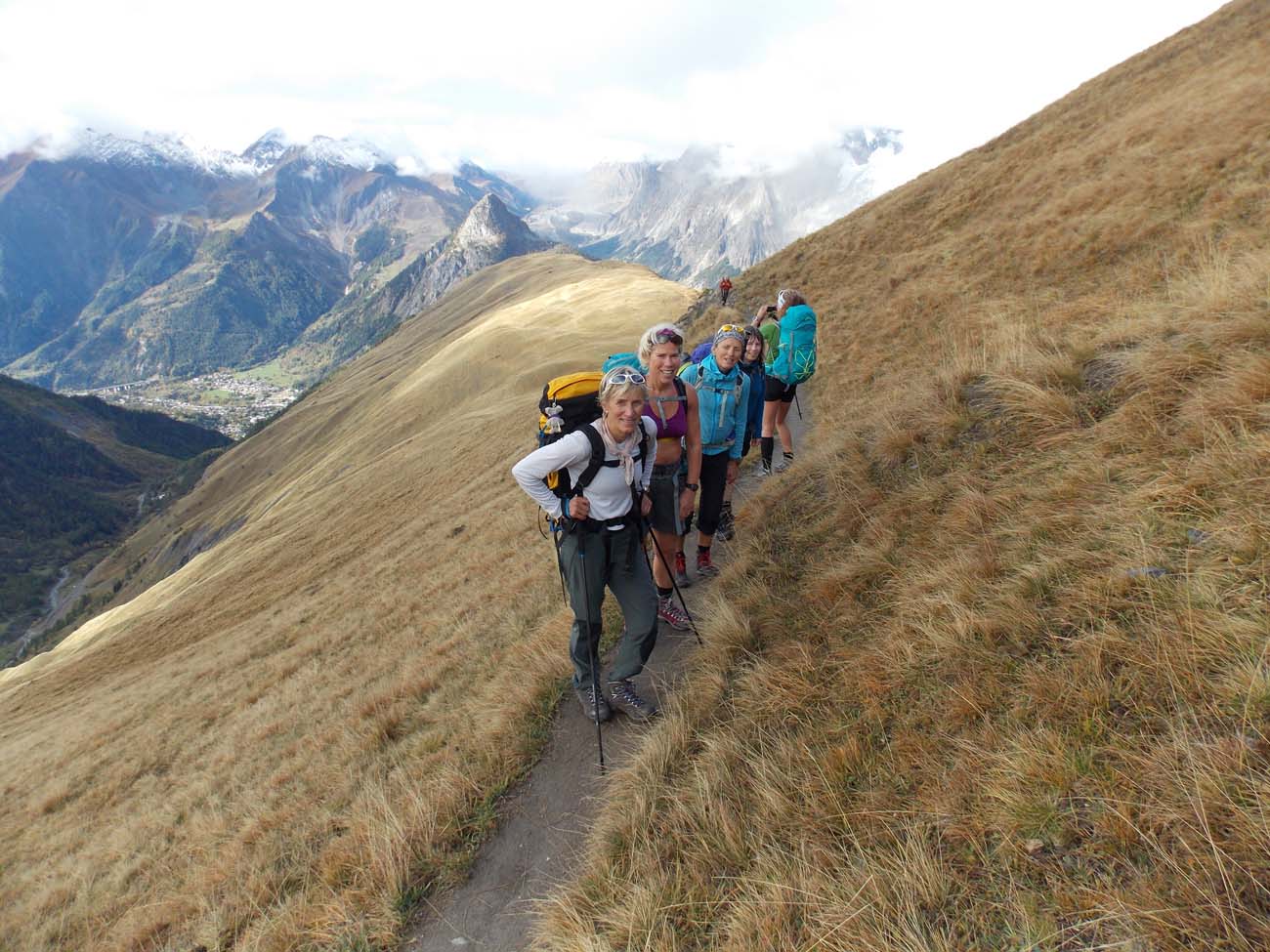
Almost there! Your day begins with a steep descent to the valley floor and the small town of Trient before tackling the last climb in Switzerland to the border with France at the Col de Balme. Today’s hike is straightforward with a long, gentle climb to the pass where the entire Mont Blanc range opens up before us. It is possibly one of the most photogenic passes of the entire walk. Lunch today will either be a picnic or a plated meal in one of the slope-side restaurants of the Le Tour ski area taking in the sound of cowbells and the stunning hanging glaciers. By mid-afternoon, you should reach the hamlet of Argentière and your hotel for the evening.
1,250 m / 4,100 ft vertical gain, 16 km / 10 miles distance, roughly 6.5 hours of walking.
Departure Day: trip concludes after breakfast
Congratulations on a successful Tour du Mont Blanc trek! Your trip officially concludes upon checkout after breakfast, where you can make your way home or to your next travel destination. Thank you for trusting OnTop Mountaineering with the planning of your trip.
Inclusions
Included:
- Fully Customized and detailed day-to-day itinerary, designed by our director and head guide, Jorg Wilz
(you will find directions, including hiking times/distances/elevation gain and loss, trail numbers and “Plan B options” in case of fatigue or adverse weather or extension options should you desire a longer day) - 45 min taxi transfer from Chamonix to Les Contamines
- Double room lodging at a hotel in the Chamonix Valley before and after your trek
- Double room lodging in village hotels, mountain inns, and rifugios
- Breakfast every morning
- Dinners for some nights in rifugios and inns (details provided when booking)
- Daily luggage transfers ( 1 x 15kg small duffel bag per person) to the road-accessible hotels/inns
- Large luggage storage (hardshell suitcases) at Chamonix Valley Hotel
- GPS tracks that you can upload to your smartphone or GPS, along with printable PDF maps
- 24-hour Hotline contacts while you are en route
- Support with your travel logistics and all trip organization as well as sightseeing suggestions
Not Included:
- Airfares
- Airport transfers to and from the Chamonix Valley
- Dinners for the nights in Chamonix Valley
- All ground transportation, including chairlifts, taxis, and buses (except the 45-minute journey from Chamonix to Les Contamines)
- Tourist Tax ( €2-€5 per night/person, payable in cash to the huts at check out)
- Large luggage transfers (hardshell suitcases/softshell over 15kg)
- All beverages (water, alcoholic, & non-alcoholic drinks available for purchase at your accommodation or in the Valleys)
- All lunches & snacks (available for purchase at your accommodation or in the Valleys)
- Single room surcharge for some or all lodging (if available)
- Any additional costs in case of itinerary changes regardless if those changes were made due to adverse weather or mountain conditions, or due to personal or group preferences.
- Insurance
Additional trip services available (€)
- Shared airport shuttles from Geneva to hotel in Chamonix Valley
- Additional hotel nights Chamonix Valley
- Topographical maps (available on request least 8 weeks before trip departure)
- Taxi transfers during trek: please request a quote to and from trailheads
Transportation
Airport & shuttles
The closest international airport to Chamonix Valley is in Geneva, Switzerland. From there, regular shuttles go to the Chamonix Valley, taking around 1.5 to 2 hours.
There are a number of airport shuttle services that provide door-to-door service from Geneva International Airport at very competitive prices for any destination in the Chamonix Valley.
Mountain Drop Offs provides a reliable airport transfer from Geneva to Argentiere or Chamonix for about 40 euro, depending on the time of year.
By train
If you arrive at any airport in Paris, you can then travel by train to the Chamonix Valley with TGV. The journey takes approximately 4-5 hrs via St. Gervais.
You can also get to Chamonix Valley by train from several other international airports. Find out more at chamonix.net
We gladly assist in organising any pre/post trip lodging and airport transfers.
Tour du Mont Blanc Hike Private Trip Pricing
Customize the Tour du Mont Blanc or add another Alps trek or via ferrata to your adventure
Tour du Mont Blanc custom trip options
By using less public transportation and more leg power, the Tour du Mont Blanc can cover 170 km / 106 miles distance and 10,000 vertical metres / 33,000′. This “classic” variation normally takes 10-11 days. Please inquire for a quote.
We will gladly run a trip for your group anytime between mid-June and mid-September.
For groups and families, we can offer the following discounts on our advertised prices
Self-Guided Trips:
2-4 participants: Our advertised per person price
5-6 participants: 5% discount from our advertised per person price
7+ participants: 10% discount from our advertised per person price
Go on another trek
We offer many treks in the European Alps throughout the summer. Italy, Austria, Switzerland, and France each have their own charms and beautiful landscapes. See what is available at ontopmountaineering.com.
Try a via ferrata
See what the buzz is all about – try one of our many via ferrata trips in Italy or France. Via ferrata routes include the use of cables, ladders, rungs, and the occasional bridge to facilitate safe passage across exposed mountain faces and ridges with beautiful hiking in between. The first via ferrata routes were built and used by soldiers in World War I. Many of these routes are still in use, but development is ongoing as via ferrata climbing has become a very popular sport in itself. We offer trips for both beginners and advanced via ferrata adventurers. See our page at ontopmountaineering.com.
Gear List
Tour du Mont Blanc Trekking – Gear List.PDF
Please download a PDF copy to use as a checklist when preparing for your trip.
Considerations
Packing for a mountain trip is a balancing act. You want your pack to be as light as possible so you can truly enjoy the trek. But you also need to have enough gear to be warm (or cool), comfortable, and well-fed and watered. When buying, renting, or borrowing gear for the trip, please keep weight, performance, and function in mind.
Legend:
Early and Late Season Trips: June and September can be considered early and late season trips – depending on residual snowpack (June) or early snow/colder temps (September)
*Optional
**Optional but recommended
Technical Gear
Bring or Rent the Following:
- Sturdy, waterproof, leather trekking boots or light mountaineering boots, ideally with high ankle support.
- Daypack (30-40 liters) with rain cover specific to the pack
- Good quality, thin, well-fitting leather gloves, preferably fingerless. Bike and belay gloves work well (for any cable-assisted sections of trail)
- Lightweight, collapsible hiking poles**
- Microspikes or yaktrax-type traction devices that fit your boots (for early and late season trips)
- Short summer gaiters (for early and late season trips)*
- Lightweight umbrella*
Lodging
Some items in this section apply only if you are lodging in 1 or more hut on your itinerary.
- Sleeping bag liner for the huts – silk is lightest (MANDATORY for HUT LODGING)
- Toiletries and small. quick-drying/ microfiber towel (towel for hut lodging)
- Cash – euros for lunches, drinks, snacks, showers, etc.
- Light hut slippers or crocs (hut lodging only)
- Ear plugs**
- Alpine Club card (hut lodging only)*
Clothing
We recommend using the ‘layering system’: Bring light, technical clothing that doesn’t take much space in your backpack and dries quickly when sweaty or wet. Layers must be put on and taken off quickly as weather conditions change during the day. There may be days when you can wear cotton, but your main clothing choices should be synthetic or wool. Merino wool is a nice material for base layers and t-shirts because it is comfortable, warm, and it does not retain odours, even after many days of use.
- Wind and waterproof shell jacket with hood (Gore-Tex or similar)
- Lightweight wind and water-resistant over pants (Gore-Tex or similar)
- Lightweight synthetic trekking pants or zip-offs
- Medium weight Primaloft jacket with hood
- Medium weight fleece sweater
- Synthetic or wool base layers – top and bottom
- Synthetic shorts and t-shirt
- Quick-drying sports bra
- 2-3 pairs of good quality trekking socks
- Warm hat that covers your ears
- Lightweight synthetic or wool gloves
- Sun hat, preferably with a wide rim
- Spare socks and underwear
- Bandana or Buff*
Other items
- Sunglasses with high UV protection
- Sunscreen and lip protection with high SPF
- Small container bug spray or cream
- One or two, one-litre water bottles
- Headlamp with new battery
- Personal first aid kit and other needs (eg. blister kit, prescription medicine, anti-inflammatory, contact lenses, prescription glasses, feminine hygiene, toilet paper, hand sanitizer etc.)
- Passport, health and travel insurance documents
- Light stuff sacs or Ziploc bags to keep your backpack organized and important items dry**
- Hiking snacks – candy bars, dried fruit, nuts, etc.**
- Cellphone with charging cable*
- Adaptor for European charging system*
- Portable powerbank*
- Pocket knife*
- Camera, spare batteries*
- Maps, GPS, altimeter watch*
FAQ
Do I need to sign a Release of Liability & Assumption of Risk Agreement (a.ka. liability waiver)?
Yes, you do. Mountaineering, skiing, climbing, hiking, via ferrata and all other wilderness and adventure travel activities are inherently risky with potential for injuries or even death.
It is very important to us that you are aware of those risks before you start the booking process, which includes filling out a booking form and paying a deposit.
With signing the liability waiver, you confirm that you understand the potential risks and hazards, and are willing to accept the risks, which includes giving up legal rights you may have.
This would also be the time to ask questions or address concerns before you book.
For your reference here is a link to our Liability Waiver. Our booking terms & cancellation policy with more details can be found here
Medical/Rescue and Trip Cancellation Insurance
Medical evacuation insurance is mandatory for participation in all OnTop Mountaineering (OnTop ltd) Trips.
Common policies sold by travel agents or policies included in your credit card contract tend to exclude adventure travel, including trekking above 2000m, mountaineering, roped travel, ski & snowboard, ski mountaineering etc. if you read through the fine print. For adventure travel policy recommendations see our website: OnTop travel insurance recommendations. You may get the best coverage if you book travel insurance policies within 14 days of paying your trip deposit. You may also want to consider additional insurance coverage like CFAR or trip cancellation.
Common policies sold by travel agents or policies included in your credit card contract tend to exclude adventure travel, including trekking above 2000m, mountaineering, roped travel, ski & snowboard, ski mountaineering etc. if you read through the fine print. For adventure travel policy recommendations see our website: OnTop travel insurance recommendations. You may get the best coverage if you book travel insurance policies within 14 days of paying your trip deposit. You may also want to consider additional insurance coverage like CFAR or trip cancellation.
We recommend pandemic coverage with your insurance policy.
Trip Related Questions:
Best season, weather and temperatures for the Mont Blanc Express Route
The best season for the TMB is from mid-June to mid-September. July and August normally see warm temperatures in the valleys (between 20°C / 70°F and 30°C / 85°F) and cooler temperatures at the passes (between 10°C / 50°F and 15°C / 60°F). If a cold front passes through, it will bring cold, wet weather with temperature drops and difficult conditions. It is even possible to get snow at the high passes in August. Be prepared for all weather conditions!
In June and September, daytime temperatures are normally a bit lower – around 20°C / 70°F in the valleys and 10°C / 50°F or less at the high passes.
What options are there for completing the TMB?
There are many options for completing the Tour du Mont Blanc. The longest variation takes 10 or 11 days and includes 10,000 m (33,000′) of elevation gain and loss and covers 170 km (106 miles) distance. The quickest is by the Mont Blanc Ultramarathon – it takes about 20 hours (!!). Or you can choose a length of trip that is somewhere in between, like what we are offering. The trip will be physically demanding with an average of 1,000 m / 3,300 ft elevation gain and loss and 14 km / 9 miles distance travelled each day (some days more, some days less). Bus and/or taxi rides along the way will keep the trek manageable in our given time frame.
How much clothing should I bring for the Tour du Mont Blanc?
It strongly depends on the weather. It may stay well above freezing all the time but it could also snow, even in mid-summer. We’ve seen it all and our recommendation is to be ready for anything upon arrival in the Chamonix Valley.
Can I buy hiking gear in Chamonix before the trip?
Chamonix is an outdoor enthusiast’s shopping dream. You’d be hard pressed to find a better selection of hiking and mountaineering gear anywhere (Arco, Italy being another such mecca). Because of the quantity of gear available, prices are reasonable even when you take the exchange rate into account.
What about drinking water on the Tour du Mont Blanc?
Drinking water is available for free at hotels and it can be purchased at an additional cost of approximately $10 per litre at huts. The group may consider bringing one or two water filters for everyone to use along the way or you can bring water purification tablets.
Will I need gaiters for the Tour du Mont Blanc?
We suggest you bring gaiters unless your pants close really well around your hiking boot. We will likely be walking in snow at times and it is important to keep your feet as dry as possible. Short gaiters should do the job.
Should I use hiking shoes or hiking boots on the Tour du Mont Blanc?
We recommend that you use good quality hiking boots. We will sometimes be walking over steep and rocky terrain, and hiking boots help to protect your ankles – both from rolling off of rocks and from rocks rolling onto your ankle. Also, your feet should be less tired at the end of our long days when you use hiking boots instead of shoes. A good pair of hiking boots do not weigh much more than a high-end pair of hiking shoes these days.
Whether you choose boots or shoes, make sure they are comfortable! They should be waterproof and you should wear them a few times before the trip to ensure they don’t give you blisters.
What should be my spending allowance per day for huts and hotels along the Tour du Mont Blanc?
We would recommend budgeting 35 SFR/day which is about US$35. This should cover buying lunch and snacks, water, and a beer at each hotel or hut.
Will I get cell or Internet service on the Tour du Mont Blanc?
Wi-Fi is available at the hotels. Very few huts have Wifi. Cellular service is pretty good throughout most of the trek. Make sure to inquire with your cell phone provider as to your roaming capabilities in Europe
Each hut has plugs to recharge phones etc. but there is always competition for them. All plugs are at 220 volts. Bring an adaptor for the European-style plug!
What is the difference between the Tour du Mont Blanc (aka TMB) and the Haute Route Glacier Trek?
The Tour du Mont Blanc (aka TMB) and the Haute Route Glacier Trek are very different in character. The Tour du Mont Blanc is probably the most popular multi-day hike in the Alps. It passes through some of the Alps’ most popular resort towns like Chamonix and Courmayeur, meaning that certain sections of the trail can be busy, especially in high season (mid-July to mid-August). The Tour du Mont Blanc is entirely non-technical and connects valley hiking with traverses over alpine passes that are usually snow-free in mid-summer. Lodging tends to be higher-end and more comfortable on the TMB than on the Haute Route Glacier Trek.
The Haute Route Glacier Trek (aka “Mountaineer’s Route” – not to be mistaken with the “Haute Route Hiker’s Route”) is the high-level traverse between the Chamonix Valley and the Swiss town of Zermatt. About 30% – 40% of the travel is on glaciers which may require travelling roped together and using crampons. This technical aspect, as well as the necessity to stay in high mountain huts, greatly reduces the number of travelers on the route. The trip is far more committing and requires better fitness and stamina than the Tour du Mont Blanc.
Can I Do It?
The TMB involves strenuous hiking on everything from good, dry trails to rocky terrain to snow-covered passes. Although technically not difficult, the trip requires up to eight hours of hiking per day with steady elevation gains and losses. Yaktrax-type traction cleats may be required in certain places, especially early in the season.
Our backpacks will be relatively light (5 – 8 kg = 11 – 18 lbs) as we will only carry snacks/lunch for the day, water, and extra clothing. We recommend a backpack size of 35 – 45 litres (2100 – 2700 cubic inches).
Feedback (from the Haute Route Glacier Trek)
Haute Route Glacier Trek – A high-level glacier tour from Chamonix to Zermatt
References of prior guests: We will gladly put potential clients in touch with previous participants of each trip in order for interested guests to get more personalized references and their questions answered from a more objective point of view than what our office could provide.
“Philippe was great! We couldn’t have asked for a better guide. His personality, technical expertise and overall great attitude made the trip a once in a lifetime experience. On Top did a great job meeting our requirements and desires for this custom trip/We feel that all of our questions where answered in a prompt and thorough manner. Hotel in Argentiere was perfect for our needs. It was nice being in a small town but also having dining close by. The food and lodging at huts were as expected.”
—Robert P., VA, USA
“Seb was extremely compentent and knowledgeable. It was obvious we were in very capable hands. I (Trish) felt that the precautionary measures he took at various stages of the trip were most appropriate. We would gladly be guided by Sebastion again.
We were very pleased with the organization. The trip had a few ‘escape’ routes in Champex and again another night where a person could bail if it was too much.
OnTop Communication was punctual and thorough.
The drescription of the itinerary difficulty was accurate. It was a tough 7 days. The hiking times quoted were very close to our actual times. The route was incredible, awesome, challenging, unforgettable. The lodging in both Argentiere and Zermatt was perfect. Not fancy, but clean, in great locations, small family-run places with alot of history. We really enjoyed the lodging choices. We thought the small hotel in Argentiere was perfect; Chamonix easy to get to, but our hotel was in a nice quiet location. I(Trish) went to church in Argentiere the sunday before our trip. Felt like a real town. Breakfasts in both Argentiere and Zermatt were wonderful. The food varied a bit by hut. Some cooks really took pride in their meals, and it showed. We were impressed with what came out of the kitchen on most occasions. Quantity was consistent. Only one hut was a disappointment in the food department – and that was only a lunch stop for us. That said, all of us ate all of the snacks we brought with us – we expended some serious calories. We would recommend this company to friends in a heart beat. We were very pleased..”
—Tennis & Trish O., WA, USA
“Philippe is an incredible guide. Very professional, knowledgable and helpful. We would go with him again. We did not spend a lot of time with Didier, but he was very friendly. Everything was organised nicely, the hotel in Argentiere is great, very helpful and friendly people. Everything we received was great and very helpful. As mentioned the hotel in Argentiere was great. Their breakfast was excellent, a lot of food and great variety. The huts and the food there were far beyond our expectations. If any of our friends would ever consider a trip like this, we would definitely recommend OnTop.”
—Helma & Jonathan G., AB, Canada
“Till was a good guide althought some huts/routes were new to him. Trip organisation was good. The itinerary was pretty challenging and made it worthwhile. Huts and sleeping rooms seemed too crowded to me. Food quality was good but last 2 huts only offereed bread with butter/jame to eat for breakfast. I would rate my experience with OnTop about 8 out of 10. ”
—August M., CA, USA
” The guides were amazing- so impressed with Geoffroy’s professionalism and always felt safe. Nick also had a great 2 days with him after the trip instead of Mont Blanc. Fridjon was also a fantastic guide – very entertaining and great customer service. Also great at teaching. Both complement each other. All organisation was great. Needed more info about how much cash to take into mountains. Didn’t realise we’d be buying water and it was SOOOO expensive. Maybe iodine tabs would be better? Very environmentally unsound to be buying plastic bottles. Also the trek was much harder than I’d anticipated and if I’d been any less fit I wouldn’t have coped. Definitely need more detailed explanation of degree of difficulty in trip notes. I do like a challenge though so it was great for me but I can think of plenty of people who may have thought they could manage based on basic trip notes.
Itinerary fantastic. Loved it all. Geoffroy was a bit worried about the very long day (?day3) but we did the steeper route instead and though tough, was fine.
Lodging was fine. Food good and plentiful, though breakfast a bit sketchy. Would have liked more info as to what to expect on our first morning as it was so crowded, rushed and stressful. Not a great start to the day – just needed to know what it would be like in advance. Take more face wipes for washing (women). Broad spectrum antibiotics. Can’t think of anything else I needed.
Would definitely recommend this trip and On Top to friends. It was absolutely incredible and a fantastic experience!! Thank you! ”
—Nikki, Nick and Alice M., Australia
” I thought Till was an exceptional guide. We have had guides on all our climbs and treks in various parts of the world and he was certainly one of the best. He was very open and easy to communicate with and genuinely seemed to enjoy his time with us. His mountain knowledge was exceptional and he also was able to answer the many questions that we fired at him over the course of the trip. When we came off Mont Blanc Till offered to drive me back to Argentiere, which was above and beyond what I would expect from a guide. I would not hesitate to have Till guide me again if I was to go back to the alps.
The trip organisation and communication were very good. Apart from a hiccup with one of my emails to you, all our correspondence was answered promptly and accurately. Everything went smoothly with the organisation and communication and can only applaud you for that.
No problems with the itinerary. Plenty of time to do everything we had to do on any particular day, with enough time at the end of the day in each hut to relax and rest for a while before the dinner bell rang.
Lodging and Food. Considering the locations of the lodges we thought they were fine. Some of the lodges are showing signs of wear and tear but I would guess that the Alpine Clubs responsible for their upkeep would be aware of that and would have regular maintenance programs in place. No problems with the food. People have to remember the location and situation of these huts in providing food for many people who come from different parts of the world and are used to eating different types of food. We go into the mountains for the mountains, not to enjoy a fine dining experience.
I would not hesitate to recommend OnTop to anyone wishing to do any of your itineraries. On your website, you might like to consider putting some testimonials up for people to read. I have always found them invaluable in helping me to make decisions on whether or not I would use a particular organisation. ”
— Murray C., Australia
“Thomas was an excellent guide. He was knowledgeable and had a great sense of humor. The terrain was new and unfamiliar to me, but I had complete confidence and trust in Thomas’ skills and judgement. He always made sure we arrived at our huts in great time (avoiding pending rain!), but was also flexible and understanding should we want to stop for an occasional break or photo. I would highly recommend Thomas to any group. Very fast communication and responses to my questions. Also really appreciated your commitment to ensuring the trip was still happening despite those last-minute cancellations. Also, I really appreciated the email we got the night before meeting our guide that connected me with Lu and Thomas. I think you should continue to send these pre-trip emails in the future – I think guests will really appreciate it.
The Haute Route was a spectacular hike; we got to walk through some of the most beautiful places I have ever seen. Huts were comfortable, and had great food. Really appreciated how the first and last days were shorter, with the more difficult days in the middle of the trip (allowed us time to ‘build up’ to those more difficult days). Also, the gradual ascent to the more elevated portions of the trip made it easier to acclimatize (sleeping at gradually more elevated huts was helpful!). Huts were warm, comfortable, and had great food. Only thing was that some of them were quite crowded (and making it difficult to sleep sometime), but I understand that this was out of your control! 10/10 would recommend this trip to my friends.” Rosalinda C., Canada
“We adored both Geoffrey and Fridjion and they worked very well together. Geoffroy was a consummate professional who NEVER got ruffled even when I was convinced we would all die
2026 PRICES
4 days/5 nights: EUR € 1575
5 days/6 nights: EUR € 1760
6 days/7 nights: EUR € 2005
7 days/8 nights: EUR € 2155
8 days/9 nights: EUR € 2370
- Price per person for groups of 2-4 pax
- # of days reflects self-guided hiking days only
- Discounts for groups and families 5+
- August departures subject to high-season surcharge
CUSTOM TRIP DEPARTURES
Custom trips at any time from mid-June to mid-September!
GROUP TRIP SIZE
2-16 Participants
TRIP INCLUSIONS
- Fully Customized and detailed day-to-day itinerary, designed by our director and head guide, Jorg Wilz
(you will find directions, including hiking times/distances/elevation gain and loss, trail numbers and “Plan B options” in case of fatigue or adverse weather or extension options should you desire a longer day) - 45 min taxi transfer from Chamonix to Les Contamines
- Double room lodging at a hotel in the Chamonix Valley with breakfast at the start and end of your trek
- Double room lodging with half board or breakfast-only in village hotels or mountain inns (meal plans will depend on lodging options available at booking)
- Daily luggage transfers ( 1 x 15kg small duffel bag per person) to the road-accessible hotels/inns
- Large luggage storage (hardshell suitcases) at Chamonix Valley hotel
- GPS tracks that you can upload to your smartphone or GPS, along with printable PDF maps
- 24-hour Hotline contacts while you are en route
- Support with your travel logistics and all trip organization as well as sightseeing suggestions
For a full list of services included, not included, and add-ons, please select our “Trip Inclusions” Tab.