FAQ
How difficult are the trails on the Palaronda Hard? Are there via ferrata sections and other exposed trails?
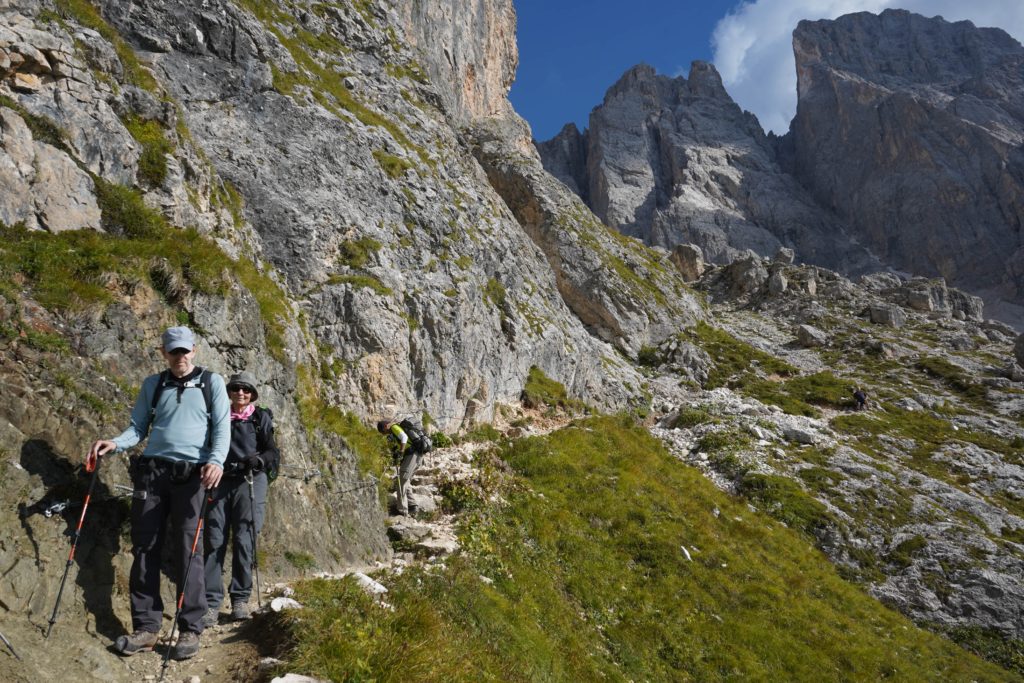
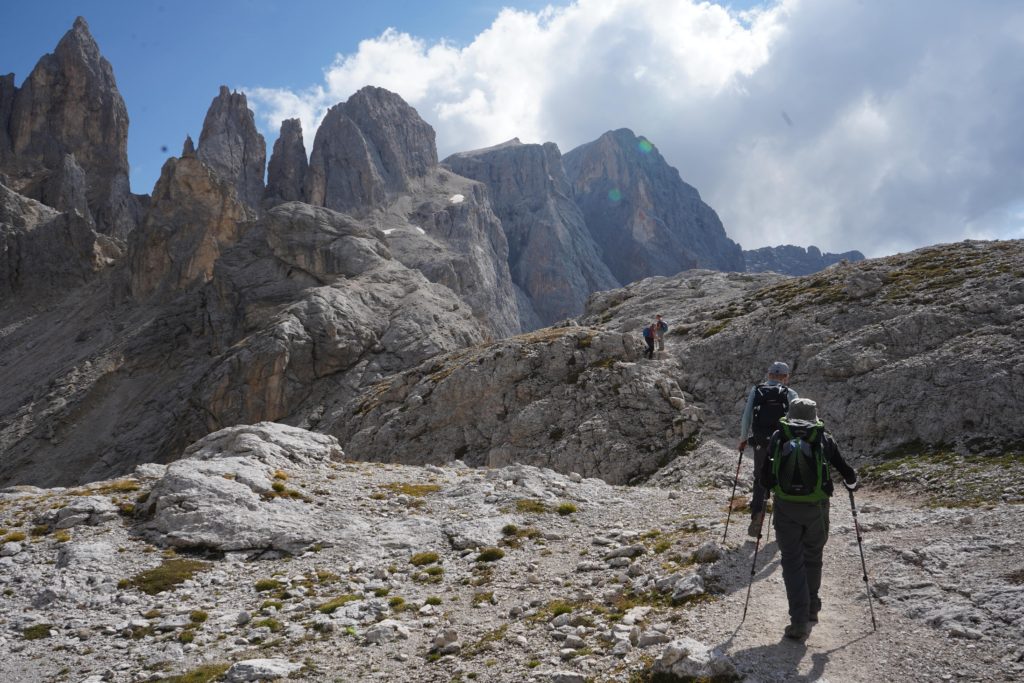
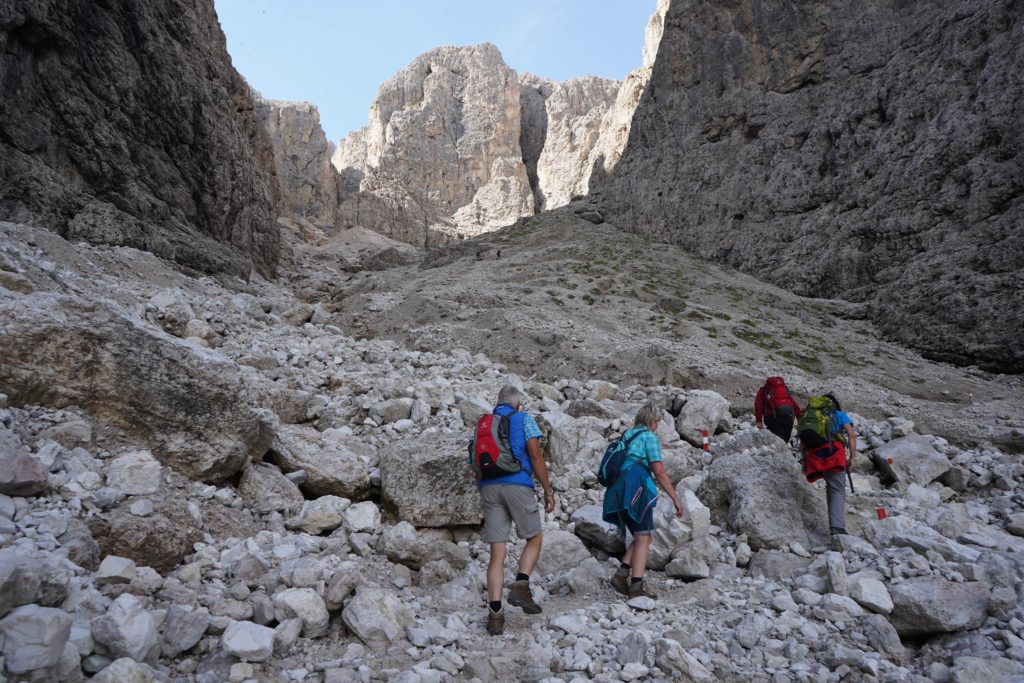
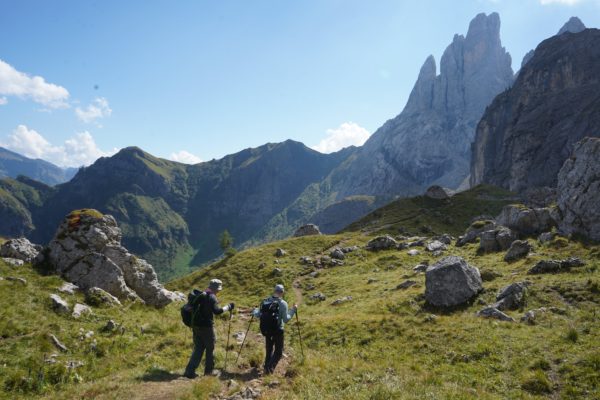
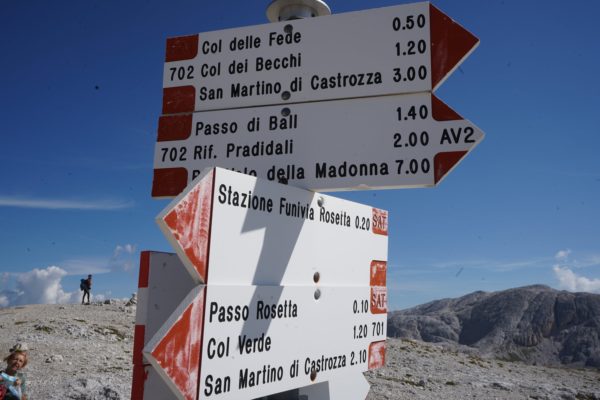
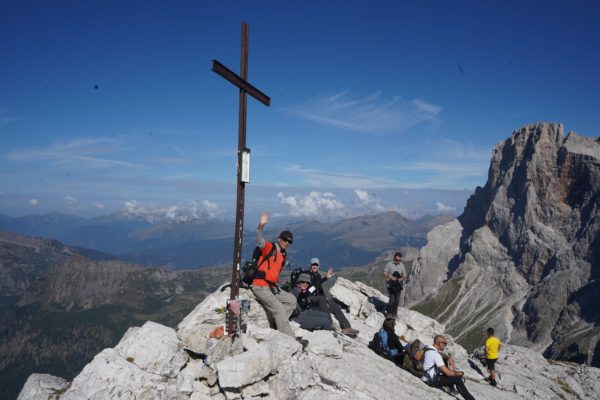
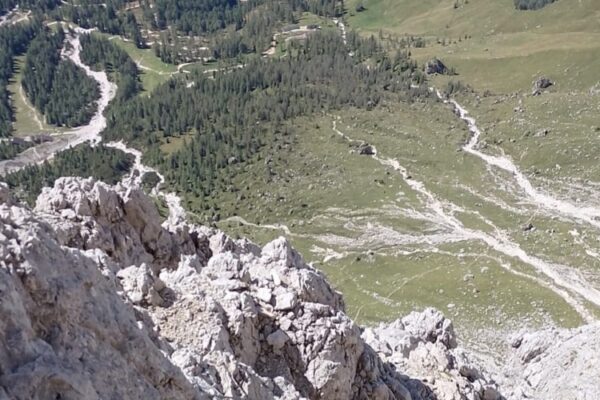
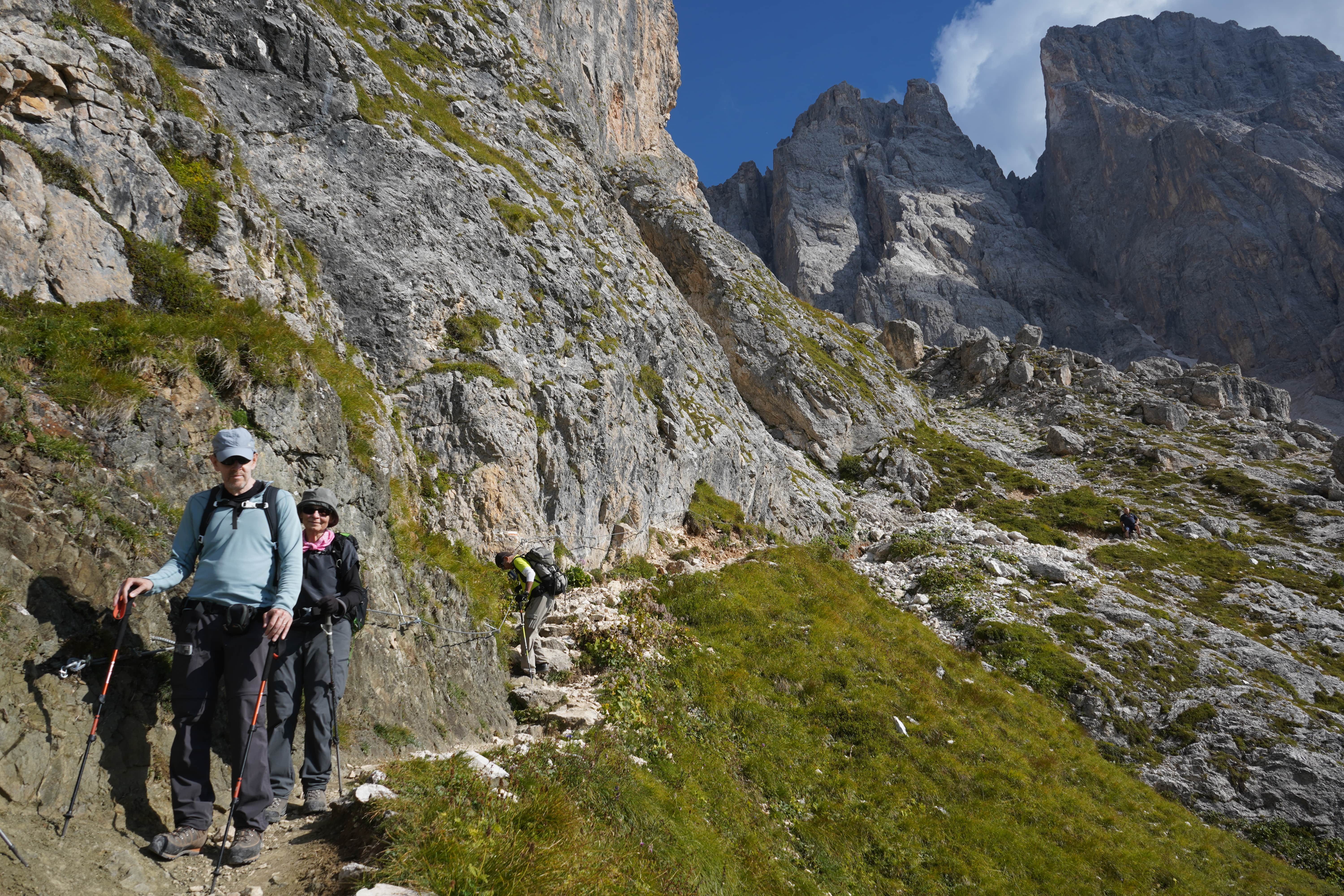
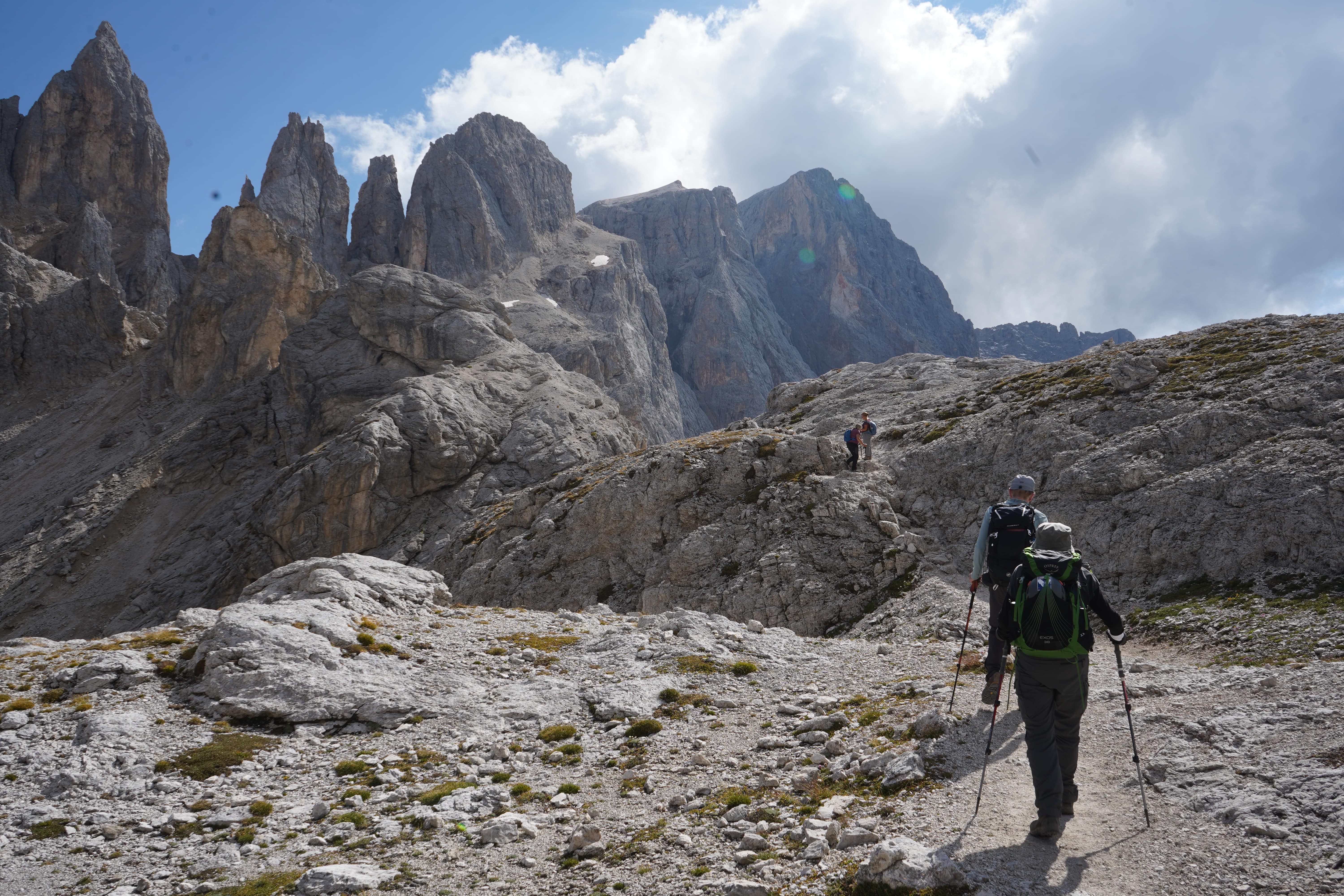
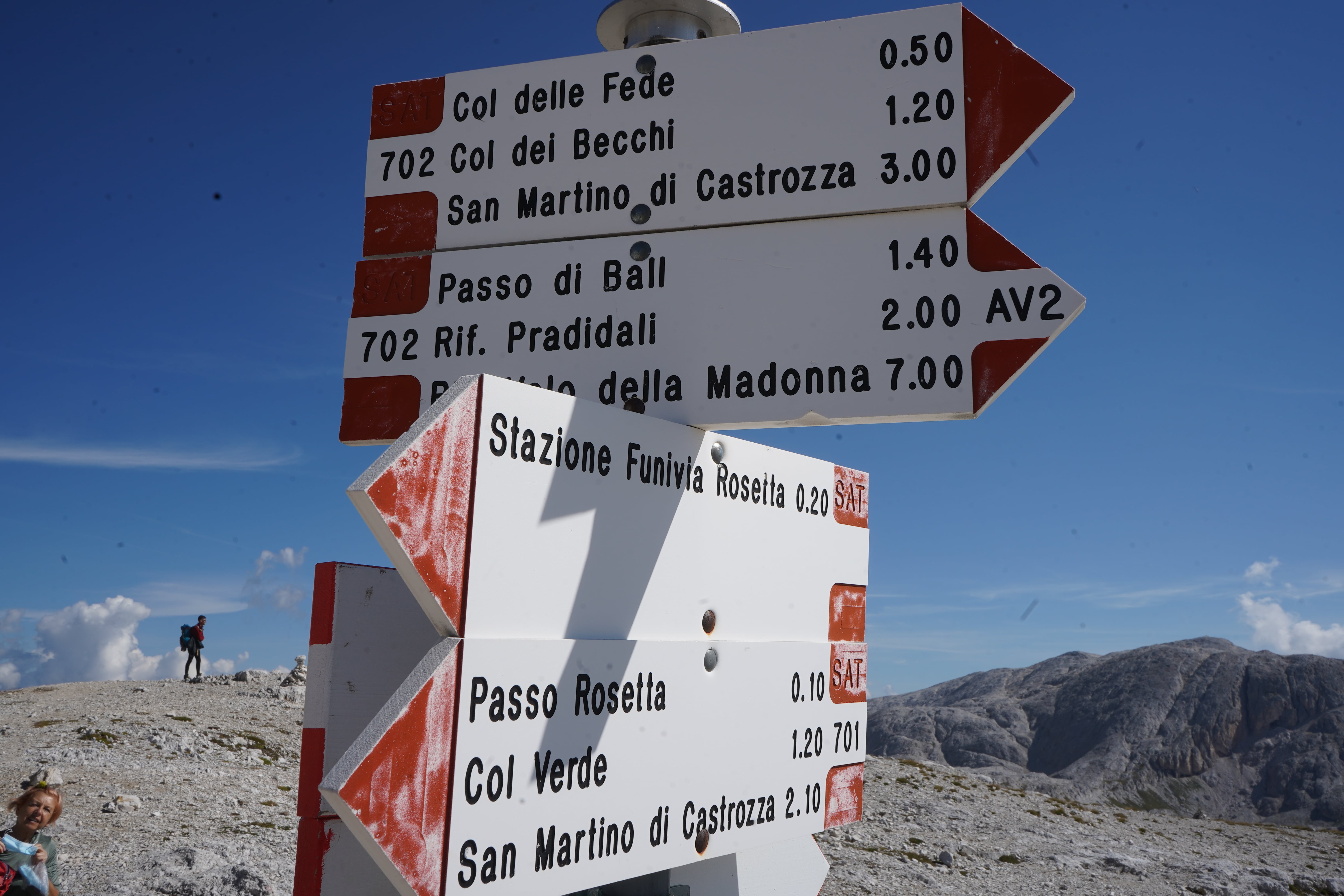
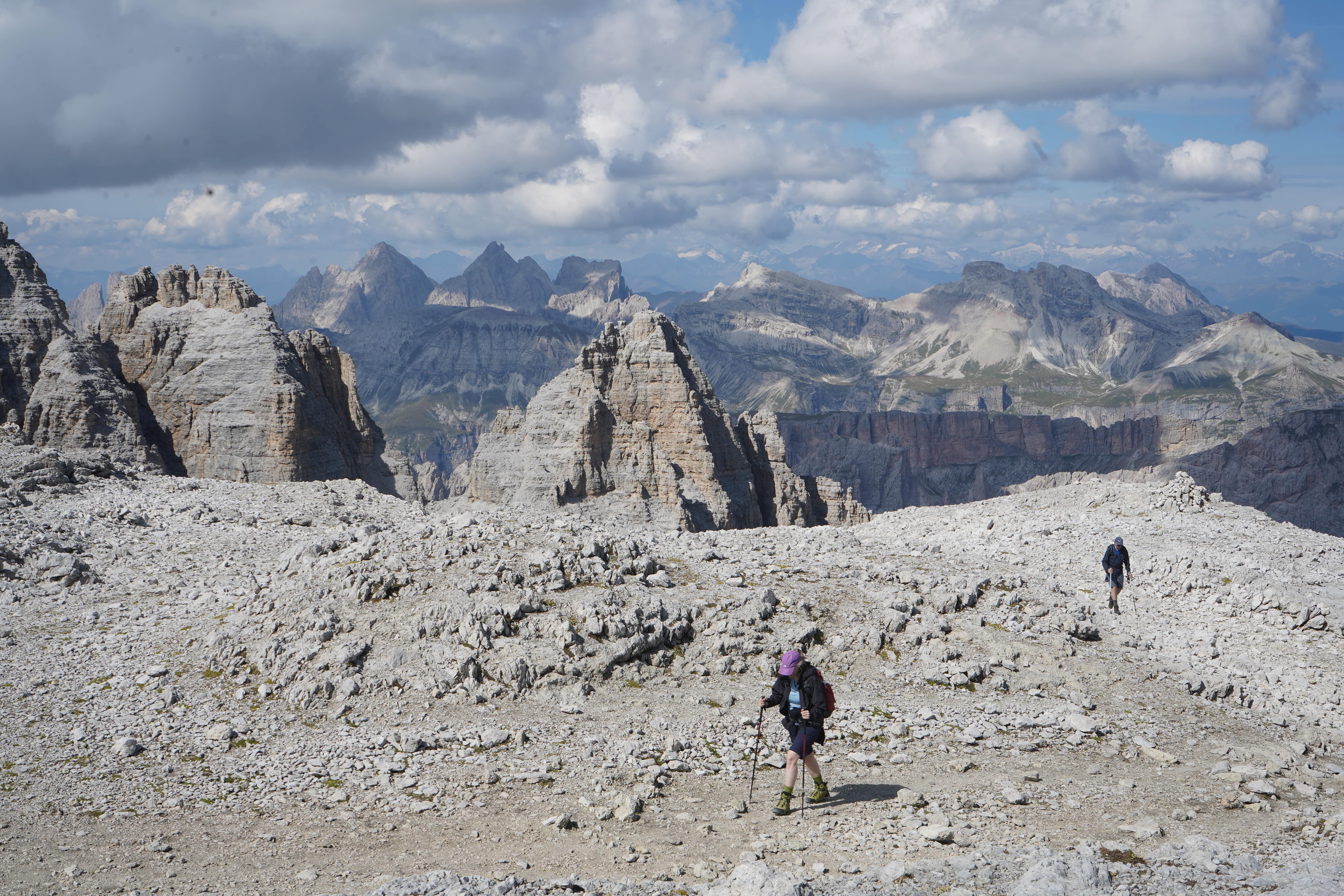
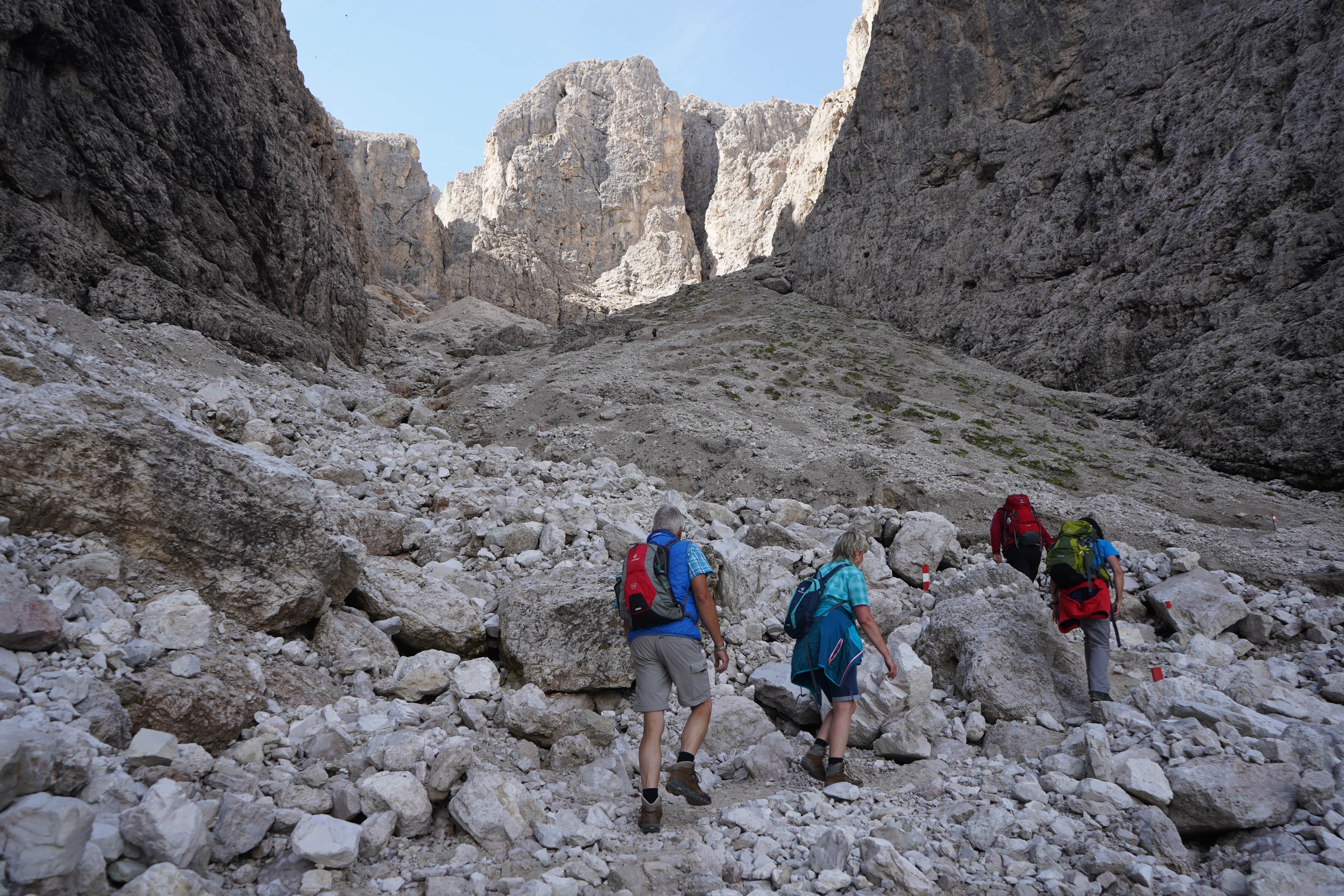
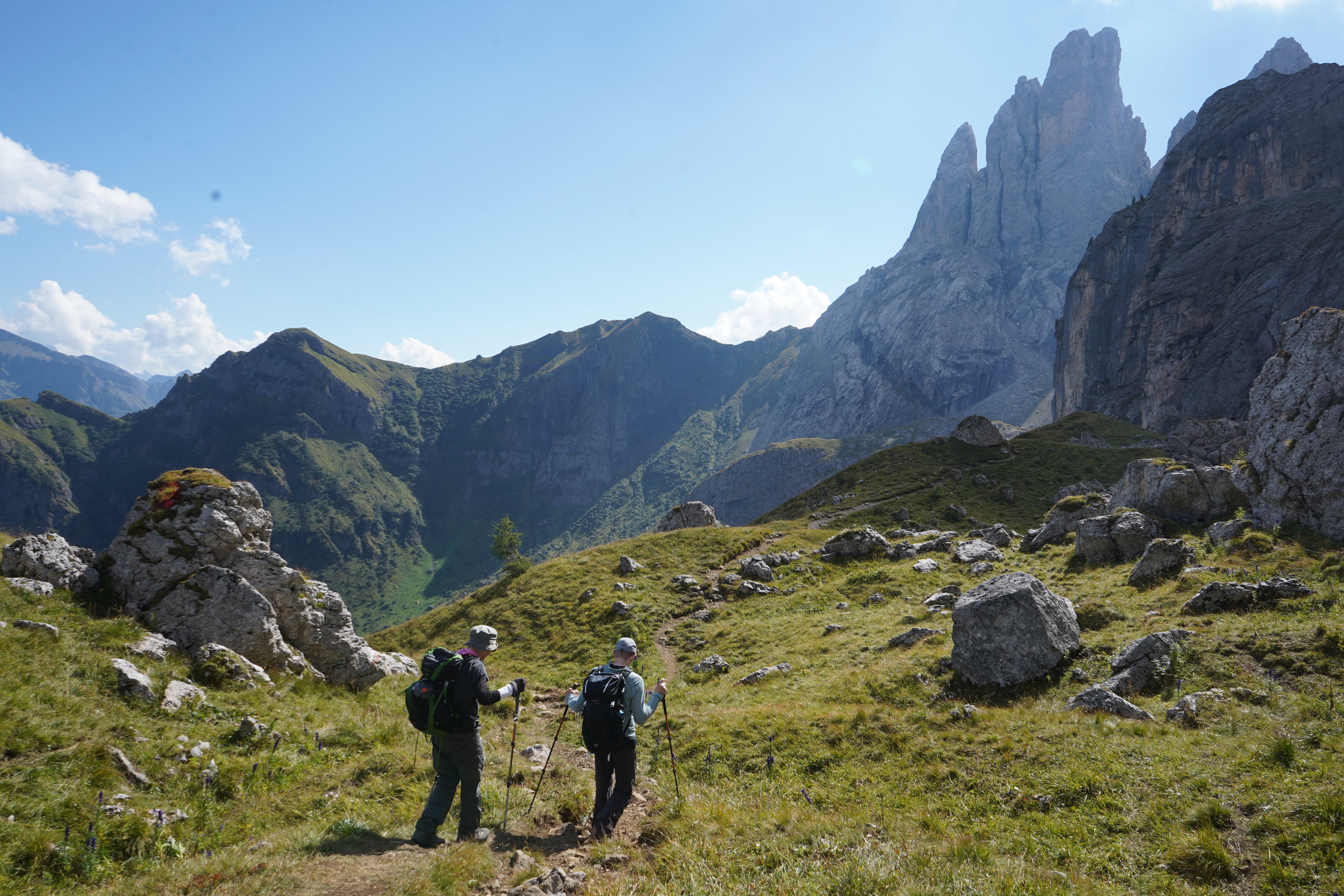
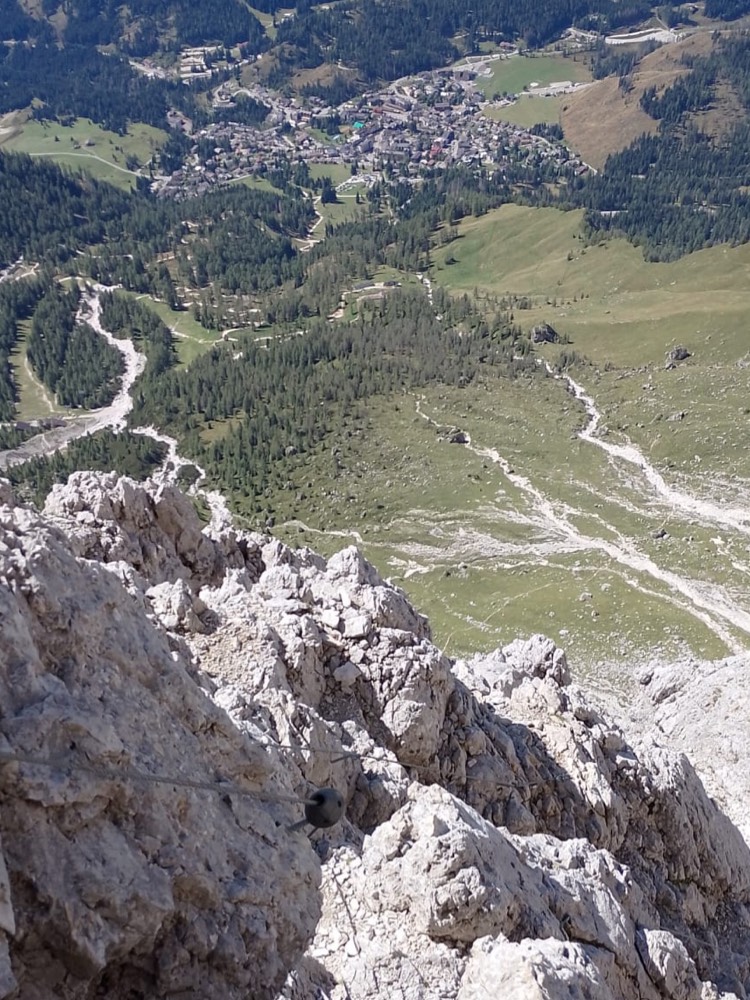
The Palaronda Hard travels on the Alta Via 2 and it does have sections with exposed trails where stumbling or falling off would result in serious consequence. Most of those sections have fixed cables to hand-rail, some longer sections are rated “via ferrata”. Pictures speak more than words and we would recommend checking out the many clips on the net, namely on Youtube that describe the AV2 in various weather / trail conditions. Unfortunately, rarely does one find particular days or sections labelled. Following is a sequence of clips that we found quite descriptive with our labelling and start times to watch for each section:
Alta Via 2 EP 3 Mike Windsor https://www.youtube.com/watch?v=3hQ0NCX92ZU .
Stage Mulaz Hut to Rosetta Hut (rated via ferrata) watch from min 1.12
Stage Mulaz Hut to Pradidali Hut (rated via ferrata) watch from min 6.32 to 8.36 and avoiding a cabled / exposed section on Delle Lede Pass to Treviso Hut / Canali Valley
Can technical / via ferrata sections be avoided on the Palaronda Hard?
Yes – we provide bad weather/bail out options but these are not intended to be the primary itinerary. For an itinerary without the technical / via ferrata sections we recommend the Palaronda Soft.
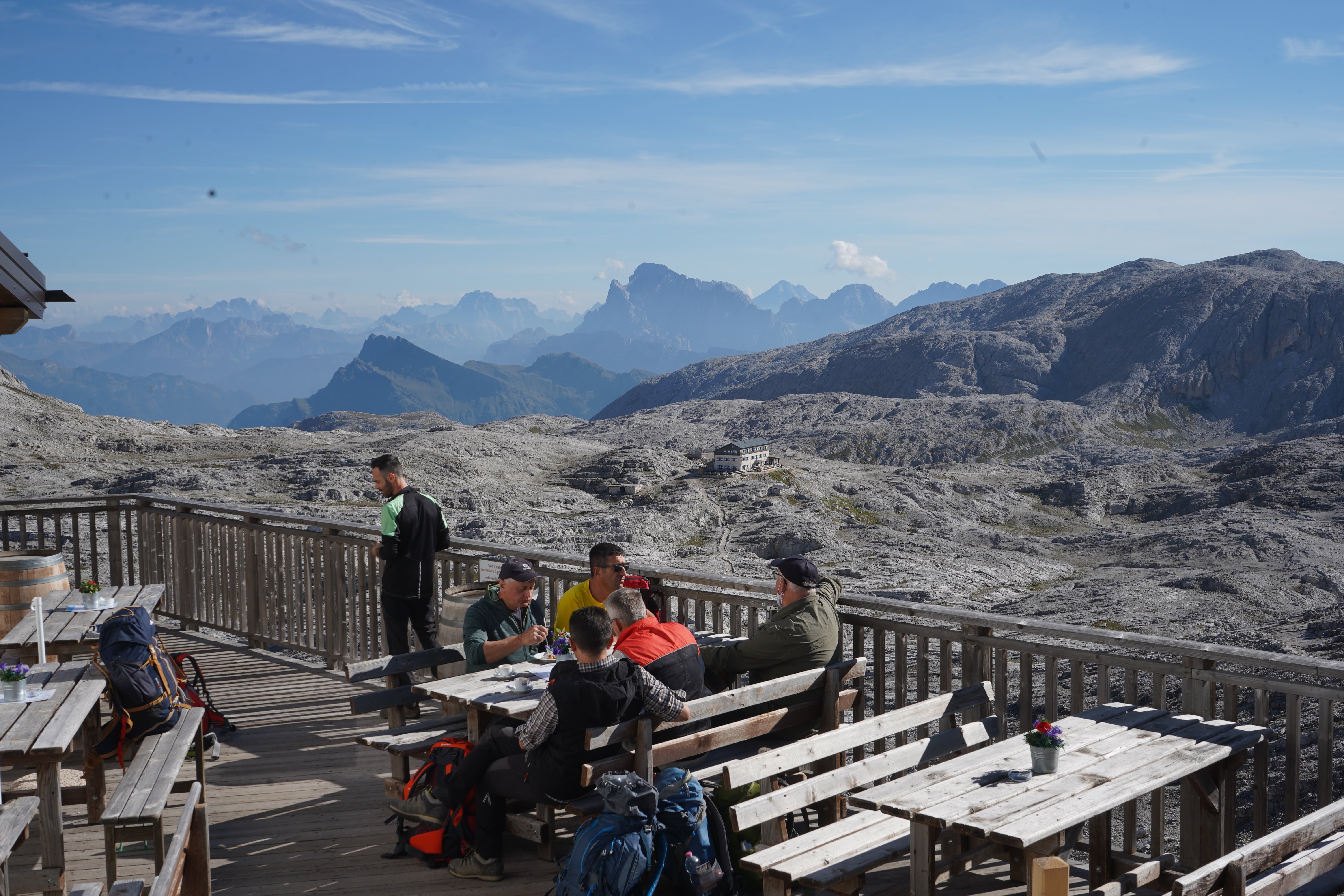
What are the huts like? Double rooms? Showers? Food Choices?
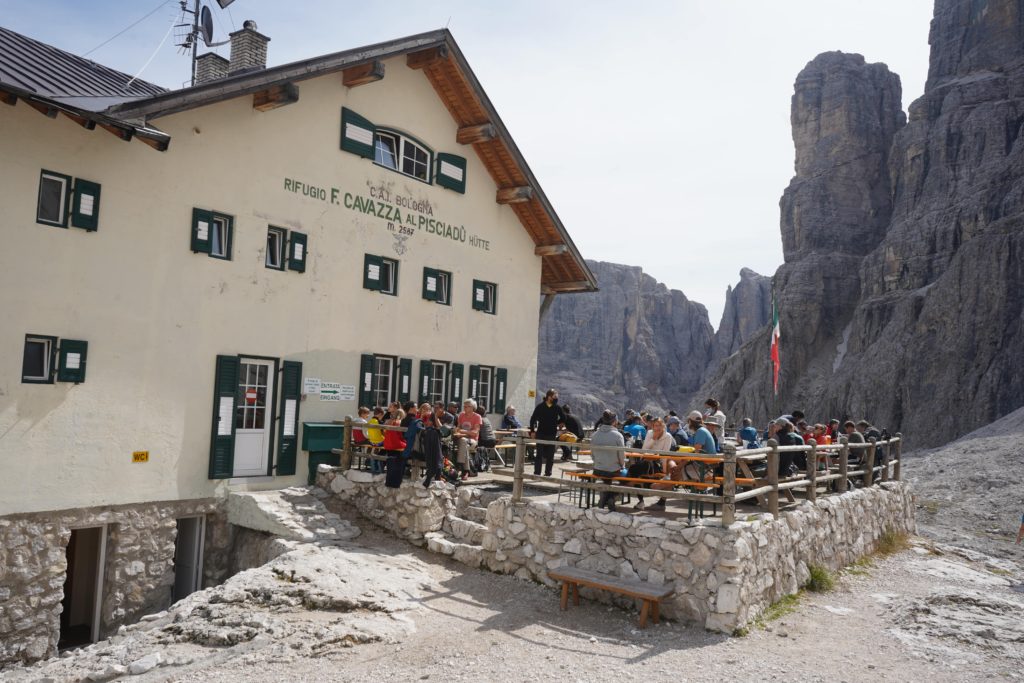
The huts in the Palaronda var. While all of the huts offer showers, only some offer private rooms. The others offer bunkbed-style sleeping with up to 10 people per room. Upon request and with an early booking, we can organize your trek with as many private (double) room options as possible.
The food is always delicious and plentiful (as is the Italian wine). Special diets like gluten free, pescatarian, vegetarian can be accommodated. For vegan diets we recommend bringing calory supplements due to limited choices.
What is a sleeping bag liner and do i need to bring one?
A sleeping bag liner, “sacco lenzuolo” in Italian, is a lightweight, sack-shaped layer (usually cotton, silk, or microfiber) that you sleep in inside a bed or sleeping bag. Think of it as a personal bedsheet you can carry in your pack. It adds a tiny bit of warmth, keeps things hygienic, and packs down small.
For hut treks in the Dolomites, the short answer is: yes, you need one — and in many huts, it’s mandatory, even in private rooms. Mountain huts provide blankets and pillows, but for hygiene reasons they require guests to bring their own liner. Some huts sell disposable sleeping bag liners but these are discouraged for not being environmentally friendly.
How do I get to the meeting place from the airport?
Please see the “Transport” tab for details.
Climate, weather, temperatures and the best time to visit the Dolomites
The Dolomites, being on the “sunny side” of the Alps, are usually blessed with favorable weather. However, as with anywhere in the mountains, there is always a chance to get rain or snow. This is rare in July and August but it can happen in June and September. Daytime temperatures can range from -5°C (23°F) to 25°C (77°F), but it is usually somewhere in between. Average temperatures and precipitation for each month are described on this helpful weather graph for the Dolomites, which covers the past 30 years.
The majority of the huts along the way are between 2,000 and 2,500 m (6,500-8,200 ft.) in elevation.
Most of the huts are open from mid-June to late September. The busiest times are from mid-July to the end of August, with the period around August 5 – 25 being Italy’s busy summer vacation time.
Medical/Rescue and Trip Cancellation Insurance
We strongly recommend the purchase of a travel insurance package that covers adventure travel. Common policies sold by travel agents or policies included in your credit card contract tend to exclude “mountaineering” if you read through the fine print. We recommend an adventure travel policy on our website at http://ontopmountaineering.com/travel-insurance/ which our clients had good experiences with in the past. *NEW: we now recommend including covid-19/pandemic coverage with your insurance policy.
Why Do You Not Offer this Trip in August?
The month of August is the Italian’s busy vacation time. Hotels across the Dolomites and other popular vacation towns accommodate for the influx of Italian tourists by imposing minimum night stay requirements of 3 – 7 days that do not align with our itineraries. 1 night stays are often possible but they come with very high premiums, sometimes 3 – 4 x what we budget. Rather than passing these premiums on to our lovely clients, we encourage bookings outside of August or on another high route.
Lodging at the Huts
- The huts are heated and provide sheets and comforters or wool blankets – however, in some of the huts the sheets/blankets are not changed between each client stay, so it is mandatory to bring a sleeping bag liner. The lightest models available are made of silk and weigh around 100 grams (1/2 pound).
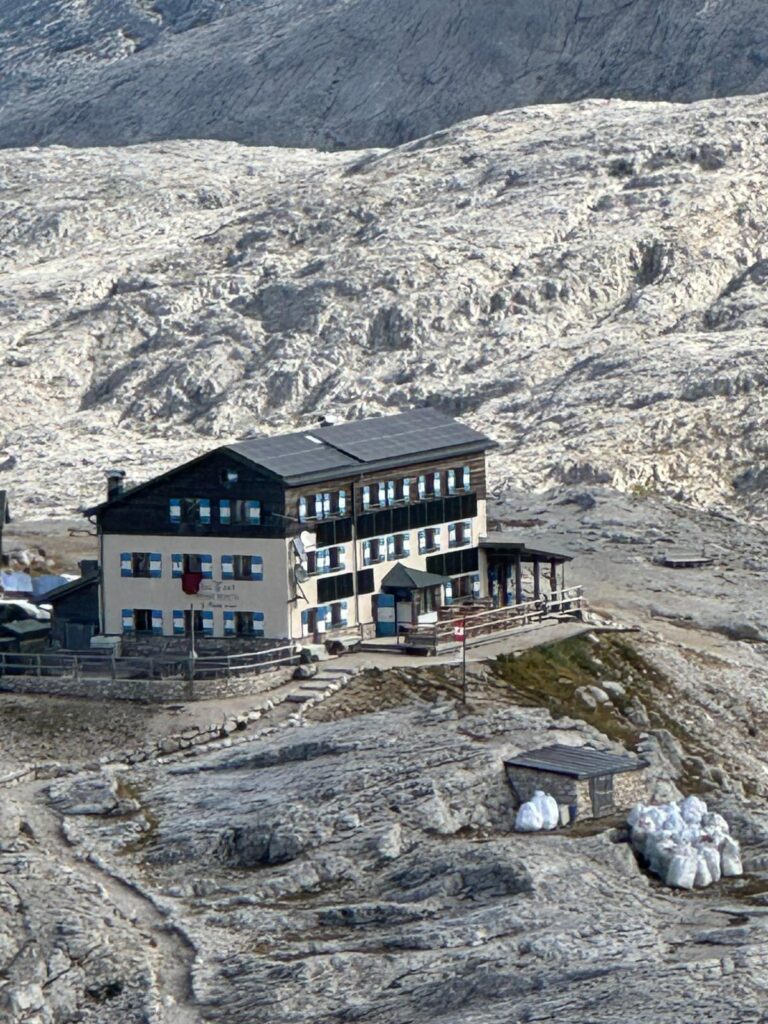
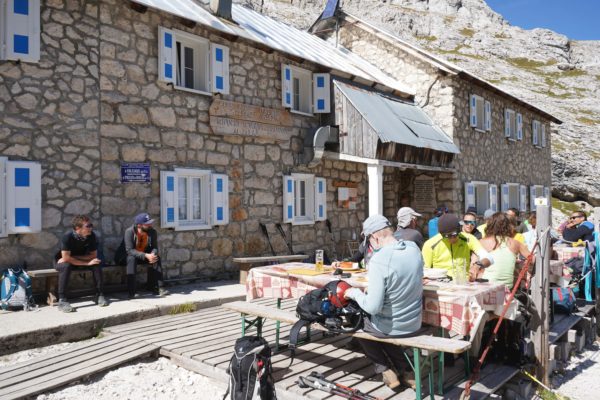
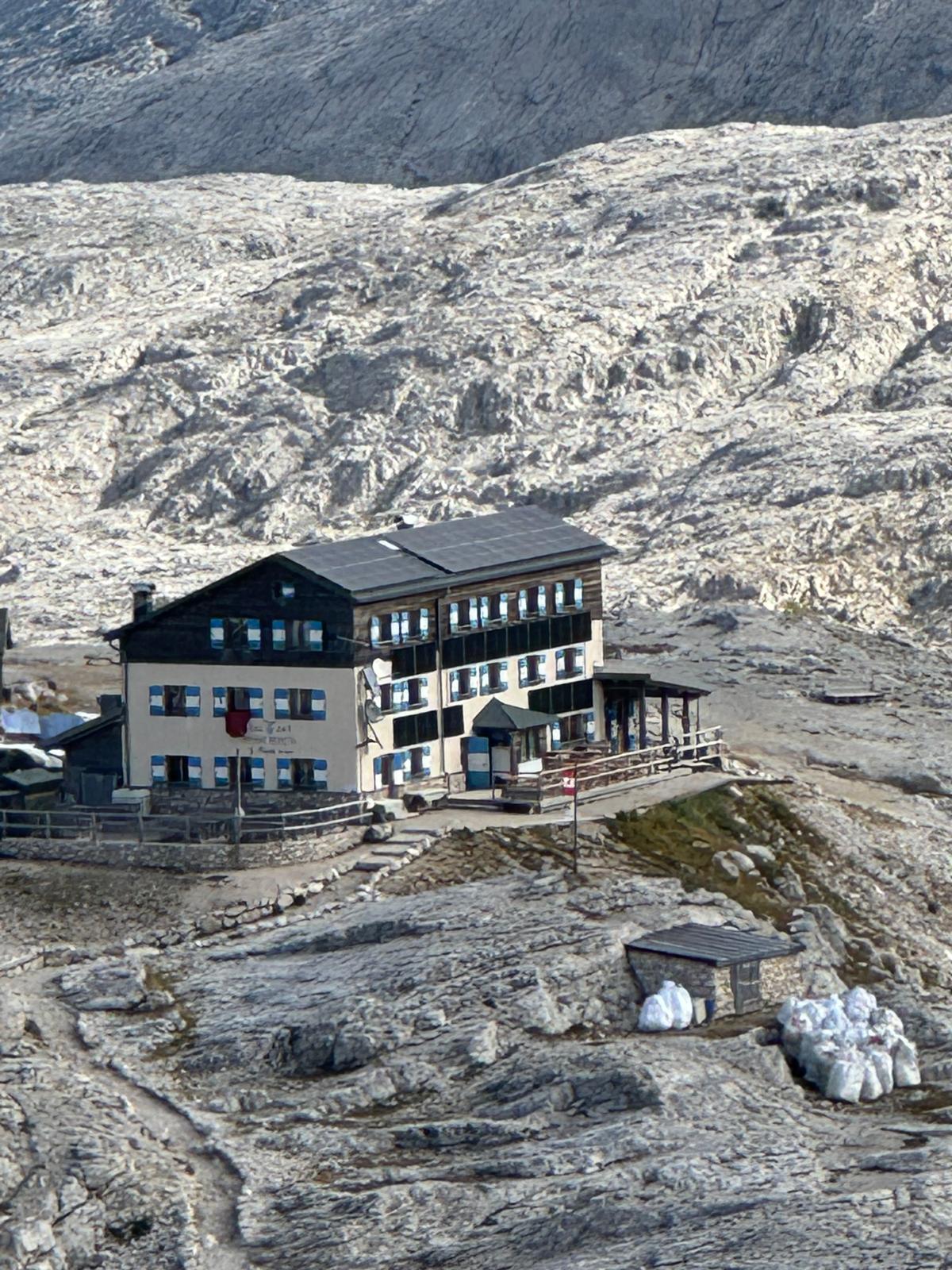
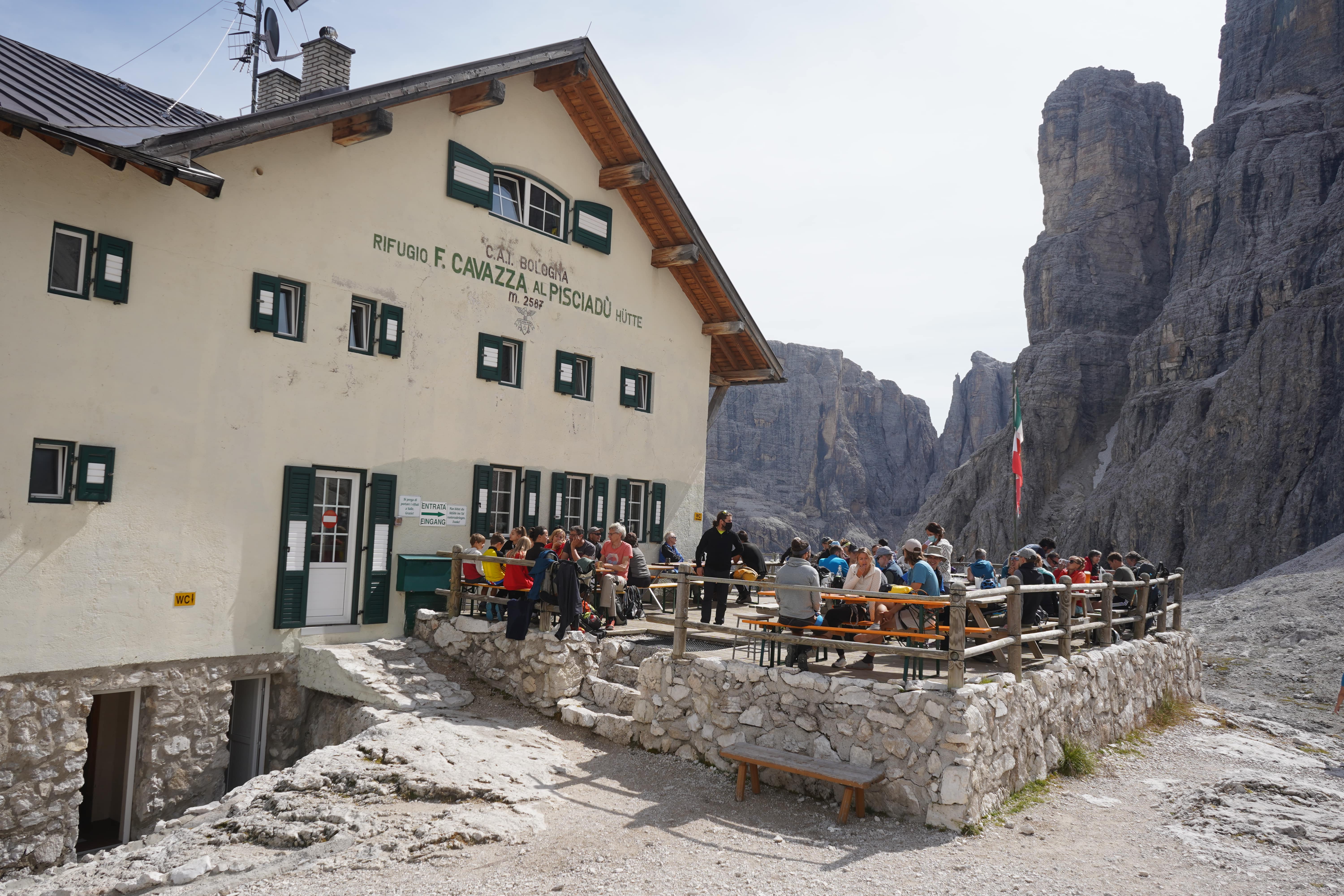
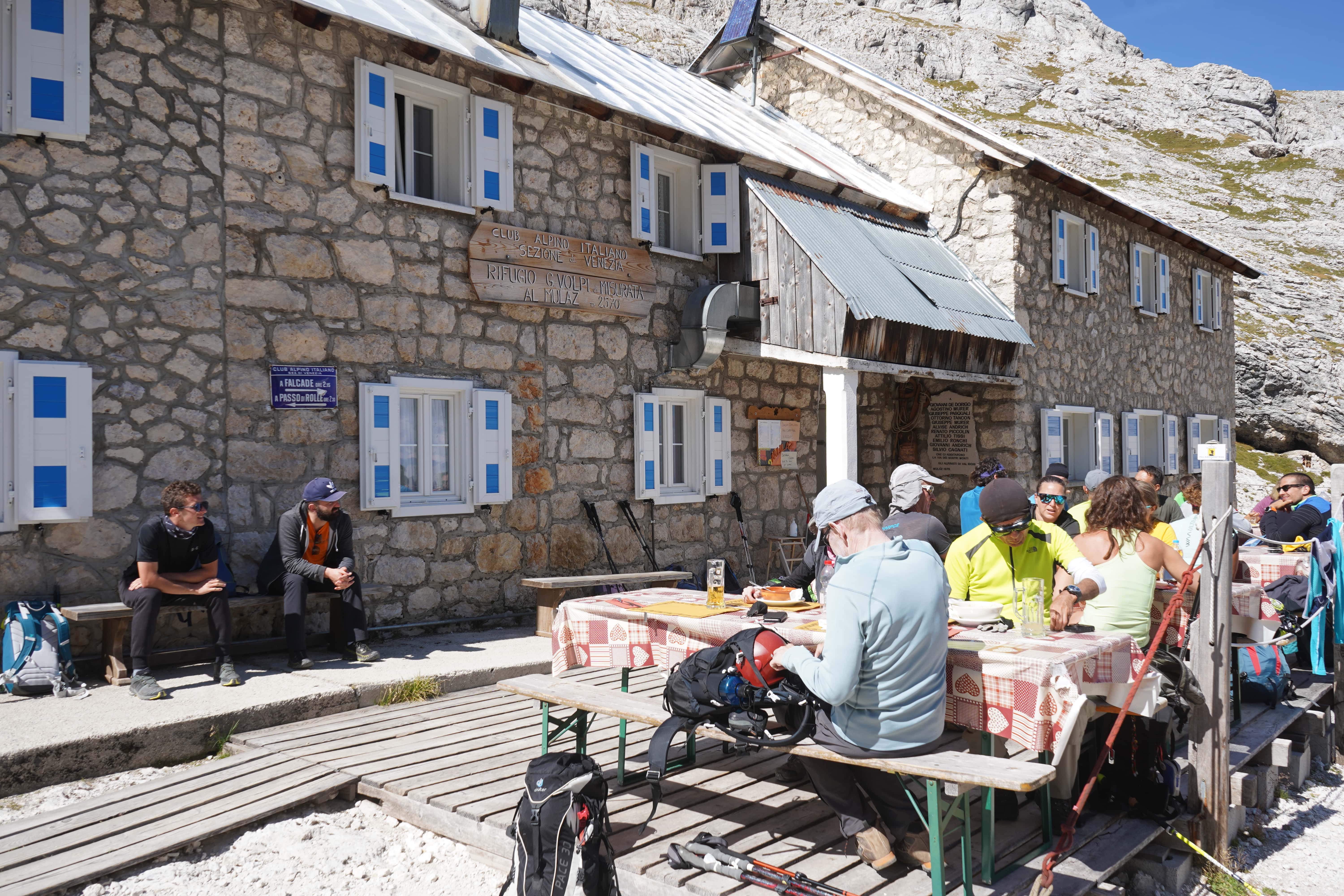
- The Huts included along our route vary in size from very large to small and rustic depending on their location – all are built in magnificent settings. Some of the huts only offer coed, multi-bed bunk rooms for 10 to 14 trekkers (when fully occupied).
- When lodging in dorm rooms/ non-private rooms, you will be sleeping with your fellow trekkers and most likely other trekkers as well. If you are a sensitive sleeper, we highly recommend ear plugs, an eye mask, and perhaps a sleep aid.
Breakfasts and Dinners at the Huts
- Breakfasts typically consist of tea/coffee, bread, jams, cold cuts or ham, cheese, muesli, cereal with milk or yogurt. Smaller or more remote huts, like the Fonda Savio Hut, may have smaller breakfast offering. If you have your preferred cereal for breakfast, granola bar or power snack, you should probably bring it along from home, as it might not be available in the small food stores in Italian mountain villages or at the huts.
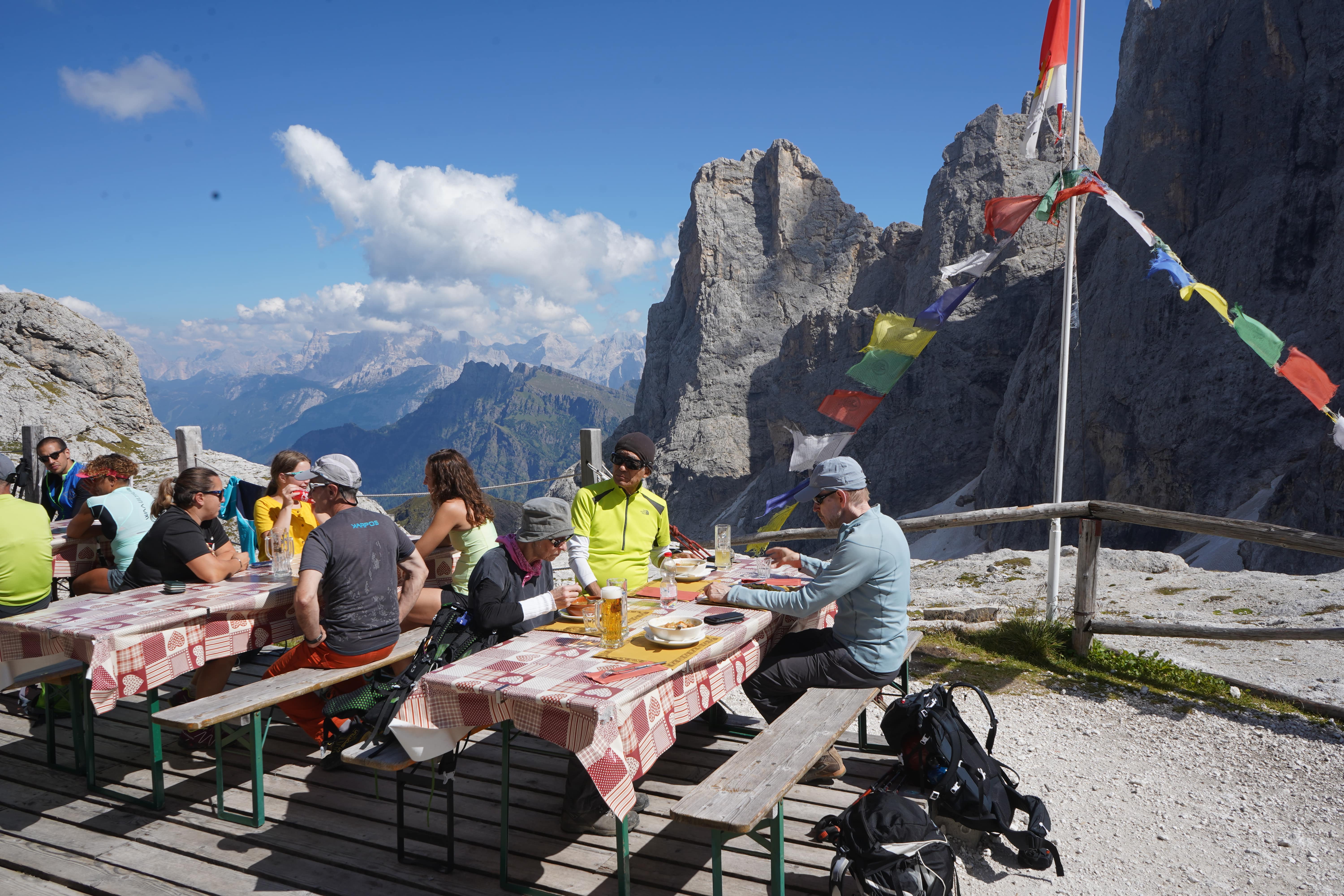
- Dinners are usually between 3- 4 courses (“mezza pensione”) which consist mostly of pasta or soup, a meat entree and dessert and/or cheese.
Lunches
Lunches are not included in our trip packages. We recommend packing a lunch for the first day of trekking. Packed lunches are available at each hut and must be ordered the night before.
Luggage Storage and Transfers
You can use the hotel luggage storage facilities at your own risk. Neither OnTop nor the hotel accepts any responsibility for loss of or damage to the luggage or the contents (including any valuables, even if we have been advised) during storage, the disposal process or any luggage transfers that may be part of your trip package. That being said, we have never had any issues with lost luggage during storage or transfer.
Medical/Rescue and Trip Cancellation Insurance
Medical evacuation insurance is mandatory for participation in all OnTop Mountaineering (OnTop ltd) Trips.
Common policies sold by travel agents or policies included in your credit card contract tend to exclude adventure travel, including trekking above 2000m, mountaineering, roped travel, ski & snowboard, ski mountaineering etc. if you read through the fine print. For adventure travel policy recommendations see our website:
OnTop travel insurance recommendations. You may get the best coverage if you book travel insurance policies within 14 days of paying your trip deposit. You may also want to consider additional insurance coverage like CFAR or trip cancellation.
We recommend pandemic coverage with your insurance policy.