
North Dolomites Ski Traverse
Alps / Italy / Dolomites
6 day ski traverse amongst spectacular dolomitic rock towers and peaks
Long descents, light packs, comfortable lodging, Italian hospitality
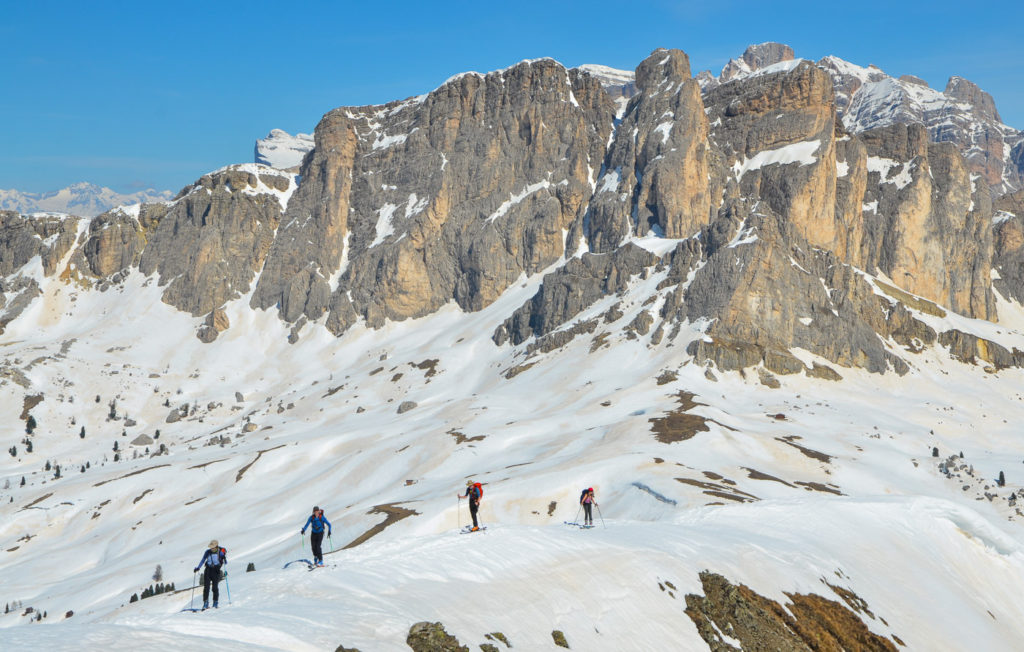
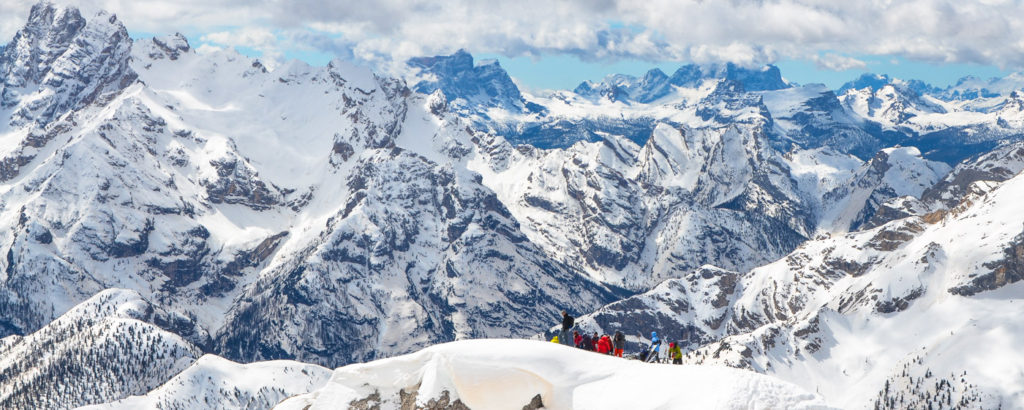
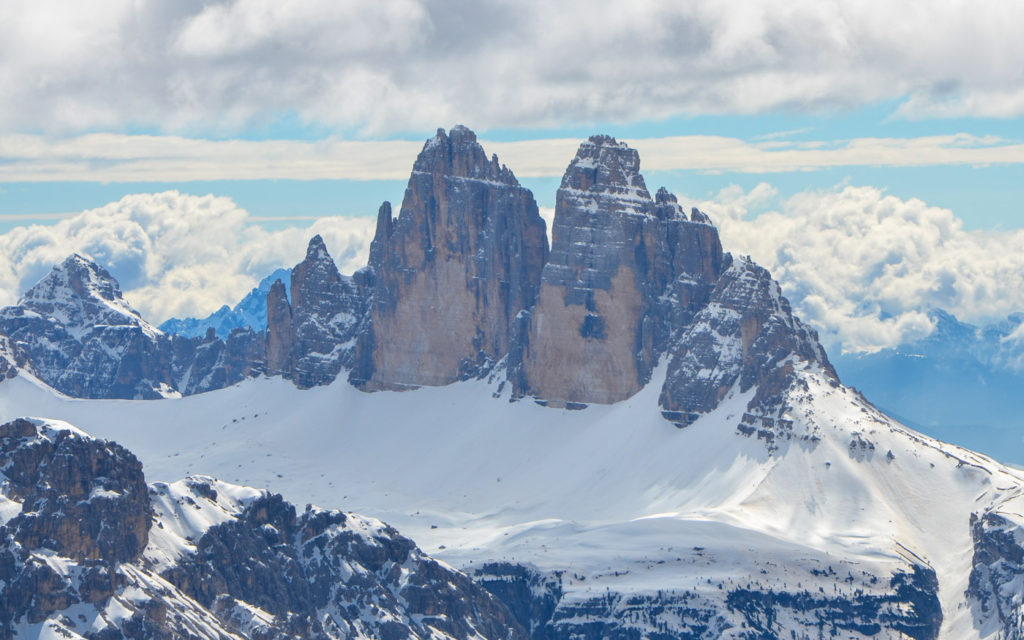
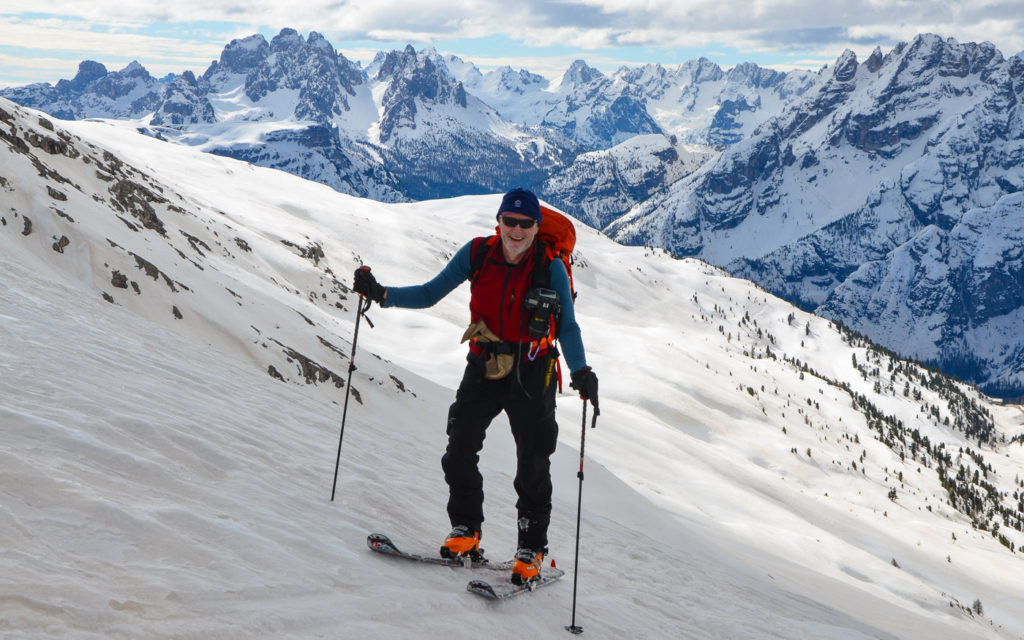
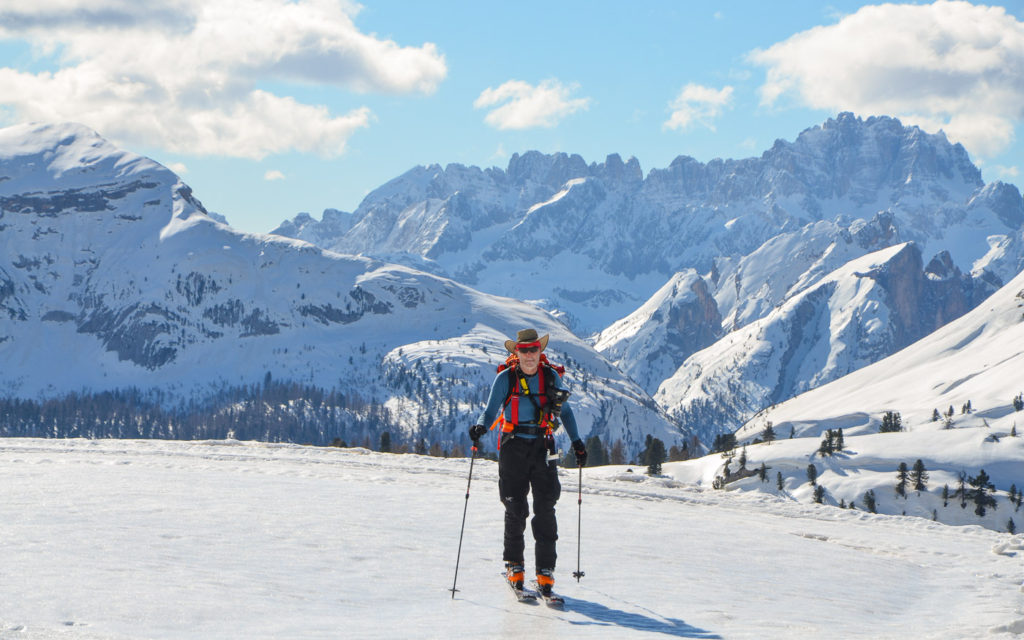
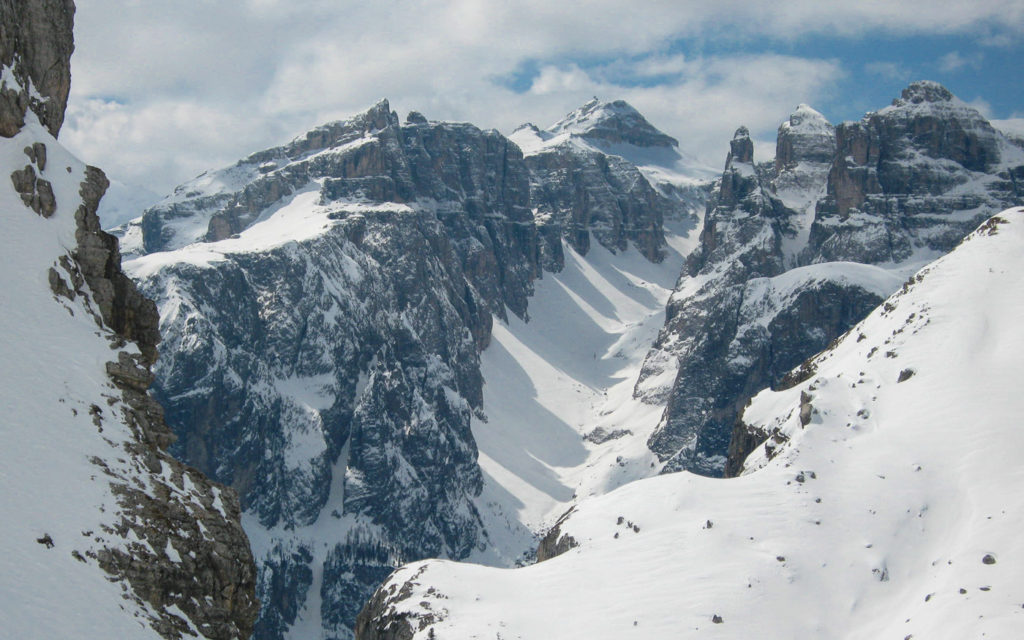
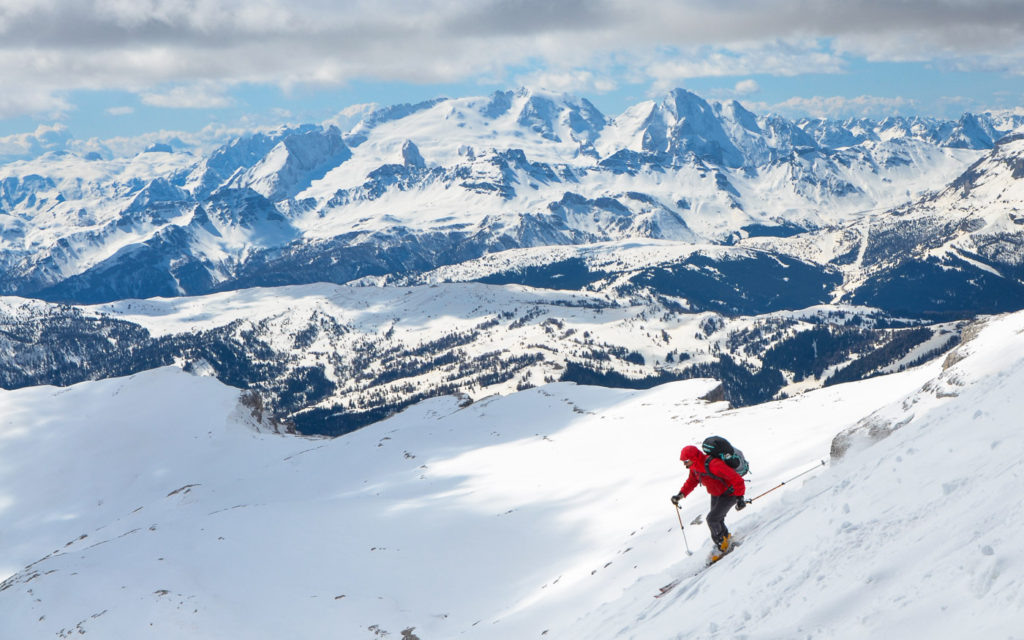
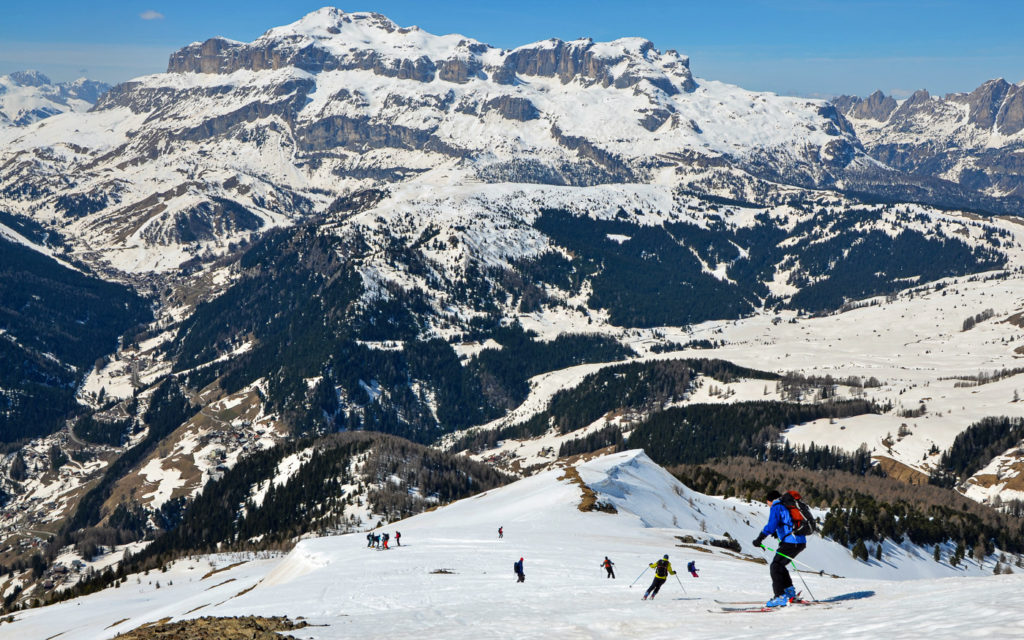
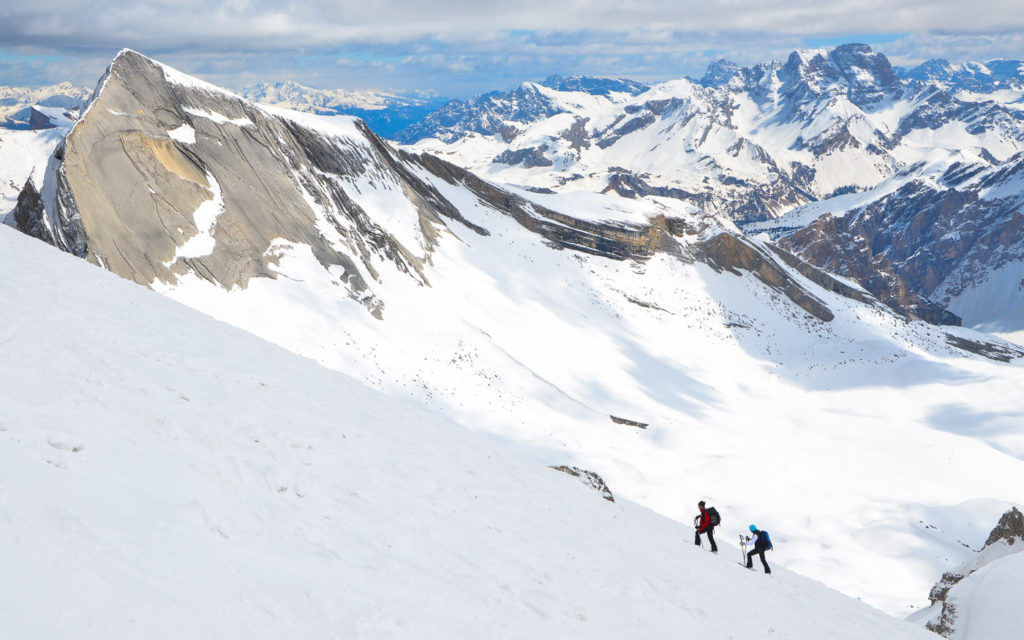
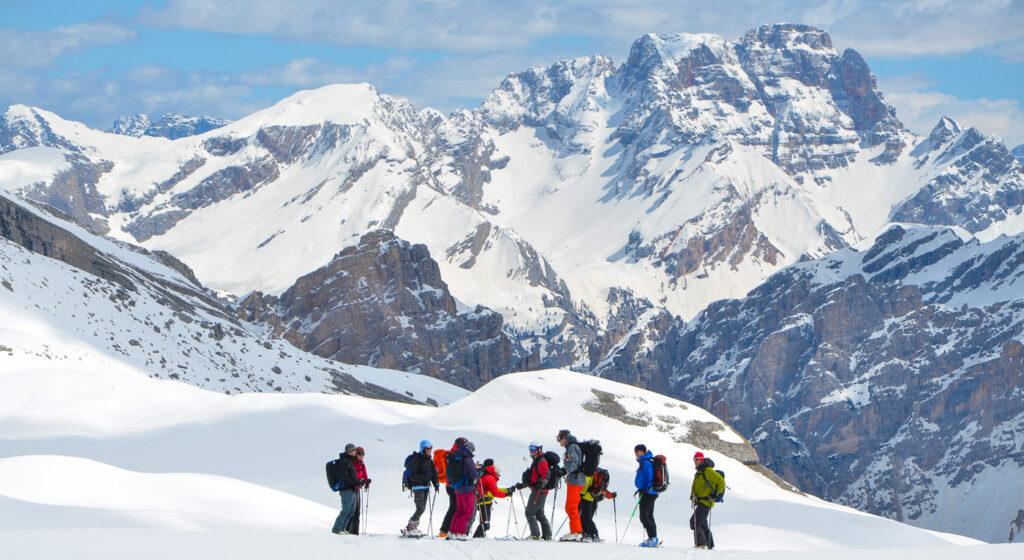
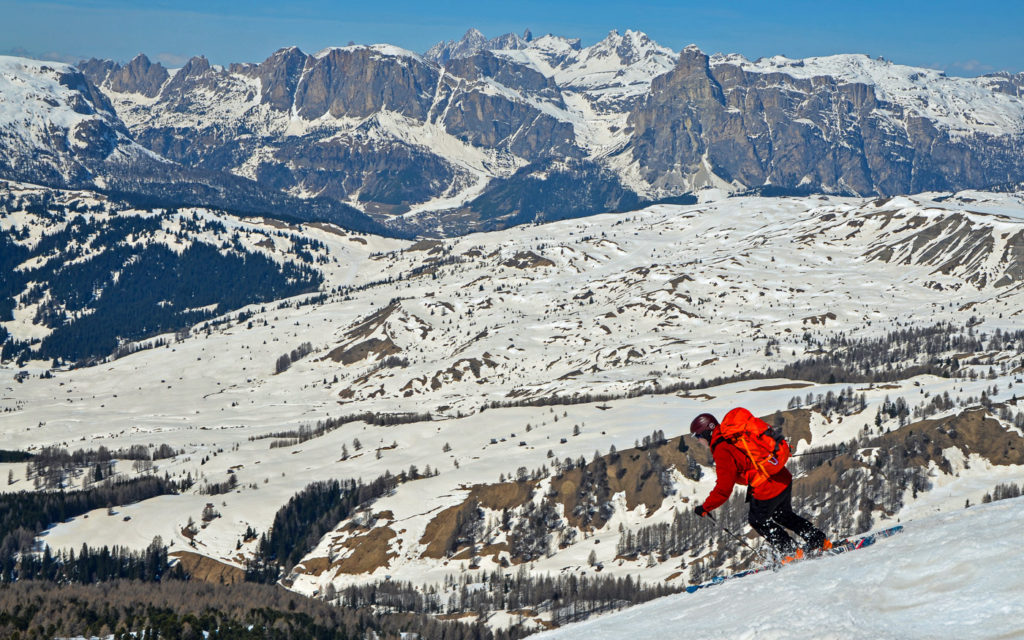
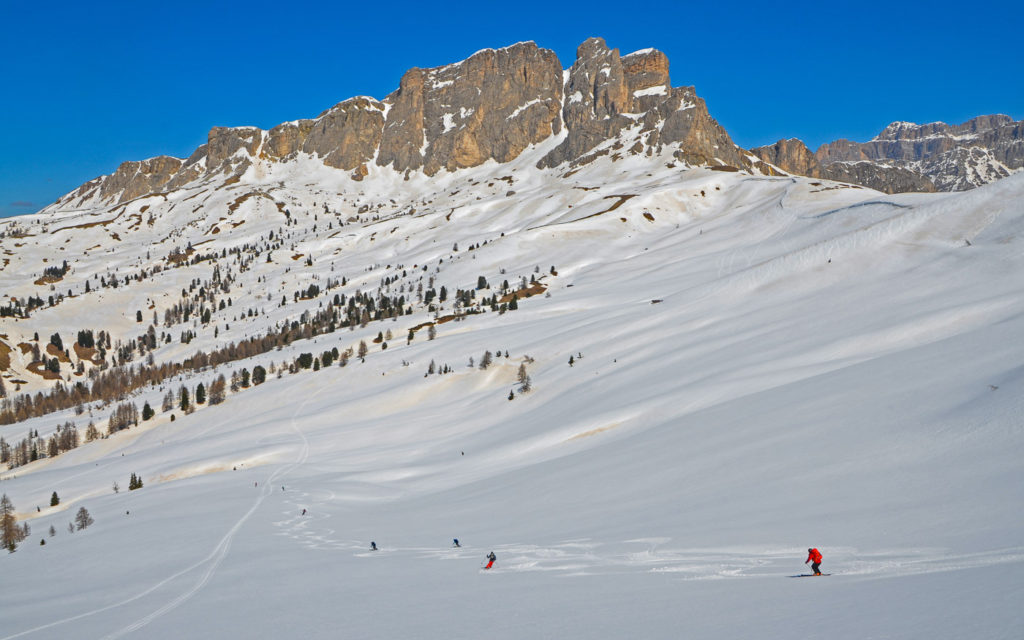
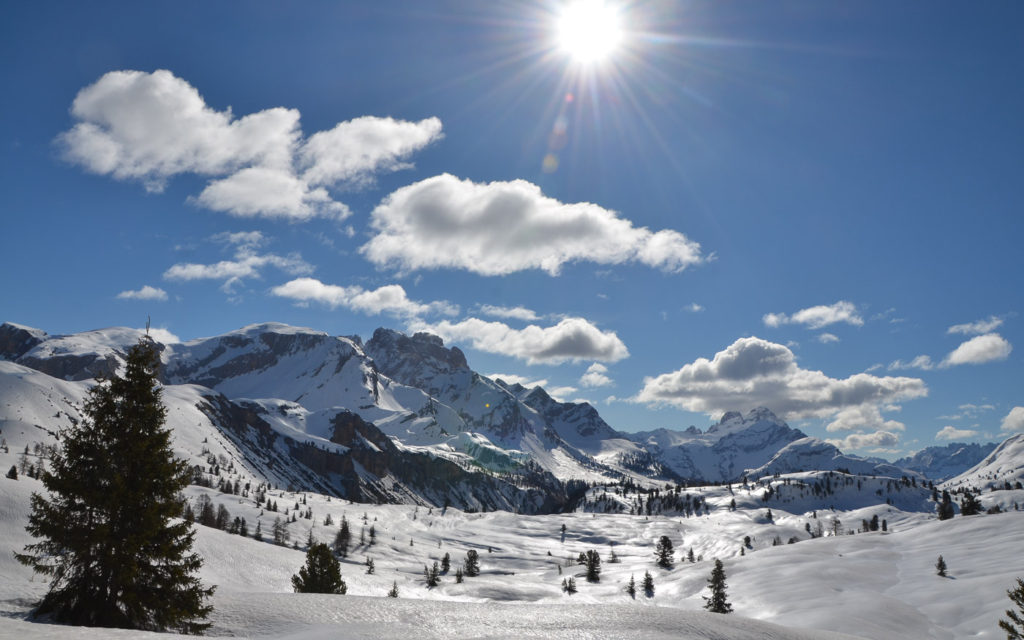
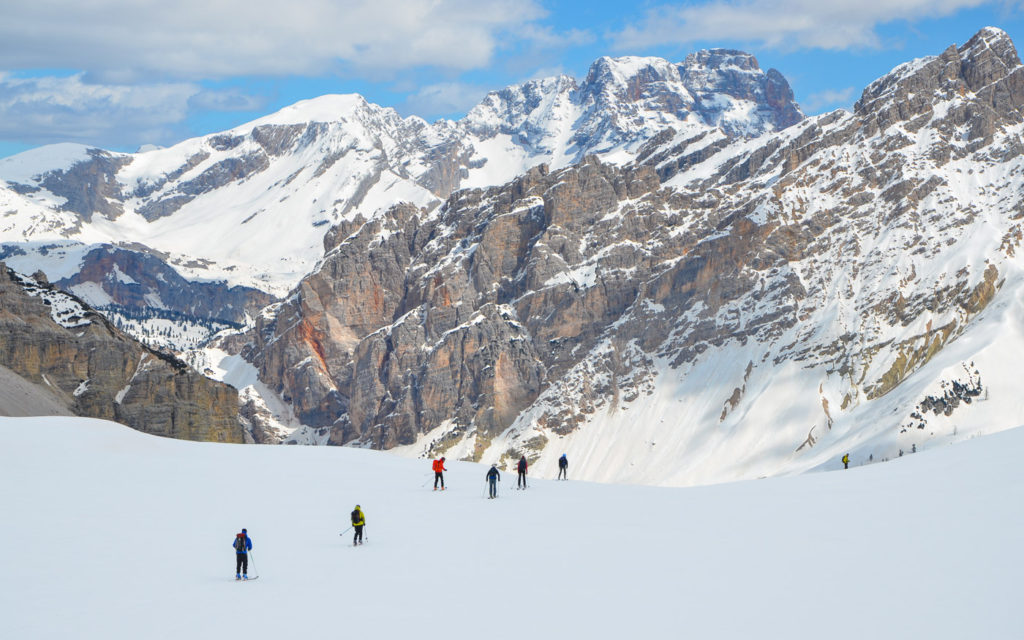
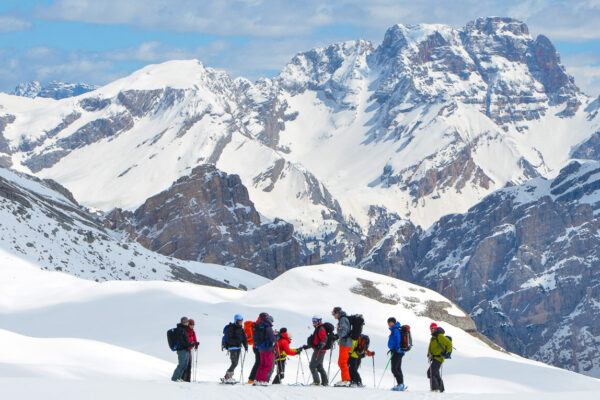
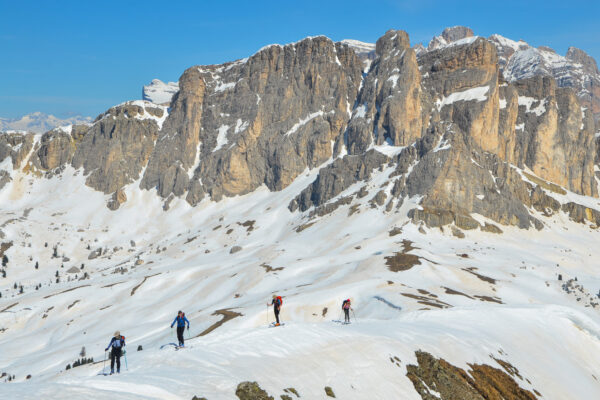
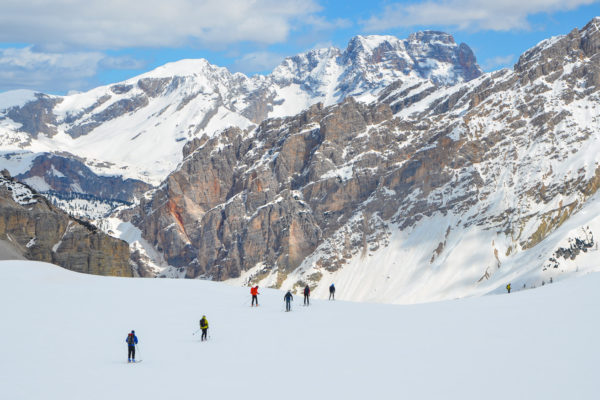
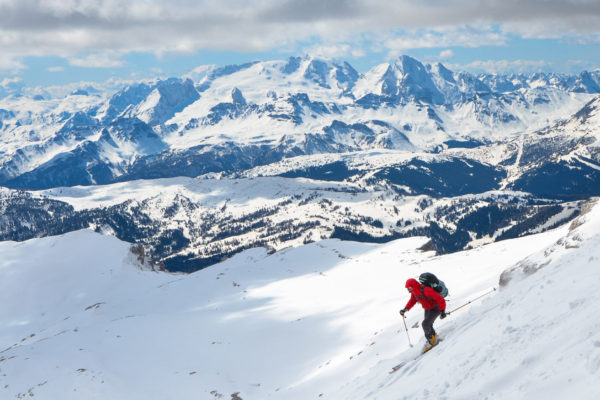
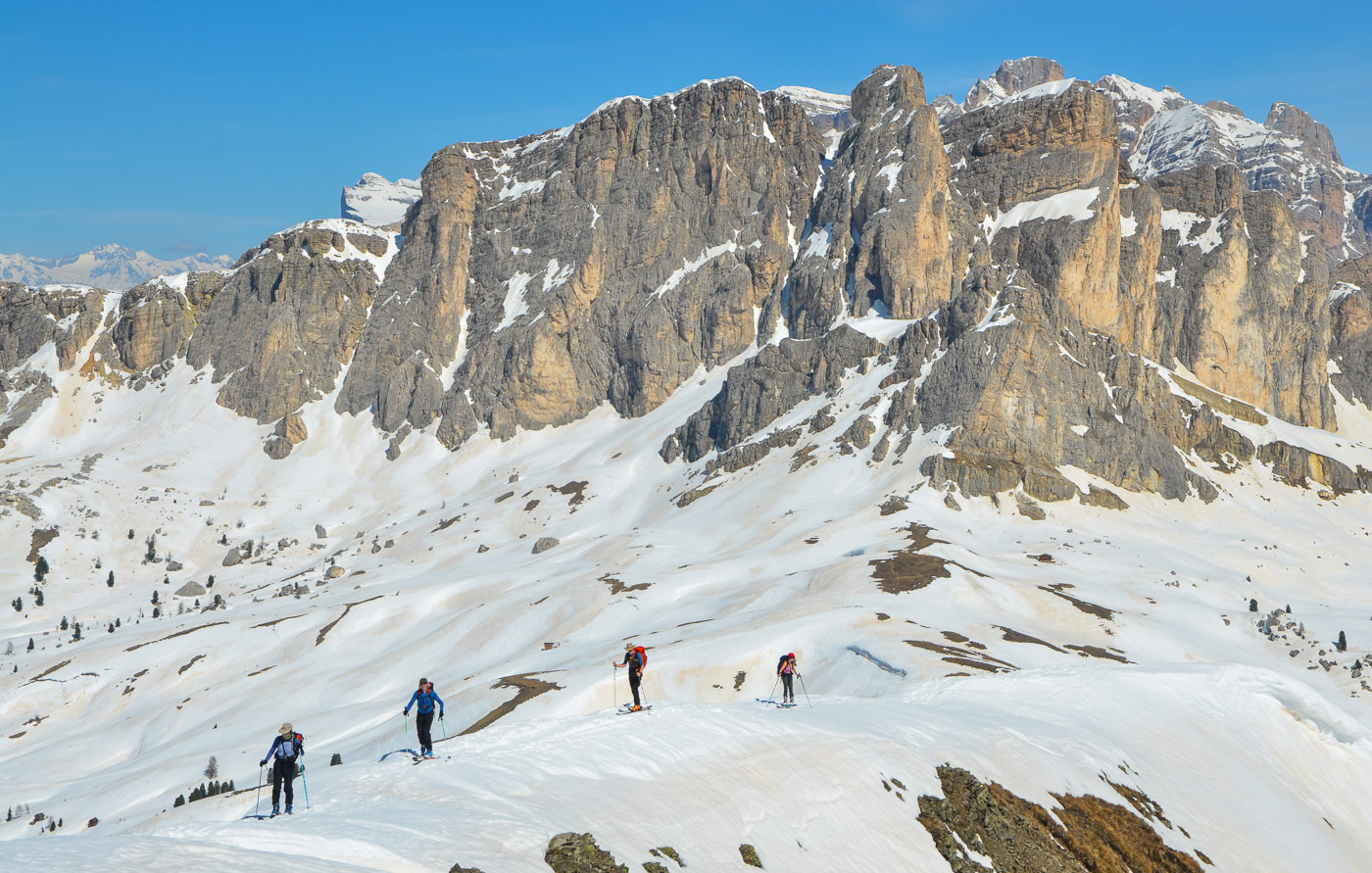
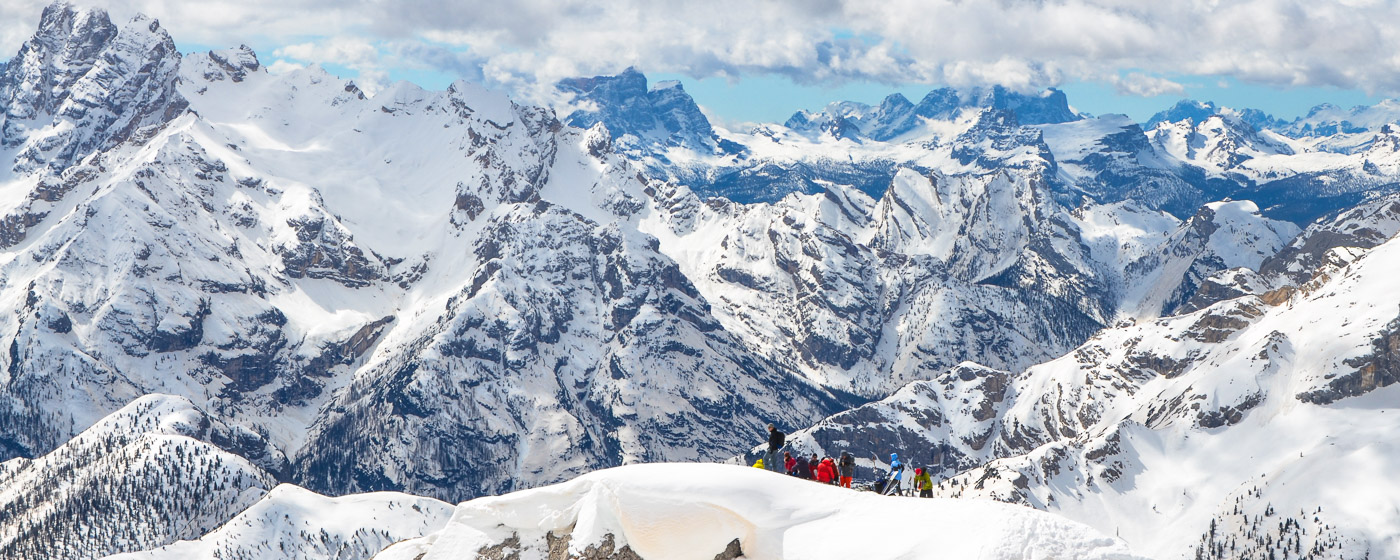
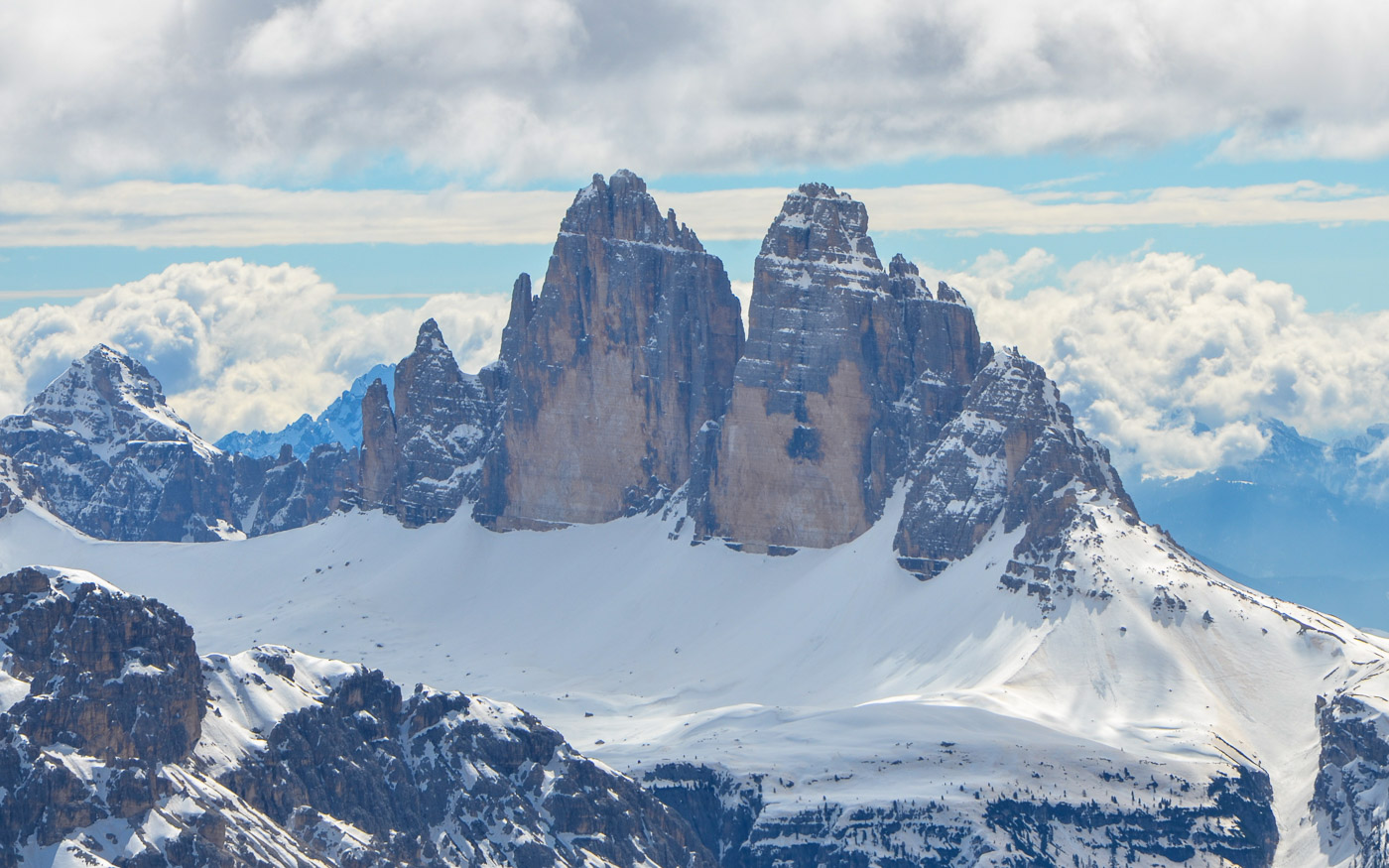
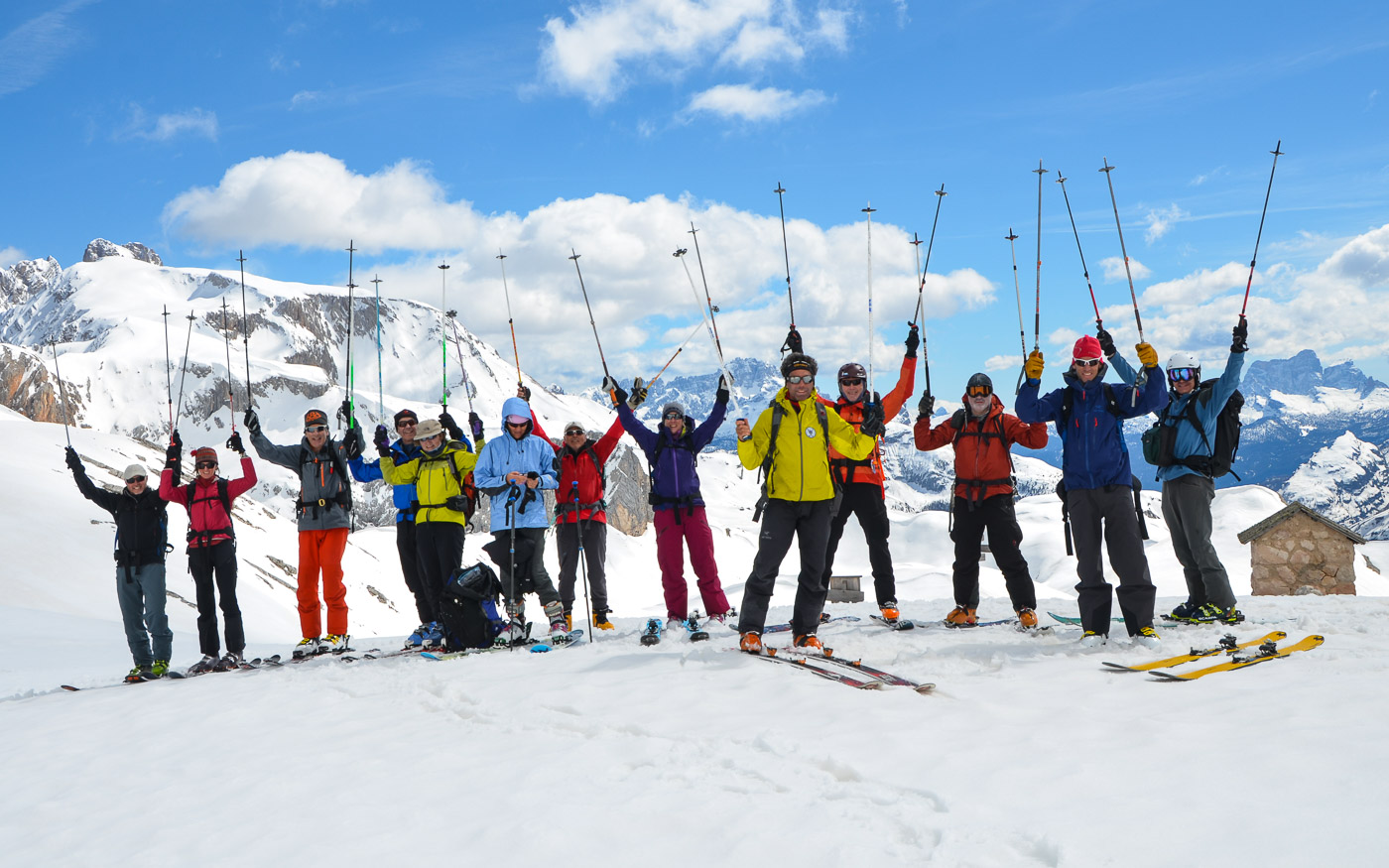
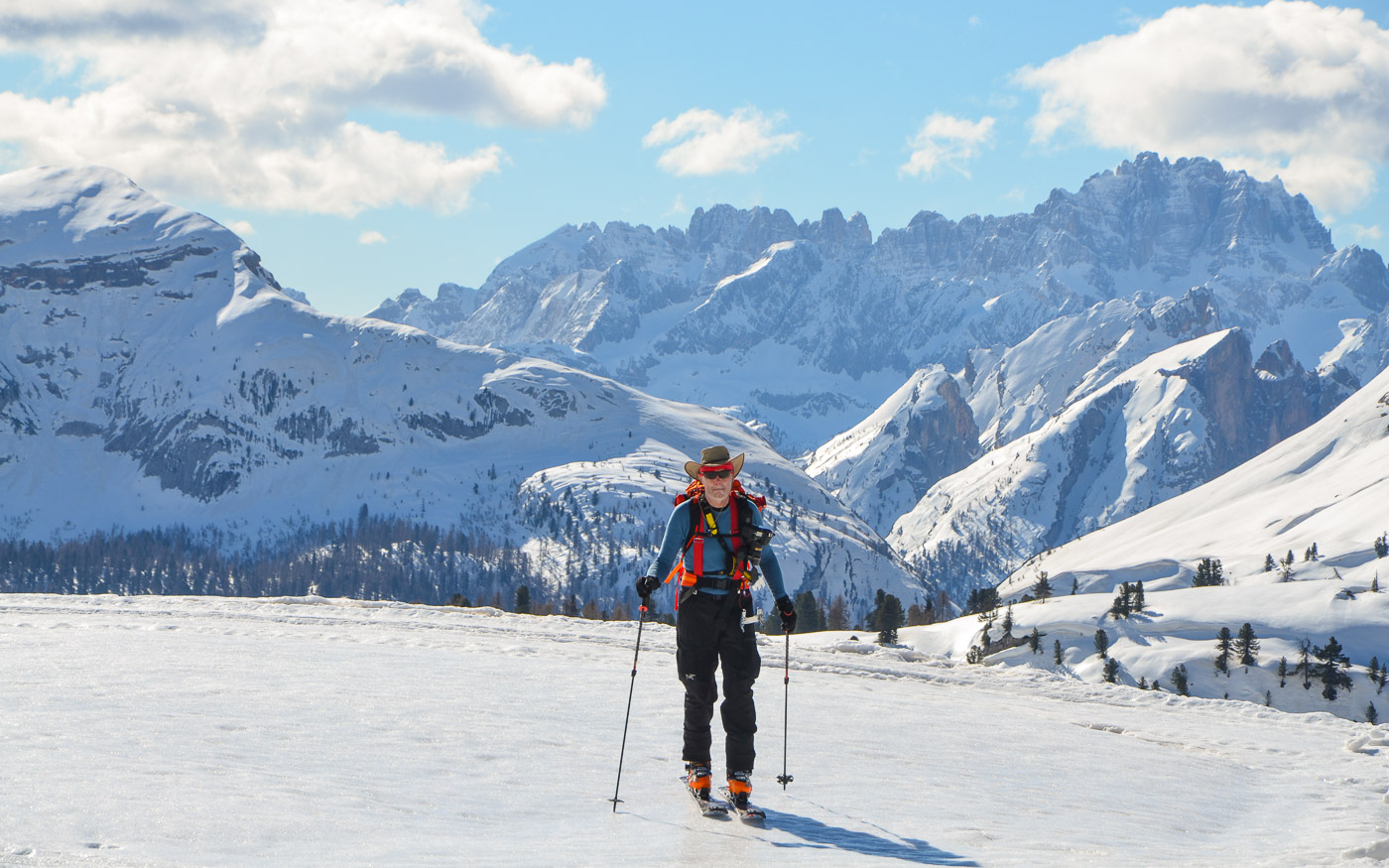
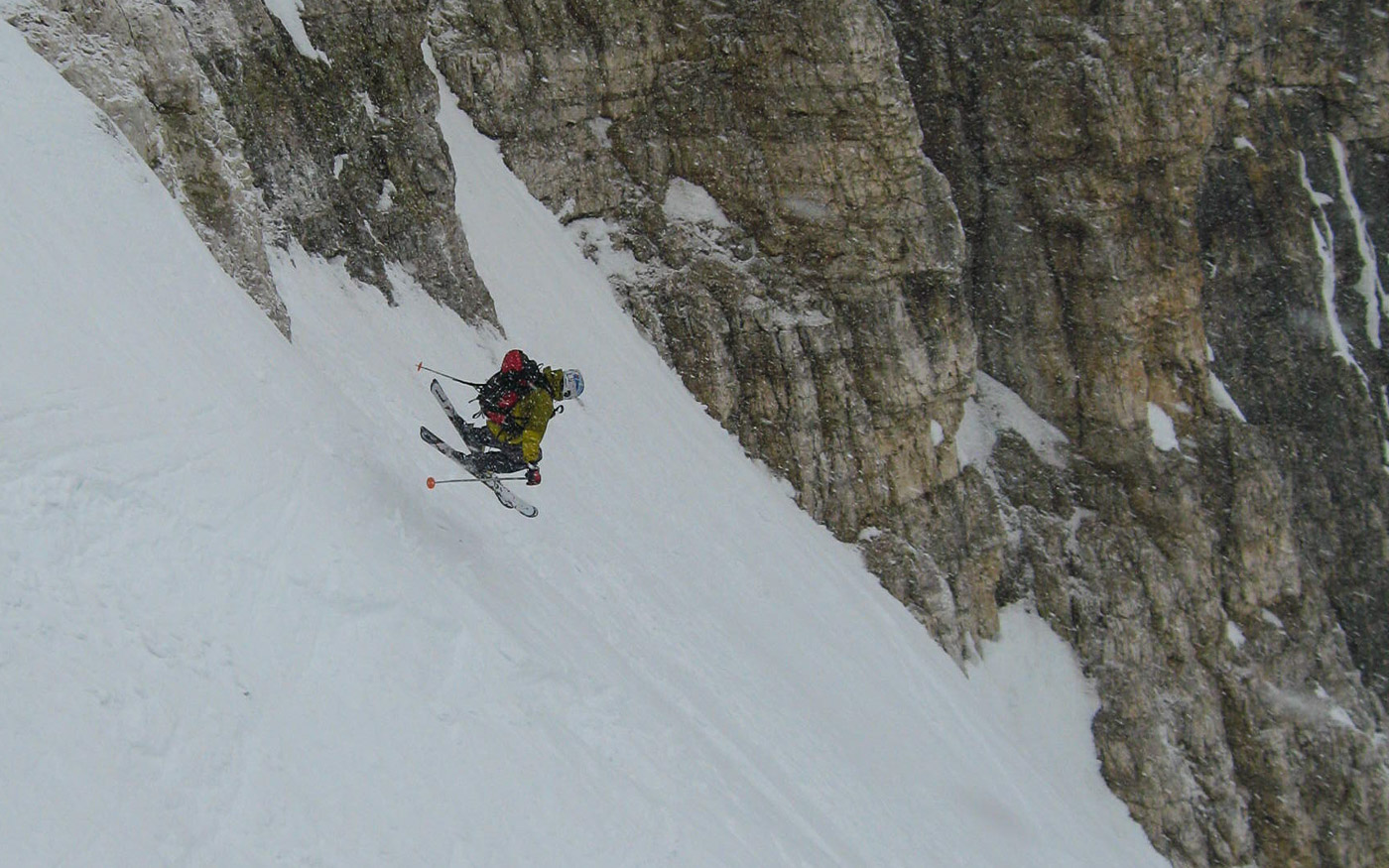
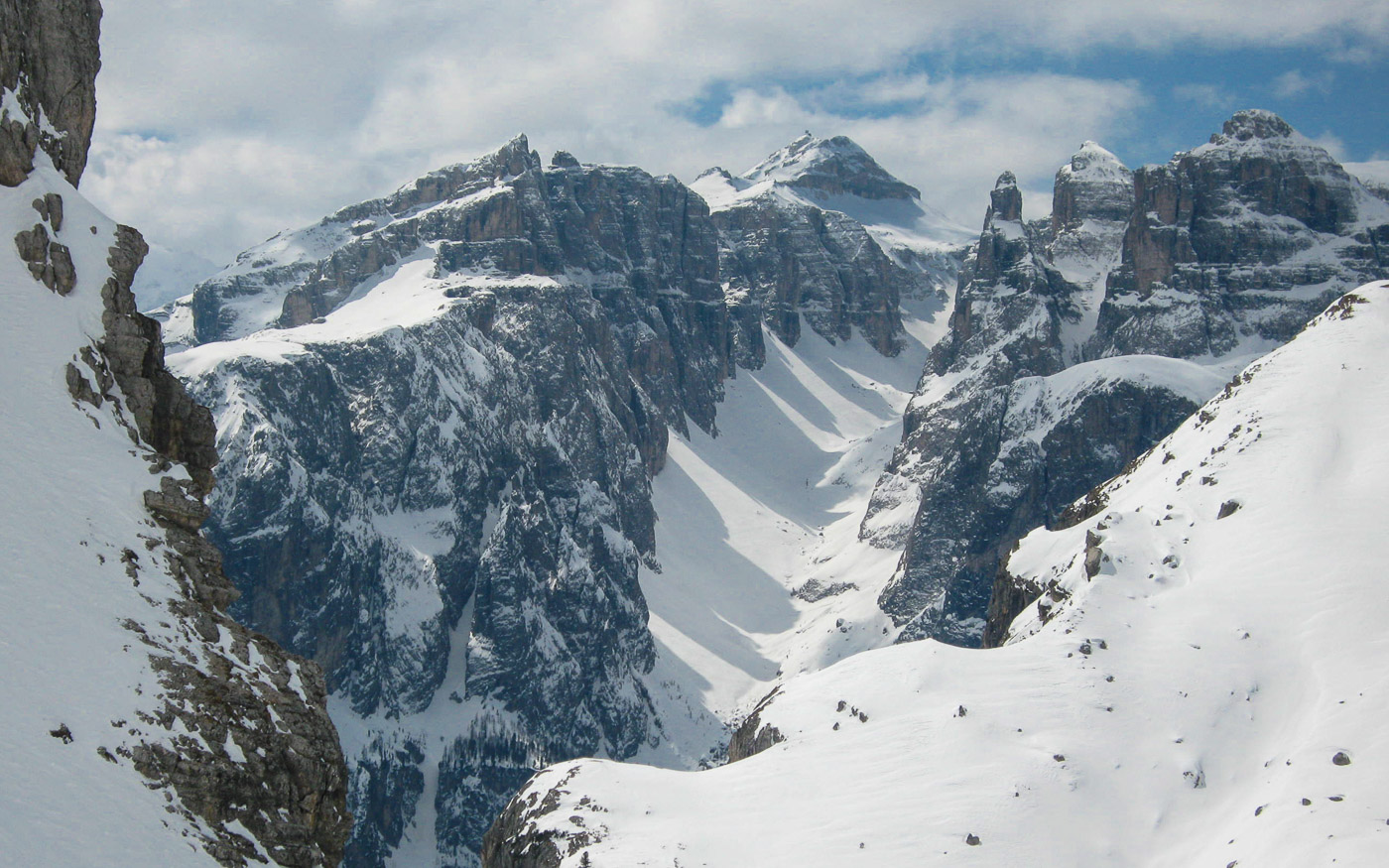
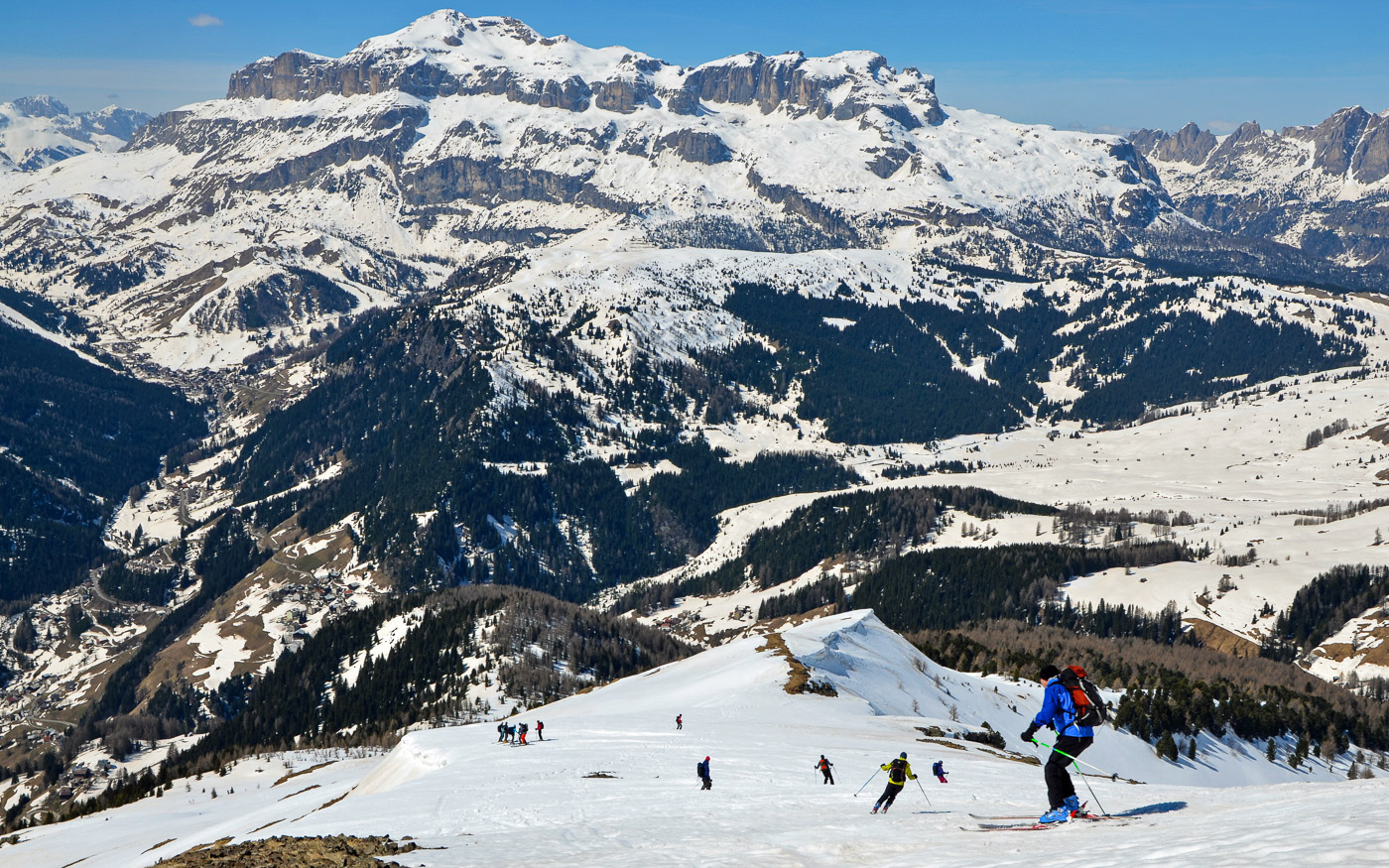
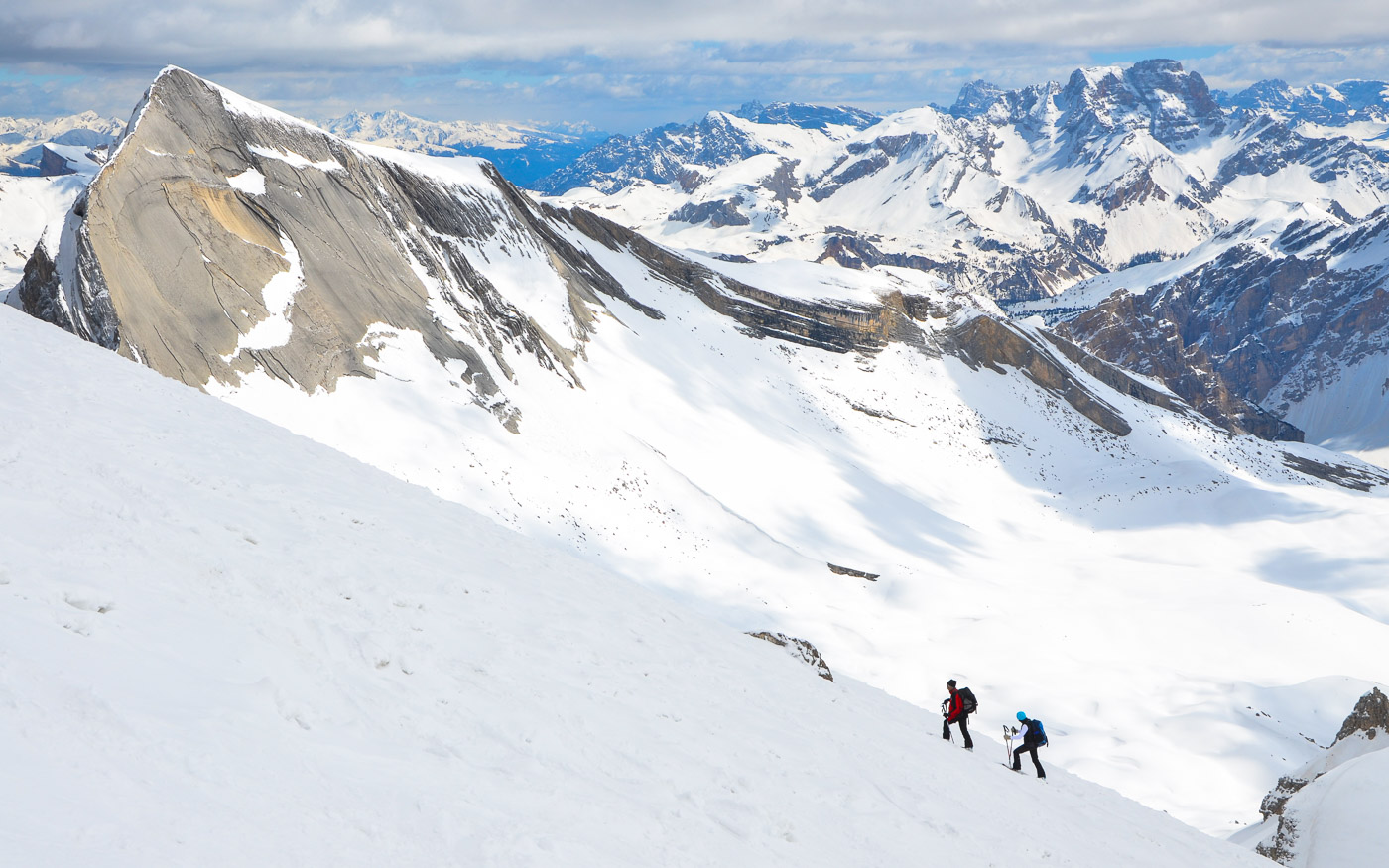
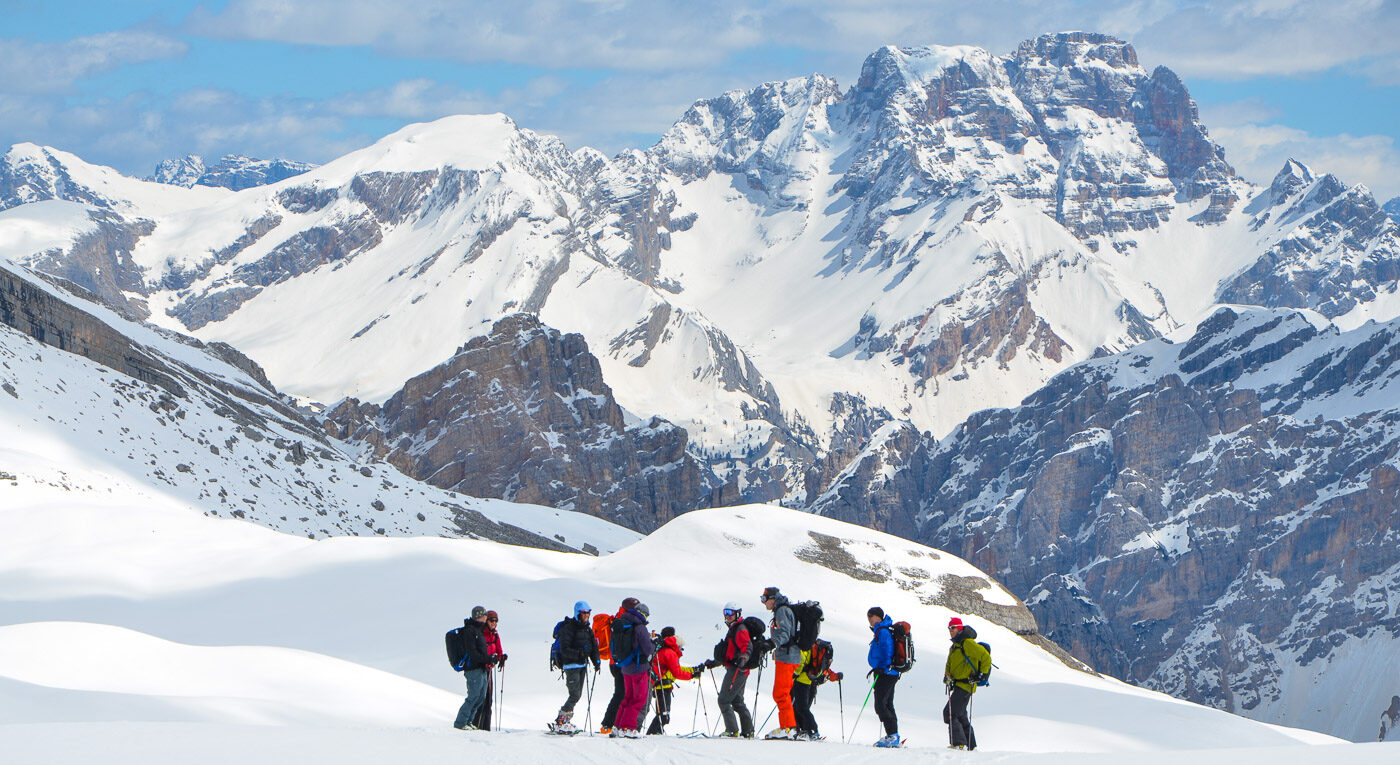
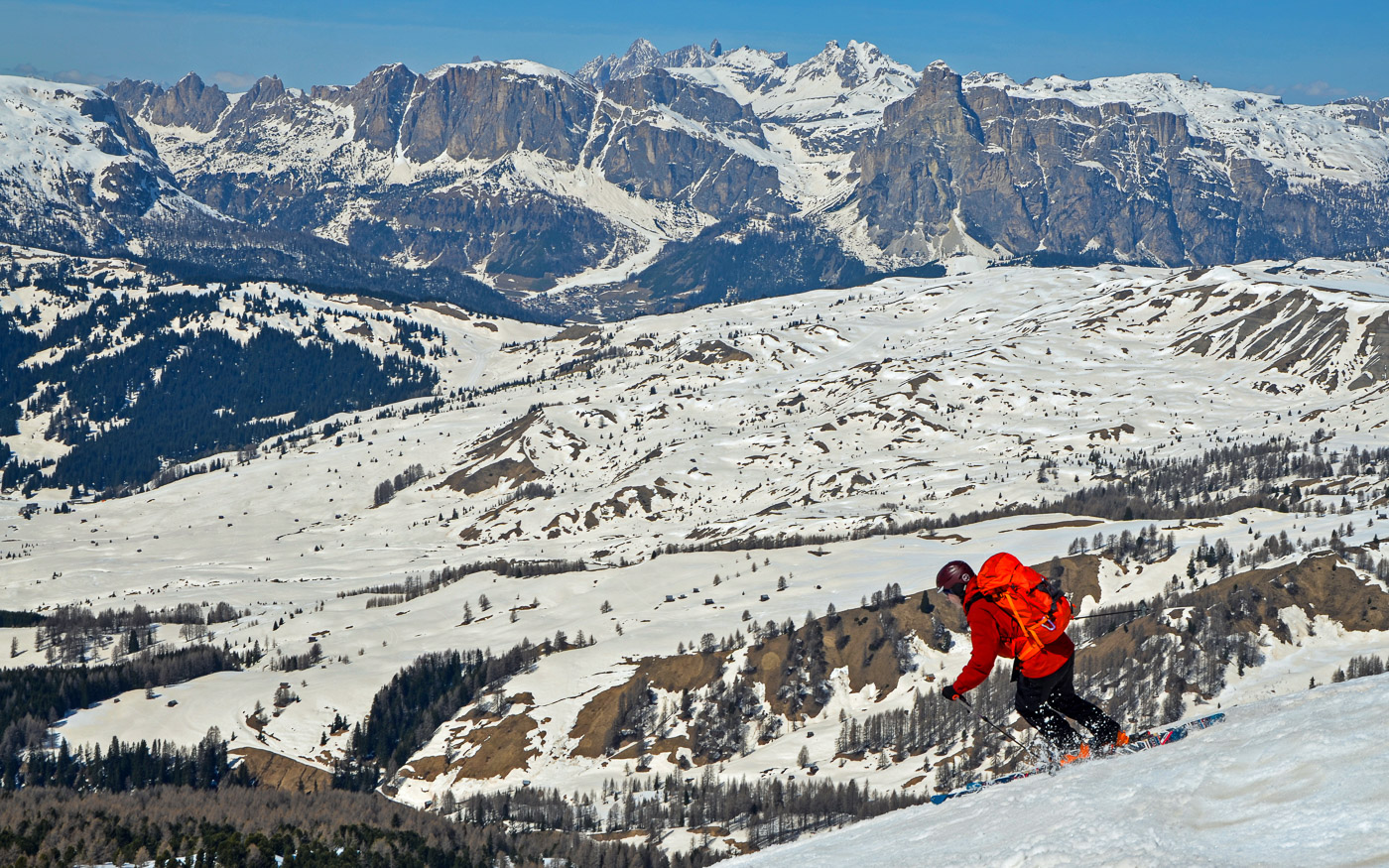
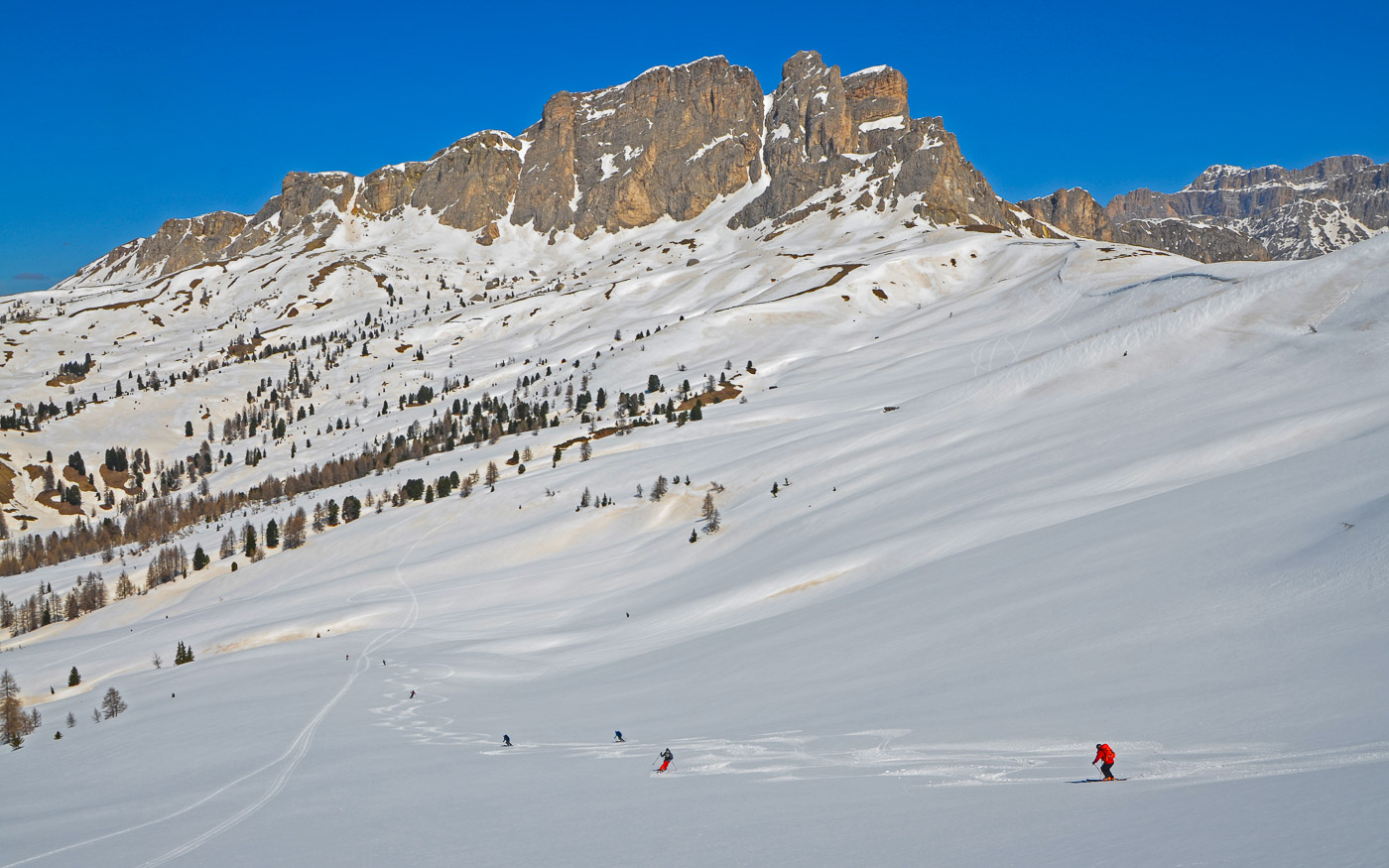
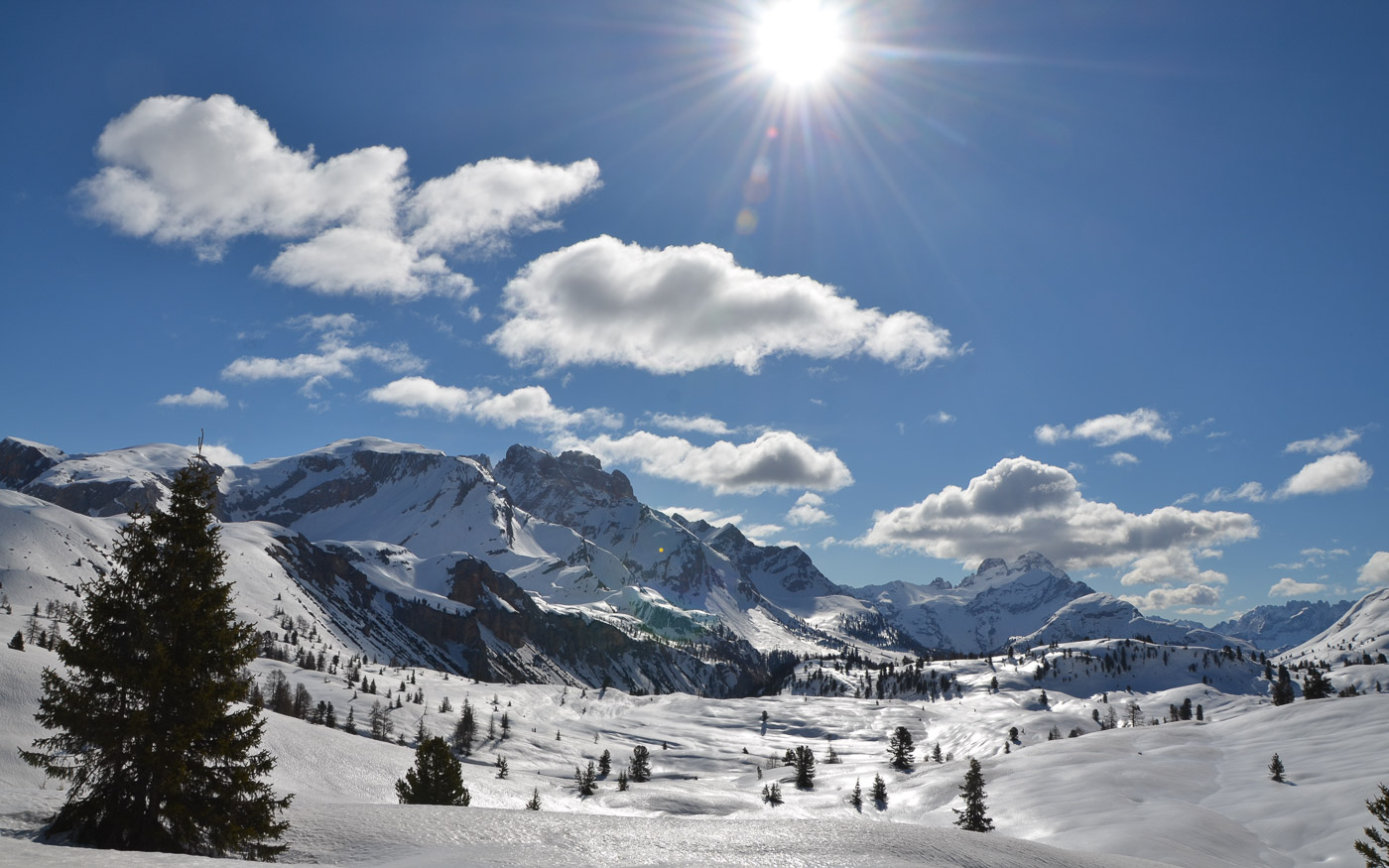
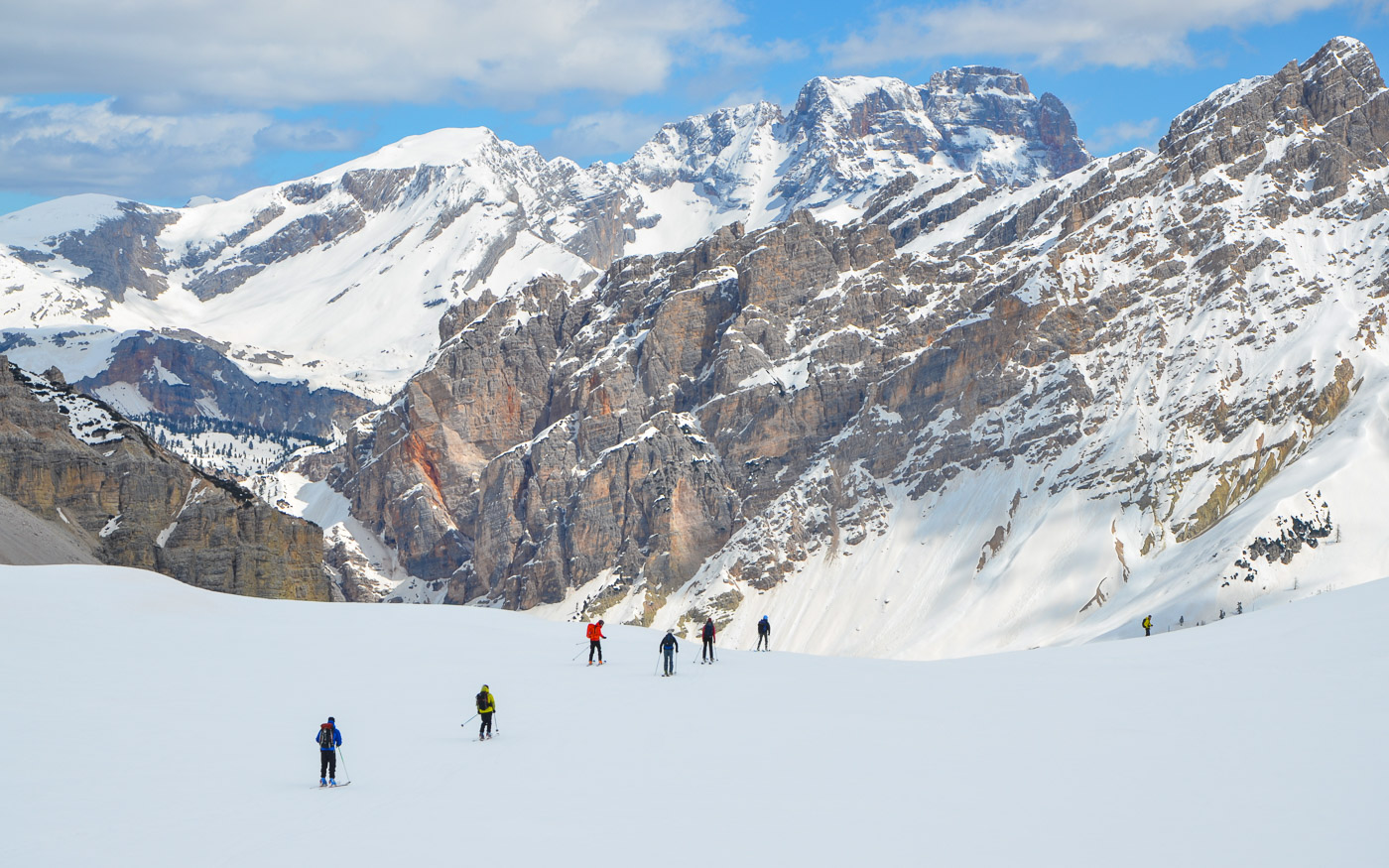
Northern Italy’s Dolomites have UNESCO World Heritage Site status for good reason – it is simply one of the most beautiful mountain landscapes on the planet. Because of its excellent snow and terrain, the Dolomites are home to one of the largest collections of downhill ski areas in Europe. But it is a big mountain range, and one need not travel far to get off the beaten path and into the backcountry. Amongst the famous, stunning dolomitic rock towers and pinnacles are ski-able summits, steep couloirs, glades, and mellow alpine terrain.
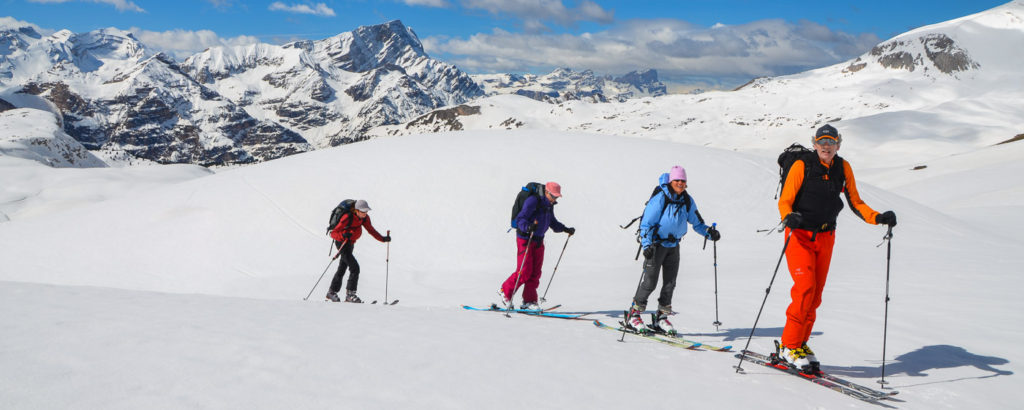
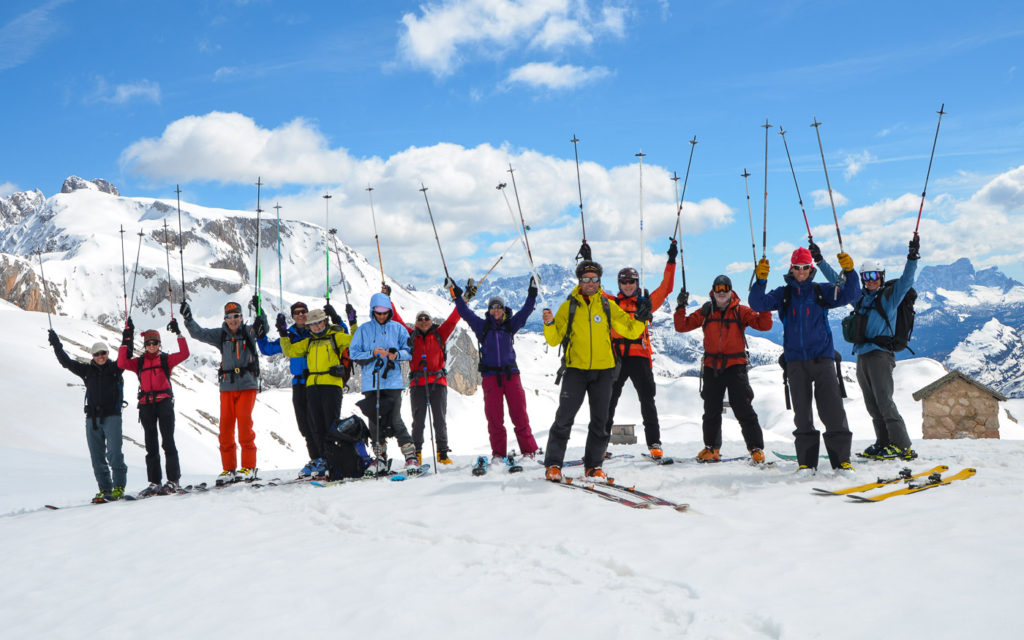
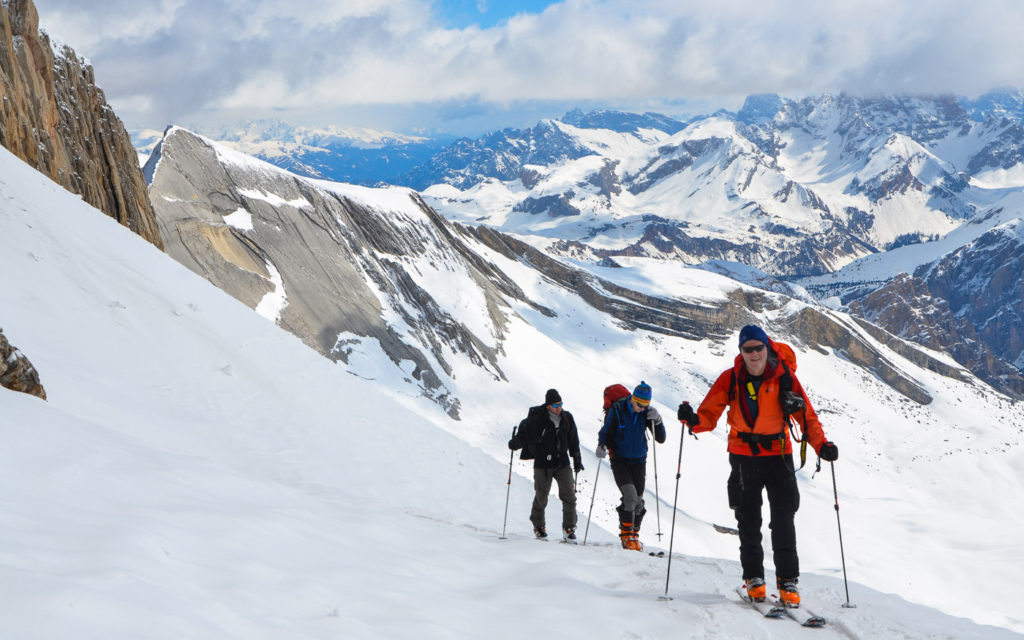
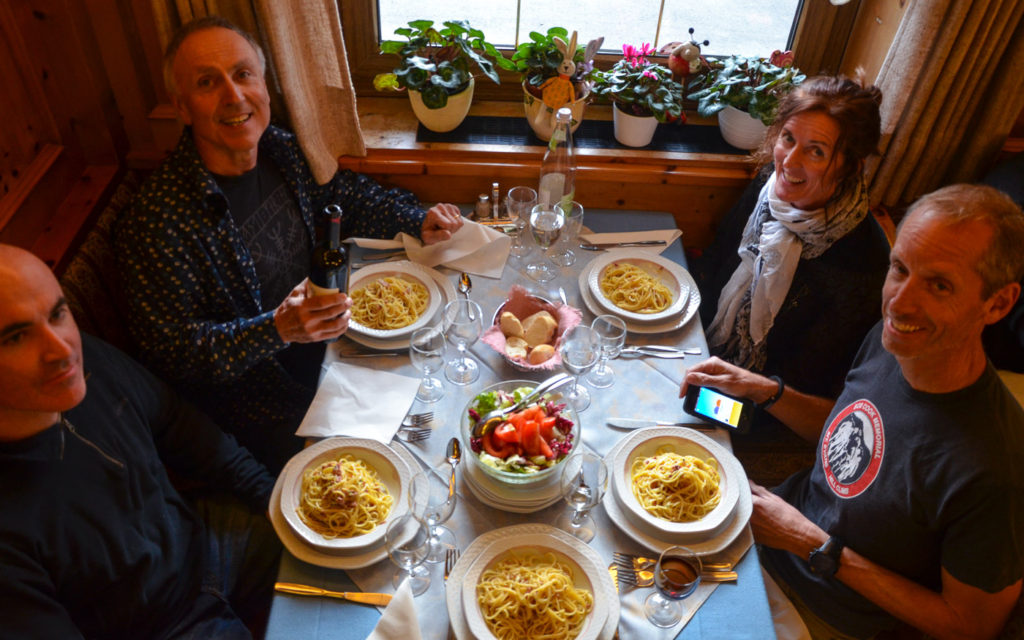
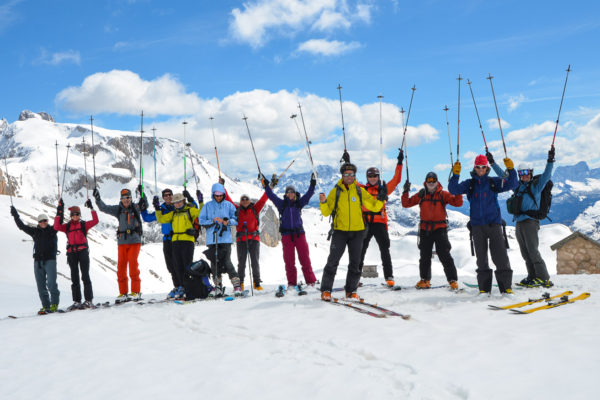
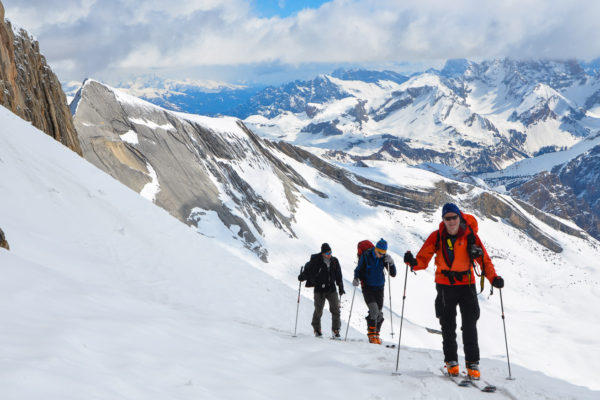
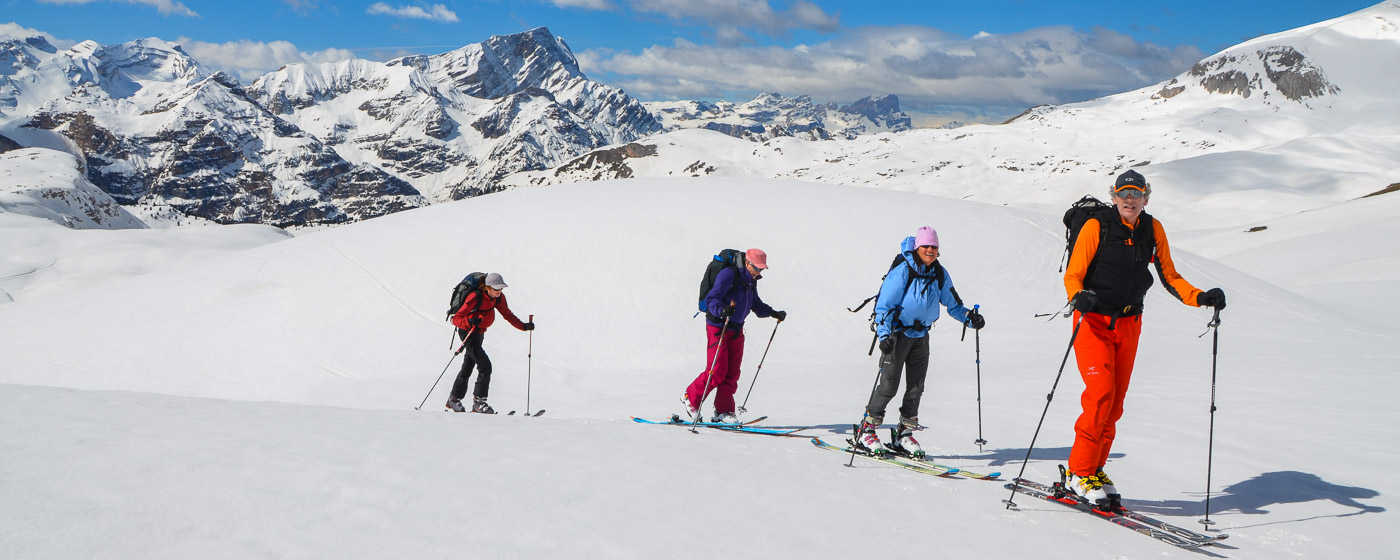
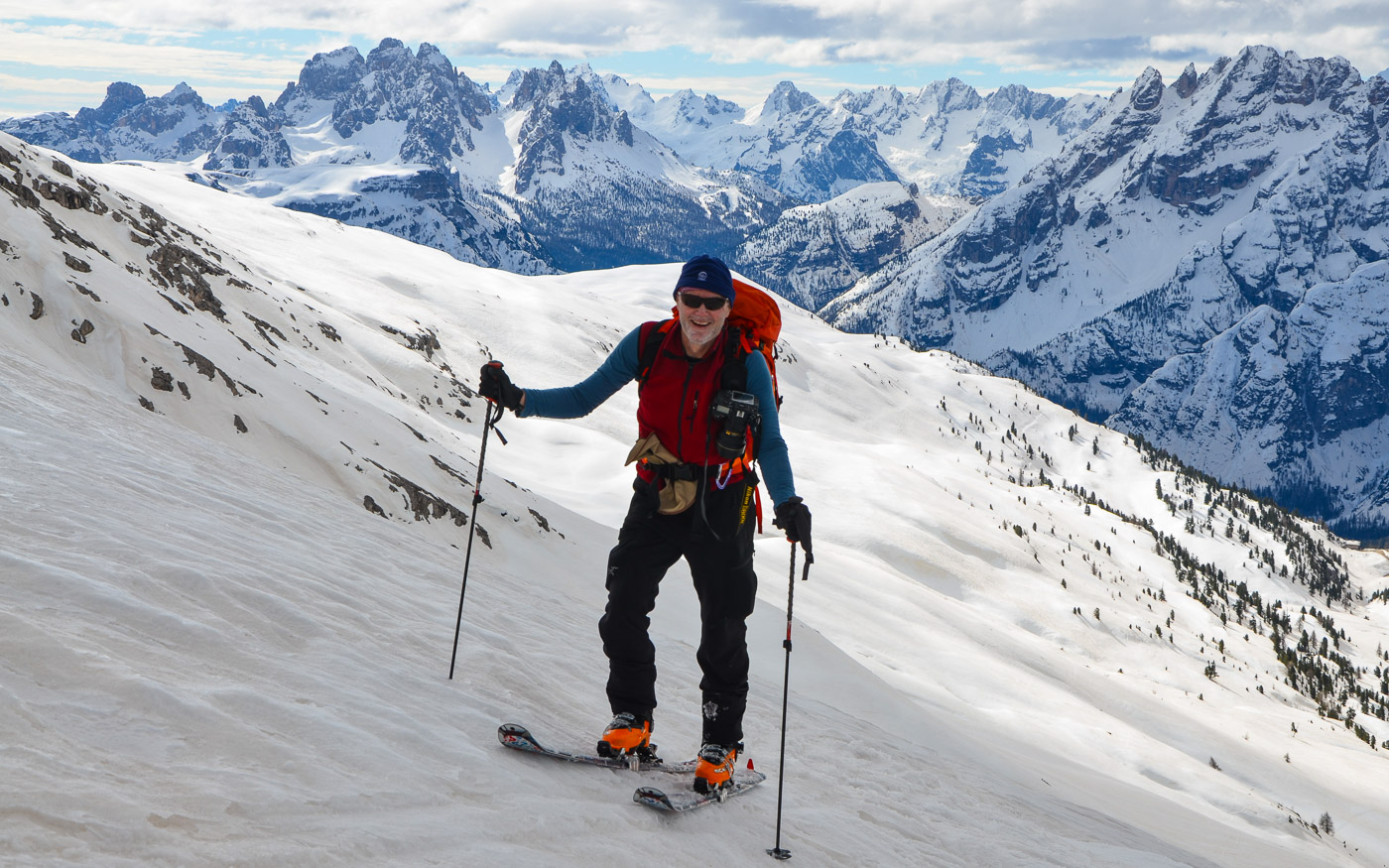
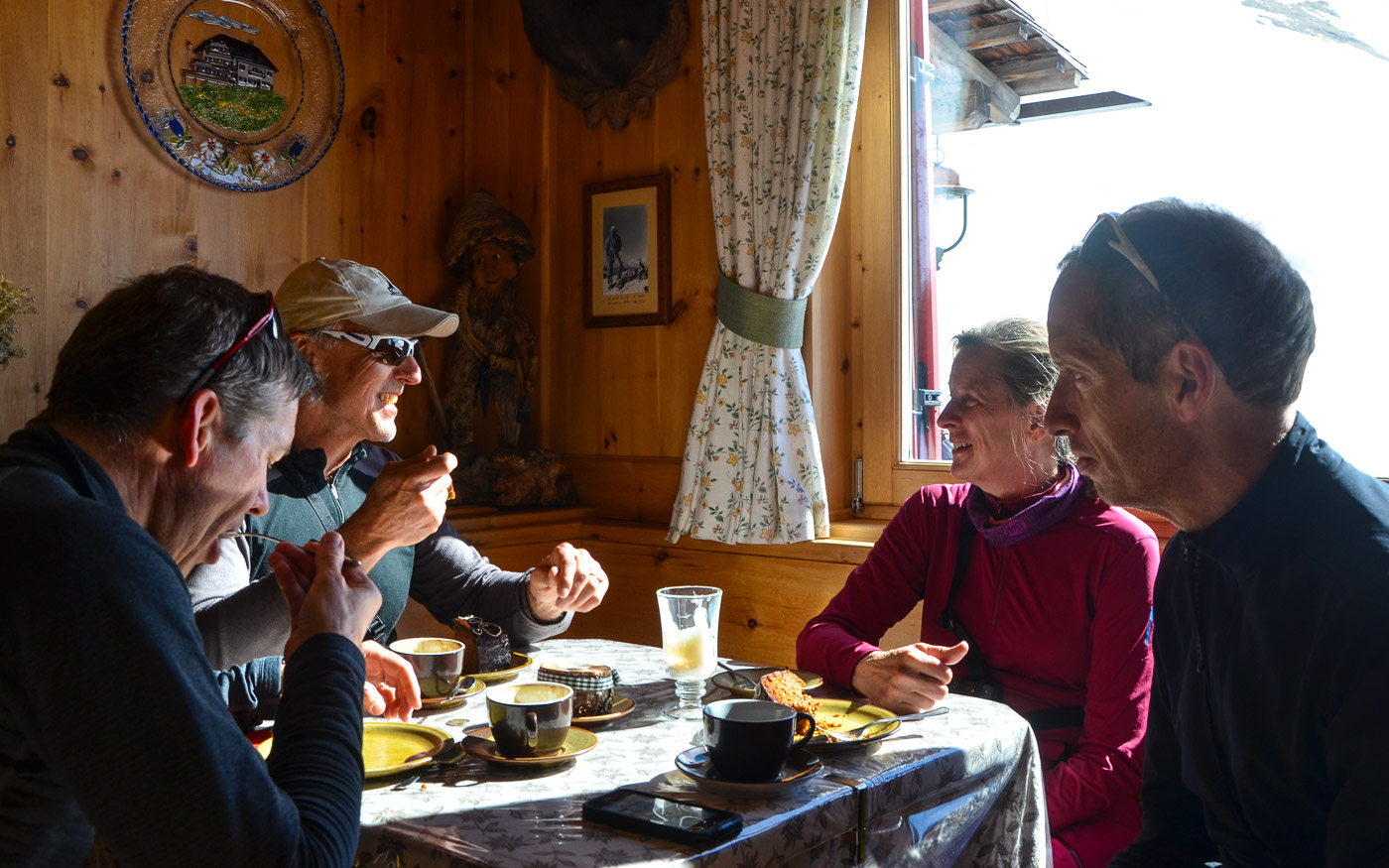
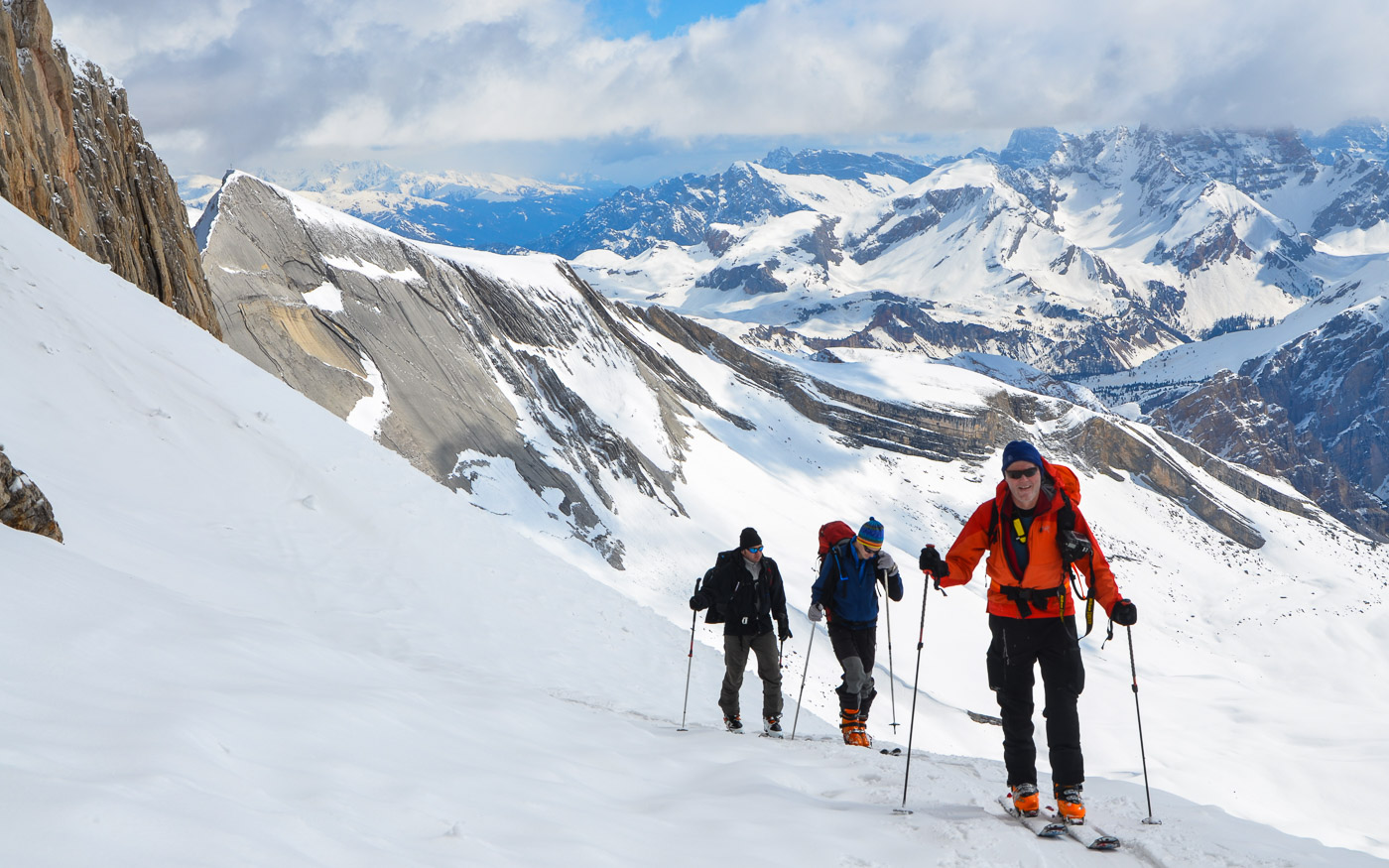
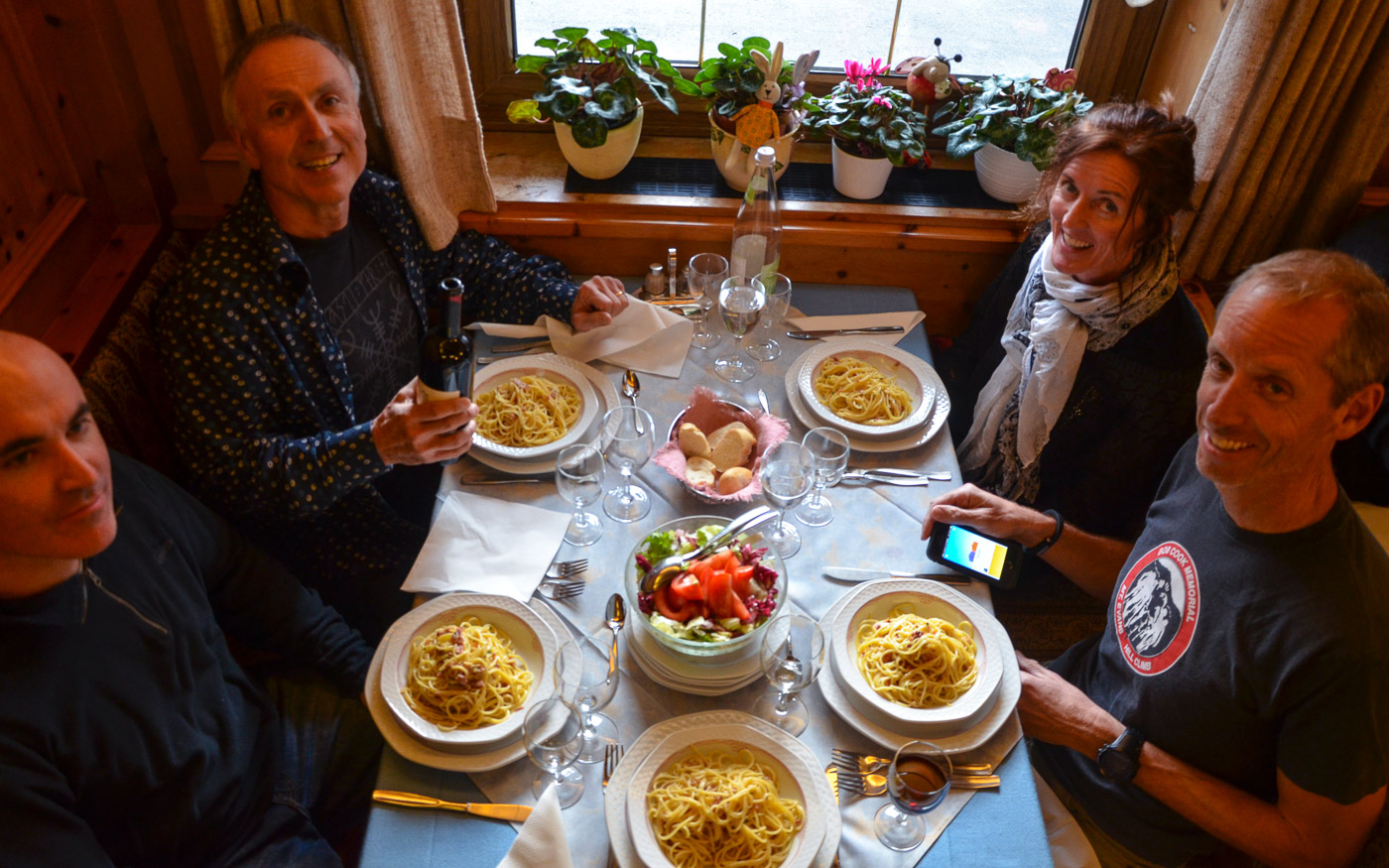
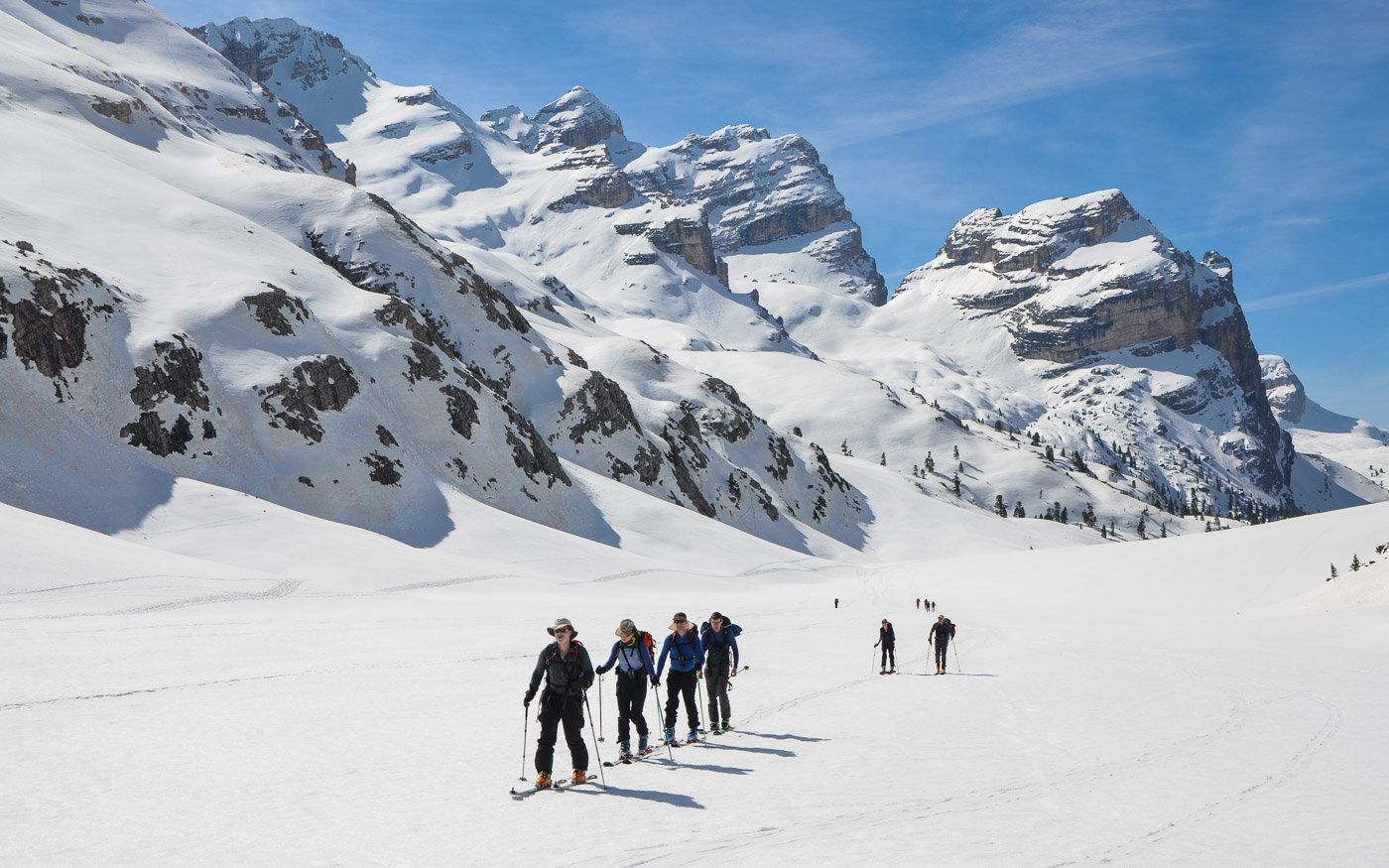
We will spend a week traversing the Northern Dolomites on skis. We will start with a chairlift ride or depart from a trailhead above treeline into the alpine, where we will soon leave the crowds behind and venture into this extraordinary landscape. After crossing a pass or two, and perhaps summiting a mountain along the way, we will enjoy a long run down to the next valley and our very comfortable, full-service hotel or mountain lodge for the night. After eating fantastic Italian food and drinking perfect Italian coffee and wine, we will be ready to sleep in comfort and repeat the process the next day.
Our packs will always be light, and there is even an option of having a luggage transfer to some of the lodges. For those who like roughing it and a bit of suffering, this trip is probably not the one you should sign up for. For those who enjoy winter backcountry travel with exceptional scenery, great skiing, and delightful creature comforts in the evening, this trip was made for you.
2026 Pricing
from €2215EUR / person
HIGHLIGHTS
- Breathtaking scenery amongst stunning rock towers
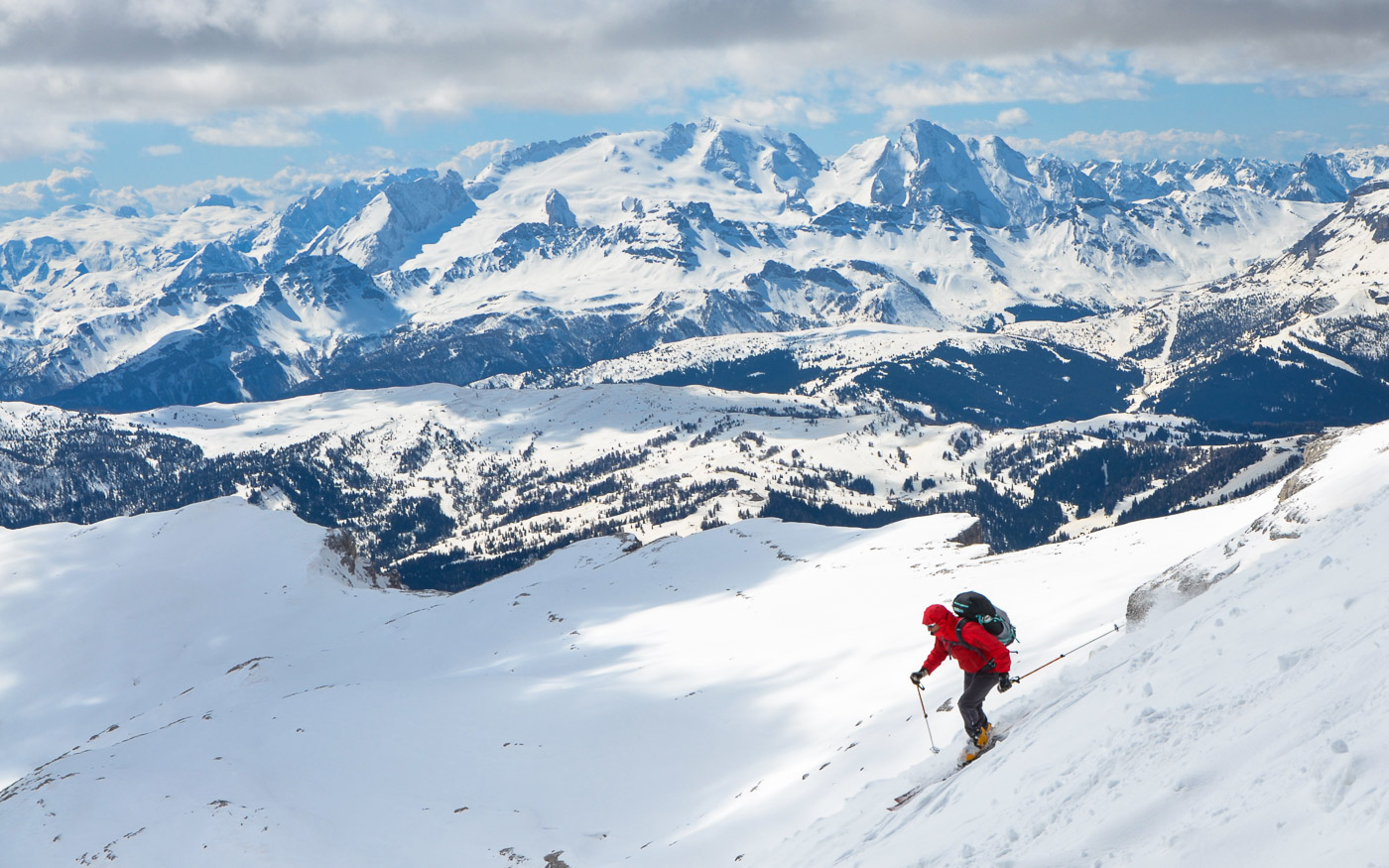
- Great skiing
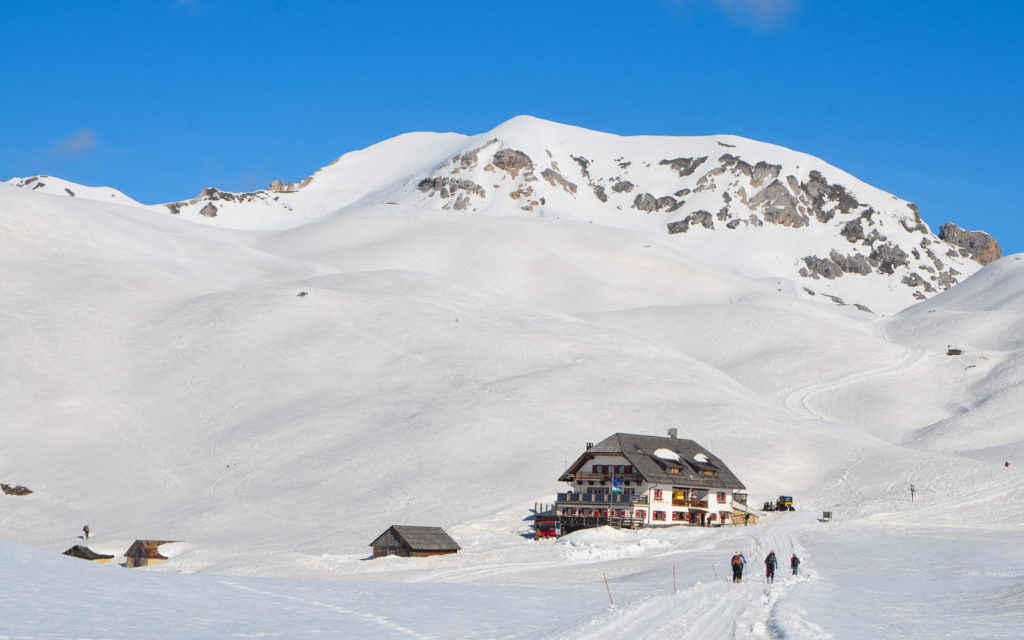
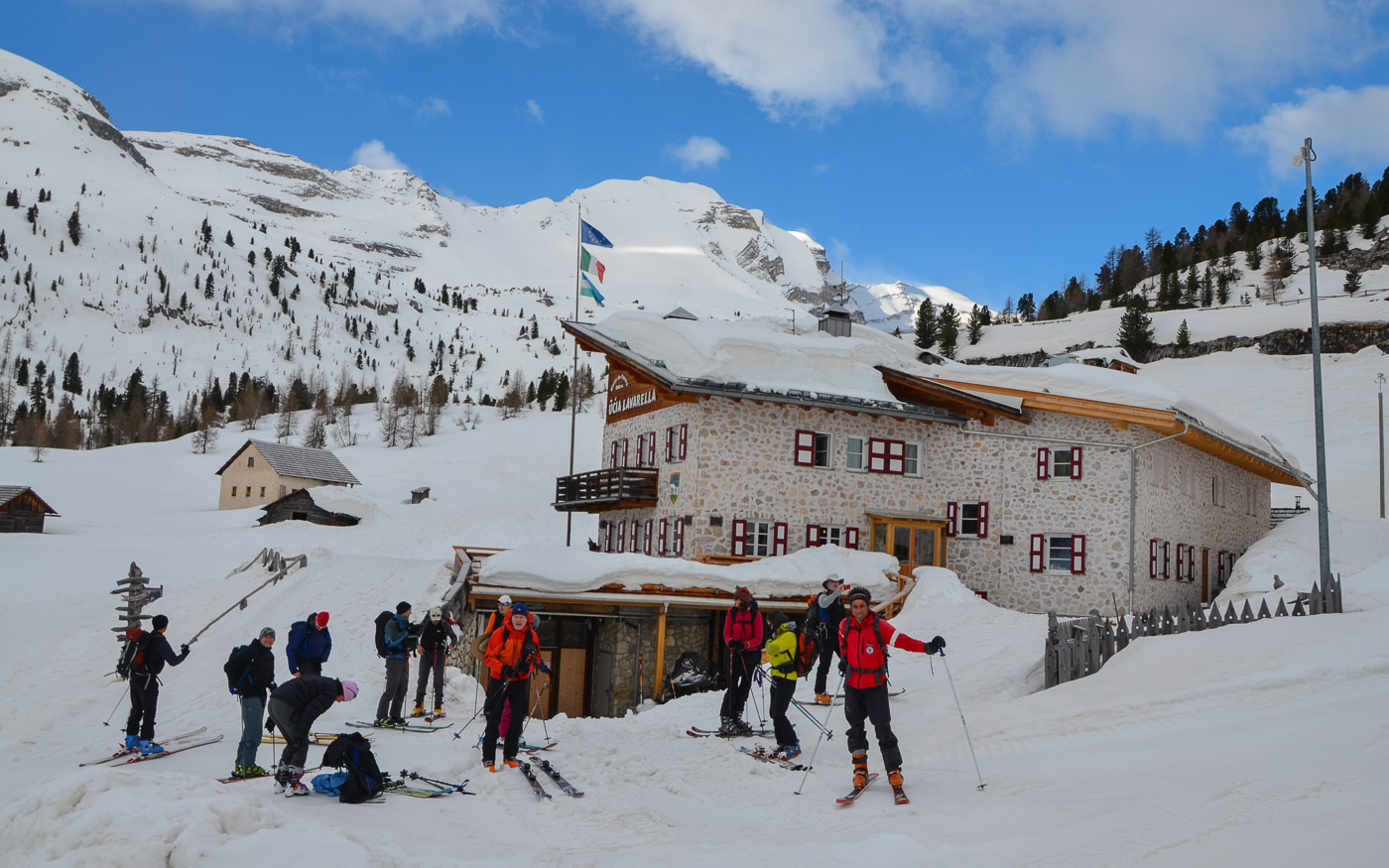
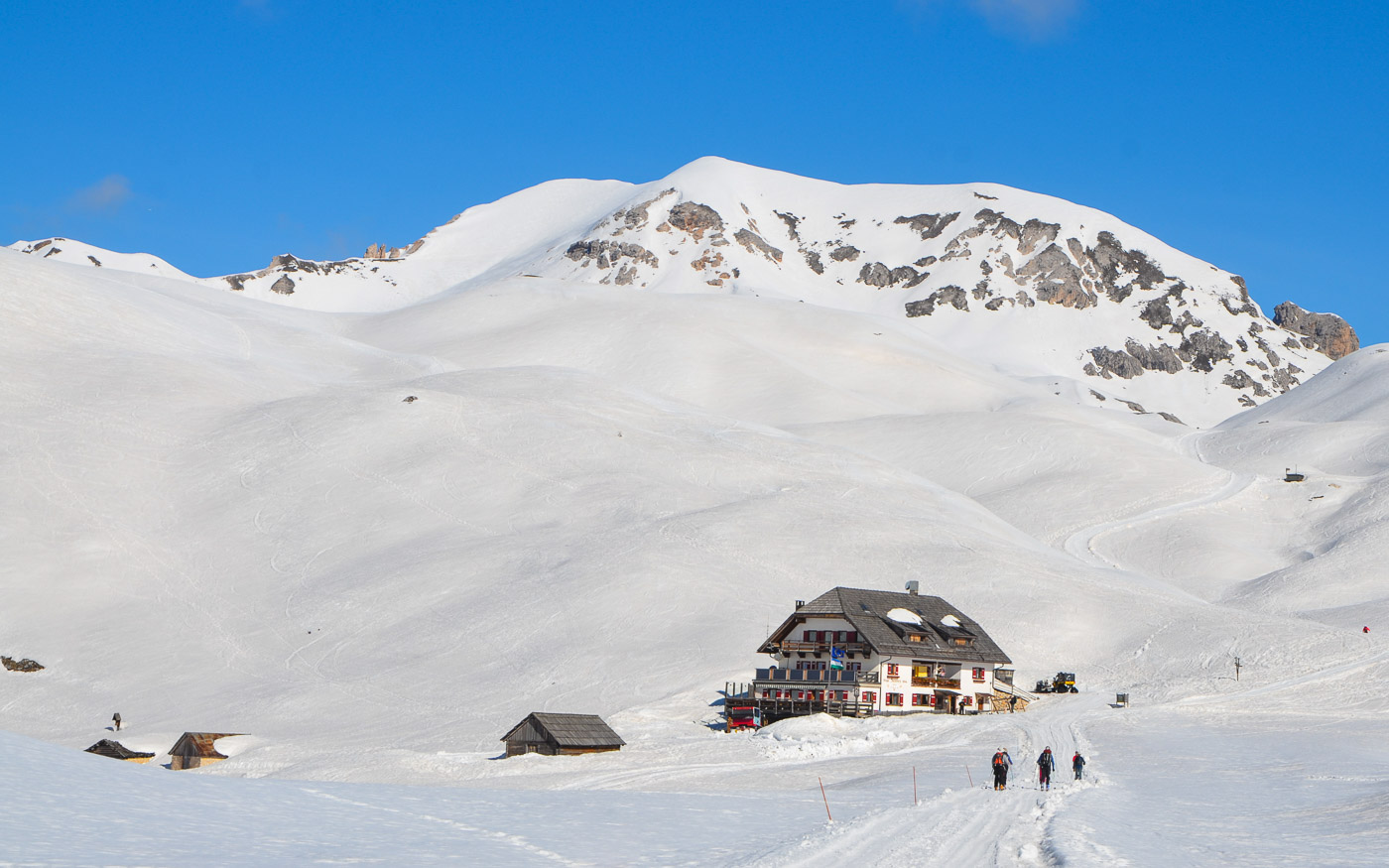
- Luxurious mountain huts and lodges
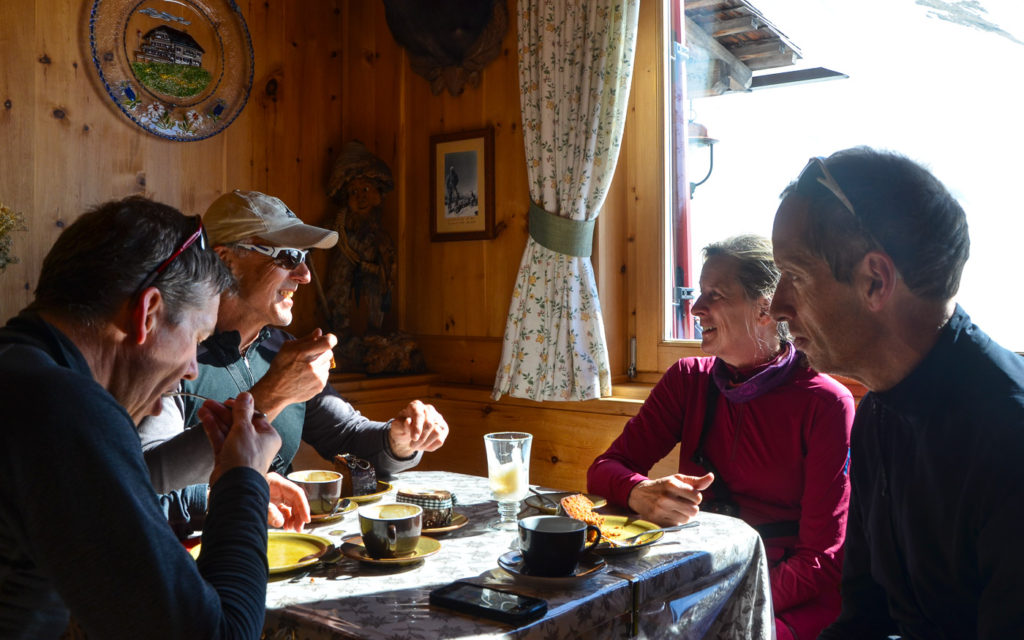
- Excellent Italian food, coffee, and wine
- Most days start with a chairlift ride
DIFFICULTY
- Up to 8 hours per day on the skis
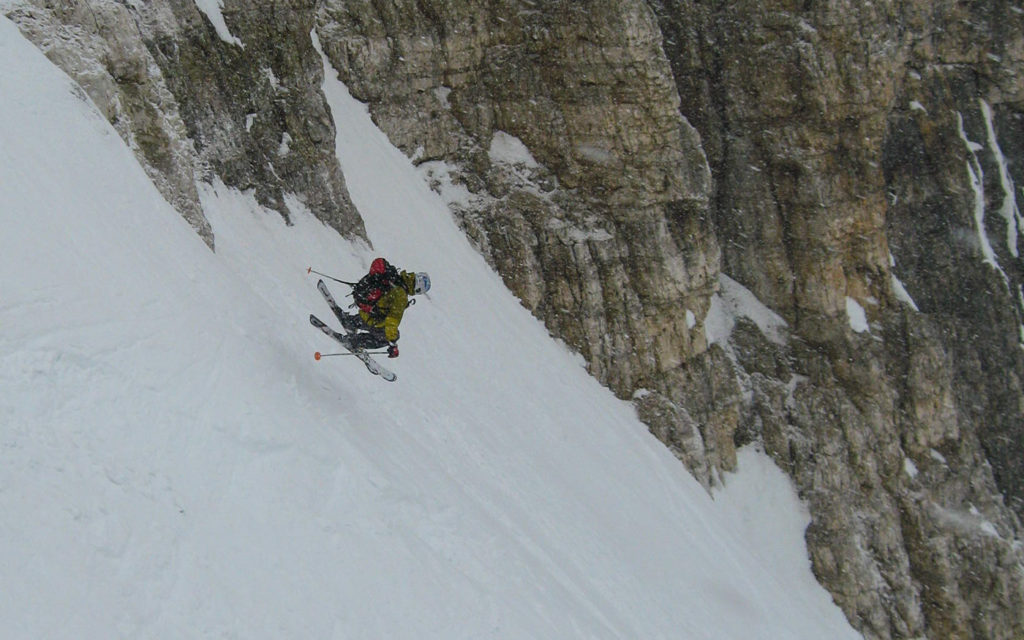
- Minimum high-intermediate skiing ability
- Steepish and somewhat narrow couloirs
- Not recommended for split boarders
Northern Dolomites Ski Traverse: Day-to-Day Itinerary
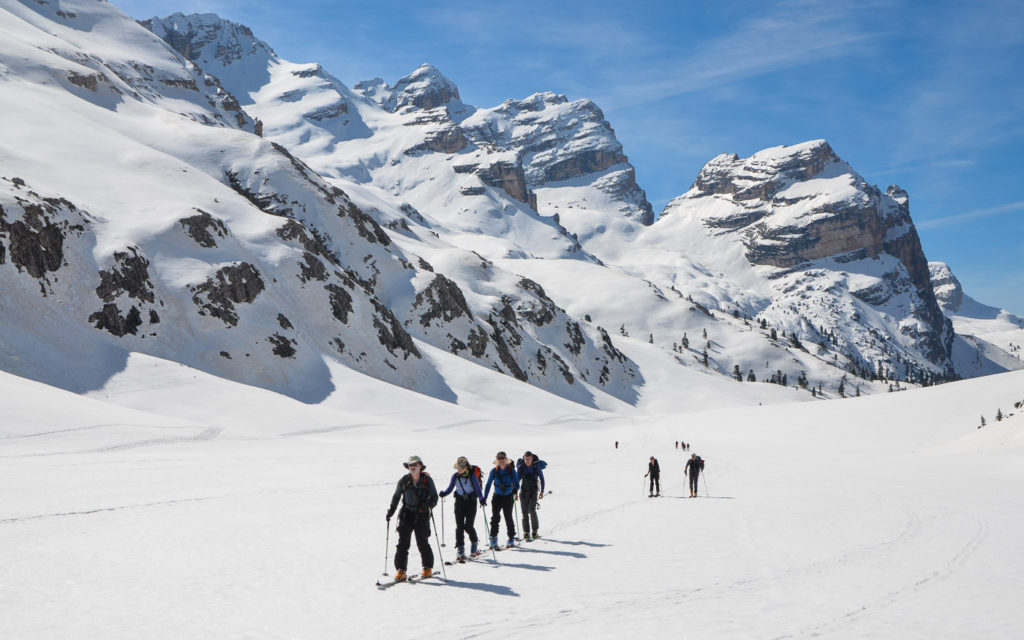
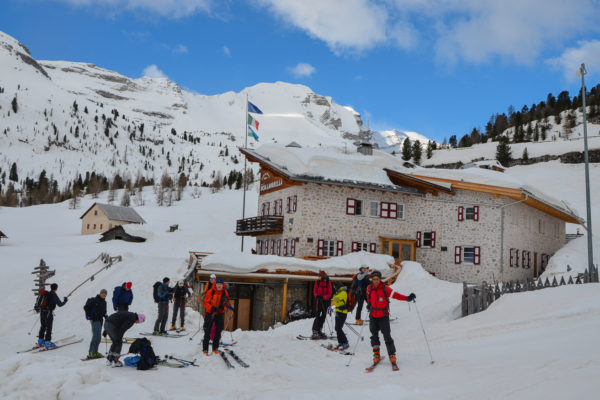
The following itinerary outlines, for the most part, the most common Northern Dolomites Ski Traverse route. Throughout the traverse, we will have options to deviate from the itinerary to maximize enjoyment of the skiing, scenery, and summits according to weather and conditions. Almost daily chairlift support enables us to make more turns than we could on a purely muscle-driven traverse. Some nights will be spent in mountain huts (better described as mountain lodges) and others in village hotels or guesthouses. All accommodations have bunk rooms, double, or quadruple rooms, common showers and, of course, always-excellent Italian hospitality. When there is road or cat access to one of our accommodations, we can organize a luggage transfer if enough participants are interested.
Travel/ Arrival Day: Badia Valley
Travel day to Badia Valley. Our lodging for the first two nights is in a comfortable, family-owned hotel.
Day 1: Badia Valley Day-Trip
Day packs only today as we head out on a day-trip! Breakfast at the hotel. Be ready to meet your guide in the lobby of your hotel at your prearranged time for an equipment check and trip briefing right before we start the day. There are many options today and one of our favourites is the trip to Mount Settsass, which is commonly the second day of the Northern Dolomites Traverse, but given its length and character, it fits better in our program as the warm-up day. Taxi ride to Corvara and chairlift to Pralongia where we will start with a transceiver exercise before climbing to Mount Settsass (2,600m). A northerly-aspect descent brings us to Armentarola and a taxi ride back to our hotel in Badia.
500 m climb and 960 m descent. The day can also be extended by doing a few runs in the ski resort.
Day 2: Badia Valley to Lavarella Hut
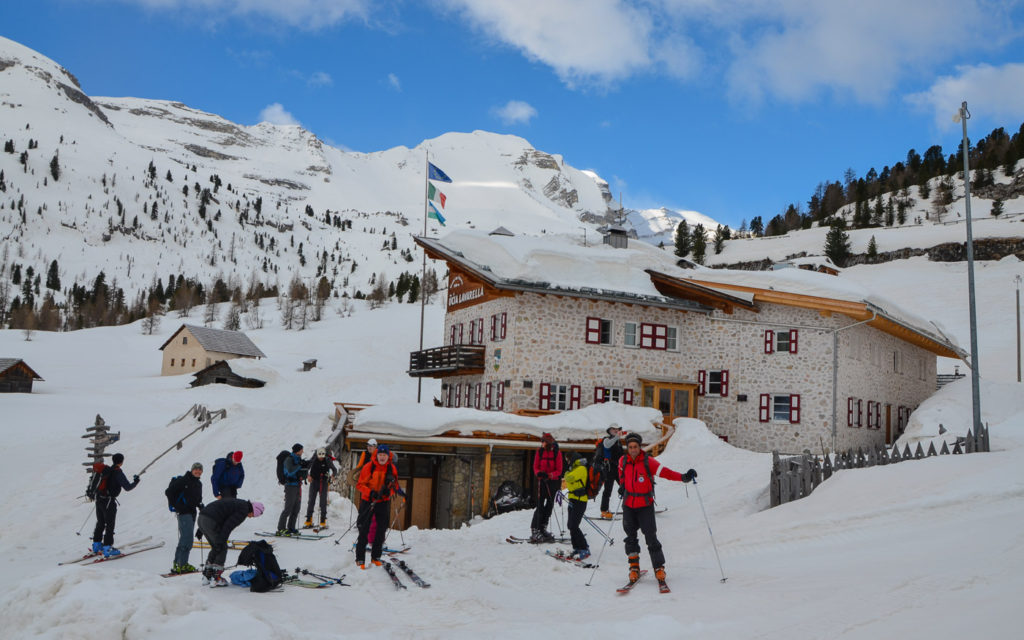
Breakfast at the hotel. Again, your guide will choose the best option to get to the Lavarella Hut depending on weather and avalanche conditions. Most commonly we take the chairlift in St. Leonhard / Pedraces from where a short descending traverse leads to a long climb to the Lavarella Plateau and on to the Heiligkreuzkofel / Le Ciaval (2,907 m) or the Zehnerkofel (3,026)). A mellow descent will take us to the luxurious and very well managed Lavarella Hut(2050m) for dinner and lodging.
1,000m climb and descent.
Option 2: Another popular option to approach the Lavarella Hut starts higher in the valley at the Capanna Alpina lodge (1760 m) and can be combined with an ascent of the Monte Lavarella (3050 m) en route to the hut.
Day 3: Lavarella Hut
Breakfast at the hut. Light packs again today as we explore the Fanes / Sennes Nature Reserve. The Lavarella Hut is probably the best base for ski touring and offers many options for day trips from mellow to very steep on all aspects including Monte Lavarella (3050m), Bechei di Sopra (2790 m), Furcia Rossa Saddle / Monte Ciaval (2910m), Sass dlas Diec (3040 m). Dinner and lodging at the Lavarella Hut.
Day 4: Lavarella Hut to Sennes Hut
Breakfast at the hut. The quickest route to connect both huts follows an Austrian WW1 supply road and takes only about 2 – 3 hrs (640 m climb, 550 m descent) and commonly we include a peak ascent either en route (for example Lavinores (2460 m) or we make our way to the Sennes Hut (2140 m) first and then venture out in the afternoon to one of the many peaks we can ski along the Sennes Plateau. Dinner and lodging at the Sennes Hut.
Day 5: Sennes Hut to Pragser Wildsee
Breakfast at the hut. Quite a few options for peak ascents along the Sennes Plateau including the Sub-Peak of the Seekofel / Croda del Becco (2750 m) or the Monte Sella di Sennes (2790 m). Ideally in the afternoon, we traverse into the Ofenscharte / Forcella Sora di Forno for a great 900 m descent to the “Wild Lake of Prags” (Pragser Wildsee / Lago di Praies 1490 m) for lodging and dinner in a hotel a short drive from the lake.
Day 6: Pragser Wildsee to Cortina
Breakfast at the hotel. Many options to choose from today but commonly we start the day with a taxi ride. A popular trip that fits in well with the traverse character of the week is an ascent of the Duerrenstein / Picco di Villandro (2,850 m), a great ski ascent with excellent views of the glaciated peaks to the north along the divide of the Alps. A long descent brings us to Schluderbach (1,430 m) on the road connecting Cortina and the town of Toblach / Dobiaccho. A taxi pick-up and 15-minute drive will bring us to Cortina D’Ampezzo for lodging in a comfortable hotel.
1,350 m climb, 1,400 m descent
Other options include the long northern aspect runs of Monte Cristallo (3150 m) en route to Cortina.
Departure/Travel Day
Breakfast at the hotel marks the finish of the trip. Guests to depart after breakfast.
Trip Inclusions
Included:
- 6 days of guiding by an internationally (UIAGM/IFMGA) certified multilingual mountain guide
- Guide expenses
- 7 nights lodging with breakfast in village hotels or mountain huts
- 4 Dinners for the nights in Pragser Wildsee and huts
- Taxis and bus transfers in accordance with the itinerary
- Luggage transfer from hotel in Badia Valley to Cortina mid-trip
- All trip organization, reservations, and assistance with all pre- and post-trip preparations
Not Included:
- Airfares and airport shuttles
- Gondola and lift tickets
- Rental equipment
- Additional luggage transfer between lodges and huts (if desired)
- Dinner for the 3 nights in Cortina and Badia
- Lunches and snacks (sandwiches and snacks can be purchased at the accommodations or in the villages)
- All beverages (water, alcoholic and non-alcoholic)
- Single room surcharge for all lodging (if available)
- Insurance
- Any additional costs in case of itinerary changes regardless if those changes were made due to adverse weather or mountain conditions, or due to personal or group preferences
Transportation
Meeting point
We will meet at a welcoming, family-run hotel in Badia, South Tyrol, Italy – 10 km north of Corvara. This comfortable lodging with excellent food will be our home for the first three nights of the trip.
Getting There
The closest airports to Badia Valley are Munich, Germany, Venice, Italy or Milan, Italy.
The nearest train is St. Lorenzen/San Lorenzo, with Bruneck/Brunico slightly further away.
From your arrival city, take a train through Fortezza/Franzensfeste train station to St. Lorenzen/San Lorenzo.This route isn’t always available so best to enter your starting/end point locations and date of travel into google maps. Google maps will populate multiple travel routes for you, combining train and bus lines if needed as well as provide you with links for the websites where you can purchase your tickets. You can also research your options and make train bookings at thetrainline.com. Try and book your train tickets as early as possible, as they become more expensive closer to the travel date. It is a 30-minute taxi ride from St. Lorenzen to Badia.
Alternatively, car rentals are relatively cheap in Europe but keep in mind this trip starts and ends in 2 separate towns so you would need to make your way back to Corvara to retrieve your car. Just be sure to have a GPS or Google Maps ready for navigation. Make sure you rent a car with winter tires! In countries like Austria and Germany, winter tires are mandatory on car rentals from November through March 31 (Austria) and April 15 (Germany).
In Italy, there is no uniform nationwide winter tire requirement. That said, in the Dolomites some roads have mandatory winter tire restrictions. For this reason, it is imperative that when renting a car in Italy, you select a “winter tires included” rate.
For more information on EU Winter Tires please click here.
If you prefer to arrive a day early to get over the jetlag and to ensure your luggage also arrives, we can provide recommendations for hotels in Munich.
For custom trips and larger groups, we will gladly provide a quote for an airport pick-up in Munich with one of our taxi partners.
North Dolomites Ski Traverse Private Trip Pricing
Why not find some friends and put together your own group? For private groups, we can offer the following pricing assuming the same inclusions :
2 participants: 60% premium in addition to our advertised per person price
3 participants: 40% premium in addition to our advertised per person price
4 participants: 20% premium in addition to our advertised per person price
5 participants: Our advertised per-person price
6 – 8 participants: 10% discount from our advertised per person price*
*we only confirm a group of 8 with 1 guide if all participants are strong skiers with previous multi-day hut trip experience, and at our discretion. For groups that are not as strong, we recommend 2 guides, in which case the discount does not apply.
For groups larger than 8, please reach out to us for a custom quote.
Northern Dolomites private group/custom trips itinerary options
Additional days:
A great way to acclimatize and to expand your trip by a day or two is to add ski touring days near the starting point of our traverse. The Dolomites offer endless off-piste skiing options. Ask us for a quote for additional days.
For custom departures, we can also extend or shorten the trip. The huts and lodges offer enough ski touring terrain to keep us entertained for plenty of extra days.
Gear List
Hut-to-Hut North Dolomites Ski.PDF
Click the link above to download a PDF copy to use as a checklist when preparing for your trip.
Considerations
Packing for a ski traverse is a balancing act. You want your pack to be as light as possible so you can truly enjoy the trek, but you also need to have enough gear to be warm (or cool), comfortable, and well-fed and watered. When buying, renting, or borrowing gear for the trip, please keep weight, performance, and function in mind.
Legend:
*Optional
**Optional but recommended
Technical Gear
- Alpine touring skis for spring ski touring, no wider than 100 mm underfoot
- Alpine touring ski boots, compatible with touring binding
- Ski crampons compatible with your skis and bindings
- Boot crampons, lightweight, compatible with your ski boot
- Adjustable ski poles
- Climbing skins, well glued and fitted to your skis (leaving the edges free once applied to ski base)
- Backpack (40 – 50 liters) with outside straps to attach skis and crampons
- General repair kit and Leatherman (can be shared between several people)
- Spare parts specific to your equipment
- Ski helmet*
Avalanche Rescue Gear
- Modern, 3-antenna avalanche transceiver
- Lightweight, metal snow shovel
- Avalanche probe (two to three meters long)
Clothing
We recommend the ‘layering system’: Bring light, technical clothing that doesn’t take much space in your backpack and dries quickly when sweaty or wet. Layers must be put on and taken off quickly as weather conditions change during the day. Merino wool is a nice material for base layers and t-shirts because it is comfortable, warm, and it does not retain odours, even after many days of use. Wind and waterproof shell jacket with hood (Gore-Tex or similar)
- Wind and waterproof shell jacket with hood (Gore-Tex or similar)
- Wind and waterproof over pants (Gore-Tex or similar)
- Ski touring pants
- Thick fleece or wool pullover, or PrimaLoft jacket
- Medium weight fleece shirt
- Capilene, fleece or wool underwear, top and bottoms
- Two or three pairs of gloves (lightweight and heavier weight)
- Socks (synthetic or wool, thick outer and thin liners)
- Spare underwear / sports bra
- Wool or fleece hat, covering the ears
- Sun hat, preferably with wide rim
- Bandana or neck gaiter (eg. Buff)*
Other Items
- Sunglasses with high UV protection. Nose cover optional. Extra sunglasses is a good idea.
- Goggles with high UV protection
- Sunscreen and lip protection with high SPF
- One-litre water bottle with an insulator. Water bladders not recommended
- Headlamp with spare battery
- Personal first aid kit and other needs (eg. blister kit, prescription medicine, anti-inflammatory, contact lenses, prescription glasses, feminine hygiene, toilet paper, hand sanitizer etc.)
- Passport and health and travel insurance documents
- Snacks – candy bars, dried fruit, nuts, etc.**
- Light stuff sacs or Ziploc bags to keep your backpack organized and important items dry**
- Rain cover specific to your pack, or large plastic bag*
- Small thermos*
- Pocket knife*
- Camera, spare batteries*
- Adaptor for European charging system*
- Cellphone with charging cable*
- Portable powerbank*
- Compass, maps, GPS, altimeter watch*
- Ski wax / skin wax*
FAQ
Do I need to sign a Release of Liability & Assumption of Risk Agreement (a.ka. liability waiver)?
Yes, you do. Mountaineering, skiing, climbing, hiking, via ferrata and all other wilderness and adventure travel activities are inherently risky with potential for injuries or even death.
It is very important to us that you are aware of those risks before you start the booking process, which includes filling out a booking form and paying a deposit.
With signing the liability waiver, you confirm that you understand the potential risks and hazards, and are willing to accept the risks, which includes giving up legal rights you may have.
This would also be the time to ask questions or address concerns before you book.
For your reference here is a link to our Liability Waiver. Our booking terms & cancellation policy with more details can be found here
Will we need ski crampons and/or boot crampons?
For spring ski touring in the Alps the ski crampons are imperative for about 70% of all trips. Once the typical spring diurnal weather cycle kicks in you will likely be walking on a melt-freeze crust on any solar aspects. The boot crampons work well for shorter, steep bits that go straight up but you will likely find yourself on extended side-hilling on a melt-freeze crust that carries for skis but you’d post-hole on boots with crampons. Consequently, what travels easily with ski crampons turns into an excruciating nightmare on boots…
That being said, if you end up picking a week that has more wintery weather with snow fall every day you may not need them at all! But if you do need them, you REALLY need them!
Boots crampons are always a delicate subject. Whether clip-binding in front or behind, one fits on one shoe and not on the other or vice versa.The crampons that always fit are paradoxically the ones that are slowest to put on, those with a strap-binding front and back.
The weight is a very important factor, as well the protective cover to store them safely in the backpack. On Monte Cevedale, for example, we would not make it up to the summit (in certain weather conditions) without boot crampons. And on Monte Pasquale can be challenging without crampons because of 15 meters of hard ground. Please bring a pair along and if the guide feels you do not need them, they can be left with your luggage at the hotel.
Can the Northern Dolomites Ski Traverse be done on a splitboard?
Some sections of the Northern Dolomites Ski Traverse lend themselves to splitboards, but other parts are not splitboard-friendly. There are some low-angle descents and up-and-down sections that must be done in “walk mode”. Also, in case the party needs to rope up in bad visibility, skiing tends to be easier than boarding thanks to the ability to ‘snowplow’. All in all, the Northern Dolomites Ski Traverse is probably not well-suited to split boards.
Are there extras we can purchase at the huts and will we need cash?
All of the huts provide a three- to four-course dinner (soup, sometimes salad, main with meat and dessert), and breakfast (coffee, tea, bread, butter, jam, cheese, sometimes also sausage). These meals are included in your trip price. However, be sure to bring some Euro cash for the extras in the accommodations as they often do not accept credit cards.
To be well on the safe side, we suggest bringing about 50 Euros in cash per day.
Beverages are available for € 3-6 . Good wine costs € 20-35 per bottle. The water at the huts is officially not drinkable, but our guides say “although it is good”. When showers are available, they cost around € 3, or shower + towel is around € 5.
You can purchase lunch-to-go at the huts and in the valleys. Snacks, sandwiches, and hot lunchtime meals can also be purchased in the huts for € 10 to 20.
Can I refill my BCA canister in Europe?
We haven’t seen the BCA system in South Tyrol. If the cartridges are different from those of ABS, Mammut, etc., then it might be difficult to find them. You should look for it in bigger cities before arriving for the traverse. Generally, in higher mountain regions in spring, people don’t bring airbags as often.
Italian “Riposo”. What is it? Why do Shops and Restaurants Close in the Afternoon?
In Italy, you will come to find that many shops, grocery stores/supermarkets, and restaurants close for a few hours in the afternoon. This is called the “riposo” or in English, simply “rest”. It is an integral part of Italian culture that typically sees Italians taking a 1.5 – 2 hour rest break after lunch. It is a cherished part of the day where Italians nap, rest, spent time with loved ones, avoid the heat during the hottest hours of the day, etc. Between 12:30 pm and 4 pm is when you will commonly see shops, and restaurants shut down so plan ahead!
Trip Details
Climate and Weather
Mid-March until end of April offers the best combination of weather, conditions and snow stability. Temperatures can vary hugely. If winter weather patterns prevail, you can expect temperatures between -5°C and -22°C. Normally in spring, the temperatures range from -10°C overnight to +15°C during the day, especially on sunny days and when descending to the valleys.
Lodging at the huts
- The huts are heated and provide sheets and comforters or wool blankets – however, in some of the huts the sheets/blankets are not changed between each client stay, so it is mandatory to bring a sleeping bag liner. The lightest models available are made of silk and weigh around 100 grams (1/2 pound).
- The Huts included along our route vary in size from very large to small and rustic depending on their location – all are built in magnificent settings. Some of the huts only offer coed, multi-bed bunk rooms for 10 to 14 trekkers (when fully occupied).
- When lodging in dorm rooms/ non-private rooms, you will be sleeping with your fellow trekkers and most likely other trekkers as well. If you are a sensitive sleeper, we highly recommend ear plugs, an eye mask, and perhaps a sleep aid.
Breakfasts and Dinners at the Huts
- Breakfasts typically consist of tea/coffee, bread, jams, cold cuts or ham, cheese, muesli, cereal with milk or yogurt. More remote huts may have smaller breakfast offerings. If you have your preferred cereal for breakfast, granola bar or power snack, you should probably bring it along from home, as it might not be available in the small food stores in Italian mountain villages or at the huts.
- Dinners are usually between 3- 4 courses (“mezza pensione”) which consist mostly of pasta or soup, a meat entree and dessert and/or cheese.
Lunches
Lunches are not included in our trip packages.You can buy lunch food in the valleys before departing on each leg of the ski traverse. Packed lunches are available at each hut and must be ordered the night before. If you have a guide, please discuss as a group what the next day’s lunch plans are as some group may opt to dine-in at a hut along the way.
Luggage Storage and Transfers
You can use the hotel luggage storage facilities at your own risk. Neither OnTop nor the hotel accepts any responsibility for loss of or damage to the luggage or the contents (including any valuables, even if we have been advised) during storage, the disposal process or any luggage transfers that may be part of your trip package. That being said, we have never had any issues with lost luggage during storage or transfer.
Medical/Rescue and Trip Cancellation Insurance
We strongly recommend the purchase of a travel insurance package that does cover adventure travel. Common policies sold by travel agents or policies included in your credit card contract tend to exclude “mountaineering” if you read through the fine print. We recommend an adventure travel policy on our website at http://ontopmountaineering.com/travel-insurance/ which our clients had good experiences with in the past. *NEW: we now recommend including covid-19/pandemic coverage with your insurance policy.
Can I Do It?
While this trip is relatively luxurious as ski traverses go, it is still physically demanding and takes us through serious mountain terrain. You must be able to ski safely and in control at all times while wearing a 6-8 kg backpack. Your skiing ability does not need to be technically perfect, but you should be a solid mountain skier with good “survival skiing skills”, and the ability to negotiate adverse snow conditions on steeper slopes without falling while still traveling at a decent pace.
You need to be in very good physical and mental condition, ready to be on your feet for about eight hours each day, including, steep, continuous, uphill climbs of up to 1,200 meters (4,100 ft). Some of the summit ascents require scrambling along exposed ridges on crampons, however, you can also choose to wait at the ski depot. The guide will carry a rope for those clients who prefer a belay.
We do not recommend this trip for backcountry ski touring novices.
We also do not recommend this trip for splitboarders.
25/26 SCHEDULED DEPARTURES
December 21 – 28, 2025
January 4 – 11
January 11 – 18
January 18 – 25
January 25 – February 1
February 1 – 8
February 8 – 15
February 15 – 22
February 22 – March 1
March 1-8
March 8 – 15
March 15 – 22
March 22 – 29
March 29 – April 5
April 5 – 12
April 12 – 19
*First and last days are travel days
WINTER 25/26 PRICES
EUR €2215 per person
*Holiday surcharge of €100 per person for custom/group trips that fall on Christmas, New Years Eve, Easter weekend.
GROUP TRIP SIZE
3-7 Clients: 1 Guide
CUSTOM DEPARTURES
Custom trips at any time from late December to mid April!
For details click “Custom Trips” Tab
TRIP INCLUSIONS
- 6 days of guiding by an internationally (UIAGM/IFMGA) certified multilingual mountain guide
- Guide expenses
- 7 nights lodging with breakfast in village hotels or mountain huts
- 4 Dinners for the nights in Pragser Wildsee and huts
- Taxis and bus transfers in accordance with the itinerary
- Luggage transfer from hotel in Badia Valley to Cortina mid-trip
- All trip organization, reservations, and assistance with all pre- and post-trip preparations
For a full list of services included, not included, and add-ons, please select our “Trip Inclusions” Tab.
SIMILAR TRIPS
Haute Route Ski Traverse
Oetztaler Alps Ski Traverse
Ortler Ski Traverse
Bow-Yoho Ski Traverse (Canada)
TRIP INFO LINKS
Italian weather (in Italian)
Good European weather forecast from Norway (search ‘Cortina’ or ‘Corvara’)
Dolomites avalanche conditions